
Understand your digestive problems and finally get them under control
A rumbling stomach, constant bloating, cramps, or bowel movements that simply refuse to go the way you want—does this sound familiar? You are far from alone. Such digestive problems have become almost normal for many people. But that is precisely what they are not. They are not a minor inconvenience you simply have to endure, but important messages from your body that you should take seriously.
Why your gut feeling is more than just a feeling
Your gut is the hidden center of your health. It controls far more from here than you may think. Imagine your body as a perfectly coordinated orchestra: when the gut, acting as the conductor, falls out of rhythm, the entire symphony begins to falter. Your energy, your skin, and even your mood—all of these are directly connected to your digestion.

So if you repeatedly struggle with digestive problems, it is often a sign that something is wrong beneath the surface. Instead of merely masking the symptoms, it is crucial to understand the causes.
You are not alone with your symptoms
The fact that digestive problems are extremely widespread is also shown by a representative survey: Almost 70 percent of Germans suffer from gastrointestinal complaints at least occasionally. While this figure shows how common these symptoms are, it does not mean that you have to simply accept them. You can read more about the prevalence of gastrointestinal complaints in Germany here.
With every rumble and every irregularity, your body sends you a message. It is a call to listen more closely and regain control of your health.
Your path to greater clarity and a better gut feeling
The first step toward improvement is always understanding. When you learn to correctly interpret your body’s signals, you can finally take targeted action and identify the true triggers of your digestive problems instead of continuing to feel your way in the dark.
Your gut is not a silent worker but a sensitive communicator. Understanding it is the key not only to relieving symptoms but also to strengthening your overall well-being from the ground up.
The really good news is that you can take action yourself. You do not have to put up with constant discomfort; you have the opportunity to get to the bottom of the causes. Modern at-home tests from mybody-x, such as an intolerance test or a microbiome test, give you the opportunity to gain highly personal insights. Such tests help you identify the following:
- Hidden food intolerances that may be behind bloating and discomfort.
- An imbalance in your gut flora that affects your digestion and immune system.
- A possible nutrient deficiency, which manifests itself through constant tiredness and a lack of energy.
This guide will hold your hand. It will help you understand the connections and find the right tools to finally give your gut the attention it deserves. Let’s start the journey together toward a better feeling in your stomach and a higher quality of life.
What is really causing your gut problems? Let’s play detective
Your digestion is not a matter of fate; it is often the direct result of your everyday life. If your stomach is constantly rumbling, cramping, or feeling bloated, there is rarely just one cause behind it. Usually, it is a mix of different factors that throw your sensitive digestive system out of balance.
Think of this section as a kind of investigation into your body. Together, we will examine the most common suspects. This knowledge is the first and most important step toward finally regaining control and targeting the areas where it can really help.
Stress: Fuel for the Fire in Your Gut
A hectic job, constant pressure, and emotional strain affect not only your mood but also your stomach directly. When you are under stress, your body releases stress hormones such as cortisol and switches into “fight-or-flight” mode.
In this survival mode, digestion is classified as unimportant and simply shut down. Blood flow to the gut decreases, the production of digestive juices is reduced, and intestinal movement slows down. You may know the result all too well: bloating, constipation, or sudden diarrhea. If this state persists, chronic stress can even attack and make the protective intestinal lining more permeable (the so-called “leaky gut”), which in turn promotes inflammation.
Think of stress as a permanent jammer disrupting your digestion. It interrupts the delicate communication between the brain and gut, meaning that even the healthiest food is no longer properly processed.
Diet: Both friend and foe
What we eat has the most immediate impact on how our stomach feels. A diet full of highly processed foods, sugar, and unhealthy fats can severely disrupt the delicate balance of your gut bacteria.
Sugar is the favorite food of the “bad” bacteria. They multiply rapidly, producing gases and giving you painful bloating. At the same time, there is often not enough food for the “good” bacteria—the important dietary fiber found in vegetables, fruit, and whole-grain products. Without these diligent helpers, stool does not form properly, which can quickly lead to constipation. For many of us, the modern diet is a daily challenge for the gut.
Hidden intolerances: When food becomes the enemy
Do you often feel tired or bloated after eating, or struggle with unexplained skin problems? Undiscovered food intolerances could be behind them. Unlike a true allergy, these reactions are often delayed and much subtler, making it difficult to identify the trigger.
The most common culprits include:
- Lactose: The milk sugar that causes bloating and diarrhea in many adults.
- Fructose: The fruit sugar that can quickly cause digestive problems when consumed in larger amounts.
- Histamine: A substance found in aged foods such as cheese, red wine, and salami that triggers a whole cascade of symptoms in people with an intolerance.
- Gluten: The protein in grains that can cause digestive problems for many people even without actual celiac disease.
These reactions are often dose-dependent and incredibly difficult to attribute to a specific cause. An intolerance test can finally shed some light on the matter. It shows which foods your immune system reacts to by producing IgG4 antibodies, helping you identify your personal triggers.
Nutrient deficiencies and hormonal chaos
Your digestion is a complex process that depends on an adequate supply of vitamins and minerals. A magnesium deficiency, for example, can lead to constipation because magnesium is essential for relaxing the intestinal muscles. Similarly, an imbalance in thyroid hormones can either slow down your digestion or speed it up dramatically.
Sometimes it becomes a vicious cycle: Impaired digestion prevents nutrients from being properly absorbed. This deficiency then further worsens the digestive complaints. To break this cycle, a targeted nutrient test or an at-home hormone test can provide valuable clues as to whether the true cause of your problems may be hidden here.
Your Microbiome: The Key to a Strong Gut
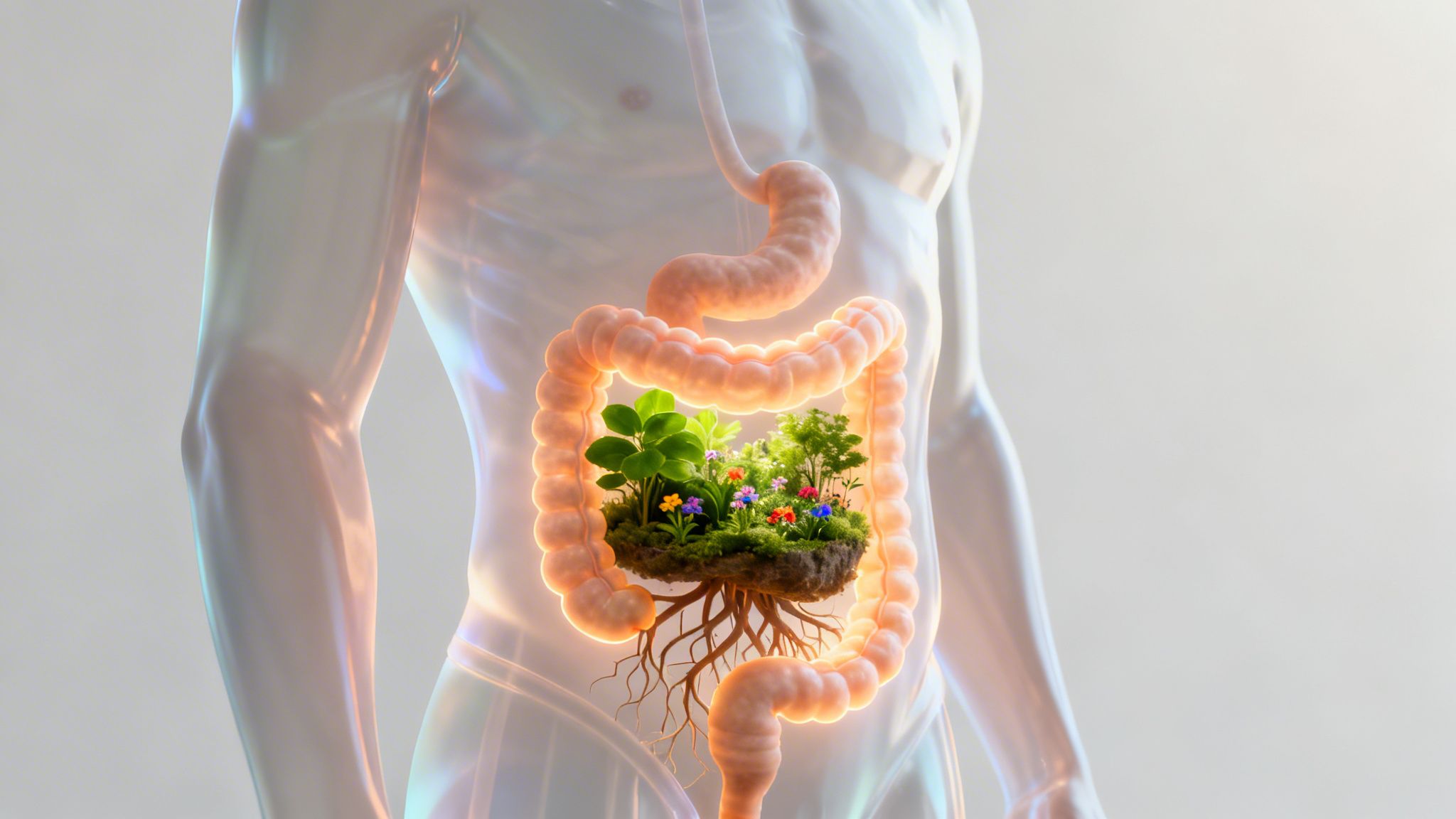
Don’t think of your gut as merely a digestive organ. Instead, see it as a pulsating, living garden inside you. In this garden, your microbiome, trillions of tiny helpers—bacteria, viruses, and fungi—work day and night to support your health. This community is as unique as your fingerprint and has a huge influence on how you feel.
These tiny inhabitants are anything but passive freeloaders. They are absolutely essential for smooth digestion because they break down nutrients that your body could not process on its own. At the same time, they produce important vitamins, such as vitamin K and several B vitamins, and train around 70% of your immune system, which is located directly in the gut.
The Ecosystem in Your Gut
A healthy microbiome needs two things above all: diversity and balance. When many different types of bacteria are present, the ecosystem remains stable and can defend itself effectively against invaders. The “good” bacteria, such as lactobacilli and bifidobacteria, keep the “bad” ones in check and maintain order.
But this balance is delicate. Factors such as chronic stress, an unbalanced, sugar-rich diet, antibiotics, or even too little sleep can seriously disrupt this inner garden. The balance tips—and a blooming paradise can quickly become a neglected landscape where the “weeds” spread.
Experts call this condition dysbiosis. When harmful bacteria gain the upper hand, the consequences can be far-reaching. They produce gases that lead to painful bloating or substances that irritate the intestinal lining and promote inflammation. This is exactly how many of the classic digestive complaints that can make your life so difficult arise.
The following graphic clearly shows how closely digestive problems are linked to key factors such as stress, diet, and an impaired gut flora (dysbiosis).

It is clear that digestive issues rarely have just one cause. They are usually the result of an interaction between various lifestyle factors.
When communication is disrupted
But your microbiome is not only responsible for digestion. It is in constant communication with your brain via the so-called gut-brain axis. Your gut bacteria produce messenger substances such as serotonin, our “happiness hormone,” and thereby directly influence your mood and how you cope with stress.
When the microbiome is out of sync, this communication can also be disrupted. The result is not only physical symptoms such as bloating or cramps, but often mental strain as well. Perhaps you know the feeling: mood swings, difficulty concentrating, or increased sensitivity to stress. You simply no longer feel like yourself.
Your microbiome is the invisible conductor of your well-being. When it is in harmony, your whole body plays a harmonious symphony. When it gets out of sync, it’s not just your gut that suffers, but also your mind.
That’s why caring for your microbiome is not just a short-term trend, but a fundamental building block of your long-term health. It’s about giving your inner garden the right care so it can bloom again. If you’d like to explore this fascinating topic in greater depth, our article explains exactly what the microbiome is and how it works.
The good news is that you can actively influence your microbiome. A targeted analysis, such as the one provided by the mybody-x microbiome test, gives you detailed insight into your personal ecosystem. Such a test shows you in black and white:
- Which beneficial bacteria are in short supply in your gut.
- Whether harmful bacteria or fungi have spread too extensively.
- The state of your digestive function and the health of your intestinal lining.
With this knowledge, you can stop guessing and start taking targeted action. You can choose the right “plants” for your garden and remove the “weeds” to address your digestive issues at the root and sustainably strengthen your gut health.
How Home Tests Can Finally Give You Clarity About Your Gut Health
Do you sometimes feel like you're stuck in an endless loop? You struggle with persistent intestinal problems, run from one doctor to the next, and try every piece of advice, but a clear cause or real, lasting improvement simply fails to materialize. This feeling of helplessness and constantly having to guess is not only frustrating—it robs you of valuable quality of life.
And you are far from alone. For 2023, the AOK reported a new record high in sick leave due to gastrointestinal problems. Almost 15 cases of illness per 100 working people show that digestive problems are a huge issue that severely affects the everyday lives of countless people. You can read more about this statistics on digestive disorders here.
But there is a way out of this cycle. Instead of passively waiting for answers, you can take action yourself and do the detective work for your own body. Modern at-home tests are your most important tool for finally obtaining data-based facts instead of vague assumptions. They give you the opportunity to look directly into your body's systems and find the true causes of your problems.
Your path to personalized health data
The idea of collecting a sample at home may seem unfamiliar at first. But don't worry, the entire process is incredibly simple, completely discreet, and hygienic. The mybody-x test kits contain everything you need, along with an easy-to-follow step-by-step guide.
Think of it this way: You become the manager of your own health project. With a small sample—whether a stool sample for microbiome analysis or a few drops of blood from your fingertip for an intolerance test—you provide the essential raw material. This is then analyzed using state-of-the-art technology in our ISO-certified specialist laboratories in Germany.
At-home tests are more than just a product. They are a tool for empowerment that enables you to move from being a passive patient to an active contributor to your own health.
After just a short time, you will receive a detailed and, above all, easy-to-understand report. It translates complex laboratory values into clear insights and provides you with concrete recommendations for action tailored precisely to your personal profile.
Which test is right for your symptoms?
The world of at-home tests is as diverse as the causes of gut problems themselves. To investigate the most common issues, two analyses are particularly informative: the mybody-x gut test (our comprehensive microbiome analysis) and the food intolerance test.
This table will help you decide which test can provide the most valuable insights into your specific symptoms.
| Your main problem | Possible cause | Recommended mybody-x test | What answers you’ll get |
|---|---|---|---|
| Persistent bloating, irregular bowel movements, general discomfort | An imbalance in gut bacteria (dysbiosis), reduced bacterial diversity | Microbiome analysis | Detailed analysis of your gut flora, inflammatory markers, and the condition of your intestinal lining, along with personalized dietary advice. |
| Symptoms after meals, fatigue, headaches, skin problems | Delayed immune reaction to certain foods (IgG4-mediated) | Food intolerance test | A clear list of foods that could potentially trigger reactions in you, as a basis for a targeted elimination diet. |
| Lack of energy, difficulty concentrating, mood swings | Deficiency in vitamins and minerals (e.g., vitamin D, magnesium, iron) | Nutrient test | Accurate measurement of your levels of important micronutrients so that deficiencies can be addressed in a targeted way. |
| Cycle problems, stress symptoms, sleep disorders in addition to gut problems | Hormonal imbalance (e.g., cortisol, thyroid hormones) | At-home hormone test | Insight into your hormonal balance to identify connections between your hormones and your well-being. |
With the results from these tests, you’re no longer left in the dark. You receive a personalized roadmap—a scientifically sound foundation for making targeted adjustments to your diet and lifestyle. This finally puts an end to guesswork and helps you begin the journey toward better digestive well-being with clear, actionable facts.
Your strategy for a healthy, calm gut
Knowledge is the first step, but what really matters is putting it into practice in everyday life. This section is your personal toolkit for noticeably better digestive well-being. Perhaps an food intolerance test has revealed your personal trigger foods, or a microbiome analysis has shown you the state of your gut flora. Based on insights like these, you’ll find specific, practical strategies here that you can easily implement in everyday life.

Forget complicated diets. It’s about finding a sustainable approach that truly fits your life. Let’s put together the building blocks for a calm and healthy gut.
Building Block 1: The Right Diet for Your Gut
Your gut reacts immediately to what you eat. A balanced and healthy diet is therefore the absolute foundation. If a test has shown you which foods cause problems for you, the first step is clear: Avoid them for a while. But more generally, there are also principles that benefit every gut.
Focus on anti-inflammatory and fiber-rich foods. They soothe your irritated intestinal lining and are also the favorite food of your good gut bacteria. Try to include more of them in your diet:
- Soluble fiber: It acts like a gentle balm for your gut. You can find plenty of it in oats, psyllium husks, apples, carrots, and barley.
- Vegetables in every color: Each color represents different valuable plant compounds. Broccoli, spinach, bell peppers, and sweet potatoes are true superheroes for your gut health.
- Healthy fats: Omega-3 fatty acids from fatty fish such as salmon and mackerel, as well as from flaxseeds and walnuts, have a strong anti-inflammatory effect. They help keep your intestinal lining stable.
At the same time, you should avoid foods that unnecessarily burden your system. These include, above all, sugar, highly processed ready-made products, and trans fats. Excessive consumption of wheat and cow’s milk products can also trigger digestive problems in many people.
Building Block 2: Nurture Your Inner Garden with Prebiotics and Probiotics
Imagine your gut is a garden. To make it flourish, you need good soil (that’s the prebiotics) and the right seeds (that’s the probiotics). This same principle also applies to your microbiome.
Prebiotics are food for your good gut bacteria, while probiotics are the living microorganisms themselves. Together, they are an unbeatable team for your gut health.
Probiotic foods provide live bacterial cultures directly where they are needed. Good sources include:
- Plain yogurt and kefir (choose varieties without added sugar)
- Sauerkraut (choose the unpasteurized variety from the refrigerated section)
- Kimchi
- Kombucha
Prebiotic foods provide the necessary fiber for these helpful allies to thrive and multiply. You can find them here:
- Chicory
- Onions and garlic
- Jerusalem artichoke
- Leeks
- Chilled potatoes or rice (they contain valuable resistant starch)
If you want to dive deeper into the topic, you'll find many more tips in our guide on how to build your gut flora naturally.
Building block 3: Your lifestyle as an ally
Your gut health isn't determined only in the kitchen. Your entire lifestyle has a huge impact on how your stomach feels.
Stress management protects your gut: Chronic stress is pure poison for your digestion. Find techniques that work for you, whether that's daily 10-minute meditations, breathing exercises, yoga, or simply a walk in nature.
Movement gets your gut moving: Gentle, regular exercise such as walking, swimming, or cycling stimulates bowel activity and can help prevent constipation. You don't have to run a marathon—even 30 minutes a day can make a huge difference.
Sleep is repair time: While you sleep, your entire body—and especially your gut—regenerates. Aim for 7–8 hours of restful sleep per night. Your gut will thank you.
These three pillars—nutrition, microbiome care, and lifestyle—are your roadmap to a sustainably better feeling in your gut. Don't see them as rigid rules, but as flexible tools that you can use to develop your own personal strategy for managing digestive issues.
When you should see a doctor
Taking care of your own health and understanding your body's signals is the key to greater well-being. Modern at-home tests, such as the microbiome test or the intolerance test from mybody-x, are incredibly helpful tools. They give you the opportunity to get to the bottom of many digestive issues yourself and take control.
But this personal responsibility also has a clear limit. There are situations in which self-tests and experimenting with your diet are no longer enough. Certain symptoms are like red traffic lights—you must stop here and see a doctor immediately. They may indicate more serious conditions that require prompt medical evaluation.
There is no time for experiments when these warning signs appear
Your body is no longer whispering; it is screaming. If one or more of the following signs occur, please do not ignore them—seek professional help immediately:
- Severe, unintentional weight loss: You lose a significant amount of weight in a short time even though you have not changed your diet or exercise routine.
- Blood in the stool: Whether it is bright red blood or dark, almost black stool—this always requires medical attention.
- Persistent high fever: Fever that occurs together with abdominal pain may indicate acute inflammation in the body.
- Severe, sudden pain: Especially when the pain is so intense that it wakes you at night or severely limits your daily activities.
- Difficulty swallowing: When swallowing suddenly hurts or you feel as though food is stuck in your throat.
Knowing when you can take the reins yourself and when you need to hand them over to a professional is crucial. These warning signs mark the point at which responsibility belongs in a doctor's hands.
Incidentally, this step does not mean that you are losing control. Quite the opposite: Going to the doctor in good time is the most responsible decision you can make. This gives you the necessary reassurance to rule out serious problems or treat them at an early stage. Only then can you calmly focus again on optimizing your diet and lifestyle.
Your most important questions about digestive symptoms—answered briefly and clearly
Here, we have collected and summarized the most urgent questions about digestive symptoms for you. This gives you quick, easy-to-understand answers for greater clarity in everyday life and on your journey toward a better gut feeling.
How quickly can I expect my digestive symptoms to improve?
This is one of the most frequently asked questions, and the answer is as individual as you are. It depends largely on the cause of your problems. For example, if you adjust your diet and eliminate foods you have identified as triggers, many people notice significant relief from bloating or discomfort after just a few days.
But if you’re dealing with a disrupted microbiome, a little more patience is needed. Think of building a healthy gut flora like tending a garden: It takes time for the right plants to grow and thrive. This process can take several weeks or even months. Patience and consistent commitment are the most important keys to success here.
Can probiotics alone solve my digestive problems?
Probiotics can be an incredibly useful tool in your health toolkit, but they are rarely the sole solution for complex digestive issues. Think of them as targeted reinforcement for your gut team, not the entire team itself.
They have their full effect as part of a holistic strategy. This primarily includes a gut-friendly diet rich in prebiotic fiber (the food for your beneficial bacteria), effective stress management, and regular exercise. A targeted microbiome test can provide clarity and show which bacterial strains may be underrepresented in your gut and whether probiotic supplementation is even suitable for you.
Think of probiotics as an important building block in your overall health strategy. They are most effective when integrated into a solid foundation of a healthy diet and a mindful lifestyle.
Is a gluten-free diet always advisable for digestive issues?
Not necessarily. Completely avoiding gluten is truly necessary only if you have medically diagnosed celiac disease or confirmed gluten sensitivity. Avoiding gluten across the board without a clear diagnosis can even have drawbacks.
Whole-grain products that contain gluten are often a valuable source of important fiber and B vitamins. If you remove them from your diet without good reason, you risk depriving your body of precisely these nutrients.
An intolerance test can help you move from guessing to knowing. It shows whether your body is actually having an immune reaction to gluten or other foods. This allows you to make dietary decisions based on solid evidence instead of relying solely on gut feeling.
Are you ready to take the first step and finally get to the bottom of your digestive issues? At mybody-x, you’ll find scientifically backed at-home tests that provide clear insights and personalized recommendations for action. Find out what your body really needs.
Discover the right tests for your health now at mybody-x.com



Share now:
Irritable bowel syndrome—what to do? Your guide to greater well-being in everyday life
Build a healthy gut microbiome: Your practical guide to feeling better in your belly