

Difference between allergies and intolerances: Symptoms, tests & diagnoses
Abdominal pain after eating? A skin rash after a glass of milk? The key difference between an allergy and an intolerance lies in how your body reacts. A true allergy is an overreaction of the immune system, whereas an intolerance is usually a problem in the digestive system—for example, you may lack an important enzyme.
Allergies and intolerances in direct comparison
Do you often feel unwell after certain meals but are unsure what exactly is behind it? You are not alone. Many people confuse these terms or use them synonymously, even though the biological mechanisms behind them are fundamentally different.
An allergy triggers an immediate and often severe defensive response from your immune system. Even the smallest amounts of an otherwise harmless substance—a so-called allergen—are enough to cause symptoms such as itching, swelling, or even shortness of breath.
In contrast, the intolerance usually does not involve the immune system. Here, your body is unable to properly process certain food components. The symptoms are often dose-dependent and occur with a delay—bloating or abdominal cramps several hours after eating are typical.
The fundamental difference is simple: An allergy is an immune system attack response. An intolerance is a processing problem in the digestive tract.
The following overview summarizes the most important points once again.
Comparison of allergies and intolerances
This overview shows the key characteristics and differences in a direct comparison.
| Characteristic | Food allergy | Food intolerance |
|---|---|---|
| System involved | Immune system (IgE antibodies) | Usually the digestive tract (e.g., enzyme deficiency) |
| Reaction time | Immediate, often within minutes | Delayed, usually after hours or days |
| Amount required | Even the smallest traces are enough | Dose-dependent; small amounts are often tolerated |
| Typical symptoms | Skin rash, swelling, itching, shortness of breath, circulatory problems | Bloating, abdominal pain, diarrhea, headaches, fatigue |
| Severity | Can be life-threatening (anaphylaxis) | Unpleasant, but generally not life-threatening |
This table makes it clear: While allergies activate your entire immune system, intolerances usually begin locally in the gastrointestinal tract. This also explains the different symptoms and reaction times.

Did you know that in Germany, only about 3–6 % of the population suffer from a diagnosed food allergy? Far more people, however, complain of symptoms they perceive as an intolerance. This discrepancy can lead to uncertainty, which is why a clear distinction is so important.
Would you like to find out whether your symptoms could indicate an intolerance? In our guide, learn how to identify intolerances and take targeted steps to counteract them.
What exactly happens in your body
To truly understand the difference between an allergy and an intolerance, let's take a look at the biological processes. You can think of the immune system as an overprotective bodyguard – but with an allergy, it raises a false alarm and overreacts completely.
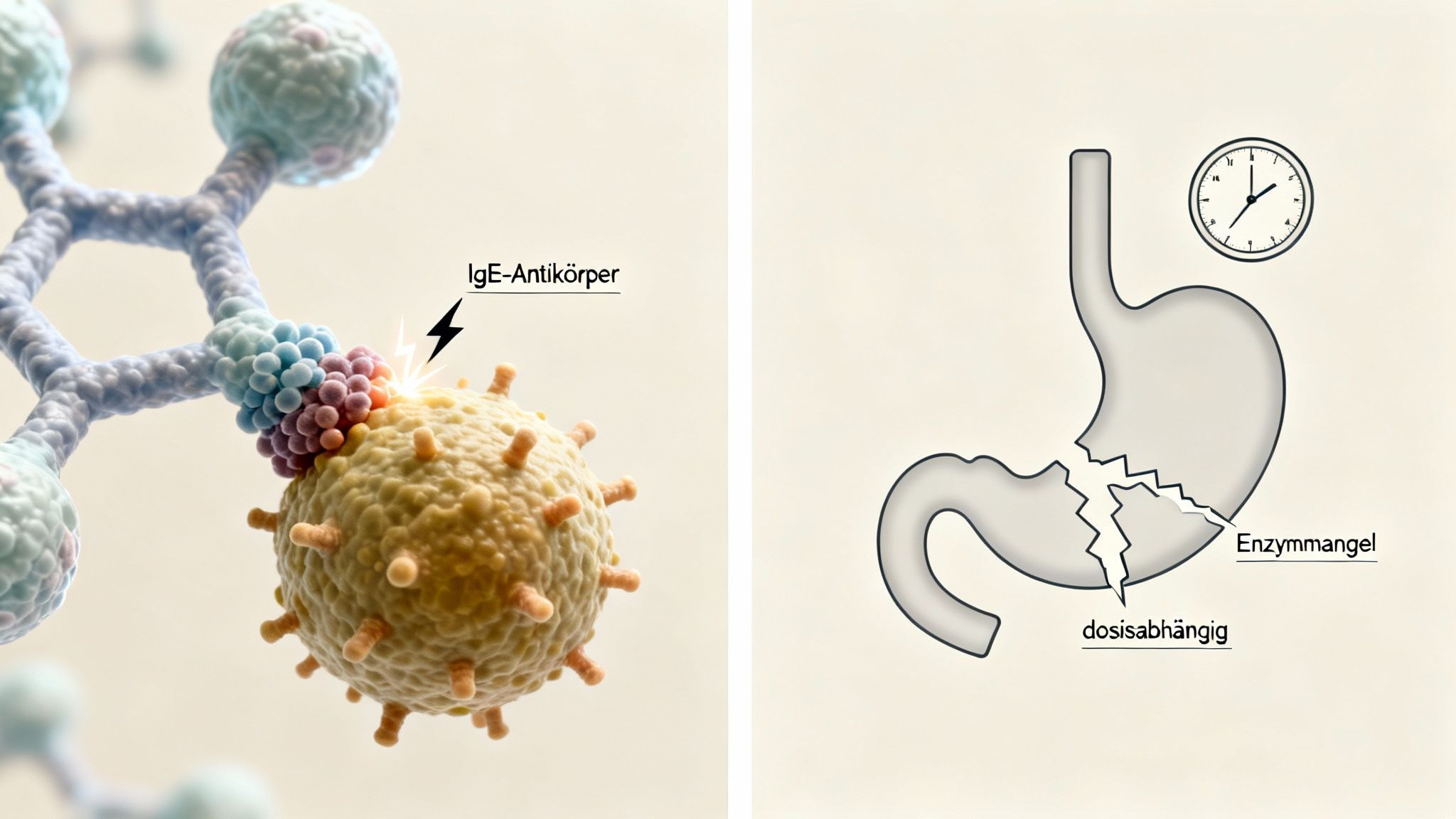
In a genuine food allergy, your immune system mistakenly classifies a substance that is actually harmless, such as a protein in peanuts, as a threat. It then sends in its special unit and produces antibodies of the type immunoglobulin E (IgE).
These IgE antibodies then lie in wait on specific cells called mast cells, which are found throughout your body – especially in the skin, airways, and gastrointestinal tract. When you come into contact with the allergen again, it binds to the IgE antibodies. This is the signal to attack. The mast cells suddenly release messenger substances such as histamine, triggering the typical, rapid, and often severe symptoms.
Allergy: A misguided immune response
The allergic reaction unfolds like a well-planned, but unfortunately pointless, defensive operation:
- First exposure (sensitization): Your body encounters the allergen for the first time, remembers it, and quietly begins producing the first IgE antibodies. You don't notice anything yet.
- Second exposure: You eat the food again. Now the IgE antibodies immediately recognize the “enemy” and activate the mast cells.
- Symptoms: The massive release of histamine and other messenger substances leads to itching, swelling, or even shortness of breath within minutes to a few hours.
With an allergy, even the tiniest traces of the trigger are enough to set the entire defense chain in motion. Your body is fighting an opponent that actually isn't one.
Intolerance: A digestive problem
An intolerance works very differently. Here, the “bodyguard”—your immune system—usually stays completely out of it. The problem is mechanical in nature and lies directly in the digestive system: your body simply lacks a tool to process certain food components properly.
The best-known example is lactose intolerance. The body lacks the enzyme lactase, which is responsible for breaking down milk sugar (lactose). If you drink a glass of milk, the undigested milk sugar continues into the large intestine.
There, intestinal bacteria break it down and ferment it. This produces gases and other by-products that cause the familiar symptoms:
- Bloating caused by excessive gas production.
- Abdominal cramps, because the gases stretch the intestinal wall.
- Diarrhea, because the undigested substances draw water into the intestines.
In clear contrast to an allergy, the reaction here is almost always dose-dependent. A splash of milk in your coffee may be fine, but a whole glass can cause problems. The symptoms also appear with a delay, often only after several hours, when the food reaches the large intestine.
Fructose malabsorption works in a similar way. The problem here lies in transporting fructose from the intestines into the bloodstream. After eating an apple, too much fructose remains in the intestines, where it causes symptoms very similar to those caused by lactose.
This knowledge is crucial for interpreting your body's signals correctly. A rapid, severe reaction immediately after eating? That points to an allergy. Delayed, dose-dependent digestive problems? An intolerance is probably the cause.
Distinguishing typical symptoms
Your body sends you signals—and these are often the first and most important indication that something is wrong. But how do you interpret them correctly? The difference between the symptoms of an allergy and an intolerance is often clearer than you might think. It simply depends on looking closely and assigning the reactions to the right areas of the body.
Imagine an allergic reaction as a loud, sudden alarm. Your immune system immediately goes on the attack, and you usually feel it intensely and without delay. The symptoms often spread throughout the entire body and are by no means limited to the digestive tract.
Skin and airways as an alarm system
With a true allergy, the skin and airways are usually the first to sound the alarm. The immune system releases messenger substances, above all histamine, triggering a visible and perceptible chain reaction.
Typical allergic symptoms include, for example:
- Skin rash (hives): Suddenly appearing, intensely itchy welts that resemble contact with stinging nettles.
- Swelling: Especially in the face—of the lips, tongue, or eyelids (angioedema). This is a serious warning sign!
- Breathing difficulties: A runny or blocked nose, severe bouts of sneezing, coughing, or even wheezing, potentially progressing to shortness of breath.
- Itching: A scratchy sensation in the mouth and throat that often begins just a few seconds after eating the trigger food.
In the worst-case scenario, this reaction can end in anaphylactic shock—a life-threatening emergency requiring immediate medical attention.
The key indication of an allergy is how quickly it occurs: Symptoms usually appear within minutes and no more than two hours, and often affect several organ systems simultaneously.
Digestive tract and head as indicators of intolerance
An intolerance behaves quite differently, more like a gradually developing problem. The symptoms usually focus on the gastrointestinal tract and often do not become noticeable until hours after eating. The amount also plays a decisive role here: A little may be tolerated, but too much causes problems.
Signs of an intolerance may include:
- Bloating and a feeling of fullness: Your abdomen feels uncomfortably tight and like a balloon.
- Abdominal cramps and pain: Dull or stabbing pain in the abdominal area is a very common sign.
- Digestive problems: Diarrhea or constipation is often the result.
- General malaise: This is often accompanied by nonspecific symptoms such as headaches, leaden fatigue, or mild nausea.
These symptoms can become chronic and severely impair your quality of life. Histamine intolerance in particular can cause a wide range of symptoms and resemble an allergy. If you would like to learn more, our article explains what histamine is and the role it plays in your body.
Correctly identifying the symptoms is the first step toward finding the cause of your discomfort and finally taking targeted action against it.
Diagnosis: How can you find out what is behind it?
When you are struggling with vague symptoms, you need one thing above all: clarity. To find out whether an allergy or an intolerance is causing your symptoms, there are various options—from established medical methods to practical tests for use at home. The key point is that the diagnosis looks for entirely different things.
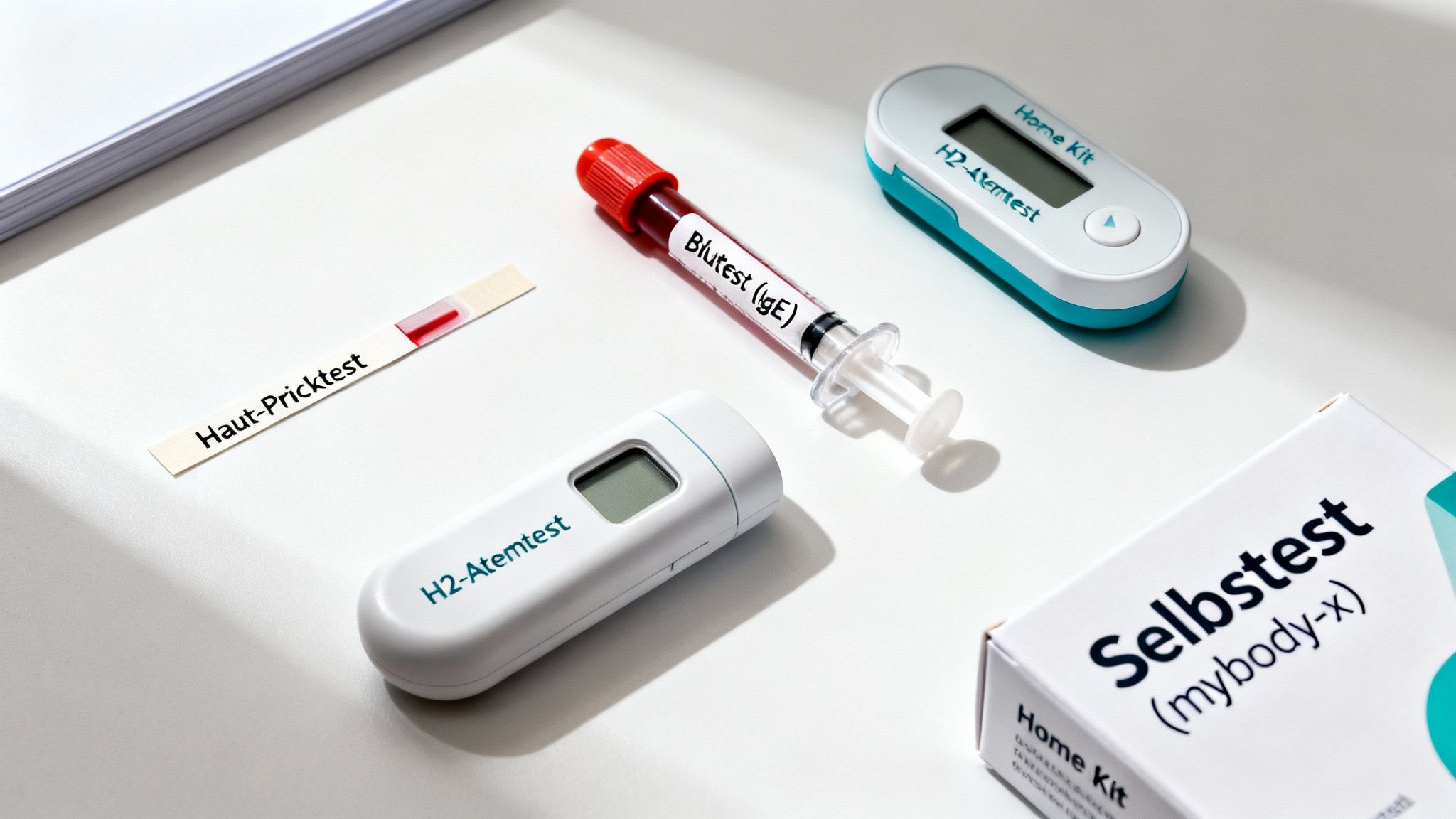
In the case of a genuine allergy, the doctor looks for an overreaction of your immune system—in other words, specific IgE antibodies. In the case of an intolerance, the aim instead is to uncover a digestive or metabolic problem.
Conventional allergy tests at the doctor’s office
There are established medical procedures for reliably diagnosing a type I allergy (immediate hypersensitivity). These tests should always be performed by medical professionals.
- Skin prick test: Tiny amounts of allergen extracts are dripped onto your skin, which is then lightly pricked. If redness or a small wheal develops, this is a clear sign of an allergic reaction.
- Blood test for IgE antibodies: In the laboratory, your blood is specifically tested for IgE antibodies against certain foods. This test is considered very reliable for detecting sensitization in your body.
- Challenge test: This test is the “gold standard.” Under strict medical supervision, you eat the suspected food in gradually increasing amounts. Because of the risk of a severe reaction, it is only carried out in medical practices or clinics.
These tests are indispensable when there is a suspicion of a genuine and potentially dangerous allergy. However, they are unsuitable for identifying an intolerance.
Detective work when it comes to intolerances
Diagnosing an intolerance is often like solving a puzzle where you have to put different pieces together. Since the immune system usually does not play the main role here, conventional allergy tests lead to a dead end.
A powerful tool is the good old food and symptom diary. If you meticulously record what you eat and how you feel afterward, you can often identify patterns yourself and narrow down the culprits.
There are also special tests for certain intolerances:
- H2 breath test: If lactose or fructose intolerance is suspected, this test is ideal. You drink a test solution, after which the hydrogen content in your breath is measured. If this value increases, it indicates that the sugars were not properly digested in the small intestine.
Important to know: Diagnosing an intolerance is usually a process of observation and targeted elimination. A single test rarely provides the complete answer.
What self-tests can do for you at home
Do you want to quickly and easily gather some initial clues? That’s exactly where self-tests come in. They can be a great supplement for understanding your body better and planning your next steps more consciously.
The mybody-x food intolerance test, for example, analyzes your blood for IgG4 antibodies. Although the scientific validity of IgG tests for diagnosing intolerances is disputed, elevated levels may indicate that your immune system is responding to certain foods. This can be a valuable starting point for adjusting your diet in a targeted way. You can read more about how to test for food intolerances in our related article.
In addition, other mybody-x tests can provide important pieces of the puzzle. A nutrient test can reveal whether dietary restrictions may have already caused deficiencies. A hormone test, in turn, can show whether a hormonal imbalance may be contributing to your symptoms.
These tests do not replace a medical diagnosis. However, they provide you with valuable data that can help you take charge of your health and go into a conversation with your doctor well prepared.
Strategies for managing symptoms in your everyday life
Finally, you have clarity! Once you know whether an allergy or an intolerance is behind your symptoms, you can take action. Now it’s about reshaping your everyday life so that you can feel truly comfortable again. However, the paths to get there are completely different depending on the diagnosis.
If you have been diagnosed with a genuine allergy, one golden rule applies: strict avoidance. There is no room for compromise, as even the tiniest amounts of the trigger can cause severe reactions, including anaphylactic shock. This requires a bit of detective work in everyday life.
Living with an allergy
As someone with an allergy, you need to know exactly what is in your food. This means making ingredient lists on packaging a constant companion and clearly communicating your allergy at restaurants or when visiting friends.
Above all, you must be prepared for an emergency. Your doctor will very likely put together an emergency kit for you. It generally includes:
- An antihistamine for mild, early symptoms.
- A corticosteroid medication to curb more severe inflammatory reactions.
- An epinephrine auto-injector—your lifesaver in the event of an anaphylactic shock.
You should really carry this kit with you at all times. It is just as important that your family, friends, and colleagues know where it is and how to use it in an emergency.
Managing an intolerance
An intolerance is quite different. The approach here is much more flexible and personal. It is not about a strict “all-or-nothing” rule, but about finding your very own personal tolerance threshold. The good news is that many people affected can tolerate small amounts of the problematic food without experiencing symptoms.
The key is to consciously adjust your diet. Instead of completely removing foods from your meal plan, you learn what amount is personally acceptable for you.
A three-step approach has proven effective:
- Elimination phase: First, completely avoid the suspected food for a few weeks, until your symptoms have subsided.
- Testing phase: After that, start reintroducing it in very small amounts, increasing them slowly. Carefully observe when your body begins to react.
- Long-term diet: Using what you learned during the testing phase, plan your meals so that you always stay below your personal comfort threshold.
A food diary will become your best friend during this time. Write down exactly what you eat and how you feel afterward. This will help you identify connections and determine your tolerance threshold precisely. Sometimes the causes are more complex—read our guide on foods high in histamine for more information.
Any change in diet naturally carries the risk of nutritional deficiencies. If you avoid certain food groups, you can quickly become deficient in important vitamins or minerals. A mybody-x nutrient test can provide clarity and show you whether you should take targeted supplements to ensure your body remains fully nourished. You can often help yourself with mild symptoms that indicate an intolerance, too. You can find more information, for example, in Home remedies for an upset stomach.
When you should definitely see a doctor
Listening to your own body is always a good start. But there are situations in which you should not waste any time and seek medical help immediately. Certain symptoms are clear warning signs that you must not ignore.
If you suddenly notice severe reactions, you need to act quickly. Do not hesitate to contact a doctor or emergency services immediately if any of these signs occur:
- Sudden shortness of breath: You are gasping for air, hear a wheezing sound when breathing, or feel as though your throat is closing.
- Severe swelling: Particularly of the face, tongue, or lips (so-called angioedema) is an alarm signal.
- Circulatory problems: You feel dizzy or lightheaded, or your heart suddenly starts racing.
- Severe skin reactions: A sudden, intensely itchy rash that spreads across the entire body (hives).
These symptoms may indicate a severe allergic reaction or, in the worst case, even anaphylactic shock. This is always a medical emergency.
Medical advice is also important for chronic symptoms
But dramatic signs are not the only reason to see a doctor. You should also take persistent, seemingly harmless symptoms seriously. Seek professional help if you suffer from chronic digestive problems, unexplained fatigue, skin rashes, or unintentional weight loss for weeks or months.
Only a doctor can reliably determine through targeted diagnostic testing whether you have an allergy or an intolerance and initiate appropriate treatment.
Your most common questions about allergies and intolerances
After highlighting the major difference between allergies and intolerances, we answer a few more questions here that are surely on your mind. This will leave you well prepared for the next steps.
Can an intolerance develop into an allergy?
No, they are two entirely different things. An intolerance is usually rooted in metabolism, for example due to an enzyme deficiency. A true allergy, on the other hand, is a clear-cut malfunction of the immune system. So a digestive problem does not turn into an immunological defensive battle.
Can symptoms of an allergy and an intolerance occur at the same time?
Yes, this is actually quite common and can make investigating the cause rather tricky. For example, you could have lactose intolerance while also being allergic to wheat proteins. A symptom diary is invaluable here for identifying the different patterns.
Which test is the right starting point for me?
That depends entirely on your symptoms. If you experience sudden and severe reactions, your first step should always be to see a doctor to rule out a genuine allergy.
Do you mainly suffer from vague, delayed symptoms such as digestive problems, headaches, or constant fatigue? Then a mybody-x food intolerance test can provide you with valuable initial clues. It shows which foods your body reacts to by producing elevated levels of IgG4, making it the ideal starting point for a targeted dietary change.
Can intolerances disappear again?
The good news: Sometimes, yes! Unlike allergies, which often last a lifetime, intolerances can improve again. Especially when a compromised gut barrier or a nutrient deficiency is behind them, a mindful diet and strengthening your gut can work wonders.
Do I have to avoid something forever if I have an intolerance?
Not necessarily. With many intolerances, the goal is to determine your personal tolerance threshold. A splash of milk in your coffee may not be a problem at all, while a whole glass is. Through a gradual elimination and testing phase, you can find out what works for you without having to give up everything.
Would you finally like to gain clarity and find out which foods could be behind your symptoms? Start your journey toward greater well-being with a home test from mybody-x and learn to interpret your body's signals correctly.



Share now:
Easy explanation of how to do an allergy test yourself
Triglycerides too high—what to do: lower levels quickly and naturally