


Histidine: Foods Containing Histidine and the Path to Histamine
October 7, 2026approx. 14 minutesby mybody®x Editorial & Expert Team
Key Takeaways
Histidine is an essential amino acid that the body must obtain from food (MedlinePlus, 2025). According to the German Food Code (BLS 4.0, 2025), the nutrient database of the Max Rubner Institute, protein-rich foods provide the most; Parmesan, for example, contains 1200 mg and raw tuna 888 mg per 100 g. Histamine is formed when an enzyme removes a carboxyl group from histidine (Holeček, 2020).
The German Food Code (BLS 4.0, 2025) lists the total histidine content; this figure says nothing about histamine.
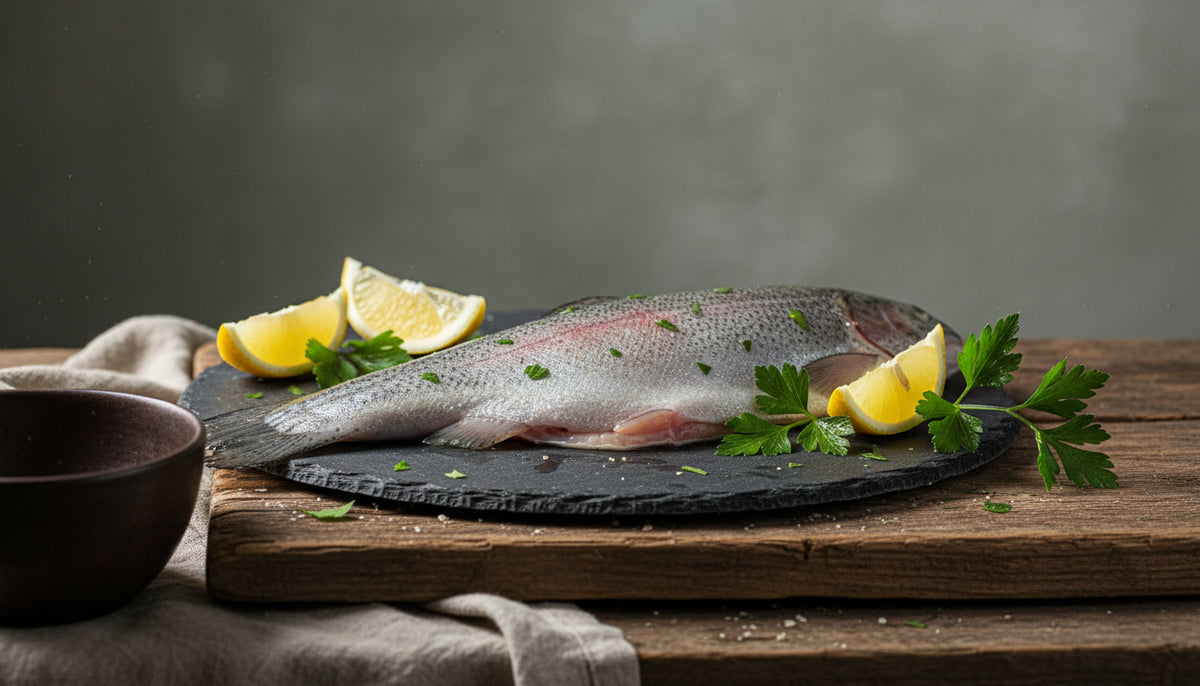
Bacteria produce histamine in fish if the catch is not adequately chilled (Hungerford, 2010).
According to a review (Holeček, 2020), histidine has its own functions in the body; the histamine system is one of them.
In This Article
What Is Histidine?
Histidine is an essential amino acid: the body cannot produce it itself, so it must come from food (MedlinePlus, 2025). According to a review (Holeček, 2020), histidine is found mainly as a component of protein in food.
Amino acids are the building blocks that make up proteins (MedlinePlus, 2025). When the body digests protein from food, amino acids are left over, and it uses them to build its own proteins, including those needed for tissue growth and repair (MedlinePlus, 2025). According to MedlinePlus (2025), the body can also use amino acids as a source of energy. For an overview, see the article on Amino acids and their roles in the body.
Essential here means indispensable in the diet because the body cannot produce the amino acid itself. According to MedlinePlus (2025), nine amino acids are essential; histidine is one of them, and tryptophan is another. What matters is not each individual meal, but a balanced mix throughout the day (MedlinePlus, 2025).
Conditionally essential amino acids are normally nonessential, except during periods of illness and stress (MedlinePlus, 2025). Histidine is not part of this group, but is one of the essential amino acids that must come from food (MedlinePlus, 2025).
A review of histidine in health and disease (Holeček, 2020) summarizes what histidine itself does in the body. It lists roles
- in buffering acid,
- in binding metals,
- in capturing reactive substances,
- in blood formation
- and in the histamine system.
The histamine system comes last on this list and is one of several functions (Holeček, 2020). So anyone who knows histidine only as a precursor to histamine is seeing just one aspect.
Histidine in numbers
9
According to MedlinePlus (2025), there are essential amino acids, and histidine is one of them.
25–30 mg
Histidine per gram of animal protein, according to a review (Holeček, 2020).
888 mg
Histidine per 100 g of raw tuna, according to the German Nutrient Database (BLS 4.0, 2025).
Source: MedlinePlus, 2025 · Holeček, 2020 · Max Rubner Institute, BLS 4.0, 2025
The same review (Holeček, 2020) estimates the histidine content of dietary protein at 25 to 30 mg per gram for animal protein, such as from meat or fish. For plant protein, such as from soybeans or oats, it gives 20 to 30 mg per gram (Holeček, 2020). The two ranges overlap, and the review gives an upper limit of 30 mg per gram in both cases (Holeček, 2020). The next section gives values for individual foods from the German Nutrient Database (BLS 4.0, 2025).
Which foods contain histidine?
Especially protein-rich foods: According to the German Nutrient Database (BLS 4.0, 2025), Parmesan leads with 1,200 mg of histidine per 100 g, while whole milk contains 90 mg. Raw beef hip and raw chicken breast fall between them, at 810 and 796 mg, respectively (BLS 4.0, 2025).
The German Nutrient Database, or BLS, is the Max Rubner Institute's nutrient database (BLS 4.0, 2025). It gives values per 100 g of the food in the form specified in its name, such as raw or ripe (BLS 4.0, 2025). The histidine column shows the total content. It does not indicate whether the histidine is present in free form or bound in protein.
Protein and histidine per 100 g (BLS 4.0, 2025)
| Food | Protein (g) | Histidine (mg) |
|---|---|---|
| Parmesan | 35,6 | 1200 |
| Raw tuna | 22,4 | 888 |
| Ripe soybeans | 38,2 | 830 |
| Raw beef hip | 22,1 | 810 |
| Raw chicken breast fillet | 23,25 | 796 |
| Emmental | 27,5 | 793 |
| Ripe lentils | 23,36 | 710 |
| Raw mackerel | 18,6 | 694 |
| Raw salmon | 19,9 | 510 |
| Raw chicken egg | 13,18 | 300 |
| Oats | 13,22 | 300 |
| Whole milk | 3,55 | 90 |
Total content per 100 g of the food in the form specified, according to the German Nutrient Database (BLS 4.0, 2025); says nothing about histamine.
The table shows two things. First, protein-rich foods are at the top; milk and oatmeal provide considerably less per 100 g (BLS 4.0, 2025). Second, the histidine value does not simply track the protein content: mature soybeans have more protein than Parmesan, at 38.2 g versus 35.6 g, but less histidine, at 830 mg versus Parmesan’s 1200 mg (BLS 4.0, 2025). So to compare histidine, look at the histidine column, not the protein content.
Among the fish in the table, raw tuna leads with 888 mg per 100 g, while raw salmon contains 510 mg (BLS 4.0, 2025). Among plant-based foods, mature soybeans lead, followed by mature lentils with 710 mg per 100 g (BLS 4.0, 2025). So the difference between animal- and plant-based foods is smaller for histidine than a first glance at the table might suggest.
Nuts and seeds also provide histidine. According to the German Food Code (BLS 4.0, 2025), cashews contain 480 mg per 100 g. The BLS lists 912 mg per 100 g for pumpkin seeds (BLS 4.0, 2025), though this figure is calculated, not measured. Lower still than whole milk is raw banana, with 77 mg per 100 g and 1.32 g of protein (BLS 4.0, 2025).
For canned tuna in its own juice, drained, the German Food Code (BLS 4.0, 2025) lists a separate entry with 1590 mg of histidine per 100 g. This value cannot be compared with the raw tuna in the table, even though it is higher (BLS 4.0, 2025). That is why it is not included in the table above.
Alongside histidine, the German Food Code (BLS 4.0, 2025) also lists tryptophan, another essential amino acid. This article focuses on histidine; what L-tryptophan is and what the body needs it for is covered in a separate article.
How does histidine become histamine?
Histamine is formed when the enzyme histidine decarboxylase removes a carboxyl group from histidine, a small part of the molecule (Holeček, 2020). According to the review (Holeček, 2020), this enzyme is found in many tissues throughout the body.

Histidine decarboxylase is the enzyme that converts histidine into histamine. You can think of it as a tailor in a workshop, cutting a piece off a workpiece. What remains is a new part with its own name: histamine. Histidine is therefore a precursor to histamine (Holeček, 2020).
A precursor is not the same thing. Histidine has its own roles, from buffering acids to blood formation, and the histamine system is just one of them (Holeček, 2020). So seeing histidine in a nutrition table does not mean you are looking at histamine.
This leaves the question of histidine as a dietary supplement. According to the review (Holeček, 2020), no signs of toxicity have been reported for histidine supplements. Allergic reactions and stomach ulcers are also not described, even though histidine is a precursor to histamine (Holeček, 2020).
One warning is in order: The author considers histidine supplements unsuitable for people with liver disease (Holeček, 2020). The review (Holeček, 2020) does not recommend taking histidine.
Bacteria also have histidine decarboxylase. Hungerford (2010) describes how bacterial histidine decarboxylase converts free histidine in fish into histamine. This means the path from histidine to histamine leaves the body and becomes a food safety issue.
A distinction is therefore helpful. In the body, tissue histidine decarboxylase converts histidine into histamine (Holeček, 2020). In food, bacteria do this using their own histidine decarboxylase (Hungerford, 2010). A nutrition table describes neither process; it lists the total amount of histidine present (BLS 4.0, 2025).
Cited source
“Inadequate cooling following harvest promotes bacterial histamine production, and can result in outbreaks of scombroid poisoning.”
Hungerford J. M.
Scombroid poisoning: a review, Toxicon, 2010
Paraphrased: If fish is not adequately cooled after the catch, this promotes the formation of histamine by bacteria and can lead to outbreaks of histamine fish poisoning, an allergy-like form of food poisoning (paraphrased from Hungerford, 2010).
How does histamine form in fish?
Through bacteria: If fish is not adequately cooled after the catch, bacteria produce histamine (Hungerford, 2010). This happens in the food before it is eaten, making it a food safety issue.
In the specialist literature, histamine fish poisoning is also called scombroid poisoning. According to Hungerford (2010), it is an allergy-like form of food poisoning and remains a major problem for the safety of fish and seafood.
According to Hungerford (2010), it stands apart among toxins in fish and seafood. It does not arise from contamination in the food chain, but from mishandling the catch. The key point is cooling after the catch (Hungerford, 2010).
This shifts the focus from the food to how it is handled. A histidine value in a nutrition table describes the fish; it says nothing about cooling and storage after the catch (BLS 4.0, 2025).
According to Hungerford (2010), the fish mainly affected are those with high levels of free histidine. Free here means not bound in protein. Bacterial histidine decarboxylase converts this free histidine into histamine (Hungerford, 2010).
This is where the nutrition table and fish poisoning diverge. The German Food Code (BLS 4.0, 2025) gives the total histidine content and does not distinguish between free and bound histidine. Its values therefore reveal neither histamine content nor the risk of poisoning (BLS 4.0, 2025).
According to Hungerford (2010), the precise role of histamine in the poisoning has not been fully established. And resembling an allergy does not make it an allergy: How a fish allergy differs from histamine poisoning is covered in a separate article.
This text focuses on histidine and how it becomes histamine. Which foods may contain histamine is covered in another article.
Chapter at a glance
Histamine fish poisoning is a foodborne illness that resembles an allergic reaction (Hungerford, 2010). It results from improper handling of the catch, because bacteria produce histamine without adequate refrigeration (Hungerford, 2010). It mainly affects fish with high levels of free histidine (Hungerford, 2010). The values in the German Food Code give the total content and do not allow conclusions to be drawn about histamine (BLS 4.0, 2025).
Which assumptions about histidine and histamine do not hold up?
Two assumptions about histidine do not stand up to scrutiny. Both confuse the amino acid with what can be produced from it.
The reasoning behind this first assumption is understandable. When reading about histamine, you soon come across histidine as its precursor. From there, you end up at a nutrition table where protein-rich foods rank near the top (BLS 4.0, 2025). The conclusion that they contain histamine seems plausible, but it is still wrong.
Assumption: “A lot of histidine in food means a lot of histamine.”
Context: The German Food Code (BLS 4.0, 2025) indicates how much histidine a food contains in total. This figure says nothing about histamine. Histamine forms when histidine decarboxylase converts histidine (Holeček, 2020). A high histidine value in the table therefore does not indicate histamine.
Assumption: “Histamine in fish is only produced inside the body.”
Context: According to Hungerford (2010), bacteria produce histamine in the fish itself if it is not sufficiently chilled after being caught. So it forms during storage, before the fish reaches your plate.
Both assumptions have some truth to them. Histidine is indeed a precursor to histamine (Holeček, 2020), and histidine does matter in fish, but specifically free histidine (Hungerford, 2010). The mistake is jumping from the nutrition label to conclusions about histamine.
Key point
An enzyme converts histidine into histamine; in fish, bacteria do this when it is not kept sufficiently cold (Holeček, 2020; Hungerford, 2010).
Can histidine be measured in the blood?
Yes. The PerformanceCheck by mybody®x (MYBODY Lab GmbH) measures histidine as one of 22 values from capillary blood. It does not measure histamine.
Capillary blood is self-collected at home with a finger prick and analyzed at a specialist laboratory in Germany. The test measures the essential amino acids, including histidine and tryptophan, as well as other values. The total is 22 values because taurine is included, even though it is not technically an amino acid. Because amino acid levels fluctuate considerably depending on your last meal, you must fast before the test; if you don’t, you’re measuring your breakfast.
Histamine is not included in the list of values. The test shows neither how much histamine your body produces nor anything about histamine in food.
What the Amino Acid Test can’t do: It can’t tell you how much protein to eat, and it won’t make your muscles bigger.
A blood test shows your current state, and an abnormal result does not automatically mean illness. The results help you prepare for a doctor’s appointment and do not replace medical evaluation. The article about the values in the aminogram, the overview of measured amino acid values, explains what the other results mean. This test may be right for you if you want a snapshot of your amino acid levels to discuss with your doctor.

From the mybody®x range · Blood test
PerformanceCheck | Amino Acid Test
Measures histidine as one of 22 values from capillary blood, collected while fasting and analyzed at a specialist laboratory in Germany. The test does not measure histamine. It helps you prepare for a doctor’s appointment and does not replace medical evaluation.
Lab analysis 3–5 business days after sample receipt
Information current as of: 07.10.2026
What are the limitations of the histidine data?
The food values refer to total content, not free histidine. And the test measures histidine in the blood, not histamine.
This text draws on a review article (Holeček, 2020) for information on the functions of histidine and its content per gram of protein. It takes the values of 25 to 30 mg per gram of animal protein from another paper cited in that review (Holeček, 2020).
The section on histamine fish poisoning is based on the summary of a review article (Hungerford, 2010). This review describes the role of histamine in the poisoning as not yet fully understood (Hungerford, 2010).
The background on amino acids comes from MedlinePlus (2025), a health encyclopedia published by the U.S. National Library of Medicine. It is intended for the general public and explains basic concepts; for details on histidine, this text draws on the specialist review (Holeček, 2020).
The German Food Code (BLS 4.0, 2025) lists the total content, regardless of whether the histidine is present in free or bound form. Its values come from different sources: some are measured, others calculated, such as the value for pumpkin seeds (BLS 4.0, 2025). All values are per 100 g of the food in the form specified (BLS 4.0, 2025).
The PerformanceCheck measures histidine, not histamine. It shows your levels now, at the time the sample is taken.
What does this mean for histidine in your food?
Histidine is found in protein-rich foods, in hard cheese just as in lentils. An enzyme converts it into histamine; in fish, bacteria do so when refrigeration is lacking after the catch. A high number in the nutrition facts table therefore says nothing about histamine. If you want to know your blood histidine level, you can have it measured and discuss the result with your doctor.
Frequently asked questions
Which cheese contains a lot of histidine?
The table above lists Parmesan at the top, with 1200 mg of histidine per 100 g and 35.6 g of protein (BLS 4.0, 2025). According to the German Food Code (BLS 4.0, 2025), Emmental contains 793 mg of histidine per 100 g and 27.5 g of protein. Both figures are total contents, regardless of whether the histidine is free or bound in protein (BLS 4.0, 2025). Parmesan therefore also contains more histidine than any of the fish or meat in the table (BLS 4.0, 2025).
Do plant-based foods contain histidine?
Yes. According to the German Food Code (BLS 4.0, 2025), mature soybeans contain 830 mg of histidine per 100 g, and mature lentils contain 710 mg. Roasted peanuts also contain 710 mg, and oats contain 300 mg (BLS 4.0, 2025). A review (Holeček, 2020) reports 20 to 30 mg of histidine per gram of protein for plant sources and 25 to 30 mg for animal sources.
How much histidine is in an egg?
The German Food Code (BLS 4.0, 2025) lists 300 mg of histidine per 100 g of raw chicken egg, which contains 13.18 g of protein. According to the same database (BLS 4.0, 2025), oats also contain 300 mg per 100 g. As with all values in the German Food Code (BLS 4.0, 2025), this is the total content per 100 g of raw egg. Whole milk is significantly lower, at 90 mg per 100 g (BLS 4.0, 2025).
Are histidine supplements safe?
The available evidence does not support a blanket answer. A review (Holeček, 2020) reports that no signs of toxicity have been described for histidine supplements. At the same time, its author considers them unsuitable for people with liver disease (Holeček, 2020). This does not amount to a recommendation to take them. If you are considering a supplement, discuss it with your doctor first.
Is histidine the same as histamine?
No. Histidine is an essential amino acid that must come from food (MedlinePlus, 2025). Histamine is formed from histidine when the enzyme histidine decarboxylase removes a carboxyl group (Holeček, 2020). Histidine is therefore a precursor with its own roles, such as buffering acid or supporting blood formation (Holeček, 2020). A food’s histidine content therefore says nothing about its histamine content (BLS 4.0, 2025).
Next step
Get your blood histidine level measured
The PerformanceCheck measures histidine as one of 22 values from capillary blood. It does not measure histamine, and the result is a starting point for a conversation with a healthcare professional.
Take the amino acid test What the 22 values in the aminogram show Read first, then decideRead more
Sources
- Holeček M.: Histidine in Health and Disease: Metabolism, Physiological Importance, and Use as a Supplement. Nutrients (2020) – europepmc.org
- Hungerford J. M.: Scombroid poisoning: a review. Toxicon (2010) – europepmc.org
- Max Rubner Institute: German Nutrient Database (BLS) 4.0 (as of 2025) – blsdb.de
- MedlinePlus (U.S. National Library of Medicine): Amino acids (as of 2025) – medlineplus.gov
The basics of amino acids are based on [4], and everything about histidine in the body on [1]. Information about histamine fish poisoning comes from [2], and food values per 100 g from [3]. The information about the PerformanceCheck reflects the mybody®x product range, as of 07.10.2026.

mybody®x Editorial and Expert Team
Amino acids Food
The mybody®x editorial and expert team writes about blood test results and nutrition, citing a source and year for every figure. Find out who’s behind it on the authors page.
Published on 07.10.2026 · Last updated on 07.10.2026
The content is for general information and does not replace medical advice, diagnosis, or treatment. Reference ranges depend on the laboratory, method, and age; the information on your test results is always authoritative.
Our products are not intended to diagnose, treat, cure, or prevent diseases.
The images in this article were created with AI; the people depicted are not real.


