
HbA1c level too high: uncovering the causes and lowering blood sugar
A high HbA1c level is usually a clear sign that your glucose metabolism has become unbalanced over the past few months. The main culprits are often easy to identify: an unbalanced diet, too little exercise, or developing insulin resistance. All of this causes sugar to remain in the blood longer than it should and attach to the red blood cells.
Understanding your elevated HbA1c level and recognizing the causes
You have the result in your hands: your HbA1c level is too high. Clearly, news like this can be unsettling at first. But look at it this way: it is a valuable wake-up call from your body to take a closer look. Above all, it is your opportunity to take corrective action early and reset the course for your health.
It is best to think of the HbA1c level as your body’s “blood sugar memory.” A regular blood sugar measurement is only a snapshot—like a single photograph. The HbA1c level, on the other hand, is like a film of the last eight to twelve weeks. It shows how much sugar (glucose), on average, has bound to the red blood pigment, hemoglobin. If the level is high, there has simply been too much sugar circulating in your blood for an extended period.
Why this level is so important
Persistently elevated blood sugar is pure stress for your body. It can gradually damage your blood vessels, nerves, and organs, often long before you notice any symptoms. That is precisely why the HbA1c level is such an important early warning indicator for recognizing the risk of prediabetes or type 2 diabetes in time.
The HbA1c level is much more than just a number on a lab report. It offers a glimpse into the recent past of your metabolism and serves as a guide to your future health.
The good news is that you can influence this level yourself. The most common causes are lifestyle-related and can therefore be changed.
The following infographic briefly summarizes the three most common causes of a high HbA1c level.
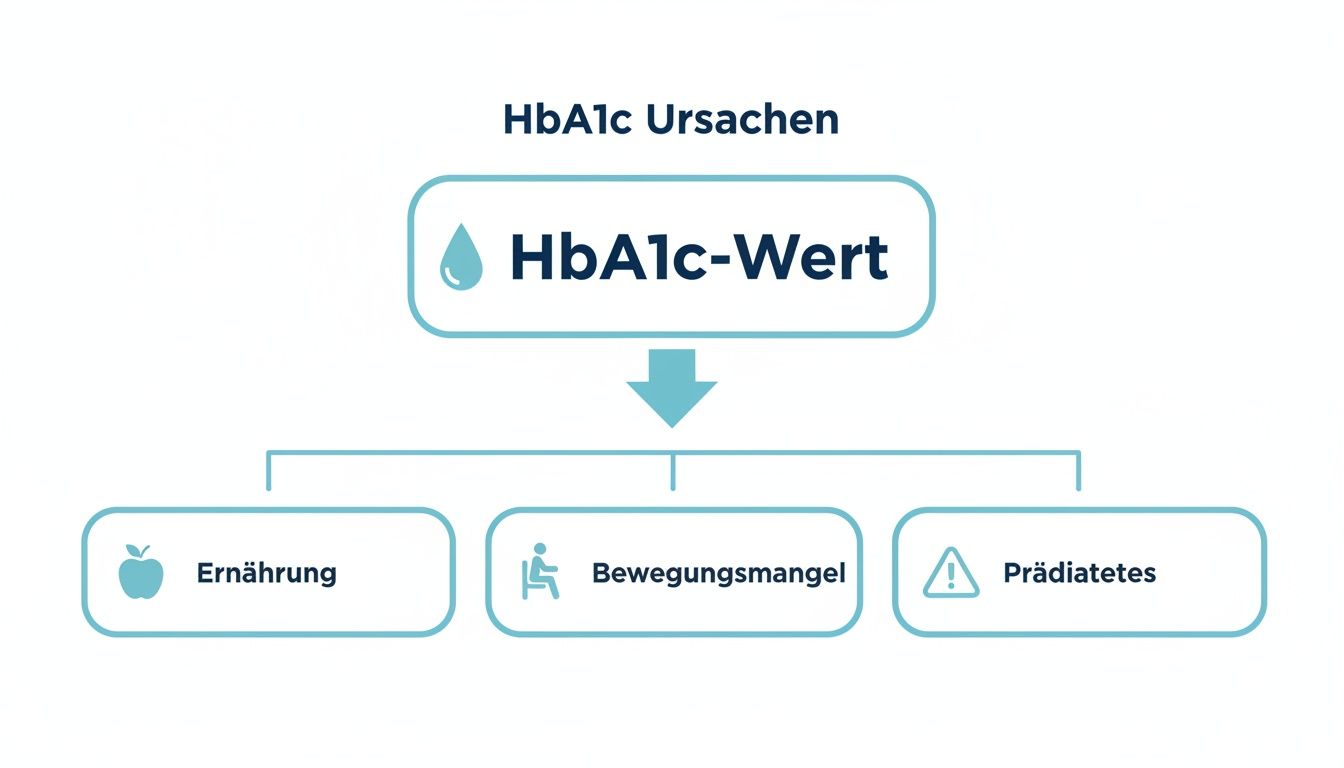
As you can see, it is primarily our dietary habits, lack of exercise, and developing insulin resistance that drive up long-term blood sugar levels.
The most common triggers in detail
To regain control, it is important to know the main culprits. Let’s take a closer look at the reasons why your level could be too high:
- Diet high in sugar and simple carbohydrates: White bread, sweets, sugary drinks, and highly processed foods cause blood sugar to spike. Your body has to produce huge amounts of insulin to counteract this. Over time, this system can simply become overloaded.
- Lack of exercise: Your muscles are the body’s biggest sugar consumers. When you move, they take glucose directly from the blood—simple as that. People who get little exercise miss out on this natural form of blood sugar regulation.
- Excess weight, especially abdominal fat: Fat cells, particularly those in the abdominal area, are small troublemakers. They can release substances that make your cells less sensitive to insulin. This is called insulin resistance and is often the direct precursor to prediabetes and type 2 diabetes.
- Chronic stress and too little sleep: Both stimulate the production of stress hormones such as cortisol. These also drive blood sugar levels upward.
To give you a quick overview, we have summarized the most important causes in a table:
Main causes of an elevated HbA1c level at a glance
| Cause | Description and impact on HbA1c |
|---|---|
| Unhealthy diet | Foods with a high glycemic index (e.g., white flour and sugar) cause rapid blood sugar spikes and overburden the insulin system. |
| Lack of exercise | Muscles use glucose during activity. Without exercise, more sugar remains in the blood and the HbA1c level rises. |
| Excess weight & abdominal fat | Visceral fat promotes inflammation and insulin resistance, making it harder for cells to absorb sugar. |
| Chronic stress | Stress hormones such as cortisol raise blood sugar levels to provide the body with energy, which increases HbA1c over the long term. |
| Genetic predisposition | A family history of diabetes can increase the risk of impaired glucose metabolism and, consequently, a high HbA1c level. |
Knowing these factors is the first and most important step. It gives you the power to take targeted action where the roots of your elevated level lie.
If you’d like to delve even deeper into the fascinating world of your body, our guide explains what a blood analysis can reveal.
What Your HbA1c Results Really Mean
A single value on a lab report can seem pretty cryptic at first. You might see “HbA1c: 6.1%” and wonder: Is that good, bad, or just a number? Let’s decode it together so you can gain clarity and know where you stand.
Imagine your red blood cells as small, smooth capsules traveling through your bloodstream. If too much sugar is constantly floating around in your blood, it literally sticks to the blood cells—it “sugars” them. The HbA1c value is essentially a measure of how many of these capsules have acquired a sugar coating over the past two to three months.
A small amount of glycation is normal and completely harmless. But if the layer becomes too thick, it is a clear sign that your body has been dealing with excess sugar for an extended period. This “glycation” is not just a measurement; it also makes blood cells less flexible and can damage the tiny blood vessels in your body over time.
Understanding HbA1c thresholds
To interpret your personal level correctly, there are internationally recognized thresholds. They are like a compass showing you and your doctor whether your glucose metabolism is in the green zone or whether it is time to take action.
Your HbA1c level is not a snapshot, but rather a kind of blood sugar diary covering the past few months. It shows, without sugarcoating, how well your body has coped with sugar on average.
The values are usually given as percentages (%), and sometimes in mmol/mol. The following overview will help you easily interpret the numbers.
HbA1c reference ranges and their clinical significance
This table gives you a clear overview of the HbA1c ranges, allowing you to quickly and easily interpret your personal result.
| HbA1c level (in %) | HbA1c level (in mmol/mol) | Interpretation |
|---|---|---|
| Below 5.7% | Below 39 mmol/mol | Normal range: Everything is in the green zone. Your glucose metabolism is working perfectly. Congratulations! |
| 5.7% to 6.4% | 39 to 47 mmol/mol | Prediabetes (gray area): This is a clear warning sign. Your body is already having difficulty regulating blood sugar. Now is the perfect time to counteract this with targeted lifestyle changes. |
| 6.5% and higher | 48 mmol/mol and higher | Diabetes: There is a high probability that diabetes mellitus is present in this range. Speaking with a doctor is now essential to confirm the diagnosis and develop a strategy. |
This classification is extremely important. It makes clear that there is not only “healthy” or “sick,” but also a crucial intermediate range—prediabetes. This is when you have the greatest chance of turning things around and preventing the development of established diabetes.
Why an elevated level is an issue in Germany
A high HbA1c level is not uncommon in Germany. One of the most common causes of a high HbA1c level is undiagnosed or poorly controlled diabetes. In Germany, the prevalence of type 2 diabetes is 7.5%, but the total proportion of people affected is estimated to be as high as 11.9%. A major problem is the high number of unreported cases: approximately 2.0% of the population—around 1.6 million people—have diabetes without knowing it. The RKI provides more information on diabetes care in Germany.
When you know your result, you can assess the urgency much better. A result in the prediabetes range means: “Warning, your body needs support!” A result in the diabetes range is a clear call to action: “Take action—and do it now!”
Knowing your exact result gives you the power to make informed decisions about your health. Instead of groping in the dark, you can take proactive action. This also means understanding the role of your diet. Why not take a look at our article on the glycemic index table? There you will learn which foods help keep your blood sugar stable. This way, you take control yourself.
How Your Lifestyle Directly Affects Your HbA1c Level
Perhaps the most important—and best—news after an elevated HbA1c result is this: You have a great deal of control over it yourself. Your daily routine is not merely a small factor, but by far the most powerful lever for bringing your long-term blood sugar back into a healthy range.
This is not about short-term tricks, but about sustainable changes that truly pay off. We will now look at the four key pillars that shape your blood sugar metabolism: nutrition, exercise, stress, and sleep. There is no complicated science here, just practical tips that work in everyday life and make a real difference.
Imagine your metabolism as a finely tuned orchestra. Nutrition, exercise, stress, and sleep are the most important instruments. If even one of them plays out of tune, the entire melody falls apart. Your goal is to become the conductor again and restore harmony.
Nutrition: The Foundation for Stable Blood Sugar Levels
What you eat has the most direct impact on your blood sugar level. Some foods send it skyrocketing like a rocket, while others keep it comfortably balanced. The secret lies in choosing the right building blocks for your meals.
The biggest troublemakers are simple carbohydrates and added sugar, such as those found in white bread, sweets, soft drinks, and many processed foods. They are converted into glucose in the blink of an eye and practically flood your blood with sugar. Your pancreas then has to produce insulin nonstop to counteract it—a tremendous strain on the system.
Choose these blood sugar heroes instead:
- Fiber-Rich Whole-Grain Products: Whole-grain bread, oatmeal, or quinoa provide complex carbohydrates that enter the bloodstream slowly. This keeps you full longer and helps you avoid cravings.
- Plenty of Vegetables and Legumes: They are packed with fiber and nutrients but contain very little quickly available sugar. Lentils, chickpeas, and beans are true powerhouses for stable blood sugar.
- Healthy Fats and Proteins: Nuts, avocados, fish, or lean meat help slow the absorption of sugar from food. The ideal formula for every meal is a smart combination of proteins, fats, and complex carbohydrates.
Exercise: The Natural Insulin Switch
Lack of exercise is one of the key causes of a high HbA1c level. Your muscles are your body's biggest sugar consumers. When you move, they draw glucose directly from the blood to generate energy—and often do so without needing much insulin.
Regular activity acts like a reset button for your cells. It makes them more sensitive to insulin and actively counteracts insulin resistance. You don't have to run a marathon! Even moderate but regular exercise can work wonders:
- A daily 30-minute walk, preferably after eating.
- For short distances, simply take your bike instead of the car.
- Light strength training twice a week to build valuable muscle mass.
In Germany, being overweight and getting too little exercise are the main drivers of an elevated HbA1c. The German Diabetes Health Report 2025 shows a worrying trend: Between 2014 and 2019, there were 450,000 new cases every year. The increase among young adults between the ages of 20 and 39 is particularly alarming. The DDG health report provides more details on current developments and background information.
Stress and Sleep: The Underestimated Antagonists
What do stress and poor sleep have to do with your blood sugar? A great deal! Both conditions put your body into an alarm mode in which it releases increased amounts of stress hormones such as cortisol.
Cortisol is a direct antagonist of insulin. It instructs the liver to release more sugar into the bloodstream to provide you with quick energy for a supposed “flight-or-fight situation.” But if this state persists, your blood sugar level remains permanently elevated—and this then shows up clearly in your HbA1c value.
- Stress management: Find techniques that work for you and help you unwind. These could include breathing exercises, meditation, yoga, or simply a relaxing walk in nature.
- Sleep hygiene: Allow yourself seven to eight hours of restful sleep each night. A regular sleep schedule, a dark, cool bedroom, and avoiding screens before bedtime can help enormously.
Your lifestyle is the key. By strengthening these four pillars, you lay the best foundation for actively lowering your HbA1c level and protecting your health in the long term. You can find more practical suggestions in our guide to 10 tips for a healthy lifestyle.
Uncovering hidden medical causes
You pay attention to your diet, exercise regularly, and yet your HbA1c level simply refuses to drop? That can be incredibly frustrating. But before you start doubting yourself, you should know this: Sometimes the cause lies deeper and has less to do with your lifestyle than you think.
Your body is a complex system in which countless processes work together. Certain medications, hormonal imbalances, or unnoticed inflammation can significantly disrupt your glucose metabolism—acting as invisible opponents to your efforts, so to speak.

When medications affect blood sugar
Some medications are known to increase blood sugar levels as a side effect. They directly interfere with the sensitive balance of your metabolism and can therefore be one of the hidden causes of a high HbA1c level.
These include in particular:
- Corticosteroids: They are often used for inflammation or autoimmune diseases. Cortisone is a stress hormone that stimulates the liver to release more sugar while simultaneously inhibiting insulin’s effect on the cells.
- Certain blood pressure medications (beta blockers & diuretics): Some of these medications can slightly reduce insulin secretion or impair the cells’ sensitivity to insulin.
- Antipsychotics and antidepressants: Some psychiatric medications can also have a negative effect on glucose metabolism.
If you take any of these medications and your HbA1c level is elevated, be sure to speak with your doctor. Important: Never stop taking the medication on your own!
Hormonal disorders as a driving force
Think of your hormonal system as the conductor of your metabolism. When your hormones fall out of sync, they can also throw your blood sugar completely off balance.
A classic example is thyroid dysfunction. An overactive thyroid (hyperthyroidism) speeds up the entire metabolism, which can lead to faster insulin breakdown and increased blood sugar levels. Conversely, an underactive thyroid (hypothyroidism) can slow the metabolism and promote insulin resistance. If you’d like to learn more about how to have your thyroid tested, read our related article: Thyroid testing.
Polycystic ovary syndrome (PCOS), a common hormonal disorder in women, is also often associated with pronounced insulin resistance. The body produces enough insulin, but the cells no longer respond properly to it—causing HbA1c levels to rise.
Sometimes an elevated HbA1c level is not the actual problem, but rather a symptom of an underlying hormonal imbalance. Taking a closer look at your hormone levels can provide clarity.
Nutrient deficiencies and chronic inflammation
Your body needs certain tools for smooth sugar metabolism—and those are vitamins and minerals. If they are lacking, the entire machinery can grind to a halt.
Two particularly important helpers are:
- Magnesium: This mineral is an essential partner for insulin action. It helps insulin, so to speak, unlock the “door” of the cells so that sugar can enter. A deficiency can lead to insulin resistance.
- Chromium: This trace element is also involved in blood sugar regulation and supports insulin function.
At the same time, silent inflammation in the body can fuel insulin resistance. These low-grade, often unnoticed inflammatory processes release substances that disrupt communication between insulin and cells. Possible triggers include an unhealthy diet, chronic stress, or undetected infections.
If you’re not seeing any improvement in your HbA1c level despite maintaining a healthy lifestyle, it’s worth investigating these hidden causes. A targeted blood test, such as the mybody®x HbA1c test, can help you take the first step and understand your long-term blood sugar levels. This gives you a complete picture and finally allows you to adjust the right factors.
Stop guessing: How to lower your HbA1c level effectively
You now know what may be behind an elevated HbA1c level. That’s the first crucial step! But knowledge alone doesn’t change anything—only taking action leads to results. Instead of trying general advice at random, you can take control with precise data and find out what works best for you personally.
This is where a smart approach comes in. You don’t have to wait weeks for a doctor’s appointment to gain clarity. A simple home test gives you the opportunity to take control of your long-term blood sugar yourself.
Your personal health compass at home
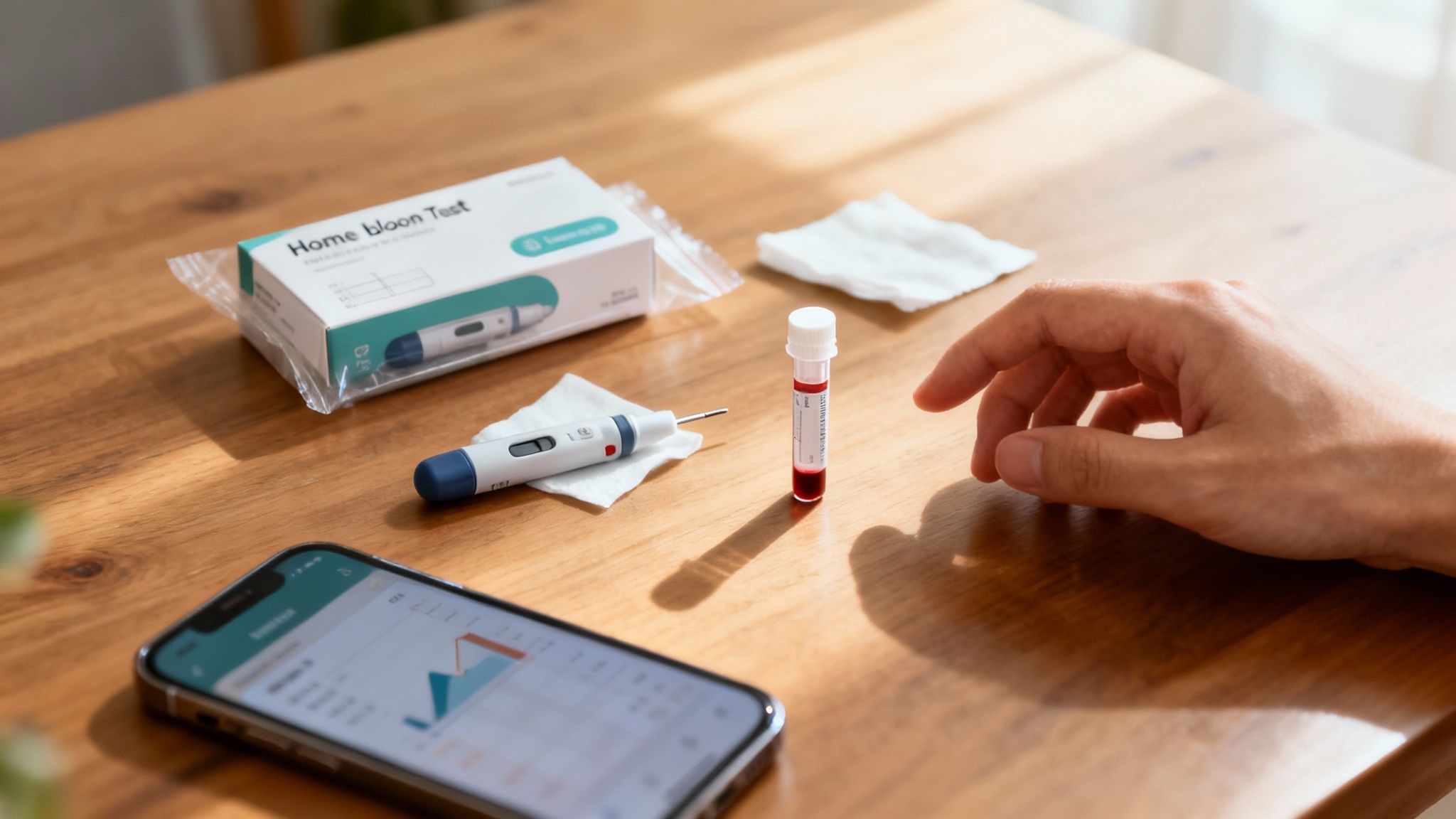
Imagine being able to accurately measure your HbA1c level at home—simply, discreetly, and without much effort. That is exactly what the mybody®x HbA1c test makes possible. Our test kit contains everything you need for a simple fingertip blood sample—without complicated instructions or uncertainty.
You then simply send your sample free of charge to one of our ISO-certified German specialist laboratories. There, it is analyzed with the highest precision so that your results are just as reliable as those from your doctor.
A home test is much more than just a measurement. It is your personal starting point for moving from passive knowledge to active action—based on your own data.
This way, you become proactive instead of waiting for symptoms to worsen or for your next routine checkup.
More than numbers: Understand and take action immediately
A lab result can quickly become overwhelming. What do you do with a value like “6,2 %” when you don’t know what it means for your everyday life? That’s exactly why mybody®x gives you much more than just a bare number.
We present your results in an easy-to-understand report. You can immediately see where your level falls compared with the optimal ranges and also receive personalized recommendations for action tailored to your situation.
These recommendations are your clear, concrete roadmap and answer the most important question: “What do I do now?”
- Nutrition tips: Learn which foods keep your blood sugar stable and which ones you should avoid.
- Exercise recommendations: We show you which type of activity is most effective at making your cells more sensitive to insulin again.
- Lifestyle adjustments: Get practical advice on stress management and quality sleep to help you manage these often underestimated causes of a high HbA1c level.
Take control—with data-driven decisions
This approach turns uncertainty into clarity. You no longer have to hope that your efforts are making a difference. Instead, you can see your progress in black and white and adjust your strategy when necessary.
Regular testing creates a valuable feedback loop. You can see directly how dietary changes or more exercise affect your long-term blood sugar level. This is not only incredibly motivating, but also gives you the confidence that you’re on the right track.
The mybody®x HbA1c test is your tool for taking control of your health. Take responsibility, make informed decisions, and work purposefully to feel energized, fit, and completely well again. Harness the power of your own health data to better understand your body and achieve your goals sustainably.
Frequently asked questions about HbA1c levels
Finally, we’ll answer the questions we encounter most often about HbA1c. We want to clear up any remaining uncertainties and give you the confidence you need for your next steps.
How quickly can I lower my HbA1c level?
That’s a completely understandable question—who doesn’t want to see results as quickly as possible? The honest answer is that it takes some patience, but your efforts will definitely pay off.
HbA1c is the “blood sugar memory” of the last two to three months. That’s why changes in your lifestyle aren’t reflected in the result overnight. Think of it like marathon training: after one week, you won’t have run your personal best yet.
Your HbA1c responds to sustainable changes, not short-term efforts. Give your body the time it needs. You can often see the first measurable improvements after about three months of consistently working on yourself.
Focus instead on small but consistent adjustments to your diet and physical activity. Realistic goals are key to staying on track and avoiding frustration.
Can my HbA1c be too high for reasons other than diabetes?
Yes, and this is a really important point. Although diabetes is the main cause of an elevated HbA1c, other factors can also drive test results up. So it’s worth keeping these causes of a high HbA1c level in mind as well.
These conditions can distort the result:
- Iron-deficiency anemia: If your body lacks iron, the lifespan of red blood cells can be prolonged. This gives them more time to accumulate sugar, artificially increasing the HbA1c level.
- Kidney failure: When the kidneys no longer work properly, certain metabolic products remain in the blood and can interfere with the test result.
- Certain medications: Corticosteroids, for example, can directly affect glucose metabolism and increase the level.
So if you find an inexplicably high level despite maintaining a healthy lifestyle, it is worth seeing a doctor to investigate these possible causes as well. A comprehensive blood test often provides clarity.
When should I definitely see a doctor about a high HbA1c level?
Taking responsibility for your own health is great, but there are times when professional support is simply essential. In these situations, you should definitely schedule a doctor’s appointment:
- If your level is 6.5% or higher: This is a strong indication of established diabetes. A medical diagnosis and treatment are now essential to prevent long-term complications.
- If your level is in the prediabetes range (5.7% to 6.4%): A conversation with your doctor is also extremely valuable in this case. Together, you can develop a clear strategy and determine whether additional tests, such as an oral glucose tolerance test, would be useful.
- If you notice symptoms: Excessive thirst, frequent urination, unexplained weight loss, constant fatigue, or vision problems are classic warning signs. Please do not ignore them!
- If your levels do not decrease despite lifestyle changes: If your level remains persistently high, hidden medical causes need to be investigated.
An at-home test like the one from mybody®x is the perfect first step toward gaining clarity. It does not replace a medical diagnosis, but it gives you the ideal basis for an informed conversation with your doctor.
How reliable is an at-home HbA1c test?
The reliability of such a test depends entirely on the quality of the laboratory analyzing your sample. And there are huge differences.
The mybody®x HbA1c test makes no compromises here. Your sample is analyzed exclusively in ISO-certified German specialist laboratories—the same laboratories trusted by medical practices and clinics.
So you can be sure that your result is determined with the same precision and care as at your doctor’s office. Simple at-home sampling, combined with professional laboratory analysis, gives you a powerful tool to proactively manage your health based on real data.
Ready to take control of your long-term blood sugar? The mybody®x HbA1c test delivers precise, laboratory-verified results and personalized recommendations straight to your home. Start your journey to greater well-being today and order your test kit at https://mybody-x.com.



Share now:
Your complete guide to minerals and trace elements
What intolerances are there, and how do you find out if you have them?