
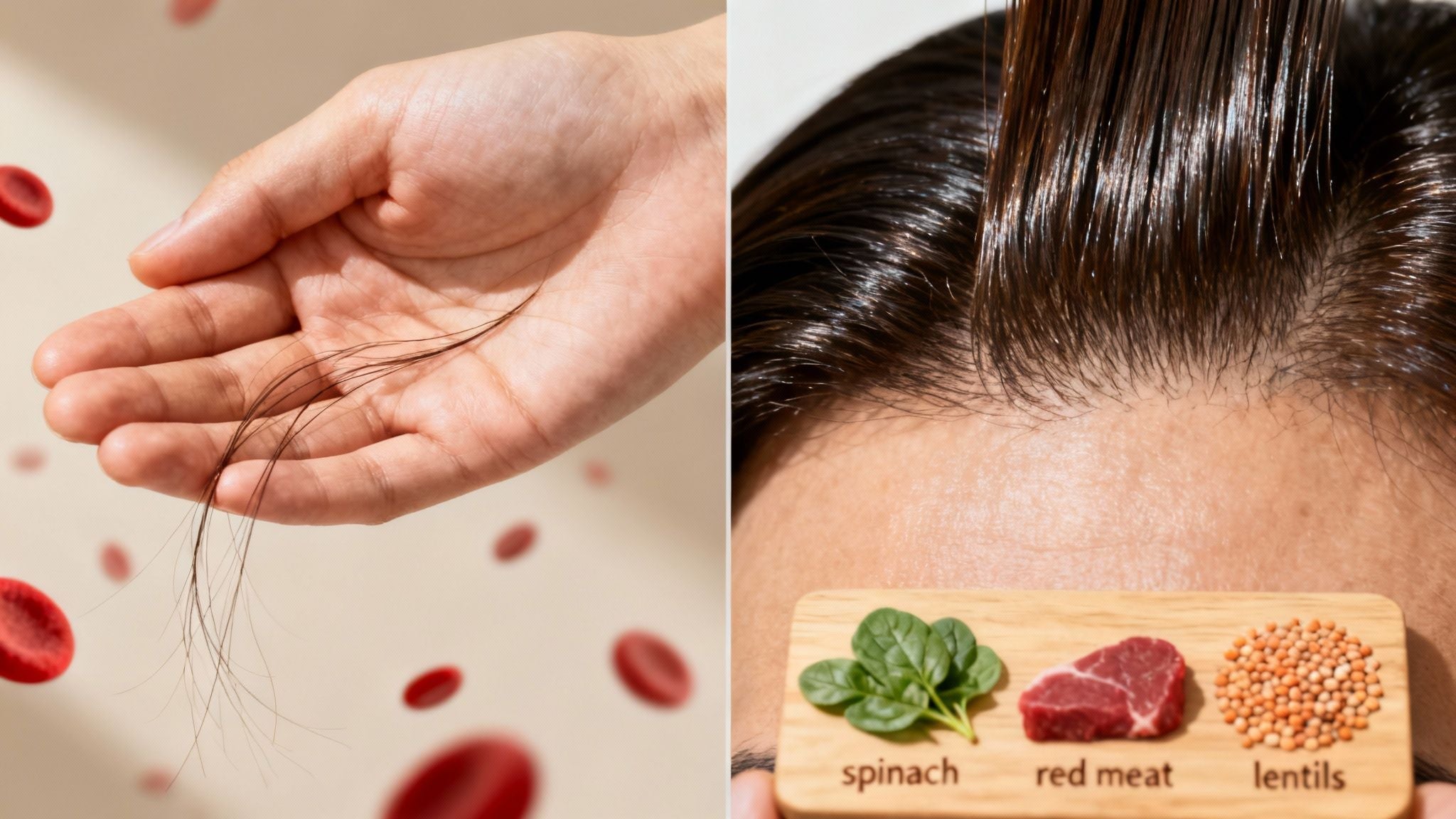
Specifically stop and prevent hair loss caused by iron deficiency
Yes, hair loss due to iron deficiency is a real and unfortunately widespread problem. If your body lacks the necessary iron to transport oxygen to the hair roots, the natural growth cycle of your hair is disrupted. The result: increased hair loss. The good news is that in most cases, you can reverse this condition as soon as you recognize the deficiency and address it consistently.
When hair sends warning signals
Are you finding more and more hair in your brush, on your pillow, or in the shower drain? You might quickly attribute it to stress or the time of year, but often a serious nutrient deficiency is the underlying cause. Diffuse hair loss, in particular, where the hair thins uniformly all over the head, is a classic sign that your body is lacking something essential.
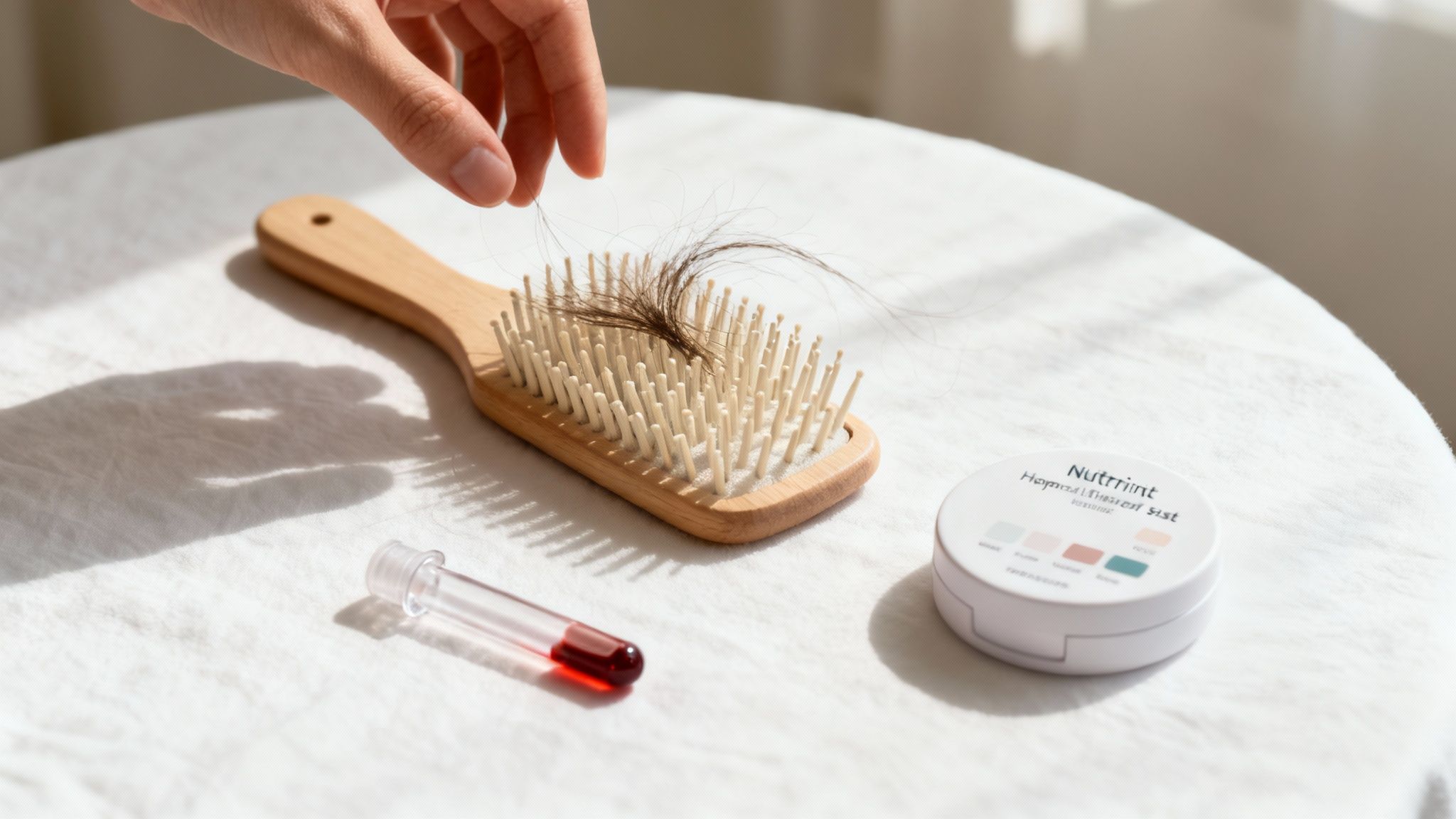
This problem is more widespread than many realize. Approximately 20 to 30 percent of women in Germany are affected by hair loss at some point in their lives. While hereditary hair loss remains the most common cause, a nutrient deficiency often plays a decisive role in diffuse hair loss.
In fact, almost 40 percent of women with non-hereditary hair loss show signs of a vitamin or mineral deficiency. If you want to learn more about the exact connections, you can find a detailed article about nutrient deficiencies and hair loss at mybody-x.com .
More than just hair loss
Iron deficiency often creeps into everyday life very quietly and doesn't just manifest itself in your head. Many of the accompanying symptoms are so nonspecific that you can easily overlook or misinterpret them. But these are precisely the important pieces of the puzzle that can point to the true cause.
So pay close attention to these additional signals from your body:
- Persistent fatigue: Despite getting enough sleep, you constantly feel exhausted and simply not fit.
- Pale skin: Your skin appears duller and less well-circulated than usual.
- Brittle nails: Your fingernails split easily, have ridges, or break constantly.
- Concentration problems: You find it difficult to focus on a task or you are easily distracted.
- Cracked corners of the mouth: Small, painful tears at the edges of your lips that just won't heal.
The following table gives you a quick overview of the most common early signs that, besides hair loss, can indicate an iron deficiency.
Typical early signs of iron deficiency
This table summarizes the most common early symptoms that, besides hair loss, may indicate an iron deficiency.
| symptom | Description |
|---|---|
| Persistent fatigue | A deep feeling of exhaustion that doesn't disappear even after sleeping. |
| paleness | Particularly visible on the mucous membranes (e.g., in the mouth or on the eyelids). |
| Brittle nails | The nails become thin, split easily, or take on a spoon-like shape (koilonychia). |
| Lack of concentration | Difficulty maintaining focus, often accompanied by forgetfulness. |
| Cracked corners of the mouth | Painful small cracks (rhagades) that heal poorly. |
| shortness of breath | Even light exertion like climbing stairs quickly leaves you breathless. |
If you recognize several of these symptoms in yourself, it is a strong indication that your body is calling for help.
Instead of just fighting the symptoms, it's crucial to get to the root cause. The first step to improvement is always to gain clarity.
You need to know where you stand to take targeted action. A simple and reliable at-home nutrient test, like the one from mybody-x, gives you exactly that certainty. It precisely analyzes your blood levels and shows you in black and white whether an iron deficiency is behind your symptoms. With this knowledge, you take control and can tackle the problem at its root.
Why your hair roots really need iron
Imagine iron as the most important courier service in your body. Its main task? To transport vital oxygen to every single cell – from the muscles to the organs. And this delivery service is especially important for your hair follicles.
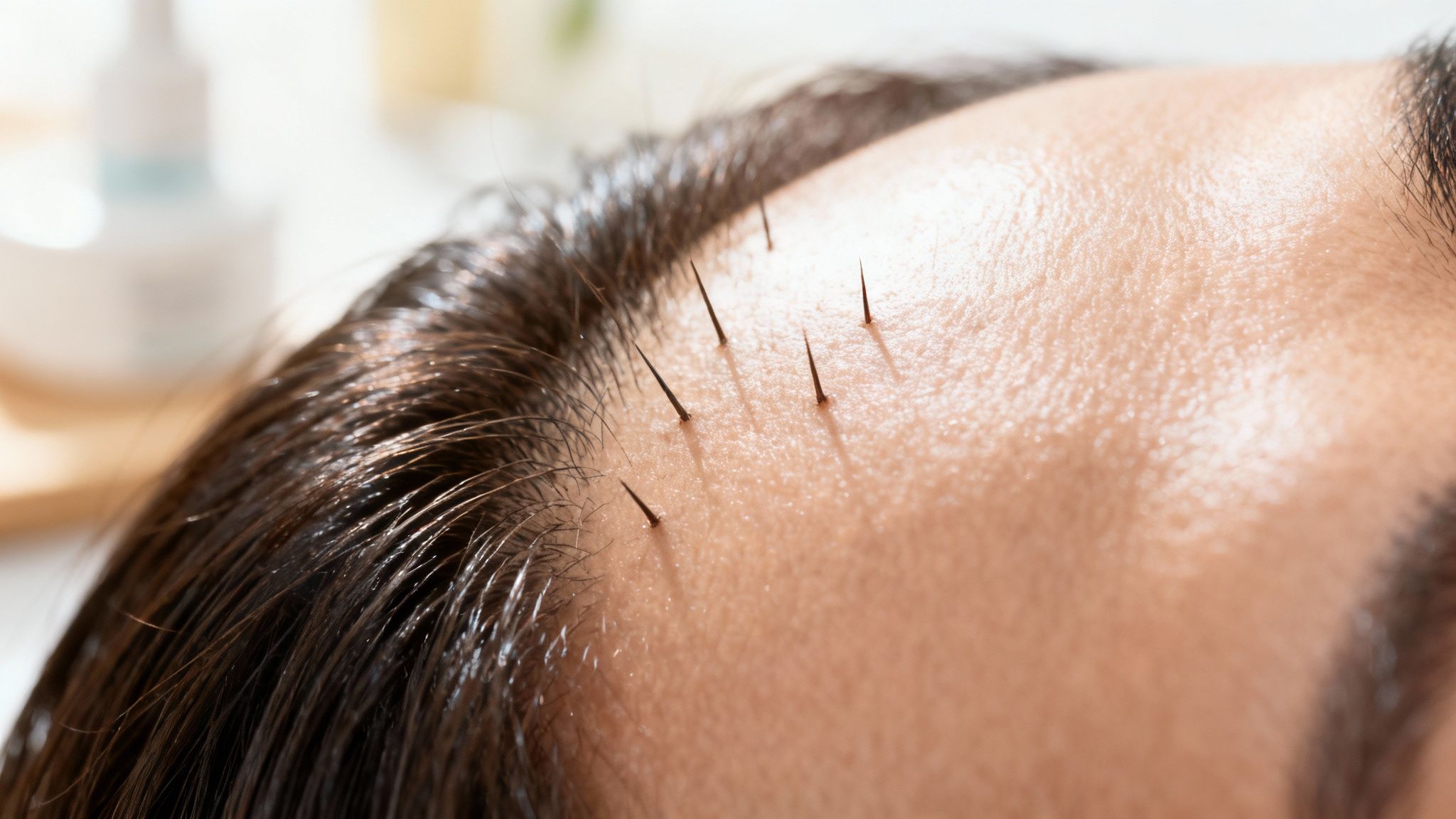
Your hair follicles are among the most active and cell-dividing areas of your entire body. To constantly produce new, strong hair, they need vast amounts of energy and nutrients. The oxygen supplied by iron is the crucial fuel for this demanding process.
But what happens when this delivery service falters? If there isn't enough iron to adequately supply all cells with oxygen, your body has to prioritize.
Your body's survival mode
Your body is clever and fully programmed for survival. It will first send the scarce oxygen to where it is vital for survival: to the heart, the brain, and other vital organs.
Unfortunately, nourishing the hair follicles is very low on this priority list. Your body considers hair production a kind of "luxury" that it can easily do without in times of scarcity. This is purely a protective mechanism to keep the vital systems functioning.
This is precisely where the problem of hair loss due to iron deficiency begins. The hair-forming cells in the follicles simply no longer receive enough energy to do their job properly.
The result: Many hair follicles interrupt their normal growth cycle and prematurely enter a resting phase, the so-called telogen phase. After a few weeks in this "sleep mode," these hairs eventually fall out.
Because this doesn't happen in just one spot, but evenly across the entire head, it's called diffuse hair loss. Your hair appears thinner and sparser overall, without any bald patches actually forming.
Ferritin: the invisible hero in the background
While iron is the active messenger, you can think of ferritin as its corresponding warehouse. It's the storage protein for iron in your body. A full ferritin store ensures that there's always enough iron available for transport, even if you're not getting enough from your diet.
A deficiency therefore often develops gradually. First, your body depletes these iron stores unnoticed. Your hemoglobin level, which measures oxygen transport in the blood, can appear completely normal for a long time. This is deceptive, because your body is already running on reserve.
That's precisely why the ferritin level is the crucial early indicator. It reveals the true state of your iron supply long before a full-blown anemia with all its symptoms appears.
The process of iron deficiency can be roughly divided into three stages:
- Depleted stores (Stage 1): Ferritin levels drop. You might not notice anything yet, but your reserves are dwindling. Hair loss can begin subtly at this stage, as the body reduces its "luxury supply."
- Iron deficiency without anemia (stage 2): Iron stores are depleted, and there is no longer enough iron available for the production of new red blood cells. Fatigue and difficulty concentrating increase, and hair loss often becomes more pronounced.
- Iron deficiency anemia (stage 3): Now the hemoglobin level also drops. The oxygen supply to the entire body is restricted, leading to clear symptoms such as paleness, shortness of breath, and severe hair loss.
This knowledge is crucial because it shows why checking your levels early is so important. With a reliable at-home self-test, like the mybody-x nutrient test, you can easily and accurately determine your ferritin level. This allows you to detect a deficiency in its early stages and take timely action before your hair and energy levels noticeably suffer. You don't wait until the warning signs become loud; instead, you take proactive steps for your health.
Where do the depleted iron stores come from? The most common causes
Iron deficiency, which manifests as hair loss, is almost never a sudden occurrence. Rather, it is the gradual result of an imbalance in which your body loses more iron than you consume over months or even years. The reasons for this are as varied as life itself. Often, it is everyday habits or specific phases of life that deplete our iron stores unnoticed.
To tackle the problem at its root, it's crucial to understand these potential causes. Be honest with yourself and take a close look at your lifestyle. Most of the time, it's not one major factor, but rather the accumulation of many small things that ultimately pushes you over the edge.
Focus on risk groups
Some people are naturally at higher risk of developing an iron deficiency. Could you be one of them?
- Women of childbearing age: Monthly menstruation is a completely normal process, but it also involves regular blood loss. And with the blood, iron is also lost. With heavy or prolonged periods, this loss can be so significant that it can hardly be compensated for through diet alone.
- Pregnant and breastfeeding women: During pregnancy, the body switches to a supply mode – not only for the mother, but also for the growing baby. Iron requirements skyrocket. These requirements remain elevated during breastfeeding to ensure optimal nutrition for the child.
- Vegetarians and vegans: While plant-based foods do contain iron, it is in a form (non-heme iron) that our bodies absorb much less efficiently than iron from animal sources (heme iron). Without a truly well-planned and cleverly combined diet, a deficiency can quickly develop.
- Endurance athletes: Those who train regularly and intensively put their bodies under strain. Metabolism is running at full speed and iron requirements increase. In addition, sometimes tiny microbleeds in the gastrointestinal tract occur during extreme exertion, further depleting iron stores.
- Blood donors: Donating blood is a great thing, but logically leads to a direct loss of iron. This iron content must then be consciously replenished.
These points clearly illustrate why iron deficiency is the most common nutritional deficiency worldwide – and a huge issue in Germany as well. In fact, more than one in ten women in Germany suffers from iron deficiency. This underscores the importance of regular checkups. You can find more background information in this article about iron deficiency and hair loss .
Hidden causes in the gut
Sometimes the problem isn't that you're eating too little iron, but that your body can't absorb it properly. Your gut is the central gateway for all nutrients. If something is wrong there, the valuable iron from your food doesn't even reach your bloodstream.
Chronic gastrointestinal diseases are often the silent "iron thieves." These include, above all:
- Chronic inflammatory bowel diseases (IBD): Diseases such as Crohn's disease or ulcerative colitis cause inflammation in the intestinal lining. This lining becomes so irritated and damaged that it can no longer efficiently absorb nutrients such as iron.
- Celiac disease (gluten intolerance): In undiagnosed celiac disease, gluten damages the villi of the small intestine, drastically reducing the surface area for nutrient absorption. Iron deficiency can be one of the first, nonspecific warning signs. If you would like to learn more about celiac disease and gluten intolerance, you can find more information here.
- Chronic gastritis: Inflammation of the stomach lining can disrupt the production of stomach acid. This acid is extremely important for dissolving iron from food and preparing it for absorption in the intestines.
The insidious thing about these illnesses is that they often remain undetected for a long time or only manifest themselves through vague symptoms such as bloating or abdominal rumbling. A persistent iron deficiency that simply doesn't improve despite a good diet and supplements should therefore always be a reason to take a closer look at gut health.
Clarity about your values is the first, essential step. Only when you know where you stand can you take the right steps. A nutrient test from mybody-x offers you precisely this assurance – conveniently from home, with precise and easy-to-understand results.
How to correctly interpret your blood test results
A vague suspicion won't help you – what you need is certainty. If you suspect that an iron deficiency is behind your hair loss, checking your blood test results is the only sensible next step. Such lab results can seem like a secret language at first glance, but don't worry: we'll translate it for you.
Here you will learn which values really count and how you can confidently interpret your results.
The three musketeers of your iron supply
To truly understand your iron status, you need to look at three key values. Together, they tell the whole story and often reveal hair loss caused by iron deficiency even before the problem becomes truly visible.
- Ferritin: This is the most important value of all! Think of ferritin as your body's vast iron storage facility. It shows you how full your reserves really are. A low ferritin level is the very first warning sign, long before actual anemia develops.
- Hemoglobin (Hb): This value measures the concentration of the red blood pigment that transports oxygen throughout your body. However, a normal Hb level can be misleading, because your body tries to keep it stable for as long as possible – and in doing so, it depletes your ferritin stores.
- Transferrin saturation (TSAT): This is essentially the loading level of your "iron transporters" in the blood. If the value is low, only a few transport molecules are loaded with iron. A clear sign that there is a lack of supply.
A home nutrient test from mybody-x analyzes these values precisely and provides you with a clear, understandable picture of your current supply.
Why ferritin is the crucial early indicator
Many people only look at their hemoglobin level, but that's a fatal mistake. Your body is a master at keeping vital functions running. To do this, it first sacrifices "luxury items" like hair growth to ensure oxygen transport to your organs. This means your hemoglobin level can still be perfectly normal while your iron stores (ferritin) are already depleted.
Your hair loss often begins the moment your ferritin level drops. It's your body's most sensitive early warning system. If you wait until your hemoglobin level also falls, you're already fighting an advanced deficiency.
For healthy and strong hair, experts recommend a ferritin level that isn't just at the lower end of the normal range, but ideally in the middle to upper third. If you want to delve deeper into this topic, our article explains everything you need to know about optimal ferritin levels for your health .
This infographic helps you quickly and easily assess your personal risk of iron deficiency.

The graphic shows that factors such as your gender, your diet and your physical activity strongly influence your risk and make checking your blood values particularly useful.
What your values specifically mean
Lab results are often given in reference ranges. These ranges define what is considered "normal" to rule out serious illnesses. However, for optimal well-being and strong hair growth, you should aim for higher values.
The following table gives you a quick overview of the most important blood values and what they tell you.
Key blood values in iron deficiency at a glance
| Blood value | What he says | Typical finding in iron deficiency |
|---|---|---|
| Ferritin (storage iron) | Shows the level of your iron reserves. The most important early indicator. | Low: This value is the first to drop. A value below 30 ng/ml is often critical for hair. |
| Transferrin saturation (TSAT) | Indicates what percentage of the "iron taxis" in the blood are loaded. | Low: Typically below 16–20% . There is too little iron available for transport. |
| Hemoglobin (Hb) | Measures the concentration of red blood pigment for oxygen transport. | Normal to low: Only decreases in a late stage of deficiency (iron deficiency anemia). |
This knowledge is your most powerful tool. It helps you to proactively care for your health and hair, rather than waiting until the problem arises. A test provides you with the data you need to tackle the problem of iron deficiency-related hair loss at its root.
Your strategy for full iron stores and strong hair
Okay, you now have clarity about your iron levels – that's the most important first step. But knowledge alone won't replenish your iron stores, of course. Now it's time to take action. We'll give you a concrete roadmap here to help you replenish your iron stores and give your hair back the strength it needs to grow.
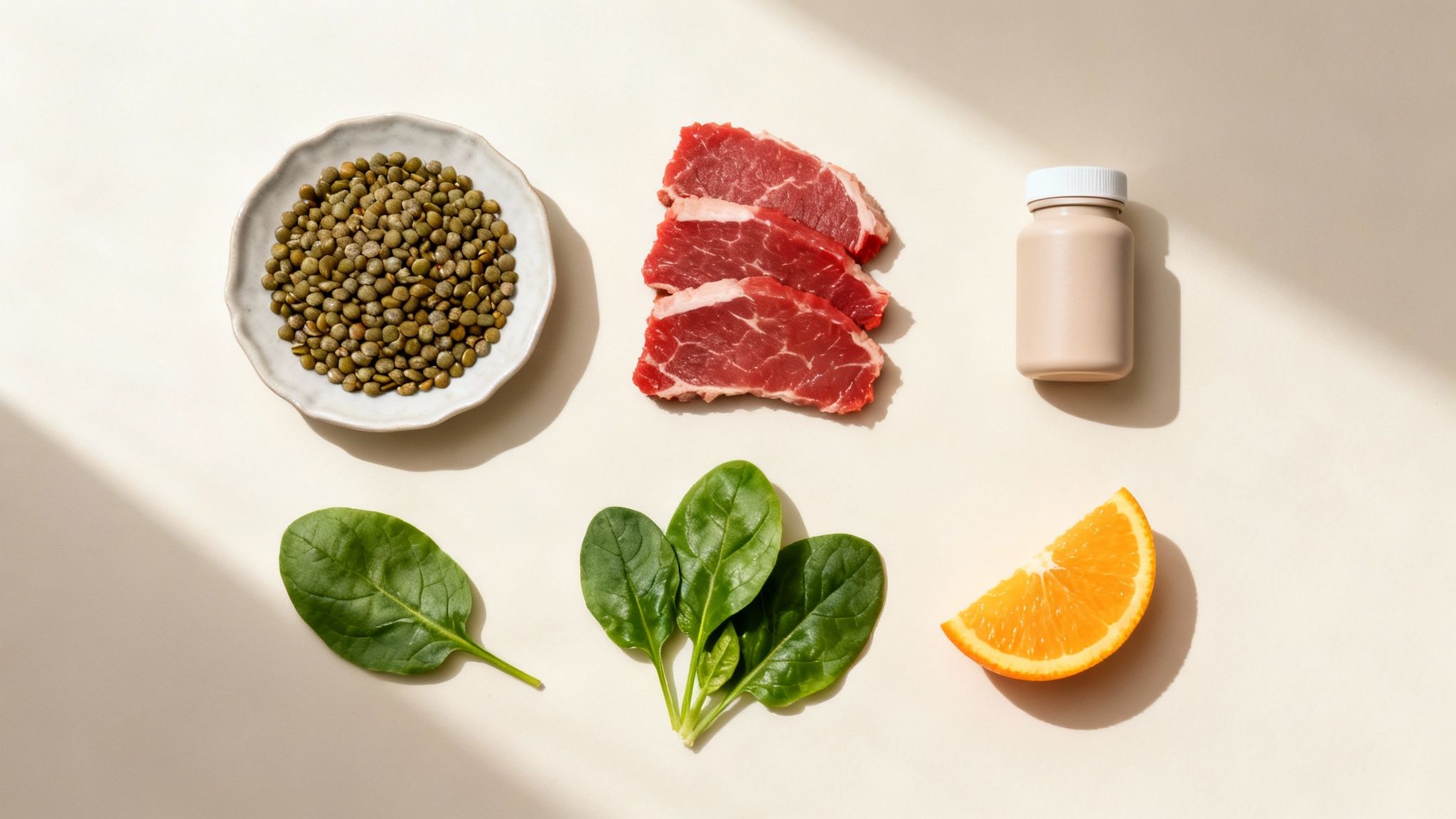
Our strategy rests on two solid pillars: a smart diet and, if truly necessary, targeted supplementation . This is how you tackle hair loss caused by iron deficiency at its root.
Fuel up on iron with every bite
Your diet is the foundation for everything. But it's not just what you eat that matters, but above all how you combine it. You have to distinguish between two types of iron in food.
Heme iron is the superstar among iron sources. It's found in animal products, and your body can absorb and utilize it particularly well. Non-heme iron from plant sources is also very valuable, but your body has a slightly harder time processing it.
Here's an overview of your top sources:
-
Excellent animal sources of iron (heme iron):
- Red meat: Beef and lamb are veritable iron bombs.
- Offal: Liver is extremely rich in iron, but should only be consumed in moderation.
- Poultry: Especially the dark meat of turkey or chicken provides a good amount.
- Fish and seafood: Salmon, herring and oysters are also valuable sources of iron.
-
Good plant-based sources of iron (non-heme iron):
- Legumes: Lentils, chickpeas and white beans are true powerhouses of the plant world.
- Whole grain products: Oatmeal, quinoa and whole grain bread are essential.
- Nuts and seeds: Pumpkin seeds and sesame seeds are particularly noteworthy here.
- Green vegetables: Spinach and chard do contain iron, but also substances that can slightly slow down its absorption.
Your body can absorb iron from animal sources two to three times better than iron from plant-based foods. This is especially important if you follow a vegetarian or vegan diet. But don't worry, with a few clever tricks you can also get the maximum benefit from plant-based iron.
How to maximize your iron intake
Now comes the crucial part: the clever combinations. With a few simple rules, you can massively increase the iron absorption from your food.
1. Your best friend: Vitamin C
Vitamin C is the ultimate booster for the absorption of plant-based iron. It transforms the poorly absorbed iron into a form that your intestines can absorb much more easily.
- Combine your lentil salad with fresh bell peppers.
- Drink a glass of orange juice with your oatmeal.
- Add a squeeze of lemon juice to your spinach.
2. Avoid the “iron robbers”
Some foods and drinks contain substances that actually block iron absorption. These include tannins (in coffee and black tea) and phytates (in whole grains and legumes).
- Drink your coffee or black tea at least one hour before or after an iron-rich meal, but never directly with it.
- Soaking legumes overnight reduces the phytate content and makes the iron more bioavailable.
3. Pay attention to calcium.
Calcium, for example from dairy products, can also compete with iron for absorption in the intestines. So, a glass of milk with your steak isn't the best idea if you want to replenish your iron stores.
For those who want to delve deeper into this topic, our comprehensive guide to nutrition for iron deficiency offers even more valuable tips and recipe ideas.
Targeted support through supplements
In cases of mild deficiency, a change in diet can work wonders. However, if your ferritin levels, as a nutrient test from mybody-x can show, are significantly too low, diet alone is often not enough to replenish depleted stores quickly enough.
In this case, targeted supplementation is the most effective way to correct the deficiency and stop hair loss. However, always discuss the intake and dosage with a doctor or therapist.
- Choose the right supplement: There are different iron compounds. So-called divalent iron (e.g., ferrous sulfate) is often more effective, but can cause stomach problems. Trivalent iron or plant-based iron supplements are usually better tolerated.
- Combine smartly: For best results, take your iron supplement on an empty stomach with a glass of orange juice to maximize absorption.
- Be patient and consistent: It takes time for your stores to replenish. Stay consistent with your intake to see lasting results.
Why patience is your most important ally
You've started your strategy, changed your diet, and maybe even taken iron supplements. Now you're naturally wondering: When will I finally see results? This question is perfectly understandable. But this is precisely where your most important ally comes into play: patience.
Understanding why the road back to a full head of hair takes time protects you from disappointment and motivates you to persevere.
Your body sets smart priorities.
Remember: Your body is a survivalist. When your iron stores were depleted, it reduced the supply to your hair follicles as one of its first measures to protect vital organs like your heart and brain. Now that you're replenishing your iron, it's doing the exact opposite.
It won't immediately send the newly available iron to the hair roots. First, it replenishes critical stores and ensures that all vital processes are running smoothly again. Unfortunately, your hair is once again at the very bottom of this priority list. This isn't a mistake, but rather a sign of your body's intelligence.
This process is a marathon, not a sprint. Your body repairs the foundations first before addressing the "facade"—that is, your hair. Give it the time it needs.
The hair growth cycle takes time.
Another crucial factor is the natural hair growth cycle itself. The hair you're losing today didn't just enter the resting phase yesterday. This process began weeks or even months ago, when the hair loss was at its peak.
To stop hair loss caused by iron deficiency and stimulate new growth, the hair follicles must first return from this forced resting phase (the telogen phase) to the active growth phase (the anagen phase). This "wake-up call" doesn't happen overnight.
Here is a realistic timeline to guide you:
- After 4 to 8 weeks: You might notice a slight initial reduction in daily hair loss. The situation is slowly stabilizing. Usually, nothing more happens during this phase, so don't get discouraged!
- After 3 to 6 months: Now the results often become more visible. The iron stores are sufficiently replenished, so the hair roots are reliably supplied again. You'll notice significantly less hair in your brush and may even see the first fine, new hairs growing back.
- After 6 to 12 months: Your hair can regain significant density and strength. It simply takes time for the newly grown hair to reach a visible length and for the overall appearance to look fuller again.
Consistency is key to success here. Stick with it, even if the first few weeks are frustrating. Your patience will be rewarded in the end.
You might also be wondering: FAQs about iron deficiency & hair loss
Finally, I'd like to address the questions that frequently arise in this context. Here you'll find clear, practical answers to dispel any remaining uncertainties and give you confidence on your path.
How quickly will my hair grow back once the iron deficiency is corrected?
Your body is clever and has clear priorities. First, it replenishes the vital iron stores needed for organs and blood production. Only when these stores are well-stocked do the hair roots receive sufficient nutrients again – they're simply lower on the priority list.
Therefore, patience is required. It can easily take three to six months before you see a noticeable improvement: the hair loss slows down and the first new, stronger hairs sprout. Persistence is key.
Can I correct my iron deficiency through diet alone?
It all depends on the starting point. In the case of a mild, incipient deficiency, a conscious and consistent change in diet may indeed be sufficient to slowly replenish the stores.
However, if your ferritin level is already significantly low – meaning you have a clinically relevant deficiency – diet alone is often not enough to counteract it quickly enough. In such cases, targeted supplementation, based on a clear test result, is usually the only sensible way to restore your ferritin levels to a healthy range.
A blood test provides you with crucial information: Is a change in diet enough, or do you need to supplement with specific medications? Only those who know their blood test results can choose the right strategy.
Is it sufficient to only test my iron levels?
No, absolutely not. The serum iron level alone is just a snapshot and can fluctuate greatly throughout the day – depending on what you've just eaten. It's not very informative on its own.
For a reliable diagnosis, you primarily need your ferritin level , which shows you how full your iron stores actually are. Ideally, you should also know your transferrin saturation. A comprehensive nutrient test from mybody-x gives you the complete picture you need to make an informed decision.
What other nutrients besides iron are important for hair?
Healthy hair growth is always a team effort. Iron is a key player, but it can't be achieved without its partners. Other vitamins and minerals are also essential for keeping hair roots strong and hair healthy.
Key partners for your hair are primarily:
- Zinc: A key player in the formation of keratin, the building block of your hair.
- Biotin (Vitamin B7): Is considered the “beauty vitamin” and is directly involved in the metabolism of the hair roots.
- Vitamin D: Plays an important role in activating new hair follicles.
- Proteins: Hair consists largely of proteins. Therefore, an adequate intake is absolutely essential.
A deficiency in any of these nutrients can also lead to hair loss. Therefore, a holistic view of your nutritional intake, such as that provided by a comprehensive nutrient test, is always the best and safest way to achieve full and healthy hair.
Are you ready to finally get clarity and tackle the root cause of your hair loss? With the reliable self-tests from mybody-x, you can easily check your nutrient levels from home and receive an easy-to-understand report. Take control of your health now and take the first step towards stronger hair.
Discover the right nutrient test for you now at mybody-x.com


Share:
Fasting for blood tests: That's why water is your best friend
What can you do to combat iron deficiency and regain energy?