

Home test kit explained: How your self-test works
A home test kit is a medical diagnostic device for private use that allows you to collect biological samples such as blood, saliva, urine, or swabs yourself and either analyze them directly at home or send them to a certified laboratory. Well-known examples include the COVID-19 rapid antigen test, the blood glucose self-test, and laboratory-based STI tests. All kits approved for private use bear the CE marking and the IVD designation (in vitro diagnostic device), confirming that they are suitable for laypeople and have undergone regulatory review. The difference between a reliable result and a false one often lies not in the test itself but in its correct application.
What exactly is a home test kit?
A home test kit, also known in German as a medical home test or self-test, is an approved diagnostic device that you can use without medical professionals. The term “home test kit” has become established as a generic term, while the official technical designation is “in vitro diagnostic device for lay use.” Both terms describe the same product, but only the IVD marking guarantees regulatory approval.
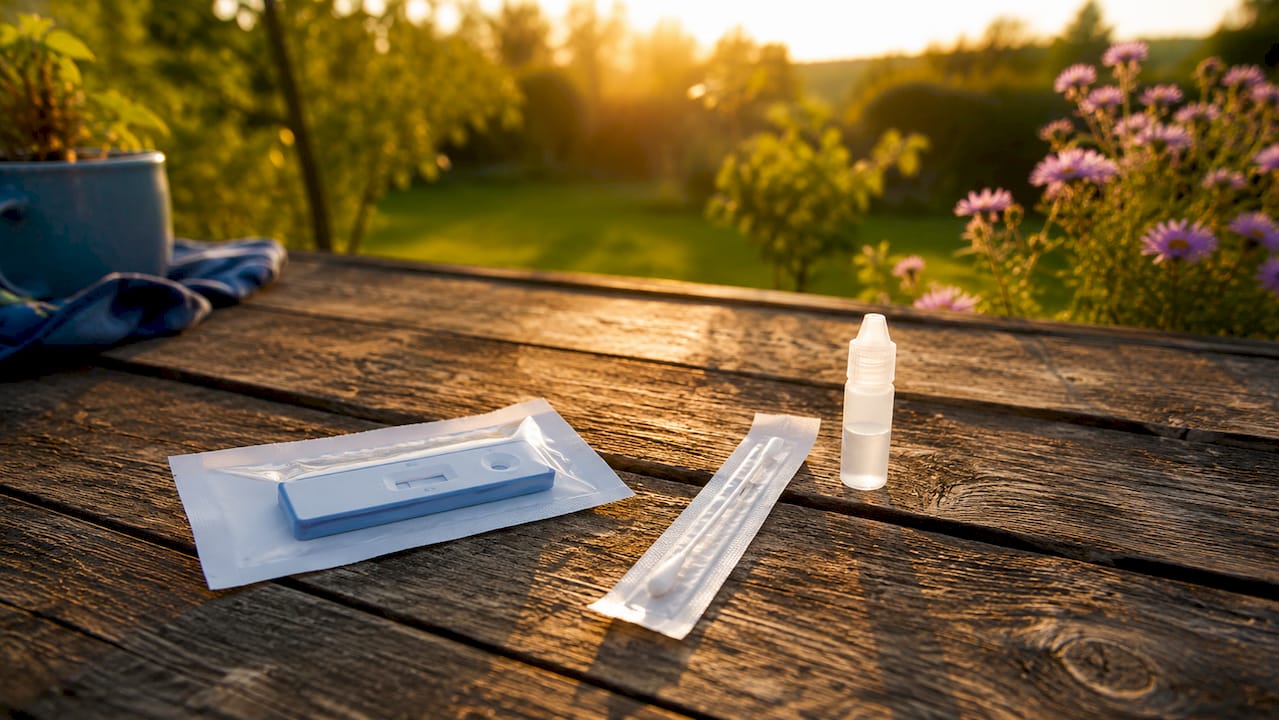
The range of available tests is remarkably broad. You can find kits for infectious diseases, metabolic markers, hormone status, genetic traits, and gut health. Each of these tests follows the same basic principle: you collect a sample, add it to the supplied reagent or send it to a laboratory, and receive a result that provides an initial indication of your health status.
Tests without IVD and CE marking are not suitable for private use and require expert interpretation by medical professionals. This means that when purchasing a home test kit, the labeling is not an optional detail but a safety feature.
How do home test kits work in detail?
Home test kits use different biological and chemical principles depending on what they are designed to measure. Understanding these mechanisms helps you interpret results correctly.
The most important testing technologies at a glance:
- Antigen tests detect specific proteins from a pathogen, such as coronavirus surface proteins. They provide results within 15 to 30 minutes and are suitable for acute infections.
- Antibody tests measure whether your immune system has already produced antibodies against a specific pathogen. They indicate past infections or immune responses to vaccinations.
- Chemical reaction tests use color changes or electrochemical signals to measure substances such as glucose, cholesterol, or hormones. Blood glucose meters work according to this principle.
- Laboratory-based kits contain sample tubes and shipping materials. You collect the sample at home, send it to a certified laboratory, and receive the result digitally. This process combines the convenience of a home test with the precision of laboratory diagnostics.
The main difference between a rapid test and a laboratory-based kit lies in the depth of the analysis. Rapid tests give you a yes-or-no answer. Laboratory-based kits provide quantitative values, meaning specific numbers that you can compare with reference ranges.
Digital apps for test evaluation increase user safety and enable direct data transfer to telemedicine providers or laboratories. This means that the next generation of home tests is no longer analog but increasingly digitally connected.
Pro tip: Take a photo of your test result with the associated app before disposing of it. Many apps automatically save the timestamp and evaluation, which can be helpful during consultations with a doctor.
What types of home test kits are available?
The wide variety of available home tests can be divided into five main categories, which differ in terms of application area, turnaround time, and accuracy.
| Test category | Examples | Time to result | Accuracy |
|---|---|---|---|
| Rapid infection tests | COVID-19, flu, RSV | 15 to 30 minutes | High with a high viral load |
| STI laboratory kits | HIV, chlamydia, gonorrhea | 1 to 3 days | 95 to 99% with laboratory analysis |
| Metabolic tests | Blood sugar, cholesterol, thyroid | Immediate to 2 days | Depending on the test type |
| Allergy and intolerance tests | Gluten, lactose, pollen | 2 to 5 days | Laboratory-based, high |
| Genetic tests and DNA analyses | Metabolism, micronutrients, microbiome | 2 to 4 weeks | Very high (sequencing) |
STI home tests with laboratory analysis achieve accuracies of 95 to 99%. This corresponds to a clinical standard and makes laboratory-based kits a serious alternative to a doctor's office for routine testing.
Genetic tests and microbiome analyses are a category of their own. They do not provide a diagnosis in the medical sense, but rather a detailed picture of your biological baseline. In this area, mybody x offers ISO-certified analyses of saliva, blood, and stool samples, which you conveniently collect at home and then send to the laboratory. The results include personalized recommendations for nutrition, micronutrients, and lifestyle.
The rule for choosing the right kit is: the more specific your question, the more targeted the test should be. If you want to know whether you are currently infected, you need a rapid test. If you want to optimize your metabolism over the long term, you need a laboratory analysis with quantitative values.
How safe and reliable are home test kits?
The reliability of a home test kit depends on three factors: the quality of the test itself, correct sample collection, and the context in which you test. All three factors significantly influence the result.
Sensitivity and specificity are the two key quality measures. Sensitivity describes how reliably a test detects an existing disease. Specificity describes how reliably it identifies healthy people as healthy. Laboratory diagnostics remain the gold standard, with higher sensitivity and specificity because sample quality, temperature, and user guidance are standardized there. This means that a home test can provide an initial indication but cannot replace a laboratory result.
A lesser-known factor is the so-called prevalence. When a disease is rare in the population, the rate of false-positive results from home tests increases significantly. A positive result in a low-prevalence situation therefore has a different significance than the same result during a flu wave. Many users underestimate this relationship.
“Home tests are a bridge to everyday life, but laboratory diagnostics are indispensable. Rapid tests lose analytical performance when used at home compared with laboratory conditions.”
| Quality characteristic | Home test | Laboratory diagnostics |
|---|---|---|
| Sample quality | Variable (user-dependent) | Standardized |
| Depth of analysis | Qualitative or semiquantitative | Quantitative, precise |
| Time to result | Minutes to days | Hours to days |
| Legal approval | CE and IVD required | Accredited laboratory |
| Cost | Low to medium | Medium to high |
Tests must bear the IVD and CE markings to be legally permitted for private use. Kits without these markings are not suitable for laypeople, regardless of how professionally packaged they appear.
Pro tip: Before purchasing, always check whether the kit bears the CE marking and the IVD designation. You will find these symbols on the packaging, usually next to the expiration date.
How do you use a self-test correctly at home?
Correct use is the decisive factor for a reliable result. Incorrect use almost invariably leads to false-negative results, meaning you believe you are healthy when you are not. The following procedure applies to most common home tests.
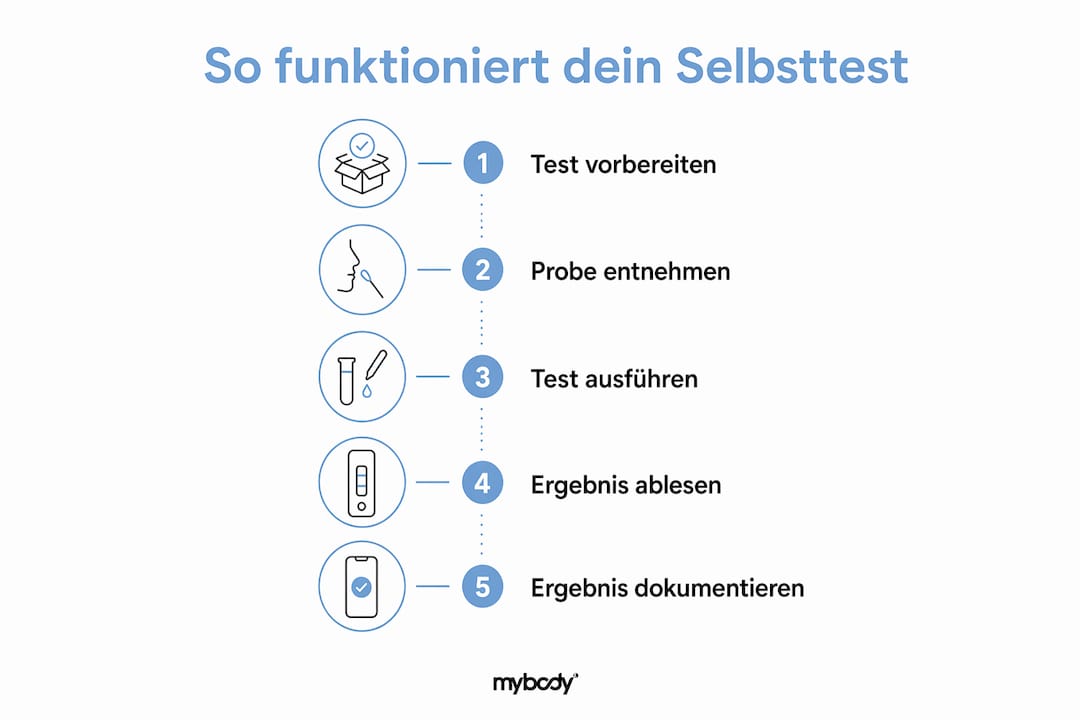
Step-by-step guide to a typical home test:
- Wash your hands. Wash your hands with soap for at least 20 seconds before opening the kit. Contaminants on your skin can distort the result.
- Check the expiration date and storage conditions. Proper storage at room temperature and observing the expiration date are prerequisites for reliable results. An expired kit produces unreliable results.
- Read the instructions in full. Read the entire package leaflet before you begin. Many mistakes occur because users skip individual steps.
- Collect the sample correctly. For nasal swabs, insert the swab at least 2 to 4 cm into the nostril and rotate it several times. For blood tests, prick the side of the fingertip, not the fingertip itself. For urine samples, use midstream urine.
- Follow the specified timing. Every test has a defined reaction time. Reading it too early or too late can distort the result.
- Interpret the result correctly. Two lines indicate a positive result on most rapid tests, while one line indicates a negative result. A missing control line means the test is invalid, not that the result is negative.
- Document the result. Photograph the result or record it with the time and date.
- Dispose of the kit properly. Biological material belongs in general waste, not the recycling bin.
Improper use, particularly incorrect swab handling, can lead to false-negative results and a false sense of security. This affects not only you but also the people around you.
Pro tip: Perform the test in the morning, before you have eaten, drunk, or brushed your teeth. Food residue and mouthwash can contaminate samples and affect the results.
You can find a detailed guide to collecting a blood sample at home in the mybody x health portal, including step-by-step photos and common mistakes.
When should you see a doctor after a home test?
Home tests enable self-monitoring and prevention, but they are not a substitute for professional medical advice in the event of symptoms or important diagnoses. The boundary between appropriate screening and necessary medical evaluation is clearly defined.
Situations in which you should always see a doctor:
- The home test result is positive, especially for infectious diseases such as HIV, STIs, or hepatitis.
- The result is negative, but you have clear symptoms. A negative result does not rule out an illness.
- You are testing a child under 12 or a pregnant person.
- You repeatedly receive abnormal values in metabolic tests such as blood glucose or thyroid tests.
- The test result is unclear or the test was invalid.
- You are planning to change or discontinue medication based on the result.
Home tests and laboratory diagnostics are not mutually exclusive; they complement each other. The most sensible approach is a two-step process: use a home test for rapid screening, followed by laboratory diagnostics for confirmation and quantification. Telemedicine providers such as Teleclinic or Zava allow you to discuss your results directly with a doctor online, without having to visit a medical practice.
For ongoing preventive healthcare, home tests are particularly well suited as regular monitoring measurements. Checking your vitamin D level, iron levels, or hormone status every six months helps you identify trends early, before symptoms appear. This is preventive medicine in everyday practice.
Key findings
Home test kits are reliable diagnostic tools for private use when used correctly. Their strength lies in rapid screening, while their limitation is the depth of their analysis.
| Point | Details |
|---|---|
| Check the CE and IVD markings | Only certified kits are approved for private use and can be interpreted safely. |
| Sample collection is crucial | Errors in swabbing, storage, or timing almost always lead to inaccurate results. |
| Rapid test versus laboratory kit | Rapid tests provide yes-or-no answers, while laboratory kits provide quantitative values with clinical precision. |
| Always confirm a positive result | Laboratory diagnostics remain the gold standard and must follow positive or unclear home test results. |
| Home tests as a preventive tool | Regular self-tests enable early detection of trends in metabolism, hormones, and micronutrients. |
mybody x: My assessment after years of using home tests
Over the past few years, I have observed that the biggest problem with home tests is not test quality but expectations. Many people buy a kit, use it, and treat the result like a medical diagnosis. This is a misunderstanding I have to correct again and again.
A home test is a tool for guidance, not a verdict. A positive rapid test tells you, “Take a closer look.” A negative test despite symptoms tells you, “Get examined anyway.” Those who understand this use home tests correctly.
What really impresses me about current developments is the combination of app integration and laboratory-grade quality. Kits that you collect at home and then send to an ISO-certified laboratory deliver results at a clinical level. That was not possible ten years ago. Today, you can have your micronutrient status, microbiome, and hormone status analyzed with the same precision as in a specialist clinic, without leaving home.
My honest advice: Use rapid tests for acute situations. Use laboratory-based kits for anything related to your long-term health. And always consult a doctor if the result concerns you. Home tests are not a substitute for medical judgment. They are a complement that gives you more control over your own health.
— mybody x
Your Health, Your Test: High-Quality Kits from mybody x
mybody x offers a wide range of ISO-certified at-home test kits for DNA analyses, micronutrient checks, microbiome testing, hormone tests, and metabolic tests. All kits bear CE and IVD markings and are analyzed in accredited Swiss laboratories.
You collect the sample conveniently at home, send it in free of charge (for orders from 49 euros), and receive your results digitally with personalized recommendations. More than 11,300 customers rate mybody x an average of 4.77 stars. Discover the right kit for your health goals directly at mybody-x.com and start your personalized health analysis today.
FAQ
What does IVD labeling mean on a home test?
IVD stands for in vitro diagnostic and identifies test kits that work with biological samples outside the human body. Only kits bearing IVD and CE markings are approved for private use and may be used without professional assistance.
How accurate are at-home test kits compared with a doctor’s test?
Laboratory-based home tests achieve accuracies of 95 to 99% and are therefore at a clinical level. Rapid tests are somewhat less precise and lose analytical performance in home use compared with standardized laboratory conditions.
What should I do if I get a positive home test result?
A positive result should always be confirmed through laboratory testing, as home tests do not replace a definitive diagnosis. Contact your doctor or use a telemedicine service to have the result interpreted.
What mistakes occur most often with self-tests?
The most common mistake is collecting a nasal swab sample too shallowly, followed by incorrect storage and reading the result outside the specified time window. All three errors lead to false-negative results.
Can I use at-home test kits for regular preventive health checks?
Yes, laboratory-based kits for micronutrients, hormones, and metabolic markers are well suited for regular checkups every six to twelve months. They enable early detection of trends before symptoms appear and are a valuable complement to medical examinations.



Share now:
Vitamin D deficiency and a large belly: what is proven and what is not
Self-test for gluten intolerance: Step by step