

How to monitor your blood values yourself: A guide to optimal health
One in two people in Switzerland has had abnormal blood values at least once in their lifetime. Those living in Lucerne, Zug, or Uri who are looking for new ways to optimize their health individually quickly feel the benefits of self-monitoring. Modern at-home blood tests make it possible to specifically influence nutrition and well-being. This guide shows you step by step how to determine your personal blood values independently and use them effectively.
Table of contents
- Step 1: Choose the right test kit for your needs
- Step 2: Carefully prepare your home and the test materials
- Step 3: Collect the blood sample correctly
- Step 4: Send the sample safely to the laboratory
- Step 5: Review and interpret your results
- Step 6: Use personalized recommendations to optimize your health
Quick summary
| Key point | Explanation |
|---|---|
| 1. Choose the right test kit | When choosing a test kit, consider your specific health goals and needs. |
| 2. Prepare your home | Ensure a clean and calm workspace to prevent infections during blood collection. |
| 3. Collect the blood sample correctly | Follow the collection instructions precisely to ensure accurate results. |
| 4. Send the sample safely to the laboratory | Carefully package your sample and follow the shipping instructions to ensure its integrity. |
| 5. Review and interpret the results | Use tools to understand your values and consult an expert if anything is abnormal. |
Step 1: Choose the right test kit for your needs
The first step in monitoring your blood values is choosing a test kit that precisely matches your individual health needs. There are various analysis options that shed light on different aspects of your health.
First, you should focus on your specific health goals. Would you like to carry out a comprehensive nutrient deficiency test or check specific values? The range extends from basic blood tests and hormone checks to detailed nutrient analyses.
When choosing, pay particular attention to the following criteria: Which parameters are tested? How complex is sample collection? Does the test provide an individual evaluation? Is personal consultation available after receiving the results? The more thorough your preparation, the more meaningful your blood values will be.
Here is a comparison of basic types of blood tests and their focus areas:
| Test type | Main focus | Suitable for |
|---|---|---|
| Basic blood test | General health status | People without specific symptoms |
| Hormone check | Hormonal balance | People suspected of having disorders |
| Nutrient analysis | Vitamin and mineral status | For suspected deficiencies |
| Specific individual value | Individual laboratory parameters | People with specific questions |
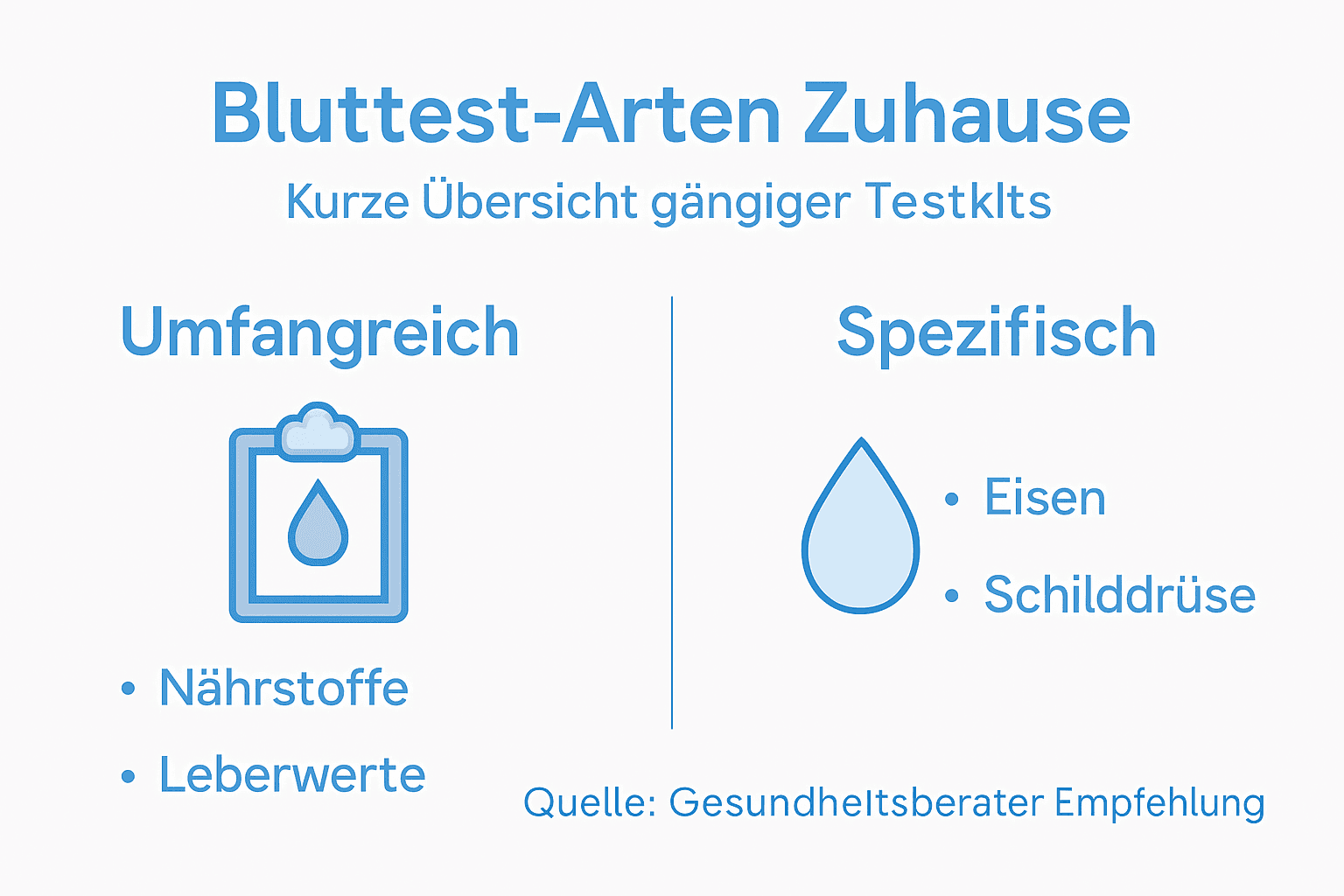
Pro tip: If in doubt, consult a healthcare advisor to find the perfect test kit for your individual needs.
Step 2: Carefully prepare your home and the test materials
When preparing for your blood test, careful preparation and hygiene play a crucial role. Make sure to create a calm, clean workspace where you can arrange all materials in an orderly and hygienic manner.
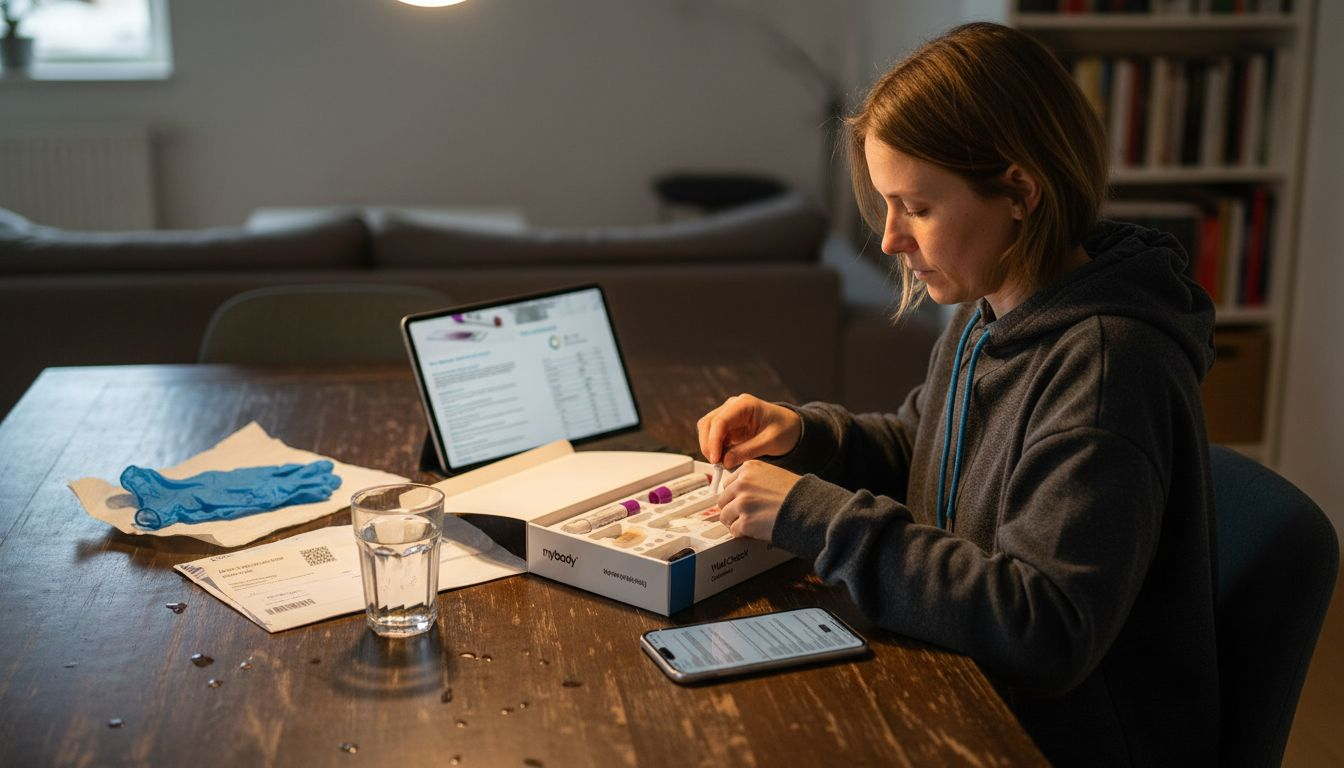
An important question to ask beforehand is: Can you drink water before having blood drawn? Proper hydration can affect the quality of your blood sample. Make sure you have unpacked and sorted all the test kit components. Check that all materials are included, such as the lancing device, sample tubes, disinfectant wipes, and adhesive bandages.
Be sure to follow the hygiene instructions when handling your test materials. Work at a clean table with sufficient lighting. Wash your hands thoroughly and disinfect your work surface. Keep all materials within reach and organize them systematically. Read the instructions carefully before you begin.
Pro tip: Prepare a glass of water and a snack to help stabilize your blood sugar levels after the blood draw.
Step 3: Collect the blood sample correctly
Correctly collecting the blood sample is essential for meaningful and reliable results. Make sure to follow all steps carefully and precisely.
When collecting your blood sample, pay particular attention to the capillary blood test instructions. First, clean your fingers with a disinfectant wipe and gently massage the finger to promote circulation. Choose the side of your finger for the blood draw. The lancing device should be pressed vertically and in one quick motion against the side of your finger.
Make sure you fill the blood sample tubes provided evenly and without interruption. If the blood draw does not work on the first attempt, stay calm. Sometimes a second attempt is needed. Make sure you cover the puncture site with a clean adhesive bandage after drawing blood.
Pro tip: After drawing blood, drink plenty of water and lie down briefly to prevent possible circulatory weakness.
Step 4: Send the sample safely to the laboratory
After carefully collecting the blood sample, safely shipping it to the laboratory is the crucial next step. Be sure to follow all packaging instructions precisely to ensure the integrity of your sample.
When packaging your blood sample, you should proceed with the same precision as you would for an at-home allergy test. Make sure all tubes are securely closed and labeled. Use the shipping bags and transport boxes provided. Maintain a constant temperature and protect the sample from direct sunlight or extreme temperature fluctuations.
Include all necessary accompanying documents in the package. Check the shipping address and ensure sufficient postage. If possible, use the prepaid return envelope. Document the shipping route and keep the tracking number.
Pro tip: Photograph your sample and shipping documentation as an additional safeguard in the unlikely event of damage.
Step 5: Review and interpret your results
After collecting the blood sample, the most exciting moment of your analysis begins: understanding and interpreting the results. Go through the results systematically and calmly.
While reading your blood test results, you can use a lab value checker to understand individual parameters in detail. Pay particular attention to values outside the normal range and their potential meanings. Compare your results with the reference values and take individual fluctuations into account.
If you notice any abnormalities or unclear measurements, I recommend consulting a healthcare professional. Not every deviation is cause for concern. Some values can be influenced by how you feel that day, your diet, or stress. Consider your blood values a snapshot of your health.
For a better overview: Common causes of abnormal blood values and recommended measures.
| Abnormal value | Possible cause | Initial measure |
|---|---|---|
| Low iron | Iron deficiency, blood loss | Adjust your diet, consult a doctor |
| High cholesterol | Unhealthy diet, stress | Increase physical activity, review eating habits |
| Elevated white blood cell count | Infections, stress | Wait for further diagnostics and monitor the progression |
| Low vitamin D | Lack of sunlight, diet | Vitamin D supplement after consultation |
Pro tip: Keep a health diary to document changes in your blood values over time and recognize patterns.
Step 6: Use personalized recommendations to optimize your health
Your blood values are more than just numbers; they are an individual guide to your optimal health. Now begins the exciting process of targeted health improvement based on your personal results.
Use the tips for sustainable health improvement to systematically optimize your blood values. Analyze your results and identify areas with potential for improvement. Focus on nutrition, exercise, stress management, and sleep quality.
Pay particular attention to factors such as nutrient supply, metabolic activity, and hormonal balance. Deliberately adjust your diet to include foods that can positively influence your specific values. A holistic approach with regular monitoring is the key to sustainable health optimization.
Pro tip: Develop an individual health plan based on your blood values and review it every three to six months.
Monitor your blood values yourself with mybody® for optimal health
Do you feel unsure when choosing a suitable blood test or not know how to interpret the results correctly? The goal described in the article is to keep an eye on your overall health and monitor blood values specifically. Many people are looking for simple ways to obtain a precise analysis and personalized recommendations for nutrient deficiencies, hormonal imbalances, or metabolic problems.
With the At-Home Health Tests – Discover All Tests - mybody®x, you get exactly the scientifically tested kits you can use in the comfort of your own home. Trust tested, ISO-certified laboratories, detailed evaluations, and personal consultation—so you can derive concrete steps toward greater well-being from your blood values. You can also benefit from attractive offers on the Save Now | Discover Blood Offers at Unbeatable Prices – mybody®x page and explore selected tests such as our At-Home Hormone Tests – Triglycerides, Cortisol, Testosterone & More – mybody®x.
Take action and start now with an individual analysis at https://mybody-x.com – for a healthy future with reliable insights that truly move you forward.
Frequently Asked Questions
How do I choose the right test kit for monitoring my blood values?
To choose the right test kit, focus on your specific health goals. Consider which values you want to check and compare the tests offered based on the parameters they measure.
What do I need to keep in mind when preparing for my blood test?
Make sure you create a quiet, clean workspace and have all test materials ready. Wash your hands thoroughly and disinfect your work surface before beginning the blood collection.
How do I collect blood samples correctly?
Follow the blood collection instructions precisely and clean your finger beforehand with a disinfectant wipe. Press the blood collection device vertically against the side of your finger and fill the sample tubes evenly.
What do I need to keep in mind when shipping my blood sample to the laboratory?
Make sure that all sample tubes are tightly sealed and properly labeled. Package the sample according to the instructions and keep a tracking number for monitoring its progress.
How do I interpret the results of my blood test?
Go through the results systematically and either use a laboratory value checker or compare your values with the reference ranges. If any values are abnormal, consult a healthcare professional for clarification.
What steps can I take to sustainably optimize my health?
Analyze your blood values and identify areas that can be improved. Develop an individual health plan that takes your diet, exercise, and stress management into account, and review it every three to six months.
Recommendation
- What is tested in a complete blood count? Everything at a glance – mybody®x
- What is normal blood pressure? Your comprehensive guide – mybody®x
- Complete blood count: Which diseases can really be detected? – mybody®x
- Testosterone testing: Simple and discreet from home – mybody®x
- Personalized Diet and Exercise Plans | Healthy Detox
- RestartiX Nutritional Webinar - Diabetes - RestartiX Store



Share now:
Low Progesterone Symptoms: Finally Understand and Take Action
Fasting for a blood test: Is coffee really off-limits?