
Fasting Before a Blood Draw: Is Coffee Really Off-Limits?
For most of us, the first cup of coffee in the morning is an indispensable ritual. Yet this very ritual often causes uncertainty when a blood draw is scheduled. To get straight to the point: The clear and truly important answer to the question “Can you drink coffee before a blood draw while fasting?” is a resounding no. For precise and reliable results, you should avoid it. Even black coffee without anything added can throw certain values off and reduce the reliability of your test results.
Coffee Before a Blood Draw: What You Really Need to Know
For many people, morning coffee is simply part of their routine. In fact, around 70 percent of Germans drink coffee every day, making abstaining before an important health test a real challenge. But this small sacrifice is crucial for getting an honest, unaltered picture of your body.
Imagine your bloodstream as a still lake early in the morning. Everything you consume creates ripples and changes the composition of the water. Coffee is not merely colored water; it is a biochemically active beverage that stimulates your metabolism, affects your hormone balance, and can even temporarily change your blood sugar level.
Why Every Sip Counts
When you have a blood test—especially one as detailed as the nutrient tests or hormone tests from mybody-x.com—you want to determine your baseline values. These are the values that show your body in a state of complete rest, without any external influences.
A blood test taken while fasting is like a snapshot of your body without a filter. This is the only way to obtain authentic data that will help you truly understand and deliberately improve your health.
This brief summary highlights the most important rules for preparing for your test.

The graphic makes it clear: For reliable results, coffee and other beverages are off-limits for now. Water, on the other hand, is not only allowed but even recommended.
The Difference Between Coffee and Water
While plain water hydrates your body without significantly affecting your metabolism, coffee triggers an entire cascade of reactions. The caffeine it contains stimulates your central nervous system and can lead to the release of hormones such as adrenaline. This, in turn, can raise your blood sugar level—almost as if your body were preparing for a stressful situation.
Although some claim that black coffee is fine, even the smallest changes in sensitive analyses—such as a cholesterol measurement or hormone profile—can lead to incorrect interpretations. In general, consuming food or stimulating drinks can distort values such as blood sugar or triglycerides by up to 20–30 percent. This naturally makes diagnosing metabolic disorders considerably more difficult. You can read more about the exact background in detail when exploring the topic of coffee before having blood drawn.
By skipping your morning coffee, you ensure that the results of your mybody®x test—whether an intolerance test or a hormone test—reflect your actual health situation.
Why fasting is so important for blood tests
When your doctor or the laboratory says “fasting,” they mean more than just a rumbling stomach. It refers to a standardized state of your body that is the essential basis for reliable and meaningful laboratory analyses, such as those we perform in the mybody-x.com tests.
Imagine your body as a tranquil mountain lake early in the morning. If you take a water sample now, you get a crystal-clear picture of the water’s actual quality. This is your initial state, your baseline value. Every meal, every juice, and even your beloved morning coffee is like a pebble falling into the water and immediately creating ripples.
Your body at rest
Even a small breakfast gets your metabolism going: your blood sugar level shoots up, your body releases hormones, and fats enter the bloodstream. These are completely normal, short-term reactions, but they would mask your true baseline values and distort the results.
To capture the lake’s true condition—in other words, your baseline health values—the surface of the water must be completely still. The golden rule is therefore to fast for at least 8 to 12 hours. During this time, your body can calmly process all the nutrients you have consumed and return to its natural resting state.
Only in this fasting state can we measure your blood values without the “interference” of digestion. This allows us to see how your system works at its core and identify deviations precisely.
If you follow this simple rule, you create the perfect foundation for analyzing your nutrient test or hormone test and receive results you can rely on.
Why water is the exception
While coffee, tea, and juices stimulate your metabolism, still water behaves in a completely neutral way. It provides your body with fluids and even makes your blood slightly less viscous, which can make the blood draw easier—without affecting important parameters such as blood sugar or blood lipids.
We have also summarized exactly what “fasting” means in detail and what other nuances you should be aware of in our article “What does fasting before a blood test mean?” for you. Your small effort in the morning ensures the highest quality of your laboratory analysis—and that is the first step toward reliable recommendations for your health.
How coffee can specifically affect your laboratory values
Coffee is so much more than just a morning pick-me-up. It is a complex beverage that triggers a whole range of biochemical processes in your body. Even if you drink it black and without sugar, the caffeine alone sets off a chain reaction that can temporarily throw your blood values out of balance.
You can think of it this way: Caffeine puts your body into a kind of “state of alert.” Your nervous system is stimulated and releases stress hormones such as adrenaline and the better-known cortisol. These hormones signal your body to mobilize energy quickly—almost as if you were about to achieve peak athletic performance or had to flee from danger.
Blood sugar and blood lipids on a roller coaster
One of the most direct consequences of this hormonal response is an increase in your blood sugar level. Your liver is instructed to release stored glucose to provide quick energy. As a result, this value would appear artificially elevated in a blood test, making a reliable assessment of your actual fasting blood sugar impossible.
The same applies to blood lipids:
- Triglycerides: Caffeine can stimulate the release of fatty acids from adipose tissue, leading to a short-term increase in triglyceride levels in the blood.
- Cholesterol: Unfiltered coffee in particular contains substances that may affect cholesterol levels.
In short: Coffee puts your metabolism into an active state that is miles away from the calm, fasting baseline we need for precise analysis. The result would not reflect your normal state, but merely a snapshot under the influence of caffeine.

These blood values can be affected by coffee
To give you a better overview, we have summarized the most important parameters that can be affected by coffee before a blood test. Precision is especially important for the mybody-x.com tests, which are designed to give you an accurate picture of your body.
| Blood value/parameter | Possible change caused by coffee | Relevant mybody-x.com test |
|---|---|---|
| Glucose (blood sugar) | Increase due to the release of stored sugar | Nutrient test, hormone test |
| Cortisol | Significant increase due to stimulation of the adrenal glands | Hormone test |
| Triglycerides (blood fats) | Short-term increase due to the release of fatty acids | Nutrient test, hormone test |
| Iron | Possibly lower levels due to impaired absorption | Nutrient test |
| Liver enzymes (e.g., GGT) | Short-term changes are possible, which can distort the picture | Nutrient test, hormone test |
| Adrenaline/noradrenaline | Increase (less often measured directly, but they influence other values) | Indirectly relevant to hormone tests |
This list shows how profoundly even a single cup of coffee affects your metabolism. To obtain an accurate result, abstaining is therefore essential.
Hormones and minerals also react
Your hormonal system is particularly sensitive. The cortisol increase triggered by coffee is a prime example. If, for example, you want to have your cortisol level measured to assess your stress level or adrenal function, the coffee would directly distort the result. If you would like to explore the topic in greater depth, take a look at our article on measuring cortisol.
It can also interfere with the absorption of important nutrients. Coffee contains so-called tannins, which temporarily inhibit your body's ability to absorb iron. During a comprehensive nutrient analysis, this is another important reason why abstaining is so crucial.
Interestingly, regular coffee consumption can even have positive long-term effects, such as on liver values. A large European long-term study linked high coffee consumption to a lower risk of death and better liver enzyme levels. But this is exactly where the catch lies: In the short term, meaning directly before a blood test, coffee distorts these markers and can raise blood sugar by up to 15 percent.
For your mybody-x.com test, this means that only completely avoiding coffee guarantees an accurate picture of your health. That is the only way we can provide you with valuable and, above all, accurate recommendations for what to do next.
Is Decaffeinated Coffee a Safe Alternative?
Many coffee lovers believe they have found the perfect trick to get around the fasting rule: simply switch to decaffeinated coffee. Sounds logical at first, right? If caffeine is the problem, the caffeine-free version should be harmless. Unfortunately, that’s a misconception.
Decaffeinated coffee is anything but harmless brown water. It is still packed with bioactive compounds that can stimulate your metabolism even without caffeine and thereby throw your blood values out of balance.
More Than Just Caffeine
Think of it this way: The process that decaffeinates coffee removes most of the caffeine but leaves hundreds of other substances in the bean. These include acids, oils, and antioxidants, all of which trigger a biochemical reaction in your body.
These substances can, for example, stimulate the production of stomach acid or signal your liver to release certain enzymes. Even if their effect may be gentler than that of the original caffeinated version, they still disrupt the sensitive balance of your fasting state.
Even without caffeine, coffee remains a complex beverage that activates your body. For the precise results you expect from your mybody-x.com test, this supposedly safe alternative is therefore not a good idea either.
Especially when analyzing metabolic parameters such as blood lipids, even decaffeinated coffee can significantly distort the results. A fascinating study showed just how substantial these effects can be.
The study revealed surprising effects: Among overweight participants, “good” HDL cholesterol rose by an impressive 50 percent, while among normal-weight participants it fell by as much as 30 percent. At the same time, important markers for “bad” LDL cholesterol increased. This shows how profound the effects can be. If you’re interested in the details, you can learn more about the study results on decaffeinated coffee here.
Only water is the right choice
These findings make one thing crystal clear: When it comes to preparing for a blood test, there are no clever shortcuts. Any kind of coffee—whether caffeinated or decaffeinated, with milk or black—is a confounding factor.
By the way, every body reacts differently to caffeine, which is partly determined by genetics. How quickly you break it down and how strongly it affects your sleep varies from person to person. In our health portal, you can learn more about how your genes determine the connection between sleep and caffeine.
To ensure that your mybody-x.com nutrient, hormone, or intolerance test provides a completely clear and accurate picture of your health, the rule is very simple: Before your blood draw, still water is your best friend. This creates the ideal conditions for results you can trust 100%.
The ideal preparation for your mybody-x.com home test
We're glad you chose a mybody-x.com home test! You're only a few steps away from gaining valuable insights into your body. But to ensure your results are truly meaningful, proper preparation is essential. Don't worry, it's very easy—and this section shows you how to make sure everything goes smoothly.
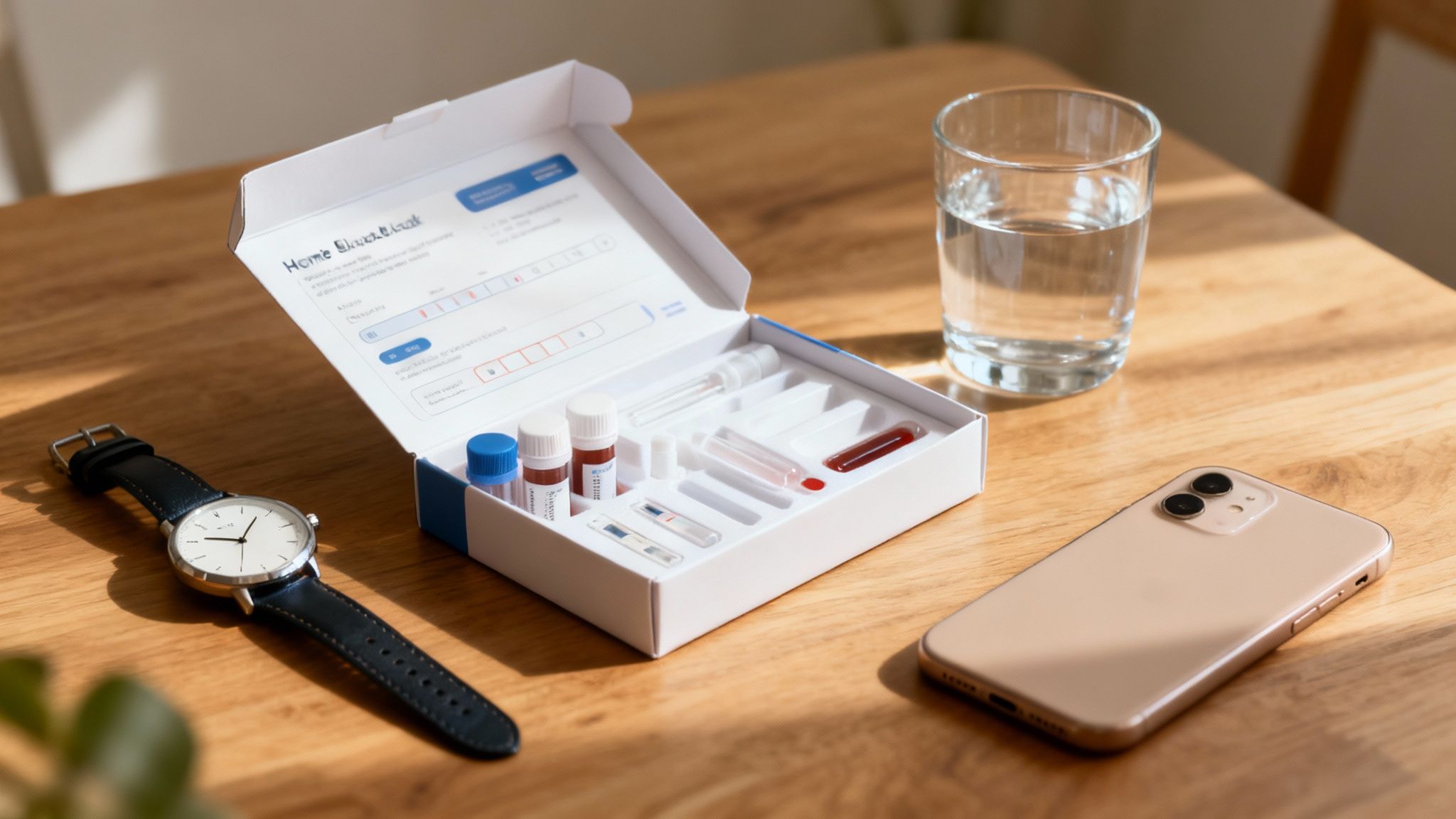
Your small effort in the morning makes a huge difference. It ensures the high quality of our laboratory analyses and provides the basis for reliable recommendations that help you take charge of your health.
Your personal checklist for accurate results
So you don't forget anything, we have put together a short checklist for you. Think of it as your personal recipe for success for a perfectly accurate analysis.
-
Observe the fasting period: This is the most important point. Please do not eat anything for 8 to 12 hours before your blood draw. The easiest option is to take the test first thing in the morning after getting up.
-
Choose the right drink: Only still water is allowed during the fasting period. Coffee, tea, juice, and all other drinks are unfortunately off-limits, as they can significantly disrupt your results. Find out why water is even important in our article “Can you drink water before a blood draw?”.
-
No dietary supplements: Please skip all vitamins, minerals, and other supplements on the morning of your blood draw. They can directly affect the measured levels of certain nutrients and distort the results.
-
Take a break from exercise: Give yourself a break from intense exercise the evening before the test and on the morning of the test. A strenuous workout can temporarily raise inflammatory markers and stress hormones such as cortisol.
By following these simple steps, you’ll create the perfect conditions for your mybody-x.com test. This ensures that the results provide an unaltered picture of your body in a resting state.
What your test day could look like
Picture the process as being completely relaxed. Have dinner the evening before and make sure at least 8 hours pass before the next morning. After waking up, drink a glass of still water—it helps get your circulation going and makes the blood draw easier.
After that, take your sample at your leisure, exactly as described in the instructions for your mybody-x.com kit. Without the influence of coffee before a blood draw or breakfast in your stomach, you’ll provide a “clean” sample. Those are precisely the pure data our laboratory experts need for an accurate analysis.
Frequently asked questions about coffee and blood draws
Questions about coffee and fasting before a blood draw come up again and again. That’s perfectly normal—after all, this is about your health, and naturally you want to do everything right. To put your mind at ease, we’re answering the most frequently asked questions we receive at mybody-x.com here. Short, clear, and to the point.
Here you’ll find everything important summarized so you know exactly what matters and why certain rules are so crucial for the accuracy of your test results.
What exactly does “fasting” mean for a blood test?
The term “fasting” often causes confusion. Basically, it’s quite simple: You should not eat anything for 8 to 12 hours before your blood sample is taken. But that’s only half the story.
It is equally important that you drink only still water during this time. All other drinks—including black coffee, tea, juice, or milk—are unfortunately off-limits. You should also avoid chewing gum, candy, and cigarettes. All these things can stimulate your metabolism and disrupt important values such as blood sugar or hormone levels.
Only when your body is in this complete resting state can we measure your unaltered baseline values—the basis for an accurate result from your mybody-x.com test.
What should I do if I accidentally drank coffee?
Don’t panic, it can happen to anyone. The most important thing now is to be honest. If you accidentally had a coffee before your mybody-x.com home test, please clearly note it on the enclosed form or briefly inform our customer service team.
If the blood draw takes place at a medical practice, inform the medical staff immediately. Depending on which values are to be measured, it is very likely that the appointment will need to be rescheduled. This is solely to ensure that you ultimately receive a truly meaningful result.
An honest warning is always better than a distorted result. Especially for metabolic analyses or hormone profiles, scheduling a new appointment is the only sensible solution for a result you can rely on.
Does the fasting rule also apply to hormone or intolerance tests?
Yes, absolutely! Especially with these specialized tests, fasting is essential. Your hormonal system is highly sensitive and reacts extremely quickly to external influences. A small stimulus such as caffeine is enough to send your cortisol level soaring. That makes it impossible to measure your true baseline level.
The same applies to tests for food intolerances, such as our mybody®x intolerance test. Consuming any food or beverage can temporarily “activate” your immune system and influence the response to certain antibodies. The result would ultimately be distorted.
To get a clear picture of your hormone status or possible sensitivities, strictly following the fasting rule for all mybody-x.com tests is the key to results you can trust.
Why is water okay, but unsweetened tea isn't?
An absolutely valid question. The crucial difference lies in the ingredients that go beyond pure water (H₂O). Still water is neutral for the body; it does not affect the metabolism. It provides you with fluids and even makes the blood draw easier without distorting your results.
Tea, on the other hand—even unsweetened—is a cocktail of hundreds of bioactive substances. These include tannins and, depending on the variety, caffeine (also known as theine in tea). Like coffee, these substances can stimulate metabolic processes, block the absorption of minerals such as iron, or boost hormone production. Tea is therefore unfortunately a confounding factor for precise laboratory analysis.
Do you want to gain clarity about your nutrients, hormones, or possible intolerances? The home tests from mybody-x.com offer you a simple, scientifically sound way to better understand your body. Order your personal test now and receive precise results directly from our German specialist laboratory to specifically optimize your health. Discover the variety of our tests at https://mybody-x.com.



Share now:
Guide to self-monitoring blood values for optimal health
Vitamin B12 Deficiency Test: Your Practical Guide for Home Use