What does longevity mean, and what can a DNA test contribute to it?
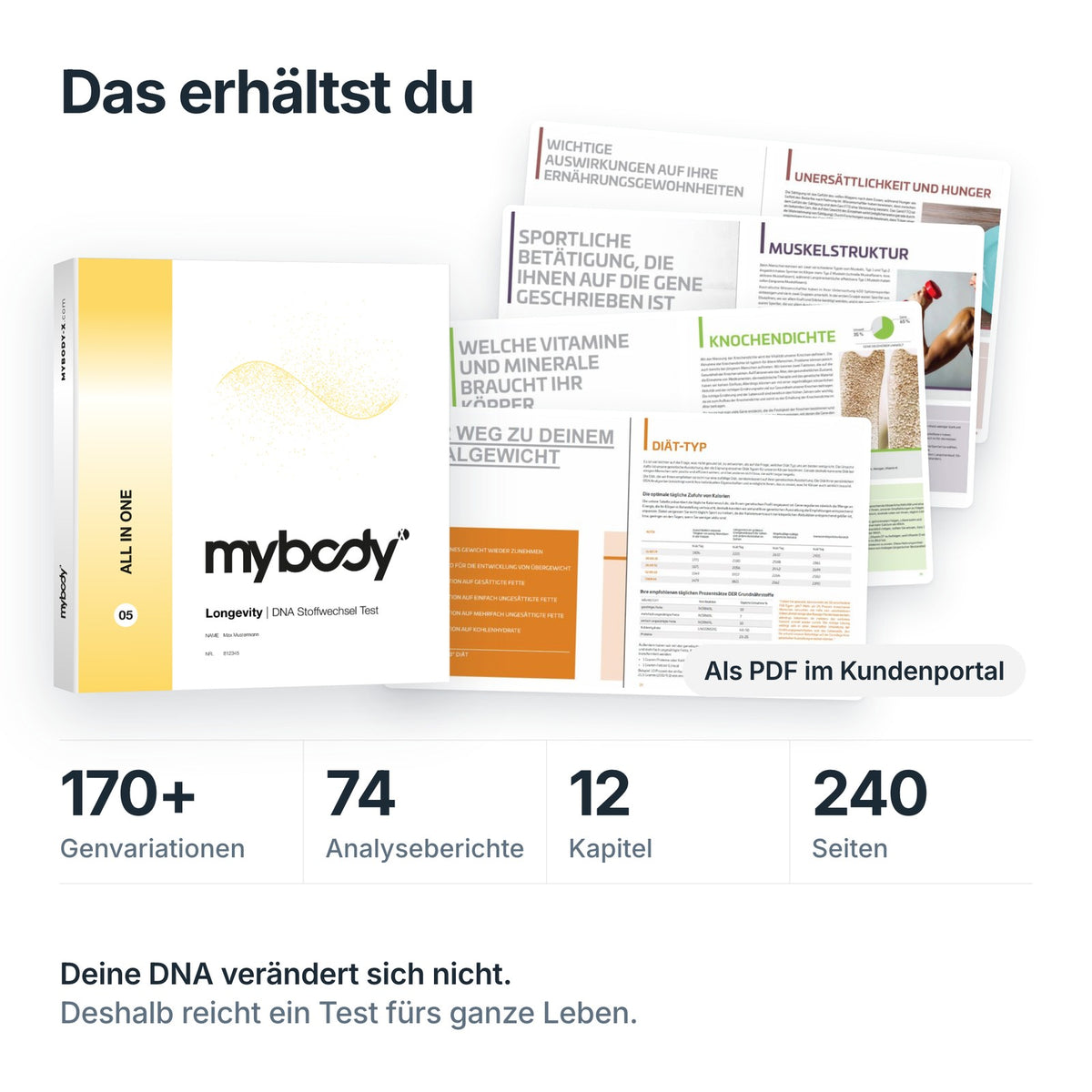
Longevity means living a long life. A DNA test cannot predict it. What it contributes is an assessment of your predispositions, detailed in 74 reports.
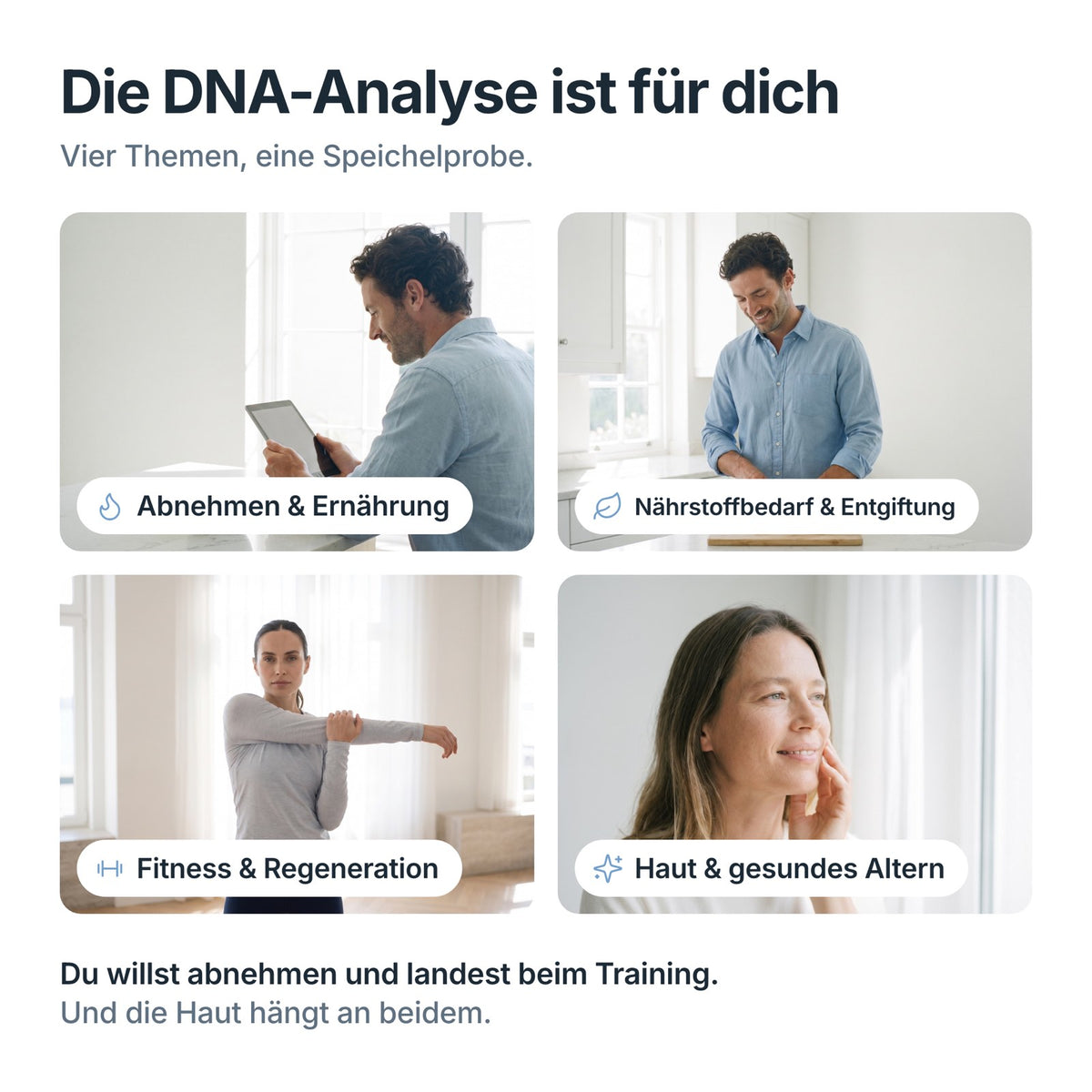
Longevity has become a catch-all term used to sell a wide variety of things. Literally, it means living a long life, and that already sets the first boundary. It is this: how long someone lives depends on so many factors that no analysis can predict it. What a DNA test can contribute is something more modest and more useful. It shifts the question from lifespan to the everyday factors that help determine it. It assesses how your body processes food and what level of strain suits your predispositions. Skin is included too, because it is connected to both. This description will not change. This description remains. What comes of it depends on what you do every day. A predisposition is not a fixed outcome, but a description of what you are working with. Anyone who approaches it with this expectation can make use of it. The benefit lies in being able to assess four areas at the same time instead of working through them one after another. Anyone expecting a measurement should look elsewhere, and we would rather say that beforehand than afterward. The difference is simple: one measures a state, while the other describes a predisposition. Both have their place; they simply answer different questions.
Who is the Longevity DNA test worthwhile for?
For anyone who wants to address several topics at once. If you only have one question, one of the smaller tests will be more cost-effective.
This is the largest analysis in the range, and that is not an advantage for everyone. More reports do not automatically mean more value. If you want to know why diets affect you differently, you do not need 74 reports, but the 24 included in SLIM. For nutrition, there is NutriCare with the same food assessment; for training, there is VITALITY. Longevity is worthwhile if these questions come together for you and you do not want to deal with them one after another. Then, with one saliva sample, you get what would otherwise require four tests, and you keep it for life. That is the real reason for this product: not more topics for the sake of the number, but because they naturally come together in everyday life. A second test will never be necessary because your predispositions do not change. Research continues, your result remains, and only your knowledge of it grows. In everyday life, this means you are not buying a snapshot, but a foundation you can return to. Whether it pays off for you depends on how many of the four topics actually affect you. For one, it is rarely worthwhile; for three, it almost always is.

 Support health