

How do health self-tests work? Guide 2026
Many health-conscious people in Switzerland face a challenge: They want to actively monitor their health but are unsure how self-tests actually work and whether the results are reliable. The range of at-home tests is constantly growing, from blood analyses and metabolic tests to rapid tests. This article explains step by step how these tests work, the necessary preparation, and how to evaluate them correctly. You will receive practical tips for safe and scientifically valid use so that you can make informed decisions about your health.
Table of contents
- Key points
- Health self-tests: basics and test types
- Preparing for and Performing a Blood Home Test
- Evaluation and interpretation of the results
- Metabolic tests and personalized health advice
- Learn more: Health and self-test solutions from mybody®x
- How does the health self-test work: frequently asked questions
Key findings
| Point | Details |
|---|---|
| Test types and sample mechanics | The article distinguishes between at-home blood tests, rapid tests, and questionnaire-based methods and explains how they work. |
| Blood test preparation | Preparations on the day before and the day of sample collection are described, including drinking enough fluids, avoiding alcohol, and following the exact procedure. |
| Validation and evaluation | It emphasizes that laboratory tests are scientifically validated and that rapid tests often have lower sensitivity. |
| Practical test selection | The article provides practical guidance on selecting suitable tests based on individual health goals. |
Health self-tests: basics and test types
The range of health self-tests has expanded considerably in recent years. In principle, three main categories can be distinguished: at-home blood tests, rapid tests, and questionnaire-based methods. Each category serves specific purposes and uses different methods of data collection.
At-home blood tests form the backbone of modern health monitoring at home. They work according to the dried blood spot principle: a small finger prick provides a few drops of blood, which are applied to special filter paper. After drying, the sample remains stable at room temperature and can be sent to a laboratory by mail. This method allows the measurement of numerous biomarkers, from vitamins and minerals to hormones. The technique has been scientifically validated and is used worldwide in medical diagnostics.
Rapid tests such as antigen tests for infectious diseases or urine tests for pregnancy and metabolic parameters deliver results within minutes. They are based on immunochemical reactions in which specific antibodies react with target substances and produce a visual signal. These tests are ideal for making quick decisions, but often have lower sensitivity than laboratory tests.
Questionnaire-based methods complement objective measurements with subjective assessments. They capture symptoms, dietary habits, or lifestyle factors and can create risk profiles. Modern providers combine such questionnaires with laboratory tests for a more comprehensive picture.
The range of measurable parameters is impressive. While some tests cover only a few markers, comprehensive panels analyze significantly more values. The most important biomarkers include:
- Vitamins such as D, B12, folic acid, and fat-soluble vitamins
- Minerals such as iron, ferritin, magnesium, zinc, and selenium
- Fatty acids, especially omega-3 and omega-6 ratios
- Hormones such as cortisol, testosterone, estrogen, and thyroid hormones
- Inflammatory markers such as CRP or homocysteine
- Metabolic parameters such as blood glucose, HbA1c, or cholesterol
For health-conscious people seeking deeper insights, medical home tests offer a practical way to regularly monitor their health. Choosing the right test depends on your individual health goals.
Preparing for and Performing a Blood Home Test
Properly performing a blood home test determines the quality of the results. Careful preparation minimizes potential sources of error and ensures that your sample provides meaningful data.

Start preparing the day before. Drink enough water to improve circulation. Avoid alcohol and intense physical activity for 24 hours before collecting the sample, as both can affect certain biomarkers. Some tests require a fasting sample, while others do not. Read the instructions for your specific test carefully.
On the day of the test, follow these steps:
- Wash your hands thoroughly with warm water and soap. The warm water improves circulation in your fingers.
- Gently massage the hand and finger from which you want to draw blood. Shake your hand downward to direct blood into your fingertips.
- Disinfect the puncture site with the enclosed alcohol swab and let the area dry completely.
- Place the lancet against the side of your fingertip, not directly on the tip. The side position is less painful and often provides more blood.
- Press the lancet firmly to activate the mechanism. A brief, sharp prick will follow.
- Gently massage from the wrist toward the finger to form a drop of blood. Wipe away the first drop with a clean cloth, as it may contain tissue fluid.
- Apply the following drops to the marked circles on the filter paper. Do not touch the paper directly with your finger; instead, let the blood drip onto it naturally.
- Allow the sample to dry at room temperature for at least 30 minutes, protected from direct sunlight.
Pro tip: Collect the sample in the morning, ideally between 7 and 10 a.m. Many biomarkers, such as cortisol, are subject to daily fluctuations, and morning values are more comparable with reference ranges.
After drying, package the sample according to the instructions. Most providers supply sealed bags with desiccant. Performing blood tests at home requires care, but with the right technique, you can obtain laboratory-quality results.
Observe the shipping deadlines. Dried blood samples remain stable at room temperature for several days; however, you should ideally ship them within 24 to 48 hours. Avoid shipping over weekends or public holidays so that the sample is not in transit unnecessarily long.
Evaluation and interpretation of the results
As soon as your sample arrives at the laboratory, the technical analysis begins. The mechanics of biomarker blood tests are based on collecting a finger-prick sample on filter paper, drying it, shipping it to the laboratory, and analyzing it using an immunoassay or spectrometry. These methods are highly precise and are also used in clinical laboratories.
Immunoassays use specific antibodies that bind to target molecules. Enzymatic or fluorescent markers are used to quantify the biomarker concentration. This method is particularly suitable for proteins, hormones, and vitamins. Mass spectrometry, on the other hand, identifies molecules based on their mass-to-charge ratio and is extremely precise for fatty acids, amino acids, and other small molecules.
Typical biomarkers and their significance:
- Vitamin D: Essential for bone health and immune function; levels below 50 nmol/L are considered deficient
- Ferritin: Stored iron; low levels indicate iron deficiency, while high levels may indicate inflammation or iron overload
- Omega-3 Index: Ratio of EPA and DHA to total fatty acids; levels above 8 percent are considered cardioprotective
- HbA1c: Long-term blood sugar; levels above 6.5 percent indicate diabetes
- CRP: Inflammation marker; elevated levels signal acute or chronic inflammatory processes
It is important to distinguish between screening and diagnosis. Home tests provide valuable indications, but they do not replace a medical examination. One example illustrates this: Tests show tendencies and are not diagnoses; validation is crucial—for example, the FIT stool test is highly accurate, but only colonoscopy is the gold standard. Even highly sensitive tests have limitations.
“An abnormal self-test is a warning sign, not a verdict. It encourages you to seek professional advice, not to panic.”
When interpreting your results, you should consider several factors. Reference ranges vary depending on the laboratory, age, sex, and, in some cases, ethnic background. A value just outside the reference range is not automatically a cause for concern. Trends across multiple measurements are often more meaningful than individual values.
Overinterpretation is a common pitfall. Not every minor deviation requires immediate intervention. Discuss abnormal results with a doctor or nutritionist who understands your overall health context. Personalized nutrition is based on solid data, not hasty conclusions.
Metabolic tests and personalized health advice
Metabolic tests go beyond simple biomarker analyses. They combine blood or saliva samples with genetic information to create a comprehensive picture of your individual metabolism. These tests analyze biomarkers in blood/saliva for personalized nutrition/lifestyle recommendations, including genetic polymorphisms such as APOE.
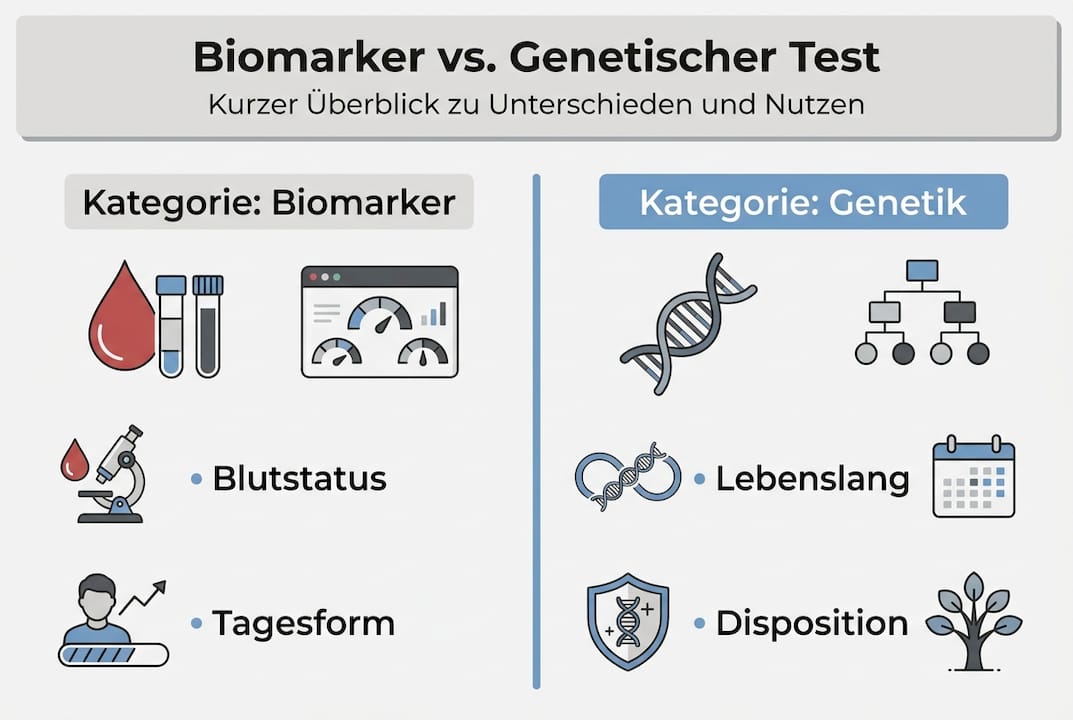
The distinction between blood biomarkers and genetic tests is fundamental. Blood biomarkers show your current state; they are dynamic and change with diet, stress, or illness. Genetic variants, on the other hand, are static: they remain the same throughout your life and influence how your body processes nutrients, responds to exercise, or carries disease risks.
Key parameters in metabolic tests:
| Category | Examples | Benefits |
|---|---|---|
| Macronutrients | Carbohydrate, fat, and protein metabolism | Optimization of macronutrient distribution |
| Micronutrients | Vitamins B, D, and E; minerals | Targeted supplementation for deficiencies |
| Genetic variants | APOE, MTHFR, FTO, TCF7L2 | Risk assessment and preventive strategies |
| Metabolic markers | Insulin, leptin, adiponectin | Insight into hormonal regulation |
| Detoxification | Glutathione, phase I/II enzymes | Support for liver detoxification |
The recommendations resulting from such tests are individually tailored. Someone with an MTHFR variant may need more folate in methylated form. A person with an FTO risk variant benefits from a protein-rich diet and regular exercise for weight management. APOE4 carriers should reduce saturated fats to minimize cardiovascular risks.
Pro tip: Genetic tests provide lifelong information, while blood biomarkers should be checked regularly. Combine both approaches for a complete picture. A one-time DNA test plus annual blood checks offers optimal monitoring.
The limitations of personalized health advice lie in the complexity of biological systems. Genes interact with the environment, the microbiome, and lifestyle in ways we do not yet fully understand. Recommendations are based on current scientific findings, which continue to evolve. Stay critical and informed.
For deeper insights into personalized nutrition analysis or specific DNA tests for nutrition, you will find comprehensive guides that combine scientific foundations with practical application.
Learn more: Health and self-test solutions from mybody®x
If you are ready to optimize your health on a scientific basis, mybody®x offers comprehensive solutions. As a Swiss provider with ISO-certified laboratories, mybody® delivers validated analyses in the areas of DNA, metabolism, the microbiome, and nutritional status. More than 11,300 satisfied customers trust the combination of precise laboratory diagnostics and personalized recommendations.
The range extends from simple blood tests to complex DNA metabolism analyses. You can conveniently perform all tests at home; samples are processed using pseudonymized data and destroyed in accordance with data protection regulations after analysis. You receive not only results but also specific recommendations for action regarding nutrition, supplementation, and lifestyle.
Those who would like to explore the subject in greater depth will find well-founded articles on personalized nutrition analysis and a comprehensive guide to medical home tests in the health portal. These resources help you make informed decisions and achieve your health goals independently.
How does the health self-test work: frequently asked questions
How reliable are self-tests from Switzerland?
Swiss self-tests from certified providers use the same laboratory methods as clinical facilities. ISO certifications guarantee quality standards for sample processing and analysis. However, accuracy depends on correct sample collection, so you should follow the instructions precisely. If you are uncertain or receive abnormal results, consulting a doctor is recommended.
Which biomarkers are commonly included in home blood tests?
Vitamin D, B12, folate, ferritin, magnesium and omega-3 fatty acids are measured as standard. Expanded panels additionally measure inflammatory markers such as CRP, hormones such as cortisol or testosterone, and metabolic parameters such as HbA1c. The number of parameters varies by provider, from 15 to more than 75 values. Choose tests based on your specific health goals.
How do I interpret results without medical training?
Reputable providers deliver results with clear explanations, reference ranges and color-coded assessments. Values are classified into categories such as optimal, borderline or abnormal. Use the often-included recommendations for action as guidance. If values are outside the normal range, consult a doctor or nutritionist who will take your overall context into account. Self-diagnosis is never sufficient.
Can I use self-tests for colorectal cancer screening?
Immunological stool tests for occult blood have been validated as screening tools and can provide indications of colorectal cancer or polyps. However, they do not replace a colonoscopy, which remains the gold standard for definitive diagnosis and removal of suspicious lesions. A positive home test requires medical evaluation. Use such tests as a supplement, not as a replacement for recommended screening examinations.
What added value do personalized nutrition tests offer?
Personalized tests identify individual nutrient needs, genetic metabolic variants and intolerances. Instead of general dietary advice, you receive tailored recommendations that take your biological uniqueness into account. This can optimize supplementation strategies, improve weight management and reduce disease risks. The benefits are greatest when you are willing to follow recommendations consistently and review results regularly.



Share now:
Eating with digestive issues: A guide to your gut health
Gut health checklist: Your guide to at-home tests