

Targeted correction of nutrient deficiencies: A guide for Switzerland
TL;DR:
- Nutrient deficiencies are common and can cause nonspecific symptoms such as tiredness, hair loss, and concentration problems.
- Blood analysis is the most reliable method for detecting deficiencies, with thorough preparation being important.
- Targeted nutrition and supplementation after a deficiency has been confirmed are effective strategies for sustainably improving health.
Unexplained tiredness, hair loss despite a balanced diet, concentration problems in the middle of the workday: many people in Switzerland are familiar with these complaints but rarely look for a connection with a nutrient deficiency. Yet current data shows that nutrient deficiencies are widespread, even among people who appear to consume enough calories. The problem is not always what people eat, but also individual nutrient utilization, lifestyle, and undetected deficiencies. This guide shows you how to recognize deficiencies, prepare in a targeted way, correct deficiencies, and monitor results over the long term, all based on scientific recommendations.
Table of contents
- How can you recognize nutrient deficiencies?
- Preparation: What you need for the analysis
- How to correct nutrient deficiencies: A step-by-step guide
- How to monitor success and avoid common mistakes
- Why individual analysis and nutrition matter more than blanket supplementation
- Individual Nutrition Analysis as the Next Step
- Frequently asked questions
Key findings
| Point | Details |
|---|---|
| Targeted analysis is essential | Only an individual blood test provides the information needed to correct nutrient deficiencies. |
| Nutrition comes first | A varied, nutrient-dense diet is the most effective and safest method of prevention. |
| Supplementation should always be evidence-based | Food supplements should only be used in cases of a confirmed deficiency and in consultation with experts. |
| Monitoring prevents mistakes | Regular monitoring and professional guidance prevent under-supplementation or overdosing. |
How can you recognize nutrient deficiencies?
Nutrient deficiencies are deceptive. Their symptoms are often nonspecific and easily attributed to other causes. If you are constantly tired, you first think of sleep deprivation. If you notice hair loss, you suspect stress. Yet many of these complaints are caused by a measurable deficiency.
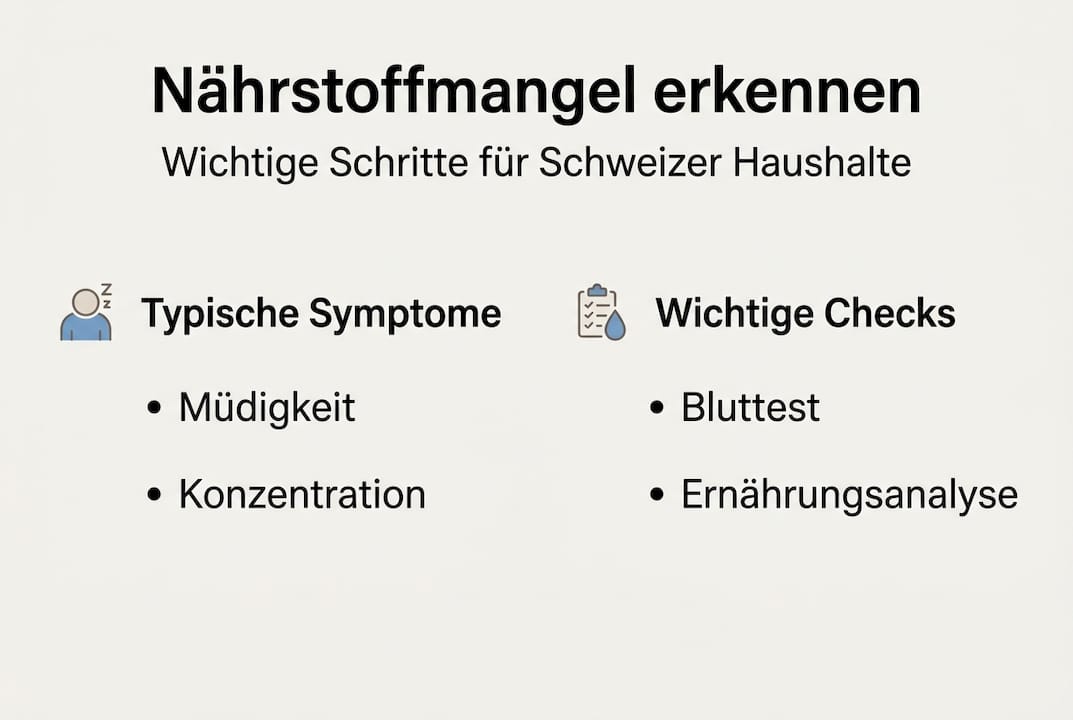
The most common warning signs include:
- Persistent tiredness and exhaustion, especially in the morning despite getting enough sleep
- Hair loss and brittle nails, often a sign of iron, zinc, or biotin deficiency
- Concentration problems and memory lapses, often associated with vitamin B12 or omega-3 deficiency
- Muscle cramps and tingling, typical signs of magnesium or calcium deficiency
- Frequent infections that indicate a weakened immune system due to vitamin D or zinc deficiency
- Pale skin and dizziness, classic signs of iron deficiency
The problem is that simply observing these symptoms does not allow anyone to make a reliable statement about their cause. Nonspecific symptoms always require a test before supplementation. Self-diagnosis often leads to incorrect conclusions and unnecessary use of products that are ineffective at best and harmful at worst.
Blood analysis remains the most reliable method and the primary method for identifying parameters. A fasting blood sample provides measurable values for vitamin D, ferritin, folic acid, magnesium, omega-3 fatty acids, and many other nutrients. Only with these figures can targeted measures be initiated.
The following nutrients are particularly often deficient in Switzerland:
| Nutrient | Common symptoms | Risk groups |
|---|---|---|
| Vitamin D | Fatigue, bone problems | Older people, office workers |
| Iron (ferritin) | Exhaustion, pale skin | Women, vegans |
| Vitamin B12 | Concentration problems, tingling | Vegans, older adults |
| Magnesium | Cramps, sleep problems | Athletes, people under stress |
| Omega-3 | Inflammation, mood swings | General population |
| Folic acid | Fatigue, nervous weakness | Pregnant women, women |
If you notice common symptoms of vitamin deficiency, you should not wait. The symptoms of a mineral deficiency are also often subtle and ignored for months. A micronutrient analysis gives you clarity before deficiencies become serious health problems.
Pro tip: Keep a brief symptom diary for one week before the test. Record your energy levels, sleep quality, and physical complaints. These notes are extremely helpful when talking to your doctor or evaluating your test results.
Preparation: What you need for the analysis
Once the initial indications are present, the next step follows: structured preparation for the test. Anyone who goes for a blood test unprepared risks distorted results and therefore incorrect conclusions.
The most important preparation steps at a glance:
- Arrive fasting: Do not eat anything for at least 8 hours before the blood sample is taken. Water is permitted. Fasting blood analysis provides particularly reliable values for iron, blood sugar, and triglycerides.
- Document your medications: Certain medicines, such as proton pump inhibitors, metformin, or antibiotics, affect the absorption of vitamin B12, magnesium, and zinc. Inform your doctor or the testing laboratory.
- Note your dietary habits: Have you eaten particularly much or little fish in recent weeks? Have you followed a vegan diet? This information is relevant for the evaluation.
- Consider the timing: Vitamin D levels are structurally lower in winter in Switzerland. A test in February shows different values from one in August.
Which parameters should be measured? Here is an overview of the most important values:
| Parameter | Why it matters | Optimal range (adults) |
|---|---|---|
| Vitamin D (25-OH) | Immune system, bones, mood | 50 to 80 nmol/l |
| Vitamin B12 | Nervous system, energy | over 300 pmol/l |
| Ferritin | Iron stores, endurance | 30 to 150 µg/l |
| Magnesium | Muscles, sleep, nerves | 0.75 to 0.95 mmol/l |
| Zinc | Immune defense, skin | 10 to 18 µmol/l |
| Selenium | Thyroid, antioxidant defense | 80 to 150 µg/l |
| Iodine | Thyroid function | individual, urine test |
There are clear differences when choosing between a family doctor and modern self-testing services. Family doctors often cover only standard parameters and rarely test for selenium, iodine, or omega-3. Specialized providers offer broader coverage and provide personalized evaluations directly to your home.
If you want to test for nutrient deficiencies, it makes sense to choose a provider that combines as many parameters as possible in a single test. More information on how you can test for and correct nutrient deficiencies can help you find the right starting point.
Pro tip: Choose tests that cover at least 8 to 10 parameters. A single vitamin D test is rarely sufficient, as deficiencies often occur in combination, such as vitamin D, B12, and magnesium at the same time.
How to correct nutrient deficiencies: A step-by-step guide
With the test results in hand, the actual work begins. The good news: In most cases, deficiencies can be significantly improved through targeted dietary adjustments without immediately resorting to supplements.
Here is the recommended process:
- Adjust your diet as the first measure: Adjust your diet first, then take targeted supplements based on test results. Increase your intake of vegetables, legumes, whole grains, oily fish, and nuts. These foods provide many micronutrients at the same time.
- Use foods strategically: Vitamin D from oily fish such as salmon and mackerel, iron from legumes and red meat, magnesium from pumpkin seeds and spinach, and B12 from eggs and dairy products.
- Use supplements only for a proven deficiency: Anyone who simply takes multivitamins without testing risks excessive intake of some nutrients while remaining deficient in others. This is not optimization; it is guesswork.
- Pay particular attention to risk groups: Vegans almost always need vitamin B12 supplementation. Older people aged 65 and over often have an increased need for vitamin D and calcium. Pregnant women need folic acid. Recommendations from the FOPH and the SGE prioritize diet, but explicitly recommend supplementation for these groups.
- Check supplement quality: Not all products are the same. Magnesium citrate is absorbed better than magnesium oxide. Vitamin D3 is more effective than D2. Choose products with clinically tested dosages.
| Nutrient | Best food sources | Supplement advisable for |
|---|---|---|
| Vitamin D | Salmon, herring, egg yolk | Deficiency on testing, winter |
| Iron | Lentils, beef liver, spinach | Ferritin below 30 µg/l |
| Magnesium | Pumpkin seeds, almonds, bananas | Cramps, sleep problems |
| Vitamin B12 | Eggs, cheese, meat | Vegans, older adults |
| Omega-3 | Salmon, mackerel, walnuts | Elevated inflammatory markers |
“Vitamin deficiencies can often be addressed through an adapted diet. Supplements are not a substitute for a healthy diet, but rather a targeted addition when there is a proven need.” Treating vitamin deficiencies based on evidence
If you want to specifically address a nutrient deficiency, you will find concrete strategies tailored to your situation. Practical dietary tips for deficiencies can help you change your diet sustainably.

Pro tip: Always combine iron-rich foods with sources of vitamin C, such as bell peppers or citrus fruits. Vitamin C increases iron absorption in the intestine by up to 300 percent.
How to monitor success and avoid common mistakes
After implementing the measures, the work is not yet done. Without monitoring the results, you do not know whether the dietary change or supplement actually worked.
This is how to proceed with follow-up testing:
- Repeat test after 3 to 6 months: Changes in the blood can only be measured reliably after this period. Earlier tests often do not yet provide meaningful results.
- Document changes in symptoms: Make a weekly note of how your energy, sleep quality, and mood are developing. These subjective data usefully complement the laboratory values.
- Adjust the dosage: Have your levels improved but not yet reached the target? Then adjust the supplement dosage after consulting a professional.
- Avoid excessive intake: Vitamin D, iron, and vitamin A can have toxic effects when taken in excess over a prolonged period. Supplementing only in cases of a confirmed deficiency and undergoing regular monitoring are therefore not optional but mandatory.
- Seek professional advice: Especially in cases of complex deficiency patterns or underlying conditions, guidance from a nutritional medicine specialist or a specialized counseling center is advisable.
“Anyone who takes supplements without monitoring regularly risks a silent excess, which can be just as problematic as the original deficiency.”
Another common mistake is stopping the measures too early. Many people feel better after just a few weeks and stop adjusting their diet or taking the supplement. The result: Their levels drop again. Consistency is crucial.
If you would like to learn more about how to identify nutrient deficiencies and keep them under control over the long term, you will find structured guidance there for various life situations.
Pro tip: Create a simple table in which you record the date, supplements taken, dosage, and subjective well-being. This overview is invaluable during your next doctor's appointment or when evaluating a follow-up test.
Why individual analysis and nutrition matter more than blanket supplementation
There is a trend that has concerned us at mybody® for years: More and more people are taking multivitamin supplements without having a test first. The logic behind it sounds reasonable: More is better. Reality is different.
Multivitamin products rarely meet actual needs. They often contain too little of what is genuinely lacking and too much of what is already present in sufficient amounts. That is not targeted health optimization; it is hope in capsule form.
We are convinced that using supplements only when a deficiency has been confirmed and prioritizing nutrition as the foundation is the only sensible approach. A personalized micronutrient analysis shows you where you really stand, not where you assume you stand.
Research on nutrition-based disease prevention clearly shows that a targeted nutrition strategy tailored to the individual is more effective in the long term than blanket supplementation. Those who truly understand their body make better decisions, save money, and protect their health sustainably.
Individual Nutrition Analysis as the Next Step
You now know how nutrient deficiencies develop, how to recognize them, and how to address them effectively. The next logical step is an analysis tailored to your body. At mybody®, you receive ISO-certified laboratory analyses that you can conveniently carry out at home. The results provide no generic recommendations, but concrete measures based on your personal values. More than 11,300 satisfied customers with a rating of 4.77 stars speak for themselves. Start now with an individual nutrition analysis and lay the foundation for long-term health.
Frequently asked questions
How often should you have a nutrient deficiency test?
A check every 6 to 12 months, or when new symptoms appear, is recommended. Regular monitoring is particularly useful in winter, when vitamin D levels structurally decline.
Which parameters are particularly important in a blood analysis?
Vitamin D, B12, ferritin, magnesium, folic acid, selenium, and iodine are among the most important measurements. Selecting parameters specifically ensures that no relevant deficiencies are overlooked.
Can I compensate for my nutrient deficiency with multivitamin products?
Only take supplements selectively after testing and consultation: Blanket supplementation is not advisable, as multivitamins rarely meet actual needs and nutrition should always remain the foundation.
What role does nutrition play compared with supplements?
A balanced diet is the essential foundation; supplementation remains an exception for risk groups following analysis. Prioritizing nutrition, as recommended by the FOPH and SGE, is the scientific consensus.
Recommendation
- Recognize Vitamin Deficiency and Take Individualized Action – mybody®x
- Recognize Nutrient Deficiency Symptoms and Address Them Effectively – mybody®x
- 7 Nutrition Tips for Deficiencies and Greater Well-Being – mybody®x
- Recognize Nutrient Deficiency Symptoms – Your Guide to Greater Well-Being – mybody®x



Share now:
Bloating—what to do? Quick relief and effective solutions for you
What helps with bloating? Your path to a calm stomach feeling