

Microbiome analysis: The key to modern gut health
Around 100 trillion microorganisms live in the human gut and influence our health more than many people realize. The diversity of these bacteria affects digestion, the immune system, and even personal well-being. Microbiome analysis makes it possible to scientifically decode your own gut flora and take targeted measures to support your health. Anyone who wants to understand the world within can gain a clear view of their individual strengths and potential weaknesses.
Table of contents
- What is microbiome analysis and how does it work?
- Scientific foundations and key measurement parameters
- Process and requirements for at-home testing
- Benefits for digestion, immune defense, and well-being
- Risks, costs, and differences from alternatives
- Secure analysis and data protection at mybody® Lab
Key findings
| Point | Details |
|---|---|
| Microbiome analysis | It provides insights into the composition and diversity of gut flora, which are crucial for health. |
| Measurement parameters | Alpha and beta diversity are key parameters in microbiome analysis and provide insights into the balance of gut flora. |
| Home testing | Home testing enables convenient analysis of gut health using modern genetic sequencing. |
| Data privacy | Data privacy and security are ensured during microbiome analysis, comprehensively protecting personal health information. |
What is microbiome analysis and how does it work?
Microbiome analysis is a scientific testing method that explores the complex world of gut bacteria in detail. It helps you understand the composition and diversity of your gut flora and provides valuable insights into your health.
This analysis identifies and quantifies the microorganisms present in the gut to provide a comprehensive picture of your microbial community. The method uses state-of-the-art genetic sequencing techniques to precisely determine the bacterial composition. It captures not only the types of bacteria, but also their relative abundance and interactions.
The test is based on the analysis of diversity indices, which provide insights into the health of your gut microbiome. For example, beta diversity measures the differences between different samples, while alpha diversity describes the diversity within a single sample. These metrics help experts understand how balanced and healthy your gut flora is.
Pro tip for microbiome analysis: Before the test, maintain a balanced diet and avoid major dietary changes in the days before sample collection to obtain representative results.
Scientific foundations and key measurement parameters
The scientific study of the gut microbiome is a complex field that provides profound insights into our health. Modern microbiological research focuses on the detailed analysis of microbial composition and its functional significance for the human body.
Two central measurement parameters play a decisive role here: alpha diversity and beta diversity. Alpha diversity describes the microbial diversity within a single sample and is often quantified using indices such as the Shannon-Wiener index. Beta diversity, on the other hand, compares the differences between different samples and helps explain how the microbiome changes in different individuals or under different conditions.
Other important scientific foundations include examining the relative abundances of specific bacterial species, their genetic functions, and the interactions between different microbial strains. Modern sequencing techniques enable researchers not only to identify species but also to analyze their specific functions and metabolic activities.
An overview of the most important measurement parameters in microbiome analysis:
| Measurement parameters | Description | Relevance to health |
|---|---|---|
| Alpha diversity | Species diversity within a sample | Indicates balance and resilience |
| Beta diversity | Differences between multiple samples | Compares the microbiomes of different people |
| Relative abundance | Proportion of individual bacterial species in the total amount | Identifies dominant or missing strains |
Expert tip for scientific analysis: When interpreting microbiome data, always consider the overall context and do not let individual values cause premature concern. If you notice anything unusual, be sure to consult medical experts.
Process and requirements for at-home testing
At-home microbiome testing offers a convenient way to scientifically examine your gut health. Modern at-home testing methods enable precise analysis of your gut microbiome without requiring a visit to a doctor.
The typical process for an at-home microbiome test involves several important steps. First, you receive a test kit with detailed instructions for collecting the sample. The stool sample must be collected and stored under specific conditions to ensure the integrity of the microbial DNA. After collecting the sample, you seal it in a special container and send it directly to the laboratory.

Important requirements for proper completion include following the sample collection instructions precisely, avoiding contamination, and sending the sample in on time. The laboratory then uses state-of-the-art DNA sequencing techniques to create your individual microbial profile. The analysis provides detailed information about the composition of your gut flora, potential imbalances, and recommendations for improving your gut health.
Pro tip for home testing: Read the sample collection instructions carefully several times before performing the test and follow all hygiene requirements precisely to ensure accurate analysis results.
Benefits for digestion, immune defense, and well-being
Scientific studies of the gut microbiome show how crucial a healthy microbiome is for our overall organism. The gut is far more than just a digestive organ—it is the center of our health, with far-reaching effects on various bodily functions.
The microbiome plays a central role in digestion. Gut bacteria help break down nutrients, produce important enzymes, and support nutrient absorption. They ensure a smooth digestive process and can reduce digestive problems such as bloating, constipation, or diarrhea.
The microbiome functions as the first line of defense in the area of immune defense. Approximately 70–80% of our immune system is located in the gut. The bacteria communicate directly with immune cells, help identify harmful invaders, and regulate inflammatory processes. A balanced microbiome can ward off infections, reduce allergies, and optimize the body's immune response.
Pro tip for microbiome health: Make sure to eat a varied, high-fiber diet and include fermented foods such as yogurt, kefir, or sauerkraut in your meal plan to support your gut microbiome.
Risks, costs, and differences from alternatives
Scientific studies on microbiome analysis show that the examination is minimally invasive and associated with few risks. Unlike conventional medical examinations, microbiome analysis does not require stressful procedures and can be conveniently carried out at home.
The costs of a microbiome analysis vary depending on the scope and level of detail of the examination. While traditional gut tests often measure only basic parameters, modern microbiome analyses provide a comprehensive examination of the bacterial composition. Prices range from 80 to 250 euros, depending on the depth of the genetic analysis and any additional consultation services.
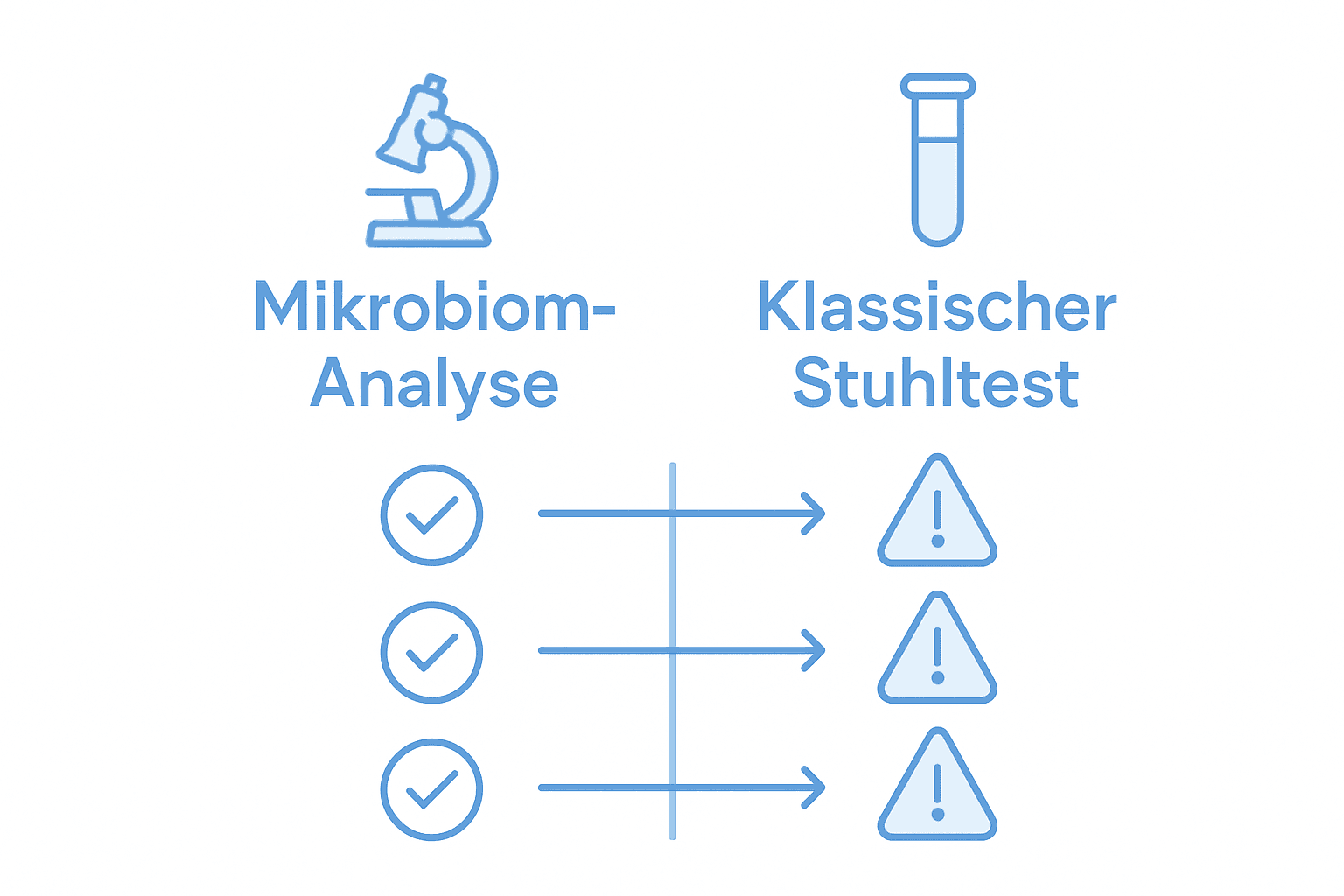
Compared with conventional alternative methods, microbiome analysis offers significantly more comprehensive insights. Conventional stool tests usually focus on individual disease markers, whereas microbiome analysis provides a holistic picture of gut health. It offers insights into bacterial composition, metabolic functions, and potential health risks that other testing methods cannot detect.
Comparison: microbiome analysis vs. conventional stool tests
| Criterion | Microbiome analysis | Conventional stool test |
|---|---|---|
| Parameters measured | Bacterial diversity, functions | Individual disease markers |
| Analysis method | Genetic sequencing | Microscopy, biochemical tests |
| Health information | Overall gut health | Specific disorders |
| Procedure | Possible at home | Usually at a doctor's office |
Test selection pro tip: Compare different providers not only by price, but also by the quality of the analysis, the level of detail in the evaluation, and the scope of personal consultation.
Secure analysis and data protection at mybody® Lab
Data security is of utmost importance in mybody® Lab's microbiome analysis. Health tests for your diet, metabolism & gut are subject to strict data protection regulations that comprehensively safeguard your personal health information.
Mybody® Lab uses state-of-the-art encryption technologies to protect your sensitive health data. After analysis, the samples are pseudonymized, and the genetic information is stored separately from personal identification data. All data is processed in accordance with the General Data Protection Regulation (GDPR), meaning that you retain full control over your information.
The evaluation process follows strict scientific and ethical standards. Highly qualified laboratory experts analyze your sample using state-of-the-art genetic sequencing techniques. Once the analysis is complete, the physical samples are securely destroyed, making traceability impossible. You receive a detailed, easy-to-understand report accessible exclusively to you.
Privacy pro tip: Before commissioning a health test, always read the privacy policy carefully and make sure you fully understand the consent form.
Discover your gut health with mybody®x's microbiome analysis
A healthy microbiome is the key to better digestion and a strong immune system. This analysis gives you clarity about the composition of your gut flora and highlights important connections to your well-being. If you want to improve your gut health in a targeted way, you should know and understand your individual microbiome composition in detail. This is exactly where the Gut Flora Analysis – For a Healthy Gut Flora - mybody®x comes in.
Take advantage of certified laboratory testing using state-of-the-art DNA sequencing. This provides not only precise data on the alpha diversity of your microbiome, but also practical recommendations for your diet and lifestyle. Whether you have digestive issues or want to strengthen your immune system, professional microbiome analysis helps you take control of your health proactively and independently. Start your journey to greater well-being now with mybody-x.com. Explore other personalized health solutions, such as DNA Metabolism Tests for Your Optimal Nutrition – mybody®x, and discover how easy at-home testing can be.
Don't miss the opportunity to take action and invest in your gut health today for a more vibrant tomorrow.
Frequently Asked Questions
What is microbiome analysis?
Microbiome analysis is a scientific method for examining the composition and diversity of gut flora. It provides valuable information about gut health and the microorganisms that live there.
How does an at-home microbiome test work?
With an at-home microbiome test, you receive a test kit for collecting a stool sample. The sample is then securely sent to the laboratory in a special container, where modern sequencing techniques analyze the bacterial composition.
What are the health benefits of a microbiome analysis?
A microbiome analysis can help improve digestion, strengthen immune defenses, and promote overall well-being by revealing imbalances in the microbiome and providing dietary recommendations.
What are the main measurement parameters in microbiome analysis?
The main measurement parameters are alpha diversity, which describes the diversity within a sample, and beta diversity, which compares differences between different samples. These parameters provide insights into the health of your gut flora.



Share now:
Blood Test for Nutrient Deficiencies: 5 Steps to Clarify Your Deficiencies
Analyze Your Own Health – Opportunities for Your Well-Being