

Gut Health Checklist: Your Guide to At-Home Tests
You want to improve your gut health, but the flood of information, checklists, and home tests makes choosing difficult. Many health-conscious individuals are faced with the question of which criteria truly matter and which tests provide reliable results. This article offers a clear overview of evaluation criteria, common symptom checks, and specific at-home testing options available in Switzerland. You will learn how to systematically assess your gut health, what microbiome tests are available, and what to look for when choosing one.
Table of Contents
- Gut Health Checklist: Key Points
- Criteria for Assessing Gut Health at Home
- At-Home Gut Tests: Methods and Significance
- Comparison and Selection of At-Home Gut Health Tests
- Practical Tips for Sustainable Gut Health
- Support for At-Home Gut Health Tests and Analyses
- Frequently Asked Questions about Gut Health Checklists and Home Tests
Key Insights
| Point | Details |
|---|---|
| Symptoms and Lifestyle | Systematic self-observation of symptoms, bowel habits, diet, exercise, and stress supports decision-making for tests or dietary changes. |
| Checklists Including Consultation | Combine self-observation with medical advice to choose targeted measures. |
| Microbiome DNA Tests | Home tests use 16S rRNA sequencing or shotgun DNA sequencing to analyze the microbiome. |
| Prevention Often Cheaper | Preventive measures are often more cost-effective than extensive tests and subsequent treatments. |
Criteria for Assessing Gut Health at Home
Before ordering an at-home test, you should assess your gut health using systematic criteria. This self-observation will help you take targeted actions and avoid unnecessary tests.
Start with symptom observation. Pay attention to bloating, abdominal pain, constipation, or diarrhea. Note the frequency and intensity of these complaints for at least two weeks. Bowel habits provide important clues: how often do you have a bowel movement, and what is its consistency? The Bristol Stool Chart offers simple guidance.
Lifestyle factors play a central role in your gut health. Your diet directly influences the microbiome composition. Do you eat enough fiber, fermented foods, and plant diversity? Exercise promotes gut motility, while chronic stress can weaken the gut barrier. Sleep quality and alcohol consumption also have an impact.

Risk factors deserve special attention. Medications such as antibiotics, proton pump inhibitors, or non-steroidal anti-inflammatory drugs can alter your microbiome. Food intolerances like lactose or fructose intolerance often cause intestinal discomfort. Chronic diseases, smoking, and family history should also be considered.
Pro Tip: Keep a symptom diary with dates, complaints, meals, and stress levels. After four weeks, you will recognize patterns that will help you decide on a test or dietary change. This documentation also supports your doctor in diagnosis.
Regular self-observation allows you to detect changes early. If you notice new symptoms or existing ones worsen, you should seek medical advice. The step-by-step optimization of gut health begins with this systematic assessment.
At-Home Gut Tests: Methods and Significance
At-home gut health tests are based on modern DNA sequencing. They analyze the composition of your microbiome and provide personalized recommendations. But how exactly do these tests work, and what can they really achieve?
Most home tests use two main methods. 16S rRNA sequencing identifies bacterial species based on a specific gene. This method is cost-effective and reliably captures bacterial diversity. Shotgun metagenomics goes further: it sequences all the DNA in your stool sample and also detects viruses, fungi, and functional genes. Both methods analyze over 50 different types of bacteria and create a detailed profile of your gut microbiome.
Modern tests measure additional parameters. Inflammation markers like calprotectin indicate intestinal inflammation. pH values provide information about digestive activity and bacterial metabolic processes. Some providers determine short-chain fatty acids, which are produced by gut bacteria and promote your gut health.
The process is straightforward:
- You order the test kit online and receive it by mail
- Collect a small stool sample using the provided tube
- Send the sample to the lab in the pre-addressed envelope
- After 2 to 4 weeks, you will receive a digital report
- The report contains your microbiome composition and personalized dietary recommendations
Pro Tip: Repeat the test after 3 to 6 months, after implementing dietary or lifestyle changes. Trend analyses will show you whether your measures are effective. Choose the same provider to keep results comparable.
Despite the benefits, there are limitations. The lack of standardization between providers leads to varying results. The same stool sample can yield different microbiome profiles depending on the lab. Reference ranges for "healthy" microbiomes are not uniformly defined. Moreover, your microbiome naturally fluctuates due to diet, stress, and time of day.
Choose accredited laboratories with ISO certification. These guarantee quality standards in sample processing and analysis. The at-home gut health test should provide transparent information about methodology and validation. Reputable providers explain which bacteria they measure and how they derive recommendations. A comprehensive microbiome analysis guide will help you interpret the test results correctly.
Comparison and Selection of At-Home Gut Health Tests
The Swiss market offers various at-home gut health tests. The selection of the right test depends on your goals, budget, and desired level of detail.
| Provider | Analysis Method | Bacterial Species | Additional Markers | Personalization | Price (CHF) |
|---|---|---|---|---|---|
| cerascreen | 16S rRNA | 50+ | Inflammation markers, pH | Dietary tips, supplement recommendations | 149-199 |
| myBioma | Shotgun | 100+ | Short-chain fatty acids, diversity | Detailed dietary plans | 189-249 |
| Arktis Biopharma | 16S rRNA | 60+ | Calprotectin, Zonulin | Probiotic recommendations | 169-219 |
| vitaminexpress | 16S rRNA | 45+ | Basic inflammation markers | General tips | 129-159 |
When choosing, you should consider several criteria. Bacterial diversity is important: tests that identify more species provide a more complete picture. Inflammation markers like calprotectin help detect acute problems. The personalization of recommendations varies greatly. Some providers offer only general tips, while others create individual dietary plans based on your microbiome profile.
Prices range from 129 to 249 CHF. Cheaper tests usually offer basic analyses with 16S sequencing. More expensive variants use shotgun metagenomics and measure additional parameters. Consider what information you really need. For an initial overview, a basic test is often sufficient.
User-friendliness plays a practical role:
- Is sample collection explained simply?
- Does the provider offer a pre-addressed return envelope?
- How understandable is the results report?
- Is telephone or written consultation available?
- Are follow-up tests offered at a discount?
You should not neglect laboratory excellence. Check whether the laboratory is ISO-certified and what standards it adheres to. Reputable providers transparently name their laboratories and methods. DTC tests show great variability and a lack of clinical validity in many cases, which is why you should compare critically.
Note important limitations. Home tests do not replace a medical diagnosis for acute complaints. Blood in the stool, severe pain, or sudden weight loss require immediate medical clarification. Tests are suitable for prevention and optimization, not for diagnosing serious diseases.
Combining with medical advice offers the greatest benefit. Discuss your test results with a gastroenterologist or nutritionist. These specialists will place the data in your health context and develop an action plan with you. The gut analysis test should be the starting point for targeted measures, not the end goal.
Practical Tips for Sustainable Gut Health
Beyond tests, you can improve your gut health through simple, evidence-based measures. These strategies are long-term and inexpensive.
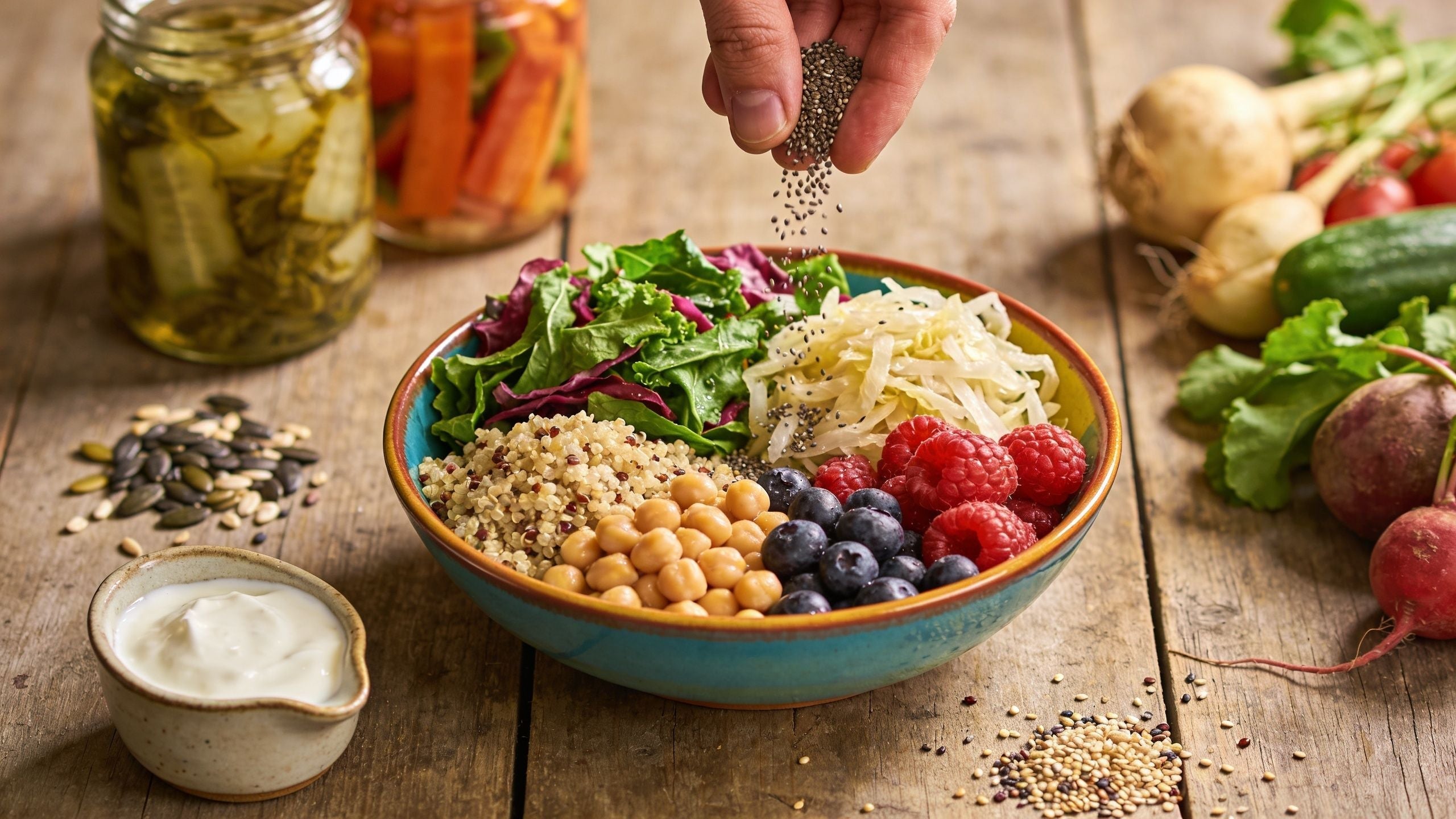
Nutrition is the most important lever. The American Gut Project shows that people who eat at least 30 different plants per week have significantly higher microbiome diversity. Plants include vegetables, fruits, whole grains, legumes, nuts, and seeds. Vary consciously and try new varieties every week.
Fiber is essential. The Swiss Society for Nutrition recommends 30 grams daily. Fiber serves as food for your gut bacteria and promotes the production of short-chain fatty acids. These protect the intestinal lining and regulate inflammation. Good sources include oats, flaxseeds, apples, lentils, and whole-grain bread.
Fermented foods provide live microorganisms:
- Yogurt and kefir with active cultures
- Sauerkraut and kimchi (unpasteurized)
- Kombucha and water kefir
- Miso and tempeh
Pro Tip: Gradually integrate fermented foods into your diet. Start with small portions, such as a tablespoon of sauerkraut daily, and gradually increase. Too rapid changes can initially cause bloating as your microbiome adjusts.
Exercise supports gut health on several levels. Regular physical activity promotes gut motility and reduces constipation. Studies show that exercise increases microbiome diversity and promotes anti-inflammatory bacteria. Even 30 minutes of moderate exercise five days a week is sufficient.
Stress management directly affects your gut-brain axis. Chronic stress alters gut permeability and microbiome composition. Proven techniques include meditation, breathing exercises, yoga, or regular walks in nature. Sufficient sleep also stabilizes your microbiome.
Be cautious with self-medication. Take antibiotics only after a doctor's prescription and when medically necessary. Probiotics can be useful after antibiotic intake, but the evidence is inconsistent. Discuss intake with your doctor or pharmacist.
Avoid hasty tests without a clear reason. If you have no complaints and eat healthily, a microbiome test often offers little added value. Invest the money in high-quality food instead. For persistent symptoms, going to the doctor is the first step, not an at-home test. The importance of gut health lies in continuous care through healthy habits.
Support for At-Home Gut Health Tests and Analyses
If you decide to take a gut health test, you need a reliable partner. mybody-x offers certified tests for easy at-home use, which are evaluated in ISO-accredited Swiss laboratories. You receive comprehensive reports with personalized recommendations on nutrition, lifestyle, and targeted measures.
The integrated health portal links your test results with sound expert knowledge. Practical articles and guides help you optimize your gut health step by step. The easy online ordering process and personal support guide you from testing to implementing the recommendations. Visit the mybody-x health portal for more information on tests, analyses, and individual consultation.
Frequently Asked Questions about Gut Health Checklists and Home Tests
How reliable are at-home gut health tests?
At-home tests provide valuable insights into your microbiome but show variability between providers. They are well-suited for prevention and follow-up but do not replace a medical diagnosis for complaints. Choose ISO-certified laboratories for more reliable results.
What symptoms should I observe myself before a test?
Pay attention to bloating, abdominal pain, bowel habits, constipation, or diarrhea for at least two weeks. Note the frequency, intensity, and possible triggers such as certain foods or stress. A symptom diary helps to identify patterns and assess the need for a test.
How can I improve my gut health long-term?
Eat at least 30 different plants per week and 30 grams of fiber daily. Gradually integrate fermented foods. Exercise regularly, manage stress through relaxation techniques, and get enough sleep. These measures are more sustainable than one-off tests.
When is a doctor's visit absolutely necessary?
If you experience blood in your stool, severe or persistent abdominal pain, unexplained weight loss, or sudden changes in bowel habits, you should see a doctor immediately. At-home tests are for prevention, not for diagnosing serious diseases. Chronic complaints always require medical clarification.
Are there simple measures without expensive tests?
Yes, dietary changes, sufficient fiber, fermented foods, exercise, and stress reduction often improve your gut health more effectively than tests. Start with these basic measures and observe your symptoms. A test only becomes useful if you want to specifically identify weaknesses or measure progress. The Gut Health Practical Guide offers concrete instructions for getting started.
Recommendation
- Your At-Home Gut Test: The Easy Way to More Clarity – mybody®x
- Is My Gut Healthy? Find Out with a Test – mybody®x
- Step-by-Step Guide to Testing Your Gut Flora at Home – mybody®x
- Stool Test at Home: How to Check Your Gut Health | MYBODY-X – mybody®x
- Family Meal Planning with Shopping List using Zenframe Meals | Zenframe Meals | Zenframe


Share:
How Self-Testing for Health Works: Guide 2026
At-home self-tests: Why micronutrients, metabolism, and the gut belong together