
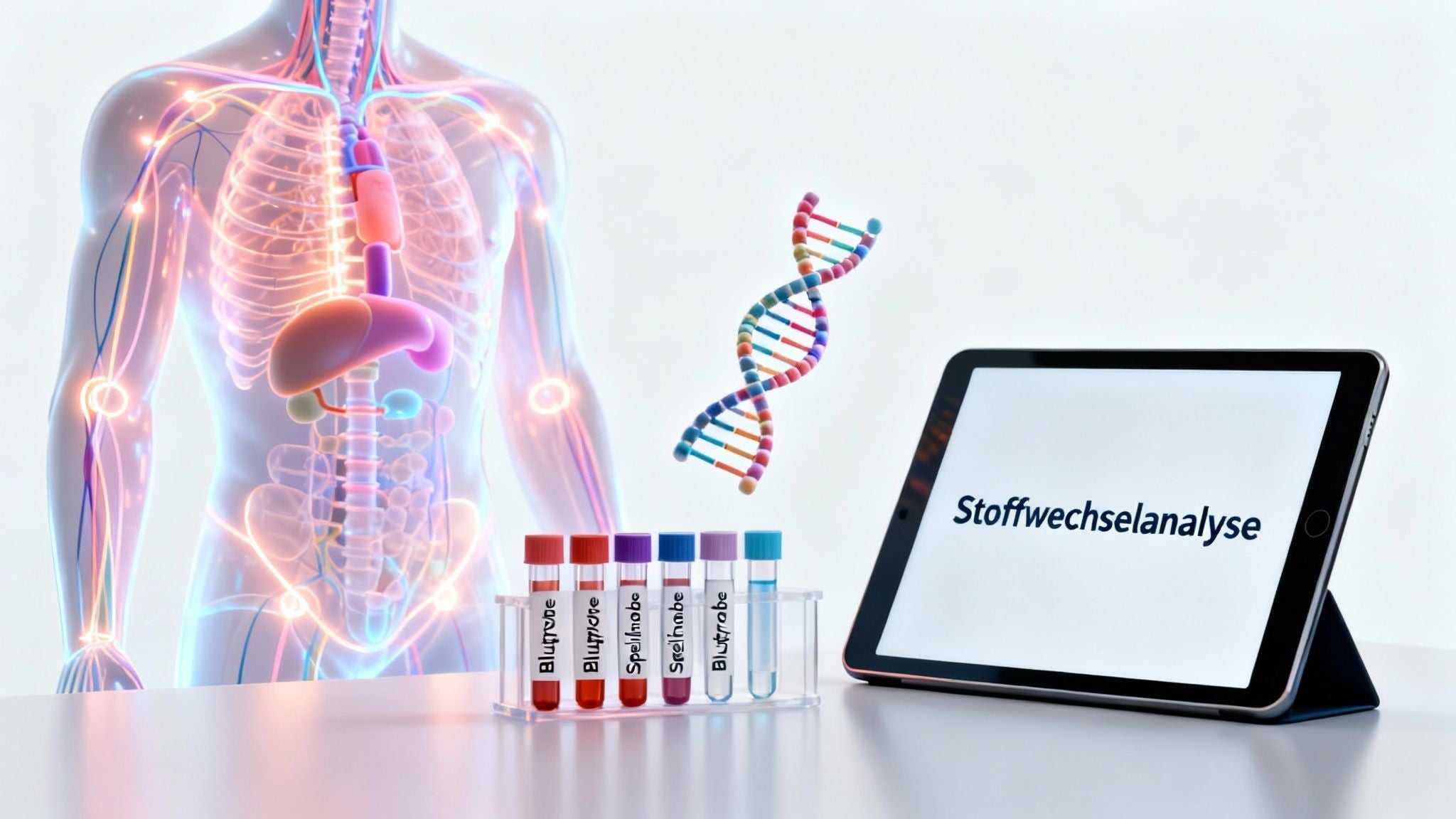
What is a metabolic analysis? How it affects your well-being
Imagine your body had a personal instruction manual. One that tells you exactly what fuel it needs to perform at its best and feel good all over. That is precisely the idea behind a metabolic analysis: It deciphers the unique biochemical processes in your body that determine how you burn energy and utilize nutrients.
What a metabolic analysis really means for you
Do you often feel tired even though you actually get enough sleep? Or have you already tried countless diets, but the number on the scale barely changes? The answer often lies deeper than general advice—it could be hidden in your personal metabolism.
A metabolic analysis is not a magic pill, but a scientifically grounded look under your hood. It goes far beyond simply counting calories and examines how efficiently your body converts various nutrients such as fats, carbohydrates, and proteins into energy. Every person is completely unique in this regard. That is also why a diet that works wonders for your friend may have no effect on you at all.
If you want to understand the basics even better, take a look at our simple guide to metabolism: What is metabolism and how does it work?.
Why your metabolism is the key
Your metabolism plays a role in almost everything related to your health. An engine that runs smoothly ensures not only a healthy body weight, but also:
- More energy in everyday life: Your body makes optimal use of the food you consume instead of leaving it unused.
- Better athletic performance: You can achieve your training goals much more effectively when you know what your body really needs as fuel.
- Targeted prevention: You can identify early on whether you are prone to certain nutrient deficiencies or metabolic disorders before they become a problem.
- A stronger immune system: Optimal nutrient supply is the best foundation for robust defenses.
An analysis gives you back control and enables you to make targeted decisions for your health instead of simply trying things at random.
Here is a brief overview summarizing the key benefits:
The key benefits of a metabolic analysis at a glance
This table summarizes the specific benefits a metabolic analysis offers for different areas of life.
| Area of life | Benefit of the analysis | Who is it particularly relevant for? |
|---|---|---|
| Weight management | Understand why diets fail; determine individual calorie & nutrient requirements | People who cannot lose weight or maintain their weight despite their efforts |
| Sports & Performance | Optimal nutrient intake for training & recovery; increase energy levels | Athletes, fitness enthusiasts, and anyone who wants to improve their physical performance |
| Energy & Well-being | Identify the causes of fatigue, lack of motivation, or difficulty concentrating | People who often feel exhausted even when external factors such as sleep are adequate |
| Prevention & Health | Early detection of nutrient deficiencies, insulin resistance, or other imbalances | Anyone who wants to proactively safeguard their long-term health and minimize risks |
Ultimately, the goal is to stop groping in the dark and instead make informed, data-based decisions for your own body.
A look at the reality in Germany
This topic is more relevant than ever. Millions of people in Germany struggle with metabolic problems that often remain undetected for a long time and severely affect everyday life. According to the German Health Report Diabetes 2025, more than 9 million people with diabetes live in Germany, making it one of the most common metabolic diseases.
In addition, according to the Robert Koch Institute, 53.5 percent of the population is overweight, which puts additional strain on the metabolism. A detailed metabolic analysis, such as the one offered by mybody® Lab, can help you understand your personal risk factors and take targeted countermeasures before serious problems arise. You can find the complete study in the German Health Report 2025.
What metabolic analysis methods are available
When you want to understand your metabolism, you often face a huge range of options. There is no single perfect approach. It is best to think of it like repairing a car: Sometimes it is enough to read the error memory; other times, the mechanic has to look deep inside the engine. Metabolic analysis is very similar—depending on your goal and question, very different methods may be appropriate.
The world of metabolic analyses is incredibly diverse today. It ranges from traditional sports medicine procedures, which often provide only a snapshot, to modern genetic tests that you can easily perform at home. Each method provides another important piece of the puzzle for the overall picture of your health.
This concept map shows how the various aspects of your metabolism—weight management, energy levels, and overall health—are interconnected and how an analysis can shed light on them.
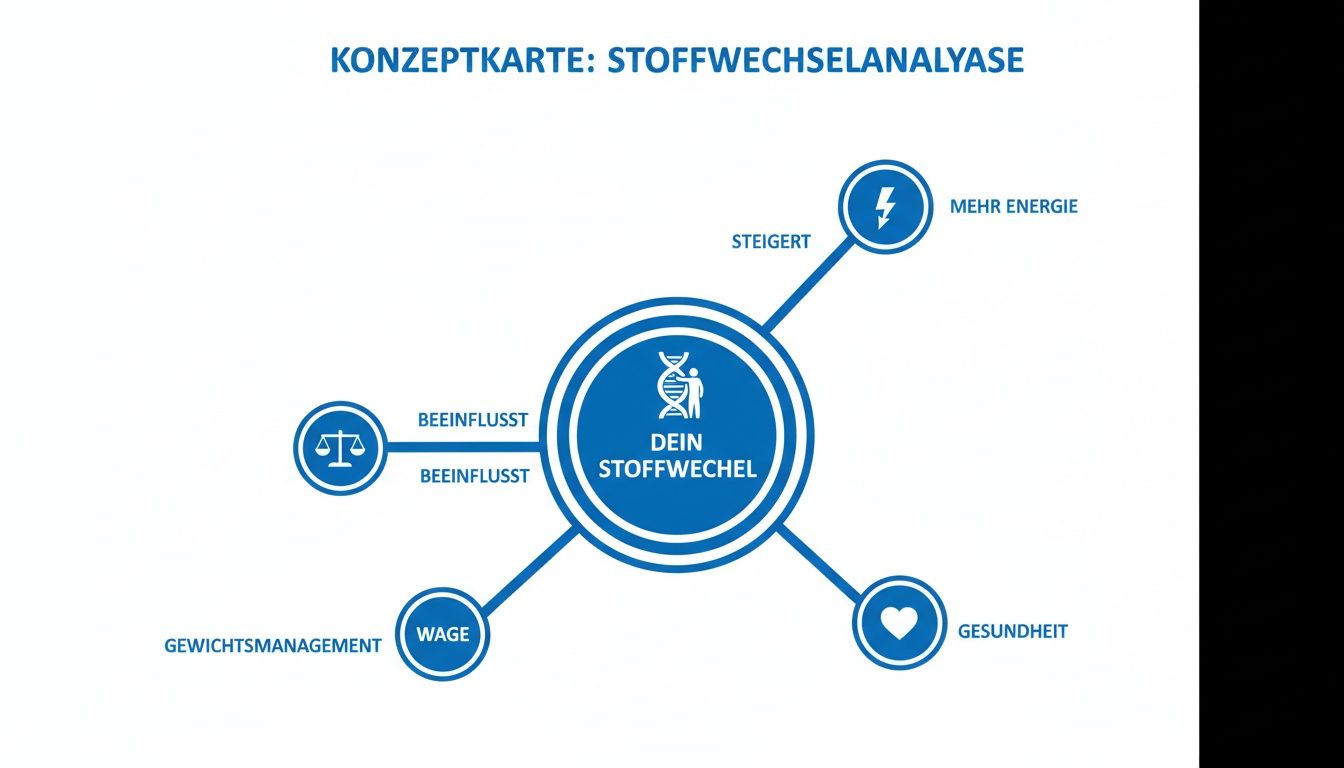
The graphic makes it clear: Your metabolism is the central engine of your well-being. An analysis gives you targeted levers to finally achieve your very personal goals.
From respiratory gas analysis to blood testing
A well-known method used primarily in competitive sports is spiroergometry, also known as respiratory gas analysis. During exercise—for example, on a treadmill—it measures how much oxygen your body takes in and how much carbon dioxide it releases. This makes it possible to determine your exact calorie expenditure at rest and during exertion—an essential value for any serious training program.
Other approaches involve conventional laboratory analyses using blood, urine, or stool samples. They can, for example:
- Identify hormonal imbalances (e.g., thyroid hormones)
- Clearly identify nutrient deficiencies (e.g., iron or vitamin D deficiencies)
- Analyze the composition of your gut flora (your microbiome)
These tests are often reactive. That means they help you get to the bottom of specific symptoms such as constant fatigue or digestive problems. If you want to explore the wide range of methods in greater depth, take a look at our comprehensive guide to the types of metabolic analyses.
The future lies in your DNA
The most exciting and forward-looking method is probably genetic metabolic analysis. Rather than providing merely a snapshot, it gives you your body's blueprint—information that remains valid for a lifetime. This type of analysis requires neither a doctor's visit nor a blood draw.
A simple saliva sample is enough to decode your genetic predispositions. This tells you which metabolic type you naturally are and how your body really responds to fats, carbohydrates, and proteins.
This is exactly where mybody® Lab comes in. We use this advanced technology to provide you with a personalized user manual for your body. You no longer have to guess which diet works best for you. Instead, you receive a clear, scientifically sound recommendation based directly on your DNA. This method looks not only at your current state but also at your innate potential—which makes it a powerful tool for long-term health.
What your DNA reveals about your metabolism
Have you ever wondered why your friend seems able to eat pasta without gaining weight, while you gain an extra kilogram just thinking about it? The answer to this puzzle often goes deeper than sheer willpower—it is encoded in your DNA.
Welcome to the heart of modern metabolic analysis. This is not about short-term trends, but about your very own genetic blueprint. Your genes play a major role in determining how your body responds to different nutrients.

Your engine and the right fuel
Imagine your metabolism as the engine of a highly complex vehicle. Every engine is built differently. A Formula 1 car needs completely different fuel from a robust tractor to perform at its best. If you fill it with the wrong fuel, the engine sputters, loses power, or, in the worst case, breaks down.
It is much the same with your body. Your genes determine whether your “engine” is designed to efficiently burn fats, carbohydrates, or a balanced mixture of both. We call this inborn predisposition your metabolic type.
A genetic metabolic analysis therefore reveals what your personal “premium fuel” is. It is the key to breaking through weight-loss plateaus, controlling cravings, and raising your energy levels to an entirely new level.
The three basic metabolic types
Although everyone is unique, genetically determined metabolic profiles can be broadly divided into three categories. A mybody® Lab DNA test can show you exactly which type you most closely match:
- The Carbohydrate Type: Your engine runs best on complex carbohydrates. Your body can use this energy source highly efficiently, while a high-fat diet tends to make you sluggish and lead to weight gain.
- The Protein & Fat Type: Your metabolism is specialized in obtaining energy from fats and proteins. A diet rich in healthy fats and protein gives you strength, while too many carbohydrates are quickly stored as fat.
- The Mixed Type: Your body is a flexible all-rounder. You function best with a balanced combination of all three macronutrients—fats, carbohydrates, and proteins. However, extremes in either direction can throw your system off balance.
When you understand which type you belong to, you can finally adapt your diet to your biology instead of constantly working against it. This principle is at the heart of nutrigenetics—the science of how nutrients interact with our genes. Read more about it in our article “What Is Nutrigenetics and How Does It Determine Our Lives?”.
Why DNA analysis makes the difference
The modern lifestyle is slowing the metabolism of many people in Germany: More than 50 percent of adults are overweight. The consequences range from insulin resistance to fatty liver disease, with a staggering 90 percent of type 2 diabetes cases occurring in people who are overweight.
A metabolic analysis finally provides clarity. mybody® DNA tests reveal your genetic strengths and weaknesses when it comes to weight management and fitness. They are ideal for anyone who wants to take their health into their own hands. With knowledge of your genes, you can finally stop guessing and start taking targeted action for your body.
How to implement your results in everyday life
Theory is all well and good, but what does a metabolic analysis really do for you? Its true value only becomes apparent when data turns into concrete actions that noticeably improve your life.
What do all these numbers and graphs mean for your everyday life? Using three typical stories, we will show you how the insights from an analysis like this can bring about real, positive changes.

These use cases make the benefits tangible. They show how the personalized recommendations from mybody® Lab can help you overcome your own personal hurdles, too.
Lena’s battle against her weight-loss roadblock
Lena (35) was desperate. She exercised regularly and paid meticulous attention to what she believed was a healthy diet—but the scales simply would not budge. She was stuck in a dead end and just could not understand what she was doing wrong.
She eventually found the answer in her DNA. A genetic test revealed the truth: Her genetic predisposition resulted in a significantly reduced ability to metabolize fats efficiently. Her body was much better at deriving energy from carbohydrates. So her “healthy” diet with plenty of avocado, nuts, and fatty salmon was exactly the wrong choice for her metabolic type.
With this crucial insight, Lena completely changed her diet:
- She consciously reduced the fat content of her meals.
- Instead, complex carbohydrates such as whole-grain products, oatmeal, and legumes now made their way onto her plate.
- She continued to meet her protein needs, but with lean protein sources.
The result? The blockage was cleared. Finally, the pounds started to come off—without starving herself or exercising even more.
Markus and his goal of a performance boost
Markus (42) is an ambitious recreational runner. His big goal: to finally break his half-marathon time. But despite intensive training, his performance had plateaued for months. He regularly ran out of breath during long runs, no matter how many energy gels he consumed.
A detailed metabolic analysis uncovered the problem: under physical strain, his body used up significantly more micronutrients than average. Magnesium and zinc in particular, which are crucial for energy production and recovery, were quickly depleted.
Your genetic predisposition determines not only how you process macronutrients, but also how high your individual need for vitamins and minerals is—especially under physical strain.
Markus then deliberately incorporated magnesium- and zinc-rich foods such as pumpkin seeds and lentils into his diet. He also supplemented these two minerals after particularly hard training sessions. The result: noticeably faster recovery and finally enough strength again for the final miles. His new personal best soon followed.
Sabine’s search for more energy
At 50, Sabine constantly felt tired and lacking in energy. However, her blood test results at her primary care doctor’s office were always “within the normal range.” She attributed it to menopause and gradually resigned herself to the idea that her energy levels simply wouldn’t be the same anymore.
However, a comprehensive nutrient analysis from mybody® Lab shed light on the issue. Although her hemoglobin level was still in the lower end of the normal range, her ferritin level (her iron stores) clearly indicated a deficiency. This unnoticed iron deficiency was the real cause of her constant exhaustion.
Based on the recommendation in her report, she deliberately increased her intake of iron-rich foods, always combining them with vitamin C for better absorption. After just a few weeks, she felt the difference: her energy returned and the debilitating fatigue disappeared.
How to read your report and derive actionable steps
You’re holding your analysis report in your hands—and at first glance, it may seem pretty complex. Lots of data, technical terms, and charts. But don’t worry, this is exactly where our real work begins. You’re not just looking at a pile of numbers, but at the key to a whole new understanding of your body.
We guide you step by step through the most important points and translate the technical jargon into clear, easy-to-understand language. It’s not about becoming a biochemist. It’s about knowing exactly what these values mean for you and your everyday life.
From Results to Concrete Action
The truly exciting part starts now: when pure knowledge becomes concrete action. Your report isn’t dry reading—it’s your very own personal guide. It not only shows you where you currently stand, but above all what you can do to achieve your goals.
Imagine finding out that, genetically speaking, you’re a carbohydrate type. What does that mean for your breakfast? It’s simple: Instead of scrambled eggs with bacon, oatmeal with fruit is the better choice for you. That way, you start the day with long-lasting energy instead of unnecessarily putting strain on your metabolism and feeling tired. Your report gives you precisely these kinds of practical, immediately actionable recommendations.
Or perhaps your analysis reveals an increased need for magnesium, especially after exercising. The logical consequence: You deliberately incorporate magnesium-rich foods such as pumpkin seeds or almonds into your diet, or support your recovery with a suitable supplement.
Your report is like a personal compass. It not only shows you where you are, but also points you in the right direction to finally achieve your goals—whether that means managing your weight, having more energy, or improving your fitness.
More Than Just Nutrition
A truly good metabolic analysis looks beyond the obvious. It also provides valuable insights into other areas of life, because your metabolism responds to everything:
- Training: You’ll learn which type of training—endurance or strength—is particularly effective for your metabolic type when it comes to burning fat or building muscle.
- Stress management: Certain genetic profiles indicate increased sensitivity to stress. Your report might therefore recommend deliberately focusing on relaxation techniques such as yoga or meditation.
- Sleep: Even your individual biorhythm is encoded in your genes. The analysis can reveal when your ideal times for sleeping and waking are, so you can feel truly rested.
If you want to delve even deeper into interpreting your results, you’ll find more valuable tips in our detailed guide to metabolic analysis. Because that’s exactly the core promise of mybody® Lab: We don’t just provide data—we give you understandable, actionable solutions and support you on your journey.
What to look for when choosing a provider
The market for health analyses has become vast and confusing. Everywhere you look, you find offers promising quick insights into your body. But honestly: When it comes to your sensitive health data, quality and trust are the only things that matter.
So how do you find a partner that not only handles your data securely but also delivers scientifically sound results you can rely on? Your health is your most valuable asset, so compromises have no place here.
Your checklist for making a safe decision
There are a few clear quality features that distinguish a reputable provider from a questionable one. Consider them your personal guarantee of safety and reliable results.
Here are the key points you should definitely check before making your decision:
- Certified specialist laboratories: Are the samples analyzed in ISO-certified laboratories? This is not a flashy label, but hard proof that the highest scientific and technical standards are being met.
- Crystal-clear data protection: Does the provider comply 100% with the GDPR (General Data Protection Regulation)? Your personal data is exactly that—personal. It must never be shared with third parties. Period.
- Anonymized sample: Pseudonymization is a crucial security feature. This means that the laboratory receives your sample only with a code, without your name or other personal data. This way, no one can directly link the results to you.
- Scientific foundation: Is the evaluation based on current scientific findings and valid studies? A good provider is completely transparent about this and openly explains its methodology.
- Sample destruction: What happens to your sample after the analysis? A trustworthy partner like mybody® Lab guarantees its complete destruction to rule out any possible misuse from the outset.
Trust is the currency when it comes to health. A provider that is open about its processes, laboratory standards, and how it handles your data shows that it truly takes your privacy and well-being seriously.
At mybody® Lab, we not only meet all these criteria—we live by them. Our aim is to give you precise insights into your metabolism in a way that makes you feel completely safe and well cared for at all times.
Checklist for choosing a reputable provider
Use these criteria to assess the quality and trustworthiness of a provider of metabolic analyses.
| Quality feature | Why it matters | Fulfilled by mybody® Lab? |
|---|---|---|
| ISO-certified laboratory | Guarantees the highest scientific standards and reliable analysis processes. | ✅ Yes |
| Strict compliance with GDPR | Protects your personal health data from unauthorised access and misuse. | ✅ Yes |
| Pseudonymisation of the sample | Ensures that the laboratory cannot directly link your sample to your identity. | ✅ Yes |
| Scientifically grounded evaluation | Ensures that your results are based on valid findings rather than vague assumptions. | ✅ Yes |
| Guaranteed destruction of the sample | Prevents your biological sample from being used for other purposes after the analysis. | ✅ Yes |
Checking off these points ensures that you receive not only interesting, but above all safe and scientifically accurate insights into your health.
What else you should know about metabolic analysis
Finally, we will answer the questions we encounter most frequently in practice. This way, you can start your personal health journey well informed and without any unanswered questions.
How long are the results of a DNA metabolic analysis valid?
Your genetic predisposition is unique and does not change. That is precisely why the results of your DNA analysis are also valid for a lifetime. They provide a reliable, lasting foundation on which you can base your nutrition and health decisions again and again.
Is a metabolic analysis useful even if I have no weight problems at all?
Absolutely! An analysis is about far more than losing weight. Many people use it to increase their energy levels, improve athletic performance or prevent illness by finally giving their body exactly what it can best process genetically.
Knowledge about your metabolism is a powerful tool for your overall well-being—regardless of the number on the scales. It is about unlocking your full potential.
What happens to my data and my sample after I have taken the test?
Data protection is our top priority. Reputable providers such as mybody® Lab ensure that your sample is pseudonymised in the laboratory—that is, analysed without your name. It is then securely and professionally destroyed.
Your personal data is handled strictly in accordance with GDPR guidelines and is never shared with third parties without your explicit consent.
Are you ready to unravel the mysteries of your body and take your health to the next level? Discover the power of personalised metabolic analysis with mybody® Lab and start your journey to more energy and well-being today.
Find the right test for you now https://mybody-x.com.



Share now:
Metabolic analysis cost: What you really get for your money
Calculate your basal metabolic rate for weight loss: Your smart starting point