

Your path to DNA-based nutrition – Personalized eating made easy
A DNA test for nutrition is a genetic analysis that reveals how your body reacts to specific nutrients like fats, carbohydrates, and vitamins. Think of it as your personal instruction manual, allowing you to tailor your diet to your unique genetic makeup—and thus achieve your health goals much more directly.
What your genetic code reveals about your diet
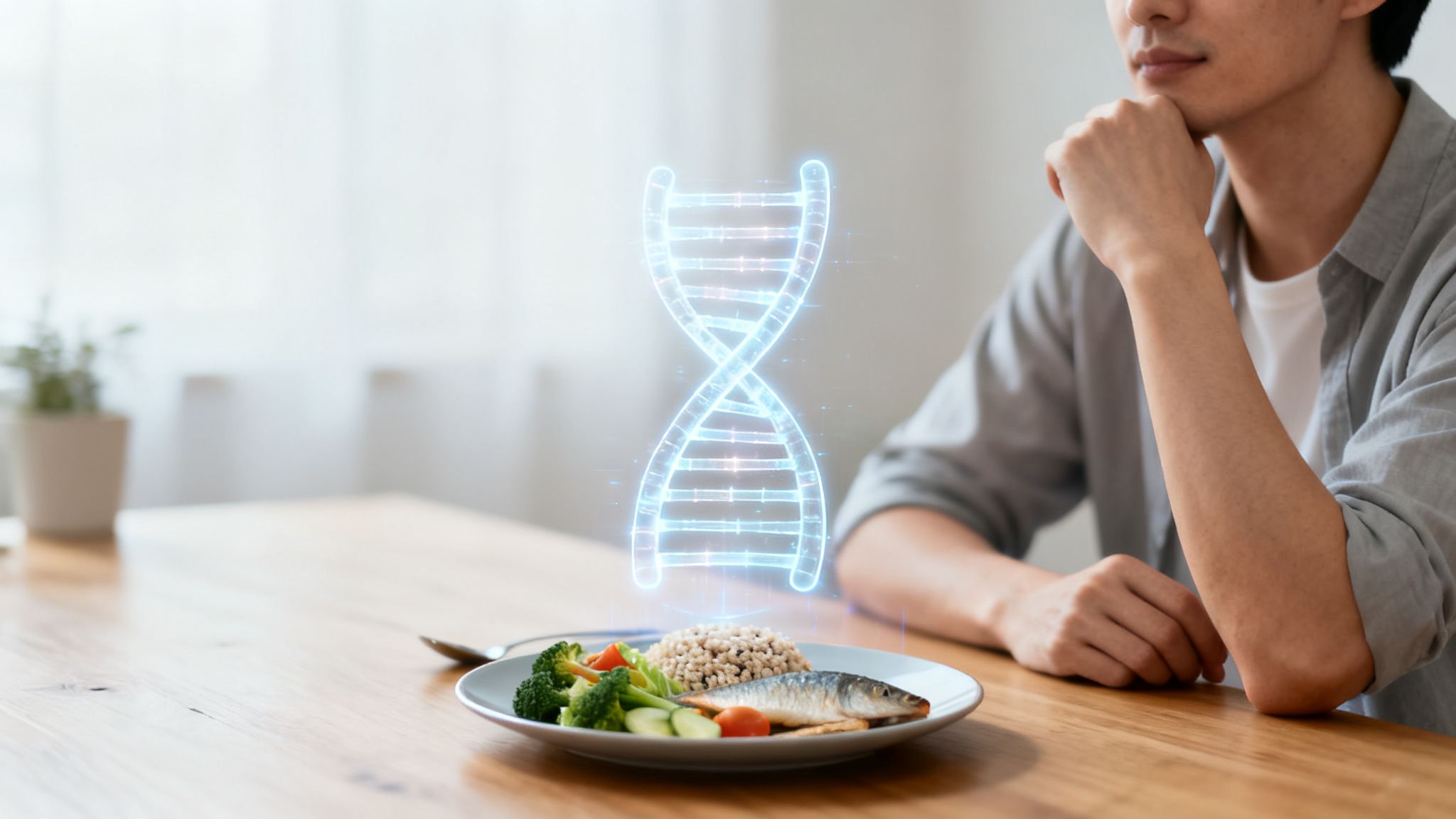
Have you ever wondered why a certain diet works wonders for your friend, but nothing happens for you? You count calories, avoid certain foods, and torture yourself with workouts – but the scale stubbornly refuses to budge. Many people know this frustration, and the reason often lies deeper than you might think: in your DNA.
Each of us is unique, and this is especially true for our metabolism. Standardized nutrition plans completely ignore this individuality. They treat every body the same and are, at best, ineffective, and at worst, even counterproductive. This is precisely where a DNA test for nutrition comes in, based on the fascinating field of nutrigenetics.
Understanding the power of nutrigenetics
Nutrigenetics – it sounds complicated at first, but it's actually quite simple. It's the science that studies how your genes influence your body's response to food. It's key to understanding why your body might process certain nutrients much better or worse than others. If you want to delve deeper, read our detailed article about what nutrigenetics is and how it shapes our lives .
A genetic test provides you with the crucial pieces of the puzzle about your body. For example, it shows you:
- Your metabolic type: Do you utilize carbohydrates, fats, or proteins particularly efficiently as an energy source?
- Individual nutritional needs: Do you have a genetic predisposition for a deficiency in certain vitamins or minerals such as vitamin D or iron?
- Sensitivities: How does your body react to caffeine, alcohol, or gluten?
- Prevention: Are there markers in your DNA that indicate an increased risk for certain health problems that you can counteract with the right diet?
This knowledge is especially important in Germany. Here, 9.7% of adults already have a diagnosed diabetes, and an unsuitable diet can further increase the risk. Although pasta dishes are on the menu several times a week for 40% of people , a DNA test could show you whether you are genetically predisposed to more pronounced blood sugar spikes and should switch to alternative carbohydrate sources.
A DNA test for nutrition doesn't give you rigid rules. Think of it more as a personalized map that helps you make smarter and more informed choices for your well-being.
It's about no longer fighting against your body, but finally working with it. Instead of blindly following the next food trend, you'll receive clear, personalized recommendations that truly suit you. To understand the bigger picture, it's also worth taking a look at the general scientific principles behind modern health approaches.
Comparison of general diets and personalized DNA nutrition
To clarify the differences, we have compared the two approaches. The table shows at a glance why a personalized strategy is often more sustainable and effective.
| feature | General diet | Personalized DNA nutrition |
|---|---|---|
| Approach | "One-size-fits-all", based on general guidelines | Individually tailored to your genetics |
| basis | Calorie counting, blanket prohibitions (e.g., low-carb, low-fat) | Scientific analysis of your metabolism and nutritional needs |
| effectiveness | Often short-term successes, frequently followed by the yo-yo effect | Higher chance of long-term and sustainable results |
| focus | Weight loss due to restriction | Holistic well-being, energy and prevention |
| motivation | Often based on discipline and sacrifice | Based on understanding and working with one's own body |
As you can see, DNA-based nutrition is not just another short-term diet, but a long-term change based on solid data about your own body.
How a DNA test unlocks your metabolism
Forget complicated medical procedures – a genetic test for nutrition is surprisingly simple these days. Behind it lies fascinating science that detects tiny but crucial variations in your genetic code. These variations significantly influence how your metabolism works.
These are called SNPs , short for Single Nucleotide Polymorphisms . That sounds complicated at first, but it isn't. Imagine your DNA as a giant cookbook for your body. SNPs are like tiny typos in this book – a single letter that has been swapped out in one place.
Most of the time, these "typos" are completely harmless. Sometimes, however, they have a noticeable impact on how your body functions. For example, how it processes fats or carbohydrates, how quickly you feel full, or how efficiently your cells produce energy. A DNA test for nutrition examines precisely these relevant SNPs.
From genes to concrete recommendations
To make this more tangible, let's look at a few well-known examples that are examined in any reputable test. These genes have a direct influence on how you react to your diet.
- The FTO gene: Often referred to as the "obesity gene." Certain variants can lower your satiety signals and increase cravings for high-calorie foods. If you have this variant, you could greatly benefit from a protein-rich diet and mindful, slow eating.
- The CYP1A2 gene: Does this sound familiar? You can't sleep after a late-night espresso, while your partner can easily drink several cups in the evening? The CYP1A2 gene controls how quickly your liver breaks down caffeine. People with slow metabolizers should keep a close eye on their coffee consumption.
- The LCT gene: This gene determines whether your body still produces lactase – the enzyme that breaks down lactose – in adulthood. A specific variant leads to lactose intolerance. A DNA test can provide clarity long before the typical abdominal pain occurs.
These examples make it clear: The goal is not to diagnose diseases. Instead, you will receive valuable tips on how to optimally adapt your diet and lifestyle to your individual predisposition.
A DNA test is not a judgment, but a tool. It provides you with the scientific basis to make informed decisions and finally understand why your body functions the way it does.
What a reputable test can do – and what it can't.
It is important to realistically assess the possibilities of a DNA test for nutritional purposes . A reputable test, such as the one offered by mybody-x, is based on scientifically sound findings and only analyzes gene variants whose influence has been proven in human studies.
This is what a reputable test can do:
- Determine your metabolic type: It shows whether you primarily use proteins, fats, or carbohydrates as an energy source. Want to learn more? Then read our guide to metabolic tests .
- Uncovering individual nutrient needs: It can indicate a genetic predisposition for an increased need for certain vitamins (e.g., vitamin D) or minerals.
- Detecting sensitivities: It analyzes your genetic reaction to substances such as caffeine, alcohol, or saturated fats.
A reputable test cannot do that:
- Diagnosing diseases: A lifestyle genetic test is not a medical diagnostic tool.
- Prescribing a "miracle diet": You receive recommendations, not rigid prohibitions. Your lifestyle, preferences, and habits continue to play the main role.
- Personal effort is key: The best genetic predispositions are useless if you don't put them into practice in everyday life.
By understanding the effects of these small "typos" in your DNA, you gain a powerful guide. It helps you to no longer see your body as an adversary, but as a partner on the path to greater well-being and health.
Here's how to easily get your personal DNA analysis
Are you curious and wondering how a DNA test for nutrition actually works? Don't worry, the process is surprisingly straightforward. We've designed everything so you can do it comfortably, discreetly, and completely securely from the comfort of your own home.
Everything you need comes in a small test kit delivered directly to you. Inside you'll find simple instructions and everything you need for your sample – no complicated medical procedures are required. A simple saliva sample is all it takes to obtain all the important genetic information for your analysis.
From your saliva sample to the finished result
Once you have collected your sample and returned it to us in the enclosed envelope, the scientific part begins. Your sample will be pseudonymized immediately. This means we separate your personal data from the sample itself. Your identity is therefore protected at all times.
Your sample will then be sent to our ISO-certified partner laboratory in Germany. Here, state-of-the-art technologies are used to precisely analyze the relevant gene markers (SNPs) in your DNA. The entire process is, of course, subject to the strict guidelines of the General Data Protection Regulation (GDPR).
Your data remains your data: Protecting your privacy is our top priority. Your raw genetic data will be irrevocably deleted after analysis and never shared with third parties. That's a promise.
The entire process can be summarized in three simple steps:
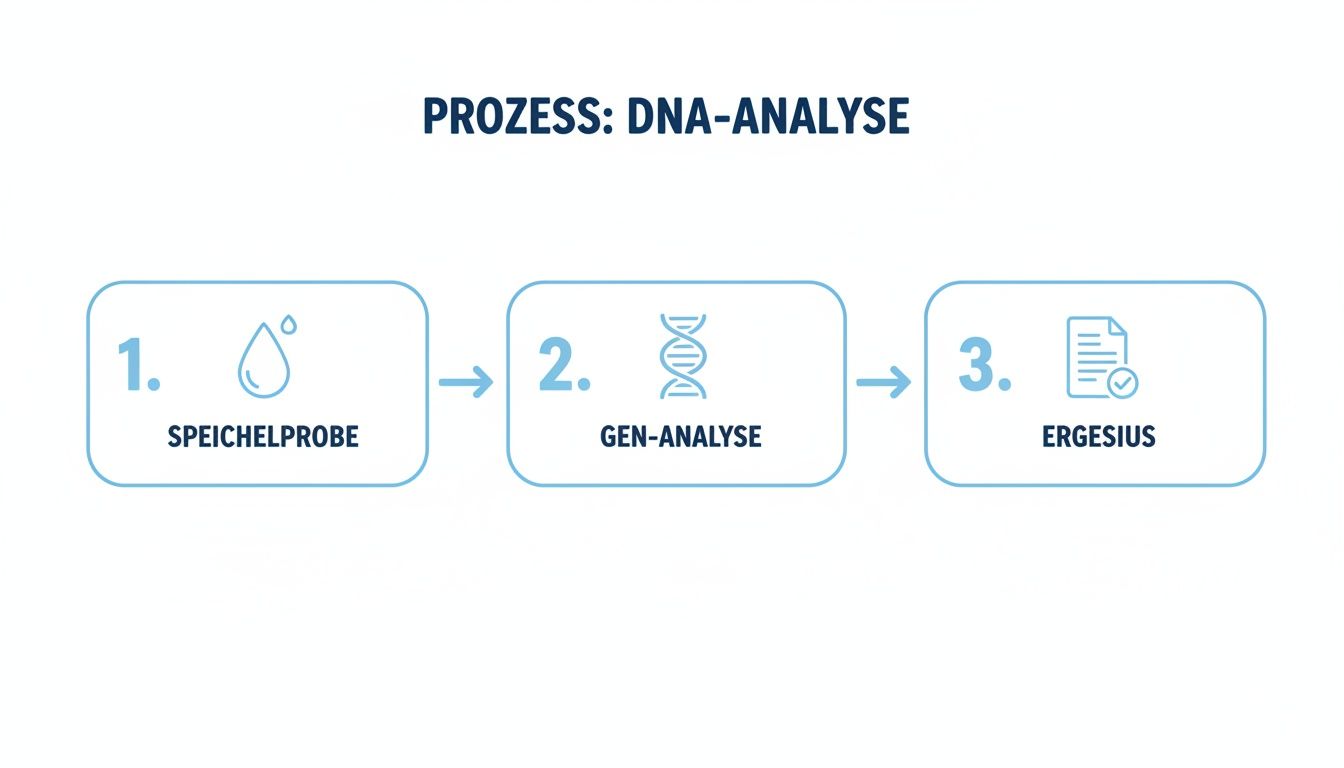
So you see: From a simple sample to a reliable analysis, it's just a small step to your personalized results.
Your personal results report: What's inside
After just a few weeks, the time will have come: You'll receive access to your comprehensive results report. And don't worry about incomprehensible technical jargon! We've translated all the complex scientific data into an easy-to-understand and visually appealing analysis for you.
Your report is much more than just a collection of data. It's your personal guide with concrete, actionable recommendations that you can immediately integrate into your daily life. Typically, you'll find:
- Your personal metabolic or meta-type: You will find out whether your body prefers fats, carbohydrates or proteins as an energy source.
- Personalized food lists: We give you clear recommendations on which foods are particularly good for you and which you should perhaps enjoy less often.
- Practical lifestyle tips: In addition to nutrition, you'll also receive advice on exercise and other habits that are ideally suited to your genetic predisposition. If you're curious about what to expect, you can learn more about how to take a DNA test here.
Many providers analyze SNPs in the genome via saliva samples. Experts often criticize the results, arguing that they are unreliable when algorithms neglect the complex interactions within the body. Reputable providers like mybody-x, therefore, rely on ISO-certified analyses and combine genetics with practical lifestyle tips. The result: over 11,300 satisfied users and a 4.77-star rating . You can read more about the background in an article on spiegel.de .
This turns your DNA into a powerful tool that helps you finally take control of your health and achieve your goals.
How to successfully implement your results in everyday life

Your personal results report is the starting point. But the real transformation only begins when you integrate this new knowledge into your daily life. A DNA test for nutrition isn't dry theory; it's a practical guide to finally establishing sustainable and healthy habits that truly suit you.
Forget about perfection. It's more about making conscious, informed decisions that feel good. The key to success lies in integrating the recommendations step by step, without overwhelming yourself. Start small, be curious, and notice how your body reacts to the new stimuli. You'll quickly realize that it's not about deprivation, but about choosing the right building blocks for your well-being.
Living your metabolic type in practice
One of the key elements of your report is the analysis of your genetic metabolic type, often also called your meta-type. This reveals which of the three macronutrients – proteins, carbohydrates, or fats – your body prefers to use as an energy source.
-
The Protein Type: Your body is a true pro at utilizing protein. A diet rich in lean meat, fish, legumes, and dairy products provides you with sustained energy and keeps you feeling deeply full. Complex carbohydrates are still important, of course, but protein should take center stage on your plate.
-
The carbohydrate type: You're one of the lucky ones whose body loves carbohydrates and uses them efficiently as fuel. Whole grain products, potatoes, oatmeal, and fruit are your best friends. They keep you energetic and vital.
-
The Balanced Type: As the name suggests, balance is crucial for you. A balanced mix of all three macronutrients is ideal. No single nutrient should be excessively dominant or deficient.
Most importantly: These types are not rigid categories. Rather, they are a personalized guideline that helps you put together your plate in a way that optimally suits your metabolism.
The following table shows an example of how the recommended composition of macronutrients can differ depending on the genetic metabolic type.
Example of nutrient distribution by metabolic type
| Metabolic type | Proteins (%) | Carbohydrates (%) | Fats (%) | Suitable foods |
|---|---|---|---|---|
| Protein type | ~30–40% | ~30–40% | ~25–35% | Chicken breast, salmon, lentils, quark, nuts |
| Carbohydrate type | ~15–25% | ~50–60% | ~20–30% | Wholemeal bread, oatmeal, sweet potatoes, fruit, rice |
| Mixed type | ~25–35% | ~40–50% | ~25–35% | A balanced combination of all groups |
These values serve as a guide and show how different the ideal plate layout can look, depending on how your genes work.
From knowledge to a full shopping cart
Implementation starts with shopping. Your personalized grocery list from the report is your best guide. Plan your meals a few days in advance – this not only saves time and stress, but also prevents unhealthy impulse buys.
A little trick to get started: Focus on just one meal a day at first, for example, lunch. Consistently plan it according to the recommendations for your metabolic type. Once that becomes routine, tackle the next meal.
Preparation also makes a difference. Meal prep, or cooking in advance, is a brilliant way to make healthy choices a habit. If a delicious meal tailored to your needs is already waiting for you in the fridge, you'll reach for unhealthy snacks much less often. Looking for more practical tips? Our guide shows you how to optimize your diet based on your test results .
Tips for everyday life and special occasions
Don't worry, your social life doesn't have to suffer because of your new diet. You can still make choices that suit you, even when eating out at restaurants or with friends.
-
At the restaurant: Take a look at the menu online beforehand. This way you can find a dish that matches your preferences at your leisure. And don't hesitate to ask for small adjustments, such as an extra portion of vegetables instead of fries.
-
When invited to someone's home: Simply offer to bring a salad or a healthy dessert. This ensures there's an option that suits you perfectly, and you'll also enrich the buffet for everyone.
-
At the workplace: Especially in the office, unhealthy temptations often lurk. In addition to your own personal recommendations, it helps to familiarize yourself with general principles of healthy eating at work – this makes implementation much easier.
Always remember: Every meal is a new opportunity to give your body exactly what it needs. With the knowledge gained from your DNA test, healthy eating becomes intuitive, simple, and above all, delicious.
More than just weight loss with personalized nutrition
Your genetic blueprint is far more than just a factor in your weight. While many see a DNA test for nutrition as merely a tool for weight loss, its true potential lies much deeper: in a holistic approach to your long-term health and vitality. It's about understanding your body at the cellular level and giving it exactly what it needs to function optimally.
This knowledge opens doors to goals that go far beyond the number on the scale. Imagine being able to not only manage your weight, but also positively influence your energy levels, athletic performance, and even the aging process.
Anti-aging and anti-inflammatory effects through genes
Chronic, low-grade inflammation is the silent driver of premature aging and many of our modern-day diseases. Your diet plays a crucial role in whether you fan or extinguish these "silent fires" in your body.
A DNA test can show you if you have a genetic predisposition for stronger inflammatory responses. With this knowledge, you can counteract this by incorporating anti-inflammatory foods like omega-3-rich fish, berries, and leafy green vegetables into your diet.
This is the essence of anti-aging from within: you give your body the building blocks to protect and regenerate itself, instead of just fighting external symptoms. Your diet thus becomes your most personal and effective weapon in prevention.
Optimize athletic performance and recovery
Are you physically active? Then you know how crucial nutrient timing and recovery are for your success. Your DNA provides valuable clues on how to perfectly coordinate your training and nutrition.
Genetic markers can give you information about:
- Your optimal training intensity: Are you more of an endurance type or does your strength lie in strength training?
- Your regeneration capacity: How quickly does your body recover after exertion and how can you specifically support it?
- Your individual nutrient needs: After exercise, do you need more protein or carbohydrates to optimally replenish your energy stores?
With these insights, you stop guessing and start training and eating based on data. This way, you get the most out of every session while minimizing the risk of overtraining.
Targeted promotion of micronutrients and gut health
Vitamins and minerals are the spark plugs of your metabolism. A deficiency often manifests as fatigue, difficulty concentrating, or a weakened immune system. A DNA test can reveal predispositions for certain deficiencies, such as vitamin D, B vitamins, or iron – often even before they show up in blood tests. This allows you to take proactive steps to counteract them.
Your gut health, the center of your well-being, also benefits. Your genes influence how you react to foods like fiber or lactose. This information helps you to specifically support your gut flora and keep your digestive system in balance.
Modern research in nutri-epigenetics shows how strongly our diet influences the activity of our genes – a crucial factor for longevity. While 17% of Germans already eat less meat, the truly optimal diet is deeply rooted in our genetics. In a country with a diabetes prevalence of 9.7%, DNA analyses enable preventative adjustments that go far beyond simply losing weight and lay the foundation for a long, healthy life. You can learn more in the trend report from the Federal Centre for Nutrition .
You ask, we answer: Everything you need to know about your DNA nutrition test
Okay, the idea of a diet perfectly tailored to your genes sounds exciting. But you probably still have a few questions. That's perfectly normal! Here you'll find honest and clear answers to the most common questions, so you know exactly what to expect.
Who is a DNA test actually intended for?
Quite simply: This test is for anyone who's fed up with diet frustration and is finally looking for a path that truly suits their own body. Have you already tried everything imaginable, but nothing has worked long-term? Then this test is perfect for you.
But even if you're simply curious and want to proactively manage your health, the test provides valuable insights. Athletes can optimize their performance and recovery, while others can discover how to age healthily and stay fit. In short: If you want to better understand your body and make informed decisions about your health, this test is an extremely powerful tool.
Is there real science behind this?
Yes, absolutely. The recommendations are based on nutrigenetics, an established branch of science that explores the relationship between genes, nutrition, and health. We specifically look at genetic variations (so-called SNPs) whose influence on metabolism has been demonstrated in countless human studies.
Important to know: Quality is paramount here. Our analyses are conducted exclusively in ISO-certified laboratories . The results are interpreted by a team of experts and should be understood as scientifically sound lifestyle recommendations – not as medical diagnoses.
So you won't get general diet tips, but rather personal guidance based on solid scientific data.
Do I have to completely turn my life upside down?
No, absolutely not! This isn't about radical deprivation or a complicated diet that no one can stick to. It's about smart adjustments. You'll receive a kind of personalized guide that shows you which foods and nutrients are particularly beneficial for you.
Think of it as an upgrade to your current eating habits. You'll learn what to pay attention to and develop a sense of what nourishes you. The goal is a way of eating that you enjoy and can maintain long-term – without hunger or the feeling of deprivation. It's a flexible guide that integrates seamlessly into your daily life.
Are you ready to unlock the secrets of your metabolism and put your diet on a scientific footing? At mybody-x, you'll find the right DNA test to finally achieve your health goals – reliable, safe, and tailored to you. Discover your personal DNA test now at mybody-x.com .


Share:
Where can you get a DNA test? The ultimate guide
Perhaps you don't lack discipline – but nutrients.