

How Does Nutritional Counseling Work? Explained Clearly
Many people talk about healthy eating and constantly counting calories. Yet more than 60 percent of Germans do not know their own nutritional requirements. Sounds surprising, doesn't it? Nutritional counseling can offer far more than mere weight-loss tips. It opens up ways to adapt nutrition so that it truly meets individual needs and supports sustainable change.
Table of Contents
- What Is Nutritional Counseling and Why Is It Important?
- The Basics of Nutrition: Nutrients and Their Functions
- Personalized approaches: How individual needs are taken into account
- The role of genetic and metabolic tests in nutritional counseling
- Practical applications: Nutritional counseling in everyday life and its effects
Brief Summary
| Insight | Explanation |
|---|---|
| Nutritional counseling promotes healthy behavior. | Professional support helps people make conscious dietary choices and promotes long-term health. |
| Personalized strategies are crucial. | Nutrition should be individually tailored, taking genetics and lifestyle into account. |
| Nutritional knowledge is essential. | A deep understanding of the required macronutrients and micronutrients optimizes health. |
| Behavioral changes require planning. | Gradual adjustments and realistic goals are necessary to achieve lasting changes. |
| Genetic tests provide specific insights. | They help people better understand individual nutritional needs based on genetic factors. |
What Is Nutritional Counseling and Why Is It Important?
Nutritional counseling is a professional service that helps people improve their dietary habits in a targeted and scientifically sound way. It goes far beyond simple dietary recommendations and offers a holistic perspective on individual health and well-being.
The Fundamentals of Nutritional Counseling
Modern nutritional counseling is based on a comprehensive understanding of individual health needs. It considers not only nutritional goals, but also personal circumstances, genetic predispositions, and metabolic processes. Scientific nutrition experts emphasize that qualified counseling must be tailored to the specific needs and living circumstances of those seeking advice.
The central goal is to empower people to make conscious and healthy dietary choices. This is achieved through:
- Detailed analysis of current dietary habits
- Identifying potential nutrient deficiencies
- Developing personalized nutrition strategies
Importance for Health Prevention
Nutritional counseling plays a crucial role in preventing health risks. It can help prevent chronic diseases such as diabetes, cardiovascular disease, and metabolic disorders at an early stage. Our nutrition experts can help you learn more about your genetic nutritional requirements to address your individual needs optimally.
The importance of professional nutritional counseling cannot be overstated: it is more than a one-time intervention; it is a tool for promoting long-term health and quality of life. Through personalized recommendations and scientifically sound strategies, it helps people optimize their nutrition holistically and sustainably.
The Basics of Nutrition: Nutrients and Their Functions
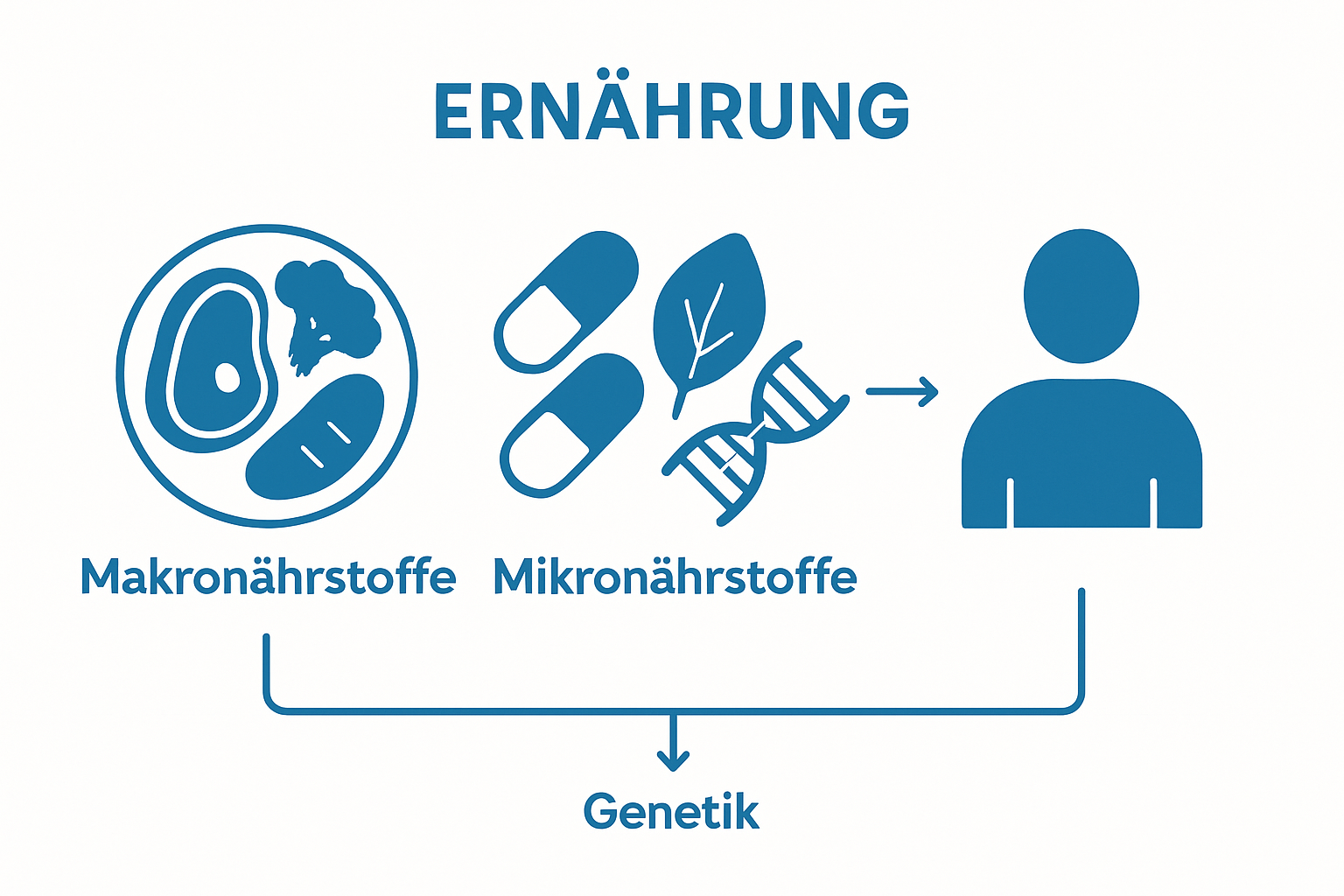
Nutrition is more than just food intake—it is the key to our health and performance. Nutrients are the chemical substances that provide our bodies with energy, support growth, and enable regeneration. They form the foundation for all biological processes and fundamentally influence our health.
Macronutrients: The Energy Providers
Macronutrients are the main sources of energy for our bodies and are divided into three key categories:
- Carbohydrates: Primary energy source that provides glucose for the brain and muscles
- Proteins: Building blocks for muscle tissue, enzymes, and hormones
- Fats: Important for hormone production and organ protection
Our experts offer detailed insights into nutrient deficiencies and their symptoms to identify individual nutritional needs.
Micronutrients: The Precision Helpers
Micronutrients such as vitamins and minerals are essential for complex metabolic processes. They regulate immune functions, support cell regeneration, and act as catalysts for biochemical reactions. Although they are needed in small amounts, they are indispensable for optimal bodily functions.
A balanced diet means not only consuming enough calories, but also getting the right nutrients in the right combination.
To clearly illustrate the various roles and effects of macronutrients and micronutrients in the body, this table summarizes their key properties and functions.
| Nutrient type | Examples | Function in the body |
|---|---|---|
| Macronutrients | Carbohydrates, proteins, fats | Main energy source, muscle building, hormone production, organ and cell protection |
| Carbohydrates | Bread, rice, potatoes | Primary energy source, glucose supply for the brain and muscles |
| Proteins | Meat, fish, legumes | Formation of muscle tissue, enzymes, and hormones |
| Fats | Oils, nuts, avocados | Hormone production, organ protection, energy storage |
| Micronutrients | Vitamins, minerals | Regulate metabolism, immune function, cell regeneration |
| Vitamins | Vitamin C, vitamin D | Immune support, bone health, metabolic regulation |
| Minerals | Calcium, magnesium | Bone formation, muscle and nerve function, enzyme activation |
Personalized approaches: How individual needs are taken into account
Personalized nutritional counseling goes far beyond standardized dietary recommendations. It views each person as a unique biological system with individual metabolic processes, genetic predispositions, and lifestyle conditions.
Genetic and Metabolic Analysis
Modern nutritional counseling uses advanced diagnostic methods to precisely assess individual needs. Genetic tests enable an in-depth insight into personal metabolism and potential nutrient utilization.
Discover your personalized nutrition strategy based on scientific findings and individual biological markers. This analysis takes into account:
- Genetic variations affecting nutrient absorption
- Individual metabolic responses
- Potential risk factors for nutritional sensitivities
Holistic approach
Personalized nutritional counseling takes into account not only biological aspects but also psychological and social factors. It analyzes lifestyle habits, stress levels, sleep quality, and personal goals. According to the scientific findings of the German Nutrition Society, successfully changing one's diet requires more than just dietary recommendations.
The goal is to develop a sustainable nutrition strategy that can be integrated into an individual's lifestyle over the long term. This means flexible nutrition plans adapted to personal needs that enhance health, well-being, and quality of life.
This table provides an overview of which aspects personalized nutritional counseling analyzes and integrates in contrast to traditional, standardized counseling approaches.
| Aspect | Traditional counseling | Personalized counseling |
|---|---|---|
| Focus | General recommendations | Individual genetic and metabolic circumstances |
| Objective | Weight control, standard prevention | Adaptation to lifestyle, personal goals, and biology |
| Diagnostics | Often a medical history and basic blood values | Genetic tests, metabolic analyses, comprehensive life-context analysis |
| Recommendations | One-size-fits-all diets, general nutritional advice | Tailored nutrition plans, flexible adaptation as needed |
| Factors considered | Age, gender, activity level | Genetics, psychology, social circumstances, current lifestyle habits |
The role of genetic and metabolic tests in nutritional counseling
Genetic and metabolic tests are revolutionizing modern nutritional counseling by providing unprecedented insight into an individual's biological processes. They go far beyond traditional dietary recommendations and offer personalized insights at the molecular level.
Scientific foundations of genetic analyses
The science of nutrigenomics examines how genetic variations influence our metabolic processes and nutrient utilization. Genetic markers can provide insight into how the body absorbs, metabolizes, and stores nutrients. Discover your personalized DNA nutrition test to gain precise insights into your individual genetic nutritional needs.
These tests analyze specific genetic variations that influence:
- Carbohydrate metabolism
- Fat burning and weight management
- Sensitivity to certain foods
- Nutrient absorption and utilization
Metabolic testing methods
Metabolic tests measure metabolic activity and biochemical processes in the body. According to the scientific findings of UGB-Gesundheitsberatung e.V., these tests can provide detailed information about individual metabolic processes.
Combining genetic and metabolic analyses creates a comprehensive picture of an individual’s nutritional needs. Nutrition experts can now develop customized dietary strategies tailored to a person’s specific genetic and metabolic characteristics. This enables a more precise, scientifically grounded approach to nutrition and health optimization.
Practical applications: Nutritional counseling in everyday life and its effects
Nutritional counseling is more than theoretical recommendations—it is a dynamic process that enables real behavioral changes and health improvements in everyday life. It serves as an individual compass through the complex world of nutrition and personal health optimization.
Strategies for sustainable dietary changes
Successfully implementing dietary recommendations requires more than just knowledge. Behavioral changes must be designed systematically and individually. Find out how food intolerances may affect your diet to make targeted adjustments.
Effective strategies include:
- Gradual dietary changes
- Realistic and achievable goals
- Developing self-monitoring and documentation skills
- Integrating new dietary habits into everyday life
Measurable health effects
According to findings from the German Nutrition Society, professional nutritional counseling can bring about significant improvements. Scientific studies show that targeted dietary interventions have positive effects on various health parameters.
The long-term effects of professional nutritional counseling range from improved metabolic regulation to a reduced risk of chronic diseases. It empowers people to make conscious dietary choices and play an active role in supporting their health.

Find out how personalized nutrition can sustainably improve your health
Many people quickly reach the limits of conventional nutritional counseling. Uncertainty about nutrient deficiencies, undetected intolerances, or the search for clear, personalized recommendations can be frustrating. This is exactly where our scientifically based service comes in—directly to your home and always individually tailored to you. Find out how you can use an at-home nutrient deficiency test to identify and precisely address gaps in your nutritional supply. Overcome uncertainty and use modern analyses as the basis for real improvements in everyday life.
Take the next step now at mybody-x.com and also discover our at-home allergy & intolerance tests. Take action before health problems arise. Get started today and find out which details of your health remain hidden—so you can improve your diet in a targeted and effective way.
Frequently Asked Questions
How does nutritional counseling work?
Nutritional counseling analyzes individual dietary habits and health needs to develop personalized nutrition strategies. It takes genetic factors, living conditions, and metabolic processes into account.
Why is nutritional counseling important for health?
Nutritional counseling helps prevent chronic diseases and promote overall health. It supports people in making conscious dietary choices and achieving long-term health improvements.
Which nutrients are considered in nutritional counseling?
Nutritional counseling considers both macronutrients (carbohydrates, proteins, fats) and micronutrients (vitamins, minerals) to ensure a balanced diet.
How does genetic analysis help with nutritional counseling?
Genetic analyses provide insights into individual metabolic processes and nutrient utilization. They enable a tailored nutrition strategy based on personal genetic predispositions.



Share now:
10 Tips for a Healthy Lifestyle for a Better Life
Guide to Gut Health: Understanding and Importance