
Gut health test: Your guide to greater well-being
Do you often feel tired or bloated, or struggle with digestive problems that you simply cannot explain? Your gut feeling may have been signaling for some time that something is wrong, but you dismiss it as stress or try home remedies that do not really help. A gut health test can finally provide clarity and is often the first crucial step away from treating symptoms and toward finding their cause.
Why your gut feeling is often right
Your gut is so much more than just a digestive organ. It is the command center of your well-being, closely connected to your immune system, your mood, and your overall energy level. Trillions of microorganisms—bacteria, viruses, and fungi—live inside it and together form your very own gut microbiome.
Think of this microbiome as a lush, vibrant garden. In a healthy garden, countless beneficial plants grow, supporting one another, nourishing the soil, and naturally keeping pests at bay. In the same way, beneficial gut bacteria help you make optimal use of your food, produce vital vitamins, and protect you from pathogens.
When the inner garden gets out of balance
But what happens when this inner garden is neglected? Chronic stress, an unbalanced diet, and perhaps taking antibiotics can disrupt the delicate balance. Suddenly, the “weeds”—that is, harmful bacteria and yeasts—gain the upper hand. This imbalance, known in technical terms as dysbiosis, displaces the beneficial helpers and can have far-reaching consequences.
The signals your body sends then are often vague and extend far beyond mere stomach pain:
- Constant tiredness and lack of energy, even though you actually get enough sleep.
- Persistent digestive problems such as bloating, constipation, or diarrhea that simply refuse to go away.
- Skin problems such as acne, eczema, or a dull complexion that seem to come from within.
- Cravings for sugar because certain bacteria practically cry out for it.
- Mood swings and concentration problems that you cannot explain.
If you recognize yourself here, you are absolutely not alone. Current data shows how widespread digestive problems are. According to a Mintel market report, three out of five Germans struggled with them last year. Parents in particular are heavily affected by stress and irregular meals. You can read more about the findings on gut health in Germany to better understand the connections.
A gut health test is like a detailed soil analysis for your inner garden. It shows you exactly what is missing, which beneficial helpers need support, and where weeds have spread.
Instead of continuing to grope in the dark and trying one diet after another, such a test gives you a scientifically sound foundation. It analyzes the composition of your microbiome and provides you with concrete data. With this knowledge, you can address the causes of your symptoms in a targeted way—and finally regain control over your health and well-being.
What gut tests are available, and what do they really reveal?
Anyone who types “gut health test” into a search engine is immediately overwhelmed by a wave of technical terms: microbiome analysis, leaky gut, inflammatory markers. This can quickly leave you at a loss. But don't worry—we'll shed some light on the subject together now. We'll look at what lies behind the most important types of tests and what they can really reveal about your gut.
It is best to think of the different tests as a detective's tools. Each tool has a very specific purpose, helping to build a complete picture of the “case”—that is, your gut health—at the end. A single tool is often not enough to solve all the puzzles.
The following graphic illustrates this process beautifully: from an unclear symptom, through the search for its cause, to clarification with the appropriate test.

It is clear here that a test is the logical step from a mere guess to a well-founded analysis—and then to taking targeted action.
The pure microbiome analysis
The basis of many at-home gut tests is microbiome analysis. Using cutting-edge technology (usually 16S rRNA gene sequencing), the DNA of your gut bacteria is analyzed. This tells you exactly which bacterial strains live in your gut and how abundant they are.
This tool is great for assessing the diversity of your gut flora—in other words, the variety of your bacterial residents. Two metrics are often distinguished here:
- Alpha diversity: Think of it like the variety of species in a single garden. The more different plant species (that is, bacterial strains) grow here, the more robust and healthier the entire ecosystem is.
- Beta diversity: This is essentially a comparison of your garden with the gardens of other healthy people. If your composition differs significantly from the average, it may indicate an imbalance.
A basic microbiome analysis is a fantastic starting point, but it only tells part of the story. It shows you who lives in your gut, but not necessarily what is happening there.
The comprehensive stool test for the complete picture
To truly understand your gut health, you often need more than simply counting the bacteria. A comprehensive stool test, such as the one offered by mybody-x.com, looks deeper and also measures key health markers that reflect the true condition of your gut.
A comprehensive test provides not only an assessment of your microbiome, but also specific indications of inflammation, a permeable intestinal lining, or digestive problems.
Here are some of the most important markers that make the difference:
- Calprotectin: This value is an extremely important marker of inflammation. If it is elevated, it may indicate inflammatory processes in the intestinal lining, often even before you experience severe symptoms.
- Zonulin: This protein regulates the permeability of your intestinal lining. Elevated zonulin levels can be a clear indication of “leaky gut syndrome,” in which the intestinal barrier is weakened.
- Bile acids: They are essential for proper fat digestion. An imbalance may indicate problems with the liver, gallbladder, or fat metabolism.
- Undigested food residues: Are fats, proteins, or starch ending up undigested in your sample? This can be a sign of enzyme deficiency and often explains why you feel bloated after eating.
Speaking of bloating: Did you know that healthy adults pass gas an average of 32 times per day? This is completely normal and simply shows that your microbiome is working hard. However, if you, like many Germans, constantly suffer from digestive problems, excessive bloating can be a clear sign of dysbiosis.
A comprehensive test therefore combines the analysis of your bacterial diversity with these functional markers. This gives you a much more accurate picture and allows you to narrow down the causes of your symptoms much more precisely.
If you are unsure which test is right for you, take a look at our detailed microbiome test comparison. There you will find more helpful information to help you make the best choice for your individual goals.
What an at-home gut test is really like
The thought of providing a stool sample initially puts many people off. Honestly, who enjoys dealing with that? But today, this concern is truly unfounded. Modern test kits, such as those from mybody-x.com, are cleverly designed so that the entire process is discreet, hygienic, and surprisingly easy for you.
We will now guide you step by step and show you how easy an at-home gut health test really is.
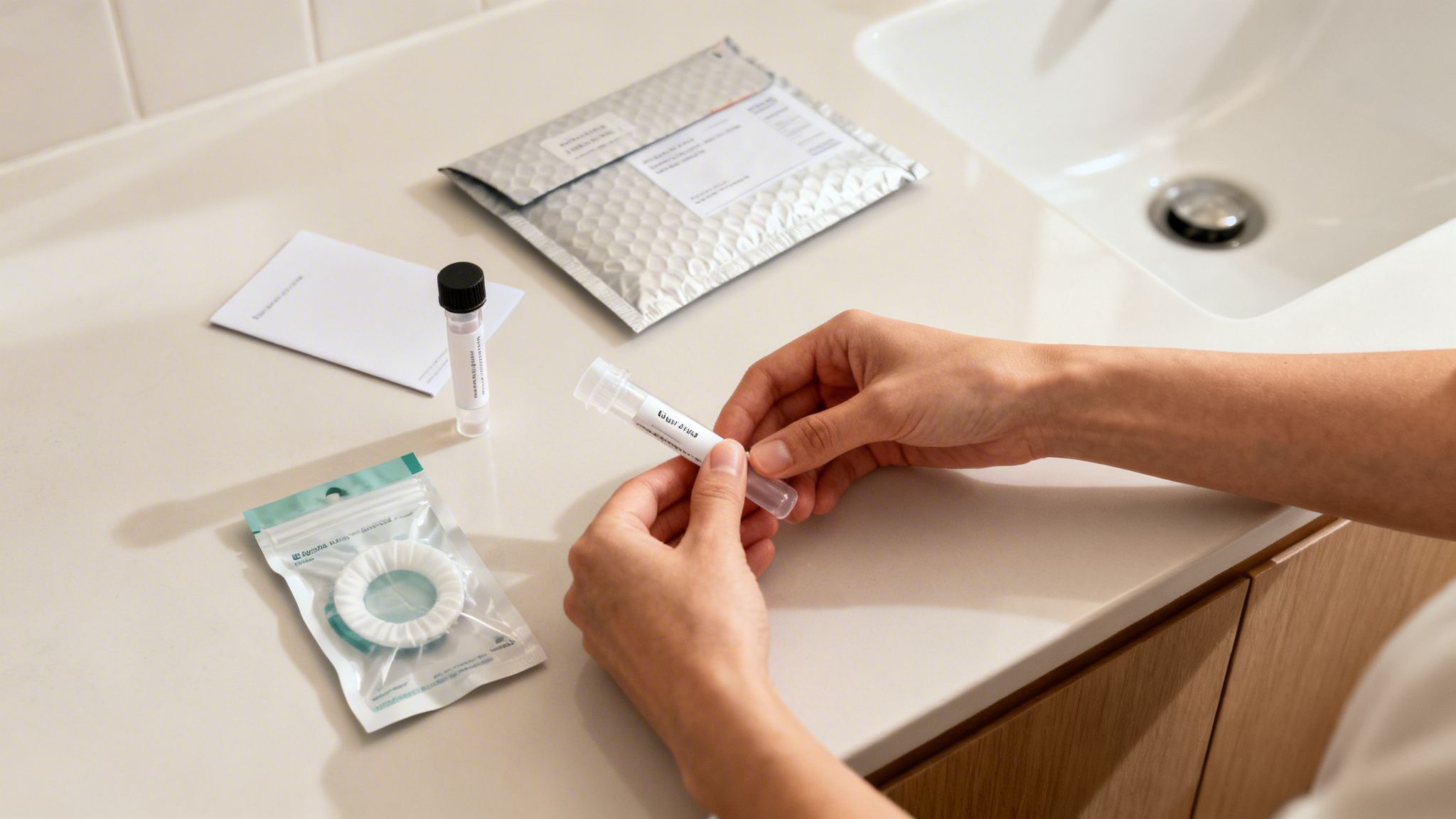
From ordering to sample collection
It all starts conveniently online by ordering your mybody-x.com test kit. It arrives at your home in discreet packaging—no one needs to know what is inside. The kit contains everything you need to collect the sample, including very clear, illustrated instructions that leave no questions unanswered.
The key part of the process is collecting the sample, which is quick and clean thanks to smart tools:
- Preparation: Lay out all the components from the kit. Your most important helper is the stool catcher—special biodegradable paper that you simply hang in the toilet. It safely catches the sample and prevents any contact with the toilet water.
- Sample collection: After a bowel movement, use the small spoon integrated into the lid of the sample tube to collect a tiny amount of your stool sample. The required amount is truly minimal; a hazelnut-sized portion is often more than enough.
- Packaging: Seal the tube tightly and place it in the leak-proof bag provided. You can simply flush the stool catcher away afterward. Clean and done.
This carefully designed process ensures that the entire procedure remains hygienic and stress-free. You can complete everything in the familiar and private surroundings of your own bathroom.
The greatest advantage of an at-home test is complete discretion and flexibility. You do not need to schedule a doctor’s appointment, sit in a waiting room, or collect the sample at any particular time—you can do it whenever it suits you best.
What you should know before the test
To get the most accurate and unbiased picture of your gut flora possible, there are a few important points you should consider before collecting your sample. After all, your gut flora is a dynamic system that responds to external influences.
Important preparation instructions:
- Antibiotics: After antibiotic treatment, wait at least four weeks before collecting your sample. Antibiotics can significantly disrupt your microbiome, and your gut needs time to recover.
- Probiotics: Ideally, stop taking probiotic supplements one week before the test. This ensures that the results reflect your natural gut flora rather than the additional bacterial strains you have taken.
- Diet: You don’t need to follow a special diet. In the days before the test, simply eat as you normally do. The goal is to obtain an authentic picture of your everyday gut health.
These simple rules help maximize the validity of your test result. You can also find detailed instructions for preparing for and carrying out the test in our article How to Perform a Microbiome Test at Home: Step-by-Step Instructions.
The journey to the laboratory and back to you
Once your sample is securely packaged, activate your test kit online using an individual code. This is important so that your results can later be anonymized while still being assigned correctly. Then place the sample in the prepaid return envelope and take it to the post office.
Shipping to our certified partner laboratory in Germany is completely free of charge for you. There, trained professionals analyze your sample using the latest scientific methods. A few days later, you’ll receive a notification that your personal results report is available online. This is how you go from an unclear feeling in your gut to concrete, scientifically grounded clarity.
Interpreting and understanding your report correctly
It’s finally here—your personal results report. You open the file and see charts, technical terms, and a great deal of data. At first, that can feel quite overwhelming. But don’t worry—we won’t leave you to figure it out alone. Your report isn’t a medical puzzle; it’s your personal guide to greater well-being.
This section is your guide to reading the results of your mybody-x.com gut health test and interpreting the most important values for you. Together, we’ll decode what the key measurements in your report mean for you and your health. Your report is not the end of the journey, but the starting point for targeted change.

The most important values in your report
Your mybody-x.com results report is intentionally presented in a clear and easy-to-understand format. It summarizes complex laboratory analyses in clear graphics and explanations. Let’s take a look at the key areas you will find in your report.
1. The diversity of your microbiome (diversity) This is one of the most important indicators of a healthy gut. High diversity means that many different species of bacteria live in your gut. The best way to picture it is as a flourishing, resilient mixed forest—as opposed to a vulnerable monoculture in a field. A high value here is therefore a very good sign.
2. Your enterotype The analysis assigns your microbiome to one of three main types (enterotypes). Each type specializes in utilizing certain nutrients particularly well—for example, fiber, proteins, or fats. This information provides valuable insight into which diet naturally suits your gut best.
3. The ratio of bacterial strains This is where we go into detail. Your results show you the ratio of the two dominant bacterial strains: Firmicutes and Bacteroidetes. An imbalance between these two groups is often associated with obesity in studies. This means you can see whether your “slimming” or “weight-gaining” bacteria have the upper hand.
Your results are a snapshot of your lifestyle. They show you honestly how your diet, stress levels, and habits affect the invisible ecosystem inside you.
Health markers that make the difference
In addition to the composition of your microbiome, a comprehensive gut health test also measures markers that describe the functional state of your gut. They reveal what is happening in your gut and whether there are signs of deeper underlying problems.
- Calprotectin (inflammation marker): This value is like a smoke detector for your gut. If it is elevated, it may indicate undetected, chronic inflammatory processes. This is crucial information for getting to the root cause of symptoms such as bloating or discomfort.
- Bile acids: Your analysis provides insight into your fat digestion. An imbalance here may explain why you have difficulty tolerating fatty foods or why you are lacking certain nutrients.
- Butyrate production: Butyrate is a short-chain fatty acid that serves as the main source of energy for your intestinal cells and has anti-inflammatory effects. Your results show how well your bacteria produce this important substance for you.
From Results to Action
The raw data is one thing, but what does it actually mean for you? The mybody-x.com report translates the laboratory values into clear, actionable recommendations. You get more than just numbers—you receive a clear plan.
This table illustrates how specific results from a gut test can lead to personalized recommendations for action.
From measurement result to specific recommendation
| Measurement result (example) | What this means for you | Specific recommendation for action |
|---|---|---|
| Low microbiome diversity & deficiency of butyrate-producing bacteria | Your “inner garden” lacks diversity, and your intestinal cells are missing their most important energy source. This can lead to a weakened intestinal barrier and inflammation. | Increase your intake of fiber from a variety of sources. Eat at least 30 different plant-based foods per week, for example, through lentils, whole-grain products, a variety of vegetables, and nuts. |
| Elevated calprotectin level & imbalance of bacterial strains | There are signs of low-grade inflammation in your gut. Certain “bad” bacteria may have gained the upper hand and be irritating your intestinal lining. | Reduce inflammation-promoting foods such as sugar and processed products. Incorporate anti-inflammatory foods such as omega-3-rich fish (salmon), turmeric, and ginger. A medical evaluation is also advisable here. |
As you can see, your report shows you exactly where you can make changes. It is your personal guide to specifically support your gut, optimize your diet, and improve your well-being from the ground up.
Concrete steps to improve your gut health
Okay, you have your test results in your hands—this is basically your personal map of your gut. Great, you have taken the first important step! But the real journey starts right now. It is about turning your findings into concrete actions that you can actually feel the benefits of.
That is exactly what this section is for: your practical guide to turning the data from your gut health test into genuine well-being.
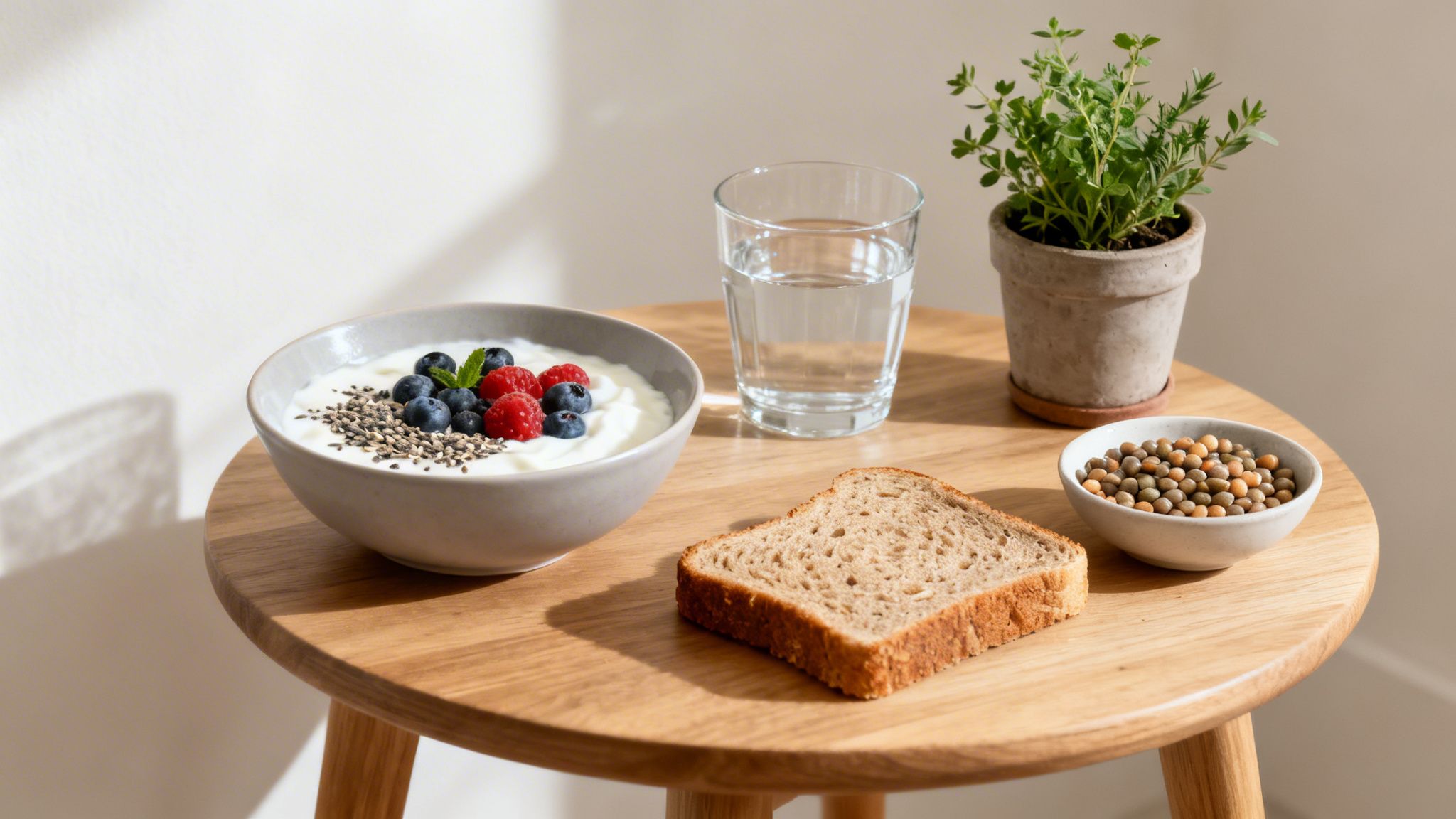
Here, we provide you with practical, scientifically sound tips for everyday life. Simply think of it as your roadmap to a balanced gut—and therefore to a better quality of life.
Feed your good gut bacteria
The key to a healthy microbiome is actually quite simple: You need to specifically support your beneficial bacteria. To do that, you mainly need two things: prebiotics and probiotics.
Think of it like gardening. Probiotics are the new, beneficial plants you put in the ground. Prebiotics are the high-quality fertilizer that helps all the good plants grow strong.
Probiotic foods – the living helpers: These foods provide living microorganisms that enrich and diversify your gut microbiome.
- Fermented vegetables: Sauerkraut, kimchi, and even classic pickled cucumbers are packed with valuable lactic acid bacteria.
- Dairy products: Plain yogurt, kefir, and buttermilk contain the familiar lactobacilli and bifidobacteria.
- Other fermented products: Kombucha, miso, and tempeh are fantastic plant-based alternatives that add variety to your plate.
Prebiotic foods – fuel for your helpers: Prebiotics are essentially nothing more than indigestible fiber. They serve as food for your beneficial gut bacteria and stimulate their growth and activity.
- Inulin-rich foods: Chicory, artichokes, onions, garlic, and leeks are real powerhouses.
- Resistant starch: It sounds complicated, but it is simple: Chilled potatoes, cooked rice or pasta from the day before, as well as slightly green bananas, provide exactly this valuable starch.
- Pectin-rich fruits: Apples and berries not only taste good, they are a real feast for your beneficial gut inhabitants.
The importance of a healthy gut microbiome cannot be overstated. In Germany, digestive tract diseases lead to around 2.4 million inpatient hospital treatments every year. An imbalance in the gut can promote chronic inflammation and even increase the risk of cardiovascular disease. This underscores how important it is to take preventive action. You can read more here about the impact of digestive diseases in Germany and the role of prevention.
The Power of Variety on Your Plate
One of the most important indicators of a healthy gut is a high diversity of bacterial species. There is a simple but extremely effective way to promote this diversity: the “30 plants per week” rule. This recommendation is based on studies that clearly show that people who consume 30 or more different plant foods per week have a significantly more diverse gut microbiome.
Don't think of it as giving something up, but as adding something. Every new type of plant you eat—whether it is an herb, a spice, a nut, or another type of vegetable—is like a new tool for your microbiome.
That may sound like a lot, but it is easier to put into practice in everyday life than you might think:
- Count the variety, not the quantity: A colorful salad mix with three different varieties already counts as three plants.
- Herbs and spices count too: A handful of fresh parsley or a teaspoon of turmeric can easily expand your list.
- Nuts and seeds as toppings: Sprinkle sunflower seeds, walnuts, and flaxseeds over your muesli or salad—and just like that, you have collected three more points.
More than just nutrition: Your lifestyle matters
Your gut health depends on more than just what ends up on your plate. Your overall lifestyle plays a crucial role.
- Stress management: Chronic stress can negatively alter the composition of your gut flora and even weaken the vital intestinal barrier. Techniques such as meditation, yoga, or simple breathing exercises can demonstrably help restore balance.
- Getting enough sleep: While you sleep, your body regenerates—and this is especially true for your gut. Sleep deprivation not only disrupts your hormones but also throws your microbiome significantly out of balance.
- Regular exercise: Moderate exercise such as brisk walking, cycling, or swimming promotes bowel movement (motility) and can increase the diversity of your gut bacteria.
By bringing these three pillars—nutrition, stress management, and lifestyle—into balance, you create the best possible environment for a healthy gut. If you would like to explore the topic in greater depth, read our guide on how to naturally build up your gut microbiome.
How to recognize a reputable provider of gut tests
You should not compromise when it comes to your health. That much is clear. However, the market for self-tests is growing rapidly, and alongside many good options, there are unfortunately also some that promise more than they can deliver. So how can you recognize a provider to whom you can truly entrust your sensitive health data and your trust?
A gut health test is an important investment in your well-being. To help you make an informed and safe decision, we have put together a checklist of the key quality criteria. This way, you can be sure you are making the right choice.
Laboratory quality is paramount
The heart of every test is the laboratory analysis. An unreliable laboratory produces unreliable results—it is as simple as that. So be sure to look for official certification. The key seal of approval for medical laboratories is ISO 15189.
This standard guarantees that the laboratory operates according to the highest international standards for quality and competence. It ensures that samples are processed correctly, analyses are performed accurately, and results are reliable. At mybody-x.com, we work exclusively with partner laboratories in Germany that are certified according to this strict standard.
Your data must be secure
Health data is among the most sensitive information there is. A reputable provider takes its protection extremely seriously. Two aspects are absolutely essential here:
- Data protection under the GDPR: Compliance with the General Data Protection Regulation is legally required in Europe. This means that your data is used only for the purpose of the analysis and is not shared without your explicit consent.
- Data security according to ISO 27001: This certification goes one important step further. It confirms that the provider has established a comprehensive information security management system to actively protect your data from unauthorized access, loss, or theft.
A trustworthy provider treats your data with the same care as your sample. Transparency about data processing and certified security standards are not a nice gesture but an absolute necessity.
Scientific rigor and transparent processes
A good test provides more than just a sheet of raw data. Does the provider clearly explain which scientific methods are used? Is the report based on current studies and does it provide clear, personalized recommendations that you can actually use?
Look for transparency throughout the entire process—from sample collection and analysis to the preparation of your results. Reputable providers do not hide behind technical jargon; instead, they enable you to understand every step. Another major advantage is support from qualified experts. Can you ask questions if anything is unclear and receive assistance from professional staff?
If you take these points into account when making your choice, you can be sure to find a genuine partner for your health—one that meets the highest standards of quality, safety, and scientific rigor.
Still have questions? Here are the answers
We understand that you may still have one or two questions before purchasing a test for your gut health. That is completely normal. To ensure you feel fully informed, we have briefly summarized the key points we are asked about again and again.
How long will I wait for my result?
Once your sample has arrived at our laboratory, the analysis usually takes between 10 and 14 business days. Don’t worry—you do not have to keep checking; we will notify you by email as soon as your personal report is ready. You can then view it securely and discreetly at any time in your personal mybody-x.com customer account.
What is the difference compared with a test at the doctor’s office?
A home test like the one from mybody-x.com offers you one thing above all: maximum flexibility and discretion. You save yourself the hassle of scheduling an appointment and waiting at the doctor’s office, and you can collect the sample conveniently in familiar surroundings.
When it comes to quality, you do not have to make any compromises. Our analyses are carried out in the same ISO-certified specialist laboratories that many medical practices also work with. The biggest difference is often how the results are presented: We place great emphasis on explaining complex connections in an understandable way and providing you with direct, actionable recommendations for your everyday life.
Do I need to change my diet before the test?
No, absolutely not—in fact, that would even be counterproductive. For a truly authentic result, it is very important that you eat normally in the days before collecting your sample. The test is intended to provide an accurate picture of your current gut health and everyday habits. This is the only way we can ultimately give you tailored recommendations that genuinely suit you and your lifestyle.
Is my data safe with you?
Absolutely. Protecting your sensitive health data is our top priority, and we make no compromises. We not only strictly comply with the GDPR, but are also certified to ISO 27001 for information security.
Your sample is processed in the laboratory using pseudonymization—which means no one there can link it to your name. Your data is transferred and stored exclusively in encrypted form on secure servers in Germany. You retain full control at all times.
Are you ready to finally get to the bottom of your gut feeling and take control of your well-being? Discover the comprehensive health analyses from mybody-x.com and find out what your body really needs.



Share now:
Gut Bacteria Test: Your Guide to Well-Being
Your gut test kit for a better understanding of your health