

What types of microbiome tests are available? Your guide
Many people hope microbiome tests will provide clear answers about gut health. The reality is more complex: home tests show considerable variability, and even identical samples can produce different results. The results are often contradictory because different types of tests use different methods. This article systematically explains which microbiome tests exist, how they work, and who each type is suitable for. You will receive a practical overview of basic analyses, specialized methods, and experimental approaches to help you make the right decision for your health goals.
Table of contents
- Why test the microbiome? An overview of goals and benefits
- All test types at a glance: basic, specialized, and new approaches
- How a microbiome test works: Process and methods explained
- What types of samples are available? Advantages and limitations of stool and saliva tests
- Reliability of microbiome tests: What do experts say about their validity?
- How to use results: Step by step toward better decisions
- Your next step toward personalized microbiome health
- Frequently asked questions
Key insights
| Point | Details |
|---|---|
| Many types of tests are available | The range extends from basic to specialized and experimental tests, requiring careful selection. |
| Tests show individual trends | The analysis supports personalized recommendations but does not replace a diagnosis by a doctor. |
| Method and sample are crucial | Different techniques, as well as stool or saliva samples, affect the significance of the results. |
| Standardization is still lacking | Results can differ between providers, so interpretation should be cautious and informed. |
Why test the microbiome? An overview of goals and benefits
Following this introduction, the question arises of what microbiome tests actually offer added value for and where their limitations lie. Most people are interested in microbiome analyses for three main reasons: recurring digestive complaints such as bloating or diarrhea, the desire for personalized dietary optimization, or general preventive healthcare. Personalized health recommendations are possible, but these tests do not directly diagnose diseases.
It is important to understand that microbiome tests provide trends and snapshots of your gut flora. They do not replace a medical diagnosis for serious symptoms. Science is still in its early stages when it comes to clear normal values.
“Microbiome research has not yet established standardized reference values. What is considered ‘healthy’ varies greatly between individuals and populations. Tests show trends, not absolute truths.”
In practice, this means:
- Suitable for: Identifying dysbiosis, indicating a lack of diversity, supporting dietary adjustments, and monitoring progress after interventions
- Not suitable for: Diagnosing Crohn’s disease or ulcerative colitis, replacing colonoscopies, or making definitive statements about disease risks
- Realistic benefit: Raise awareness of your own gut health and select targeted prebiotics or probiotics
The benefits of microbiome tests lie primarily in the opportunity to understand your starting point. If you understand which bacterial strains dominate or are missing in your gut, you can take more targeted steps to improve your gut health. A microbiome analysis is particularly useful if you already have symptoms or want to optimize your diet based on scientific evidence.
All test types at a glance: basic, specialized, and new approaches
Once the basic objectives are clear, it is helpful to compare the different test types available directly. The market now offers a wide range of analyses that differ significantly in scope, methodology, and purpose. Distinguishing between basic, leaky gut, parasite, and genetic tests helps with orientation.
| Test type | Target group | Main focus | Significance |
|---|---|---|---|
| Basic analysis | Beginners, general preventive care | Bacterial diversity, main phyla | Overview of diversity |
| Leaky gut test | Suspected intestinal barrier disorder | Zonulin, inflammatory markers | Indications of permeability |
| Parasite screening | Returning travelers, chronic complaints | Pathogens, worms, protozoa | Detection of specific pathogens |
| Genetic analysis | Long-term optimization | Metabolic genes, enzyme activity | Predispositions for food processing |
| Experimental tests | Research-oriented individuals | Saliva, skin, vaginal flora | Additional perspectives |
The most common test formats in detail:
- Standard microbiome analysis: Identifies 100 to 1,000 bacterial species, shows the ratio of Firmicutes to Bacteroidetes, and provides indications of diversity
- Extended gut health analysis: Also includes fungi, yeasts, inflammatory markers such as calprotectin, pH level, and short-chain fatty acids
- Functional tests: Focus on the bacteria's metabolic activity, vitamin production, and fiber breakdown
- Combination tests: Microbiome plus food intolerances or nutritional status
The differences between microbiome tests lie not only in the price, but above all in the depth of the analysis. A basic test for 99 euros provides you with a general overview, while premium analyses costing 300 euros or more also include rare bacterial strains and functional markers. Specialized leaky gut tests specifically measure zonulin and other markers of the intestinal barrier.
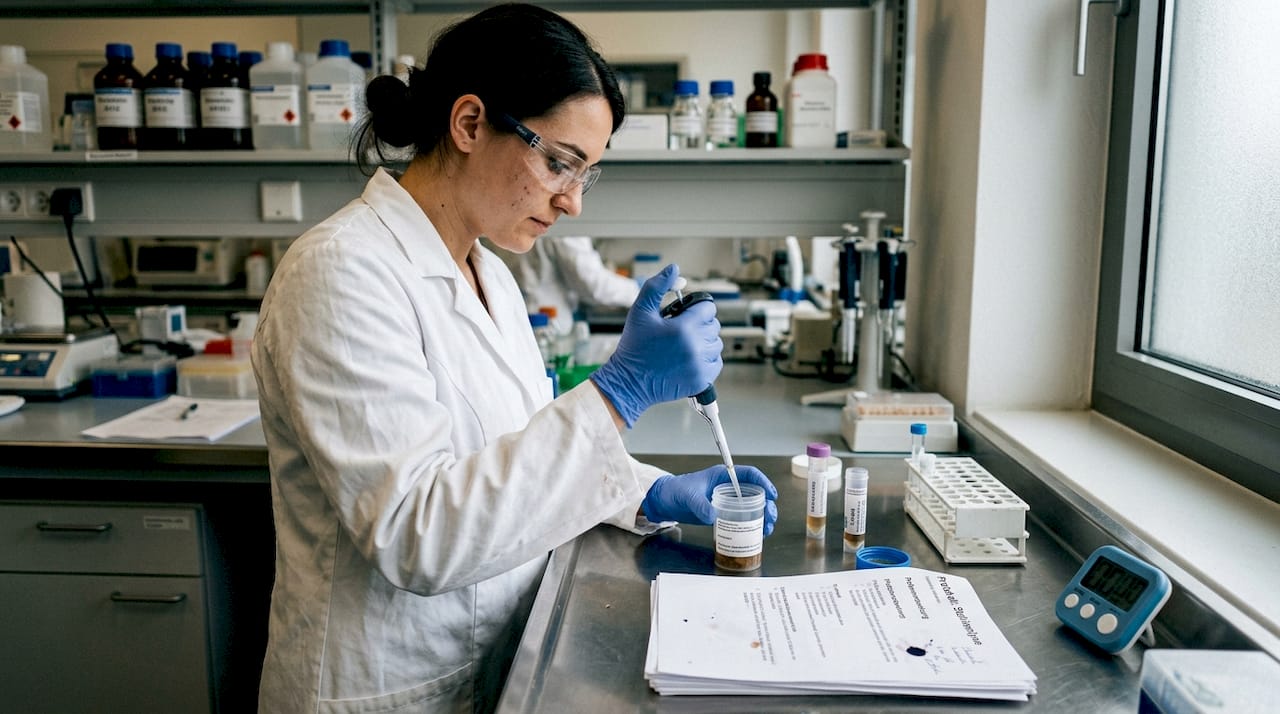
If you have specific concerns, such as after traveling abroad or in the case of persistent digestive problems, parasite and leaky gut tests may be more useful than a broad basic analysis. The key is to choose the test that matches your individual question.
How a microbiome test works: Process and methods explained
If you are now interested in a type of test, it is worth looking at the practical process and what happens behind the scenes. The process is standardized, but the details make the difference in the significance of the results.
- Order the test kit: You will receive a set containing sample tubes, instructions, and a return envelope
- Collect the stool sample: Place a small amount (pea-sized) in the tube, usually containing a stabilizing solution
- Send the sample: Mail it to the laboratory within 24 hours
- DNA isolation: In the laboratory, bacterial DNA is extracted from your sample
- Sequencing: The stool sample, DNA isolation, sequencing, and analysis are usually carried out using either the 16S rRNA or shotgun method
- Bioinformatic analysis: Comparison with databases and identification of bacterial species
- Results report: After 2 to 4 weeks, you will receive a detailed report with recommendations
Pro tip: Collect the sample in the morning before breakfast and avoid antibiotics for at least four weeks beforehand. You should pause probiotics three days before collecting the sample to obtain an unaltered picture. Make sure the sample does not get too warm during transport.
| Method | Bacteria detected | Accuracy | Cost |
|---|---|---|---|
| 16S rRNA sequencing | Down to genus level | Medium | Low |
| Shotgun metagenomics | Down to species level, including functions | High | High |
| qPCR | Specific strains | Very high for individual strains | Medium |
| Culture-based | Culturable species only | Limited | Low |
The methodological differences explain why different providers often deliver different results. A laboratory using 16S sequencing can distinguish only down to the bacterial genus, whereas shotgun metagenomics can also determine the exact species. The microbiome test process is transparently documented by reputable providers.
The reference database also plays a role: Some laboratories compare your values with European averages, while others use global databases. This significantly affects the interpretation. The value of microbiome diagnostics depends heavily on the quality of these comparison data.
What types of samples are available? Advantages and limitations of stool and saliva tests
In addition to the method, it is crucial which type of body material is analyzed. There are now also exciting approaches that go beyond the traditional stool test.
Stool samples: The established standard
- Capture the colon microbiome, where most bacteria live
- Easy collection at home without medical personnel
- Broad data base for comparisons and interpretation
- Sample stability when stored correctly
Saliva tests: Relevant for specialized questions
- Analyze the oral microbiome and upper digestive tract
- Less invasive, more comfortable for some people
- Experimental status, fewer reference values available
- Interesting for dental health and respiratory diseases
Stool samples predominate; saliva testing is experimental for the upper GI tract microbiome. A study involving 20 participants showed that stable microbiome types associated with dietary patterns can be detected using saliva tests. The research is promising, but stool tests remain the gold standard for reliable dietary recommendations for gut health.
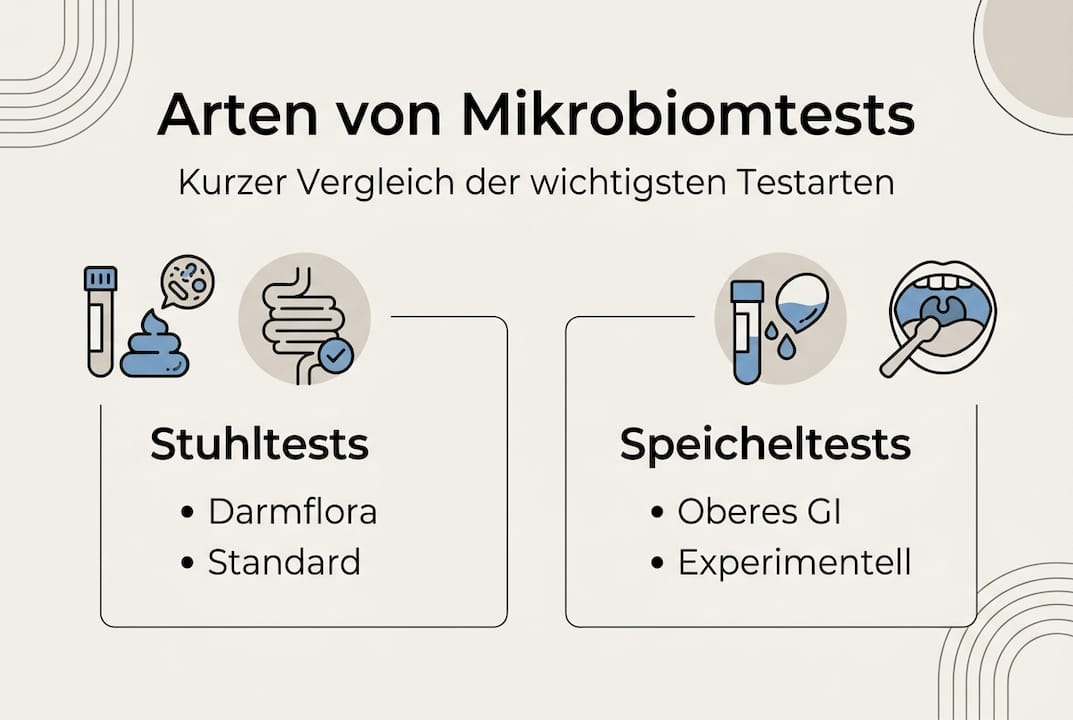
Statistical context: In a study involving 20 participants, four different salivary microbiome types were identified, associated with different dietary habits. Reproducibility was 87 percent over a period of three months.
Pro tip: If your primary concern is gut health and digestion, choose a stool test. Saliva tests are useful as a supplement for gum problems, frequent respiratory infections, or if you want to understand how different microbiomes interact. For most health goals, the stool test is the better choice.
Other experimental approaches include skin tests for skin conditions or vaginal swabs for women's health. These niche tests have their place, but they do not replace comprehensive gut analysis. You can find more details about saliva tests compared in current professional publications.
Reliability of microbiome tests: What do experts say about their validity?
With so many testing options, it is worth asking how reliable and practical the available analyses really are. The scientific community agrees that microbiome tests have potential, but also significant limitations.
“A study by the U.S. National Institute of Standards and Technology showed that different providers can deliver different results even with the same sample. Variation between laboratories can be as high as 40 percent.”
These discrepancies arise from different analytical methods, reference databases, and bioinformatic algorithms. This does not mean the tests are worthless, but you should interpret the results with common sense.
Practical tips for interpretation:
- Focus on major trends, not individual bacterial species accounting for 0.3 percent
- Compare your diversity with reference values, not absolute bacterial counts
- Repeat tests with the same provider to monitor changes over time
- Combine test results with how you feel
- Seek medical advice if your results are abnormal
Microbiome tests are useful for tracking individual trends, but not for diagnoses. They show whether your gut flora is diverse, whether certain beneficial strains are missing, or whether potentially problematic bacteria are overrepresented. This can inform dietary adjustments, but it does not support medical conclusions.
The scientific evaluation of microbiome tests shows that the technology is mature, but interpretation remains complex. Experts warn against exaggerated health claims. At-home gut microbiome tests evaluated critically are accepted by professional societies as screening tools, not diagnostic instruments.
It is also important to remember that your microbiome naturally fluctuates. Stress, diet, medications, and even the time of day influence its composition. A single test is a snapshot, not a permanent label.
How to use results: Step by step toward better decisions
Once the results are available, practical implementation becomes the focus. Many people feel overwhelmed by the extensive reports. A structured approach can help you make meaningful use of the information.
- Read the results carefully: Take time to review the report rather than just skimming it
- Identify the main findings: Which three points stand out? Low diversity? Missing bacterial strains? Inflammatory markers?
- Prioritize recommendations: Start with one or two measures, not ten at once
- Test dietary adjustments: Introduce recommended foods gradually and observe your response
- Plan follow-up testing: Test again after three to six months to document changes
- Consult experts when uncertain: Dietitians or doctors can help put the results into context
Providers emphasize the benefits of their recommendations, while experts warn against overinterpretation. The truth lies somewhere in between: Use tests as a guide, not as dogma. If recommendations from different providers differ significantly, focus on the areas of overlap.
Typical dietary adjustments based on test results:
- Low diversity: More sources of fiber, fermented foods, and a wide variety of colorful vegetables
- Low Akkermansia levels: Polyphenol-rich foods such as berries, green tea, and dark chocolate
- Elevated inflammatory markers: Omega-3 fatty acids, reducing sugar and processed foods
- Shortage of butyrate producers: Resistant starch from cooled potatoes, oats, and green bananas
Only informed use delivers benefits. If you want to make the most of the results, combine the test data with how you feel. Not every recommendation is right for everyone. Experiment, document changes, and adjust your strategy.
Your next step toward personalized microbiome health
Now that you have gained a comprehensive understanding of microbiome testing, mybody-x’s individual solutions can support you as you get started. We offer ISO-certified microbiome analyses that are scientifically grounded and combined with clear, practical recommendations. Our tests not only assess bacterial diversity but also provide specific dietary strategies tailored to your individual gut flora.
At mybody-x, you receive more than just laboratory data: Our experts support you in interpreting the results and help you integrate them into your everyday life. With more than 11,300 satisfied customers and an average rating of 4.77 stars, we have demonstrated that personalized health analyses work. Benefit from free shipping on orders over 49 euros, personal advice, and our money-back guarantee if you achieve no results.
Our high-performance microbiome tests at mybody-x combine state-of-the-art sequencing technology with years of experience interpreting gut health data. We guarantee the highest level of data security in accordance with the GDPR: your samples are pseudonymized and professionally destroyed after analysis. Start your journey toward better gut health now with a partner that combines science, quality, and personalized support.
Frequently asked questions
How do stool and saliva tests for the microbiome differ?
Stool tests are considered the standard for gut health, while saliva tests experimentally assess the microbiome of the upper digestive tract. Combining stool and saliva is possible, as demonstrated by studies with stable types.
Who can benefit most from a microbiome test?
Microbiome tests are most useful for people with recurring digestive problems or those seeking targeted dietary adjustments. Personalized recommendations support targeted changes for bloating, diarrhea, or general optimization.
How reliable are at-home tests performed independently, really?
Different providers sometimes deliver divergent results for identical samples. Trends can be identified, but diagnoses are not possible. An NIST study on at-home test variations shows up to 40 percent variation between laboratories.
Can I directly optimize my diet through microbiome tests?
The tests provide indications of trends in the microbiome, but specific, individualized dietary recommendations require a holistic assessment. Recommendations should not be considered in isolation but combined with medical guidance.
How often should I repeat a microbiome test?
A follow-up test after three to six months is advisable to document changes resulting from dietary or lifestyle adjustments. More frequent testing offers no added value, as the microbiome needs time to respond to interventions.



Share now:
Healthy Gut – More Energy Through a Strong Digestive System
Improve your gut health and finally feel good again