
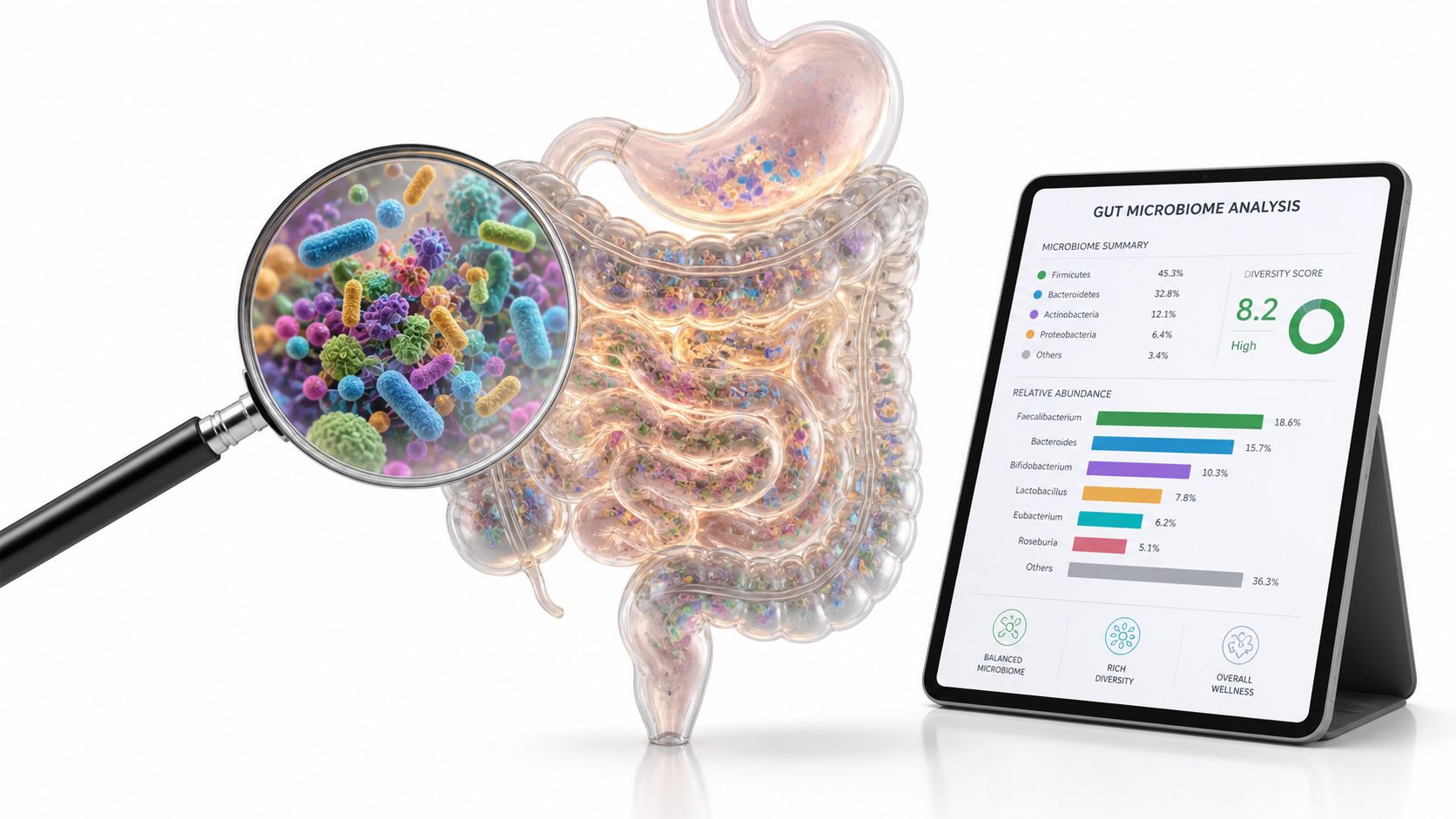
Discover the best gut microbiome tests with personalized recommendations
You may already have tried quite a few things. More fiber, less sugar, probiotics, fermented foods, perhaps even a few dietary supplements. And yet the feeling remains: Your gut is doing its own thing. Sometimes digestion runs smoothly, sometimes not at all. Sometimes you feel clear-headed and resilient; other times tired, bloated, or simply out of balance.
This is exactly where many people start looking for a gut microbiome test and end up in a market full of grand promises. The problem is not that there are too few options. The problem is that many tests provide data but no useful guidance. So anyone looking for the best gut microbiome tests with personalized recommendations should not start with advertising, but with a much more important question: Which tests can withstand scientific scrutiny at all?
The clear answer upfront: Don’t rely on colorful bacteria lists. Pay attention to the method, the interpretation, and what you can actually do with the results.
| Feature | Simple online tests | Scientific analysis with practical recommendations |
|---|---|---|
| Methodology | Often broad overviews | More precise, in-depth analysis depending on the method |
| Report | Often lots of technical terms, little practical help | Easy-to-understand evaluation related to diet and lifestyle |
| Recommendations | Generic tips | Individually derived next steps |
| Everyday benefits | More about curiosity than guidance | Useful when data becomes a plan |
| Compatibility with other health topics | Usually isolated | Can be usefully supplemented with DNA, blood, or hormone analyses |
Your gut feeling is right: Why your gut microbiome is so important
If you often feel tired, your stomach feels tight after eating, or you feel that your body is not responding properly despite eating a “healthy” diet, this is not an imagined problem. Many people first notice only vague signals: less energy, unsettled digestion, irregular bowel movements, and sometimes the feeling that they suddenly react differently to certain foods.

There is a simple reason for this. Your gut is not just a digestive tube. It is home to a complex ecosystem of microorganisms that constantly works together with your body. When this system gets out of balance, you often do not notice a single clear symptom, but rather many small disruptions in everyday life.
What your gut microbiome does for you every day
A healthy microbiome is extremely beneficial to the body because gut bacteria help break down nutrients, prevent pathogens from spreading in the gut, and support the functioning of the immune system. The gut microbiome also stimulates intestinal movement, which is essential for regular bowel movements, as explained by the NDR in its discussion of the role of probiotics and prebiotics in the gut microbiome.
This is what many people underestimate. When your microbiome becomes unbalanced, it affects more than just your stomach. It can also influence how well you tolerate food, how regular your digestion is, and how stable you feel overall.
A calm stomach is often no coincidence. It is usually the result of a microbiome that is well nourished and does not constantly have to struggle against your daily routine.
When a closer look makes sense
You don’t have to wait until symptoms become severe. Health-conscious people in particular often want to understand earlier how their bodies work. That makes sense. Recognizing patterns leads to better decisions about nutrition, recovery, and prevention.
If you want to take a deeper dive, the article why the gut microbiome is important provides a good overview. But as a consultant, I consider something else even more important: Don’t confuse an interest in gut health with blind trust in every test. A test is useful only when it helps you manage your daily life more intelligently.
How do gut microbiome tests actually work?
Most people buy a gut microbiome test without knowing the key question of quality: Which method was actually used? That is exactly where rough guidance ends and genuine analysis begins.
At their core, home tests generally follow one of two approaches. The simpler option focuses mainly on larger groups of bacteria. The more advanced option analyzes much more deeply and can classify microbes more precisely. If you want personalized recommendations, this difference is not merely technical—it is practical.
16S or WGS is no minor detail
Imagine two maps of the same city. The first shows only neighborhoods. The second shows streets, house numbers, and key points of interest. Both are maps. But only one really helps you get where you want to go.

**Advanced gut microbiome tests increasingly use Whole-Genome Sequencing (WGS) or shotgun metagenomics, which can identify microbes down to the strain level, while less expensive 16S rRNA sequencing offers only a rough genus-level resolution and captures functional metabolites less precisely. WGS tests provide greater analytical depth, typically raising the cost of such high-resolution tests in Germany to €200 to €350, as explained in the overview of more accurate tests for gut health.
This doesn’t automatically mean that more expensive is always better. But it does mean that you should know whether you’re buying a basic overview or a differentiated analysis.
What This Means for Your Everyday Life
If a test works only at a basic level, you often get a nice overview but little precision. This is frequently followed by general recommendations such as eating more fiber, consuming less sugar, or eating more fermented foods. That isn’t wrong. It’s just not truly individualized.
A more in-depth method is more interesting if you don’t just want to know that your gut should be “supported somehow,” but also which patterns stand out and how they can inform nutrition, recovery, or additional diagnostics. This also fits with looking beyond the gut. The Longevity | ALL IN ONE DNA Test from mybody®x analyzes genetic risk factors for aging, inflammation, nutrient utilization & metabolism. This is not a gut test, but it is a useful supplement if you don’t want to view symptoms in isolation.
Rule of thumb: If a provider talks extensively about personalization but explains its method only vaguely, you should become skeptical.
You can find more information about the methodological background in the overview of the science behind microbiome analysis. This understanding is precisely what protects you from paying a lot of money for technical imprecision.
What to Look for When Choosing a Gut Microbiome Test
The market is confusing because almost every provider sounds similar. They all talk about balance, diversity, personalized tips, and cutting-edge analysis. That sounds good, but it isn’t enough. You need clear selection criteria. Otherwise, you may end up buying a pretty PDF report with no real value.
The most important filter is more uncomfortable than any marketing message. Professional associations are critical of paid at-home microbiome tests. You shouldn’t ignore this; you should use it as your starting point.
The Official Criticism Is Justified

While providers offer individual recommendations for action, according to the German Society for Nutrition (DGE), there is no scientific consensus in 2026 on an “optimal” bacterial profile. The DGE advises against stool tests because they offer no therapeutic benefit. The DGVS has also rated the tests as “expensive and pointless” since 2018 because they are neither standardized nor validated, as summarized by the Verbraucherzentrale’s assessment of microbiome tests.
That sounds harsh. It is. And precisely for that reason, you should not look for the loudest provider, but for the provider that takes this criticism seriously. A useful test does not need to pretend that the science is settled. It must transparently show how it provides meaningful guidance despite these limitations.
This checklist separates marketing from substance
Pay attention to these points before ordering:
- Clear methodology: The provider should openly state whether it uses 16S, WGS, or another method. If this remains unclear, it is a warning sign.
- Sound interpretation: Good reports explain results in clear, understandable language. Poor reports hide uncertainty behind technical terms.
- Data protection: Health data is sensitive. GDPR-compliant processes are the minimum standard, not a bonus.
- Support after the test: If you are left alone with the report, half the benefit is missing.
- Connection to everyday life: The recommendations must be translated into food choices, routines, and real decisions.
The key question is not who tests, but how
Many people search for the “best” test and mean the longest list of bacteria. That is the wrong question. What matters more is: Do you receive an interpretation that enables you to take sensible action without fooling yourself?
If you want to examine different approaches side by side, the comparison of differences between microbiome tests can help. I would not recommend a test that simply markets away criticism from the DGE and DGVS. A reputable provider structures its service precisely for this reason, clearly separating the method, limitations, and benefits.
The 2026 testing landscape at a glance
If you search today, you will essentially find two categories. The first consists of simple online tests. The second consists of more comprehensive analyses with a stronger focus on interpretation, data protection, and connections to other health-related questions. That is precisely where it becomes clear whether you are merely buying information or genuine foundations for action.
Comparison of gut microbiome testing approaches
| Feature | Simple online tests | Scientific analysis (like mybody®x) |
|---|---|---|
| Goal | Quick overview | Well-founded interpretation with practical relevance |
| Analytical depth | Often rather superficial | More differentiated, depending on the method |
| Presentation of results | Raw data, scores, lists | Understandable reports with context |
| Recommendations | General dietary advice | Personalized next steps |
| Guidance | Often little or none | Implementation support may be available |
| Overall health picture | Usually limited to the gut | Can usually be combined meaningfully with other analyses |
Simple tests seem attractive at first glance. They are easy to order, easy to carry out, and promise quick insights. The problem comes afterward. You get the names of bacteria, color codes, and a few standard recommendations. If you are lucky, it is interesting. If you are unlucky, it only makes you anxious.
Why More Comprehensive Analyses Are More Useful in Everyday Life
A well-founded approach takes a broader view. Not just: Which microbes were found? But also: What action follows from this, what is reliable, what is merely an indication, and where should you look at other areas of health?
This is exactly where the connection to other tests becomes important. For example, if you struggle with low energy, weight issues, or fluctuating resilience, you should not attribute everything solely to your gut microbiome. The DNA Metabolism Analysis from mybody®x shows genetically determined metabolic types, fat and carbohydrate utilization, and individual weight-related risks. This is helpful if you want to understand whether your issue lies primarily in the gut, in your metabolism, or in both.
Many complaints seem like gut problems but are actually the result of an interplay between diet, metabolism, recovery, and everyday stress.
My Clear Assessment
If you are simply curious, a basic test may be enough. But if you genuinely want to change something, an isolated rapid test is often insufficient. In that case, you need an approach that combines analysis with implementation.
That is why I consider blanket provider rankings to be of limited value. The more meaningful distinction is: superficial data collection or scientifically contextualized analysis with a concrete action plan. Only the second category truly justifies the investment.
From Results to an Action Plan: How to Use Your Test Report
A test report is not the goal. It is a working document. If you only read it and then put it aside, it will do almost nothing for you. The value arises only when you derive decisions from the report that you can actually implement in everyday life.
Many people make the same mistake here. They read bacterial names, look at traffic-light ratings, and immediately turn to supplements. That is rarely the smartest order.
How to read a report effectively
Work in three steps:
-
Recognize patterns
Do not focus first on individual bacteria, but on recurring indications. Is the issue more about diversity, signs of imbalance, or indications that certain dietary habits do not suit your current situation? -
Prioritize measures
Do not tackle everything at once. Start with nutrition, then everyday habits, then supplements. If you turn ten knobs at once, you will not know in the end what actually made a difference. -
Check effectiveness
A good plan requires monitoring. Otherwise, everything remains a gut feeling.
Actionable dietary recommendations are essential: After an initial test, targeted measures should follow, along with a retest after 8–12 weeks to check their effectiveness. Repeated tests every 6–12 months can support long-term progress. Prebiotics in foods such as chicory, onions, or garlic support the microbiome, with studies showing that around five grams per day are needed to achieve an effect, as described in the overview of at-home gut microbiome tests.
What belongs in the plan and what does not
A useful action plan is specific. For example:
- Adjust your diet: Deliberately incorporate more prebiotic-rich foods.
- Review stressors: Take an honest look at stress, sleep, and eating patterns.
- Document your progress: Note symptoms, tolerance, and digestion.
- Plan a follow-up test: Not out of impulsiveness, but to put changes into context.
Blind supplement activism does not belong in the plan. Just because a report suggests “support,” you do not need to immediately buy the next powder or preparation.
The best test report is one that leads to three clear everyday decisions. Not thirty.
If you want to work on practical implementation, you’ll find useful starting points in the guide to building your gut flora through nutrition. What always matters is that you observe changes rather than simply consume.
Why mybody®x is the right partner for your gut health
After all the justified criticism of at-home microbiome tests, the question remains: What is actually useful, then? My answer is clear. Not every test is useful. What is useful is a provider that does not conceal the market’s weaknesses, but offsets them through sound processes, understandable analysis, and genuine support.
This is precisely the relevant point with mybody®x. The provider works with ISO-certified laboratories in Germany and follows strict GDPR and ISO-27001 standards. This is not a minor detail. Anyone collecting health data at home must ensure especially rigorous laboratory processes and data protection.
What makes the difference in practice

But the analysis itself isn’t the only important factor. The real added value lies in translating the results into everyday life. That’s exactly where many other offerings fall short. With mybody®x, it’s not just about sending in a sample, but about clear reports, personalized recommendations for nutrition and lifestyle, and coaching from health experts.
If you’re specifically looking for a microbiome test, the Gut Flora MICROBIOME Test Complete is relevant. According to the catalog, it analyzes overall gut health, including bacterial diversity, leaky gut, inflammatory markers & dysbiosis. It serves as the basis for targeted nutrition & probiotic recommendations, personalized & conveniently provided from home.
Why price alone isn’t the whole story
Many people compare only the price. That’s understandable, but it’s too narrow a perspective. In Germany, commercial at-home gut microbiome tests currently cost an average of between 150 and 350 euros. mybody®x positions itself within this range by justifying its price through comprehensive reports, personalized recommendations for action, and included coaching, thereby setting itself apart from cheaper tests with less therapeutic value, as summarized in the market overview of microbiome test winners.
That’s the decisive point for me. If a test is merely cheaper but leaves you alone with an unclear report, you’re not really saving money. You’re simply shifting the cost into uncertainty, ill-advised purchases, and more trial and error.
Good health diagnostics don’t end with the findings. That’s where they begin.
Anyone who takes their gut health seriously should therefore not buy the cheapest report, but choose the most useful process. And if you notice that your symptoms may involve more than just your gut—that nutrients, intolerances, or hormones could also play a role—it’s worth taking a systematic look beyond the obvious.
If you no longer want to guess at your symptoms but want to understand them systematically, take a look at the mybody x blood test. There you’ll find at-home self-tests for the gut, DNA, nutrients, intolerances, and hormones, helping you address health concerns from home on a well-founded basis.



Share now:
The most reliable microbiome tests for your gut flora: Our top recommendations!
Microbiome analyses: Netflix documentary drives demand up tenfold