
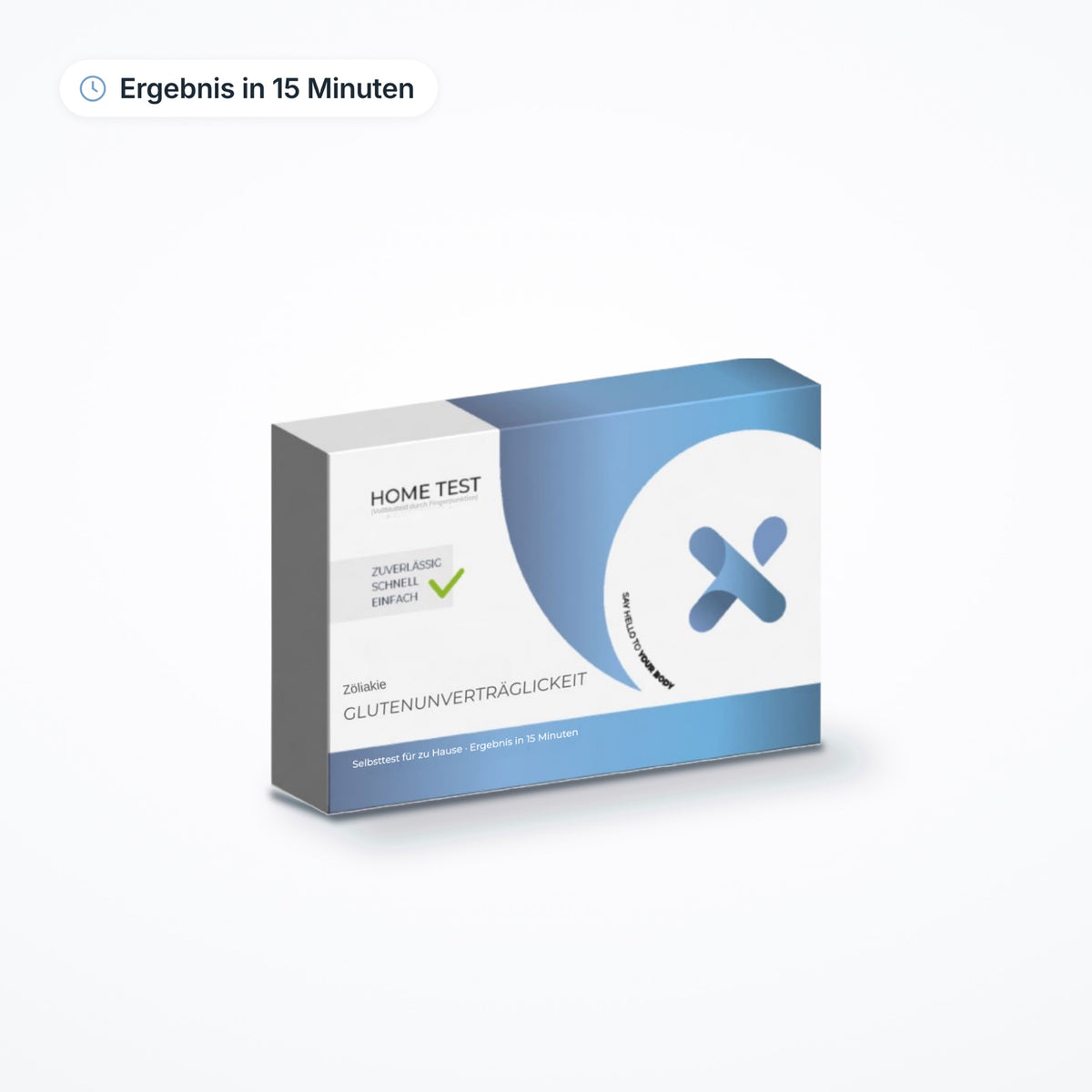



Celiac disease gluten intolerance test
FIND OUT WHETHER YOU HAVE A GLUTEN INTOLERANCE—SIMPLY WITH A BLOOD TEST.


 Medizinische Selbsttests
 30 Tage Geld-Zurück-Garantie
The celiac disease self-test includes:
- At-home test kit (blood sample)
- Find out whether you have gluten intolerance
- Results within 15 minutes
What can the celiac disease test detect?
With the celiac disease self-test, you can easily test from home whether you might have gluten intolerance (celiac disease). The test measures specific antibodies (anti-tTG-IgA) in the blood, which are often elevated in celiac disease. The test result can help you identify health changes early and take appropriate action.
✔️ Inflammation and damage to the intestinal lining caused by gluten consumption
✔️ Impaired nutrient absorption, which can lead to deficiencies
✔️ Take more control in everyday life: Take your well-being into your own hands, make informed decisions, and act proactively.
The celiac disease test is perfect for you if...
... you notice one or more of the following signs:
Physical symptoms, such as
- Abdominal pain
- Diarrhea
- Bloating
- Fatigue
- Unexplained weight loss
or
- Celiac disease or other autoimmune diseases in your family
- Recurring health problems that may indicate a food intolerance
- Symptoms that occur after consuming foods containing gluten
- Skin rashes or allergy-like reactions that may be related to your diet.
Are you unsure whether the celiac disease test is right for you? Our product finder will help you discover the right test.
Product description for the celiac disease test
Celiac disease is an autoimmune condition in which the body reacts excessively to gluten, a protein found in wheat, rye, and barley. Consuming foods containing gluten causes inflammation and damage to the lining of the small intestine, which can impair nutrient absorption.
The most common symptoms include abdominal pain, diarrhea, fatigue, and weight loss
A lifelong gluten-free diet is the only effective treatment for relieving symptoms and restoring intestinal health.
With our at-home celiac disease self-test you can easily find out whether you have gluten intolerance by detecting anti-tTG IgA antibodies in your blood.
Celiac disease gluten intolerance test
Developed by doctors
Scientifically sound
Responsible manufacturing
100% customer-oriented

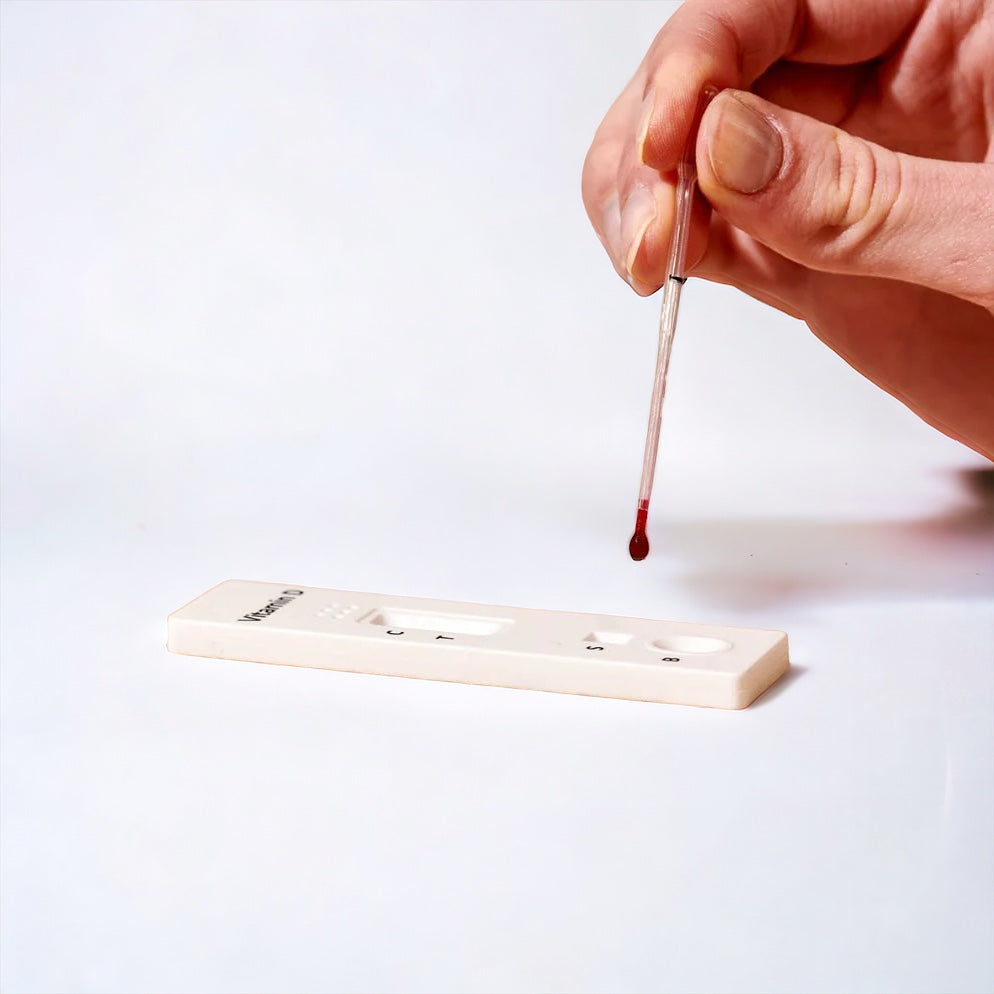
1. Remove the probe
After receiving your test kit, collect your blood sample according to the instructions.
2. Receive results
Within just 15 minutes, you’ll receive a reliable test result and learn exactly what level of celiac disease antibodies is present in your body.

3. Achieve health goals
Now you can incorporate your personalized, easy-to-understand recommendations into your everyday life and achieve your individual goals.


Do you know your values?
A rapid test is an effective method for determining this accurately and reliably, ensuring whether you have gluten intolerance.
This allows the condition to be detected at an early stage and effective treatment to be initiated.
A lifelong gluten-free diet is the only effective method for alleviating symptoms and restoring intestinal health.
The blood values measured are the same ones used by general practitioners for examinations.
- Unique: Perform a celiac disease test from home
- The sample shows your current anti-tTG IgA antibody level
Take a closer look at what you get
With a self-test, you can check your levels up to date from anywhere without visiting a doctor.
Detailed celiac disease self-test
Medicine and science meet ISO-certified laboratory processes

Our tests are developed in close collaboration with experts from various fields, including nutrition and sports science as well as laboratory technology. With many years of experience in the industry and our ISO-certified processes, we ensure the highest quality and reliability.
Thanks to this comprehensive expertise, we offer you products that are not only based on the latest scientific findings, but also meet strict quality standards.

Highest quality standard
ISO-certified analyses & medical self-tests
Expert advice
Free consultation & discussion of the analysis reports
Years of experience
Present across Europe in 12 countries with 11,000+ happy customers
Designed to enhance your quality of life...


Questions? We have the answers!
What is celiac disease?
Celiac disease is an autoimmune condition in which the immune system reacts to gluten and damages the lining of the small intestine. Symptoms include abdominal pain, diarrhea, and fatigue. Treatment consists of a lifelong gluten-free diet.
How does celiac disease develop?
Celiac disease is triggered by a misguided autoimmune response to gluten—a protein found in grains such as wheat, rye, barley, spelt, and green spelt. In people with celiac disease, the immune system recognizes gluten as a threat and produces antibodies that attack the intestinal lining and cause inflammation.
In addition to gluten intolerance, other factors may contribute to the development of celiac disease:
- Infections with intestinal viruses or changes in the gut flora are considered possible triggers
- A genetic predisposition plays a major role: Around 90% of people with celiac disease have a specific surface protein on their immune cells that is involved in the inflammatory response.
- Heredity: Children of people with celiac disease have an increased risk of also developing the condition (approximately 10–15%).
- Other factors, such as intestinal infections, taking antibiotics during pregnancy or childhood, and changes in infants’ microbiomes, could also promote celiac disease, but study results on this are still inconsistent.
When should you take a test?
You should consider taking a celiac disease self-test in the following cases:
- Symptoms: If you have symptoms such as abdominal pain, diarrhea, bloating, fatigue, or unexplained weight loss.
- Family history: If celiac disease or other autoimmune diseases are known to occur in your family, testing is advisable.
- Unclear symptoms: If you have persistent or recurring health problems that could indicate a food intolerance.
- Before starting a gluten-free diet: If you are considering starting a gluten-free diet, you should get tested beforehand, as the test is only conclusive if you are consuming gluten.
What will I receive, and how long does the test take?
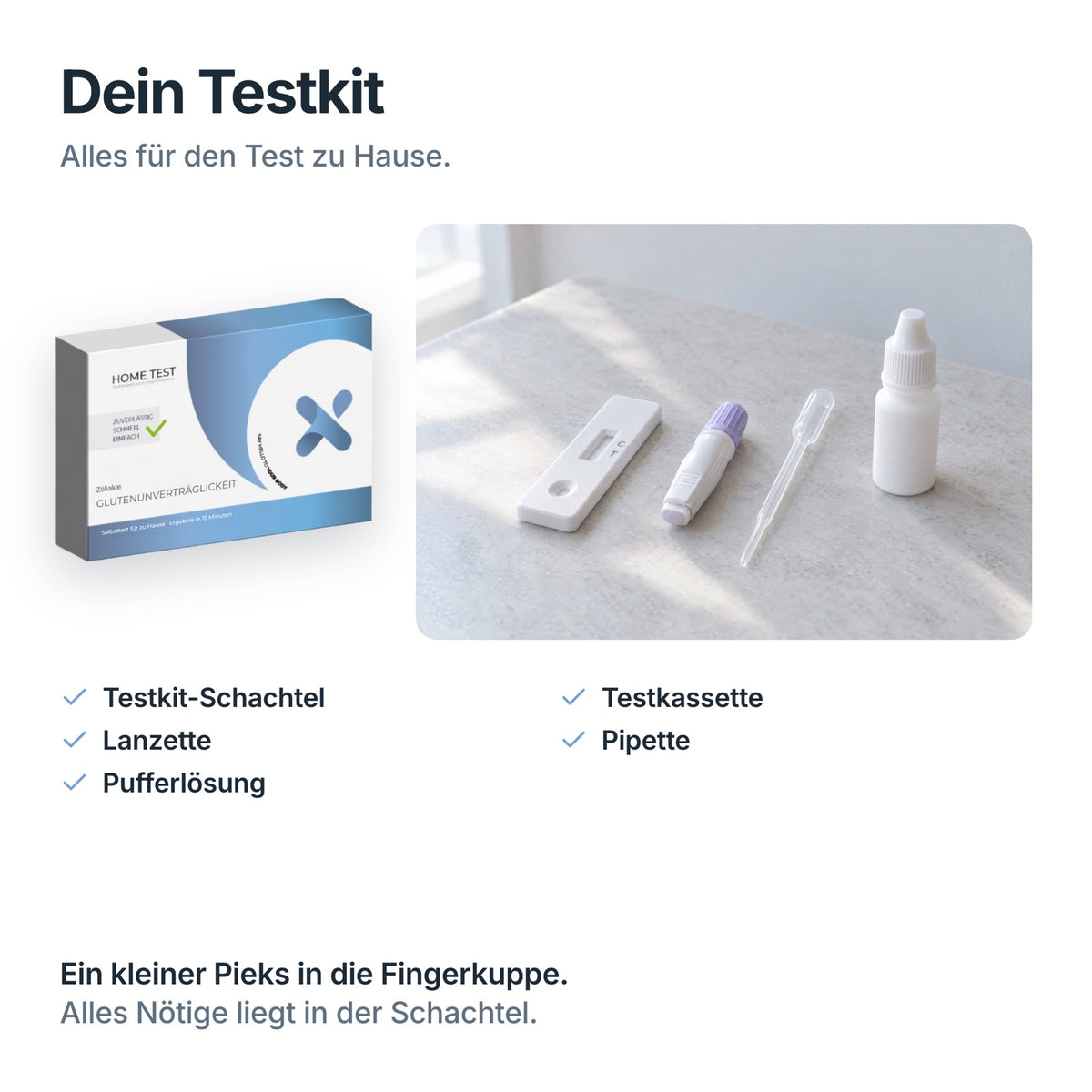
The celiac disease self-test includes the following:
- 1 test cassette
- Instructions
- 1 lancet
- 1 pipette
- 1 buffer solution
- 1 alcohol pad
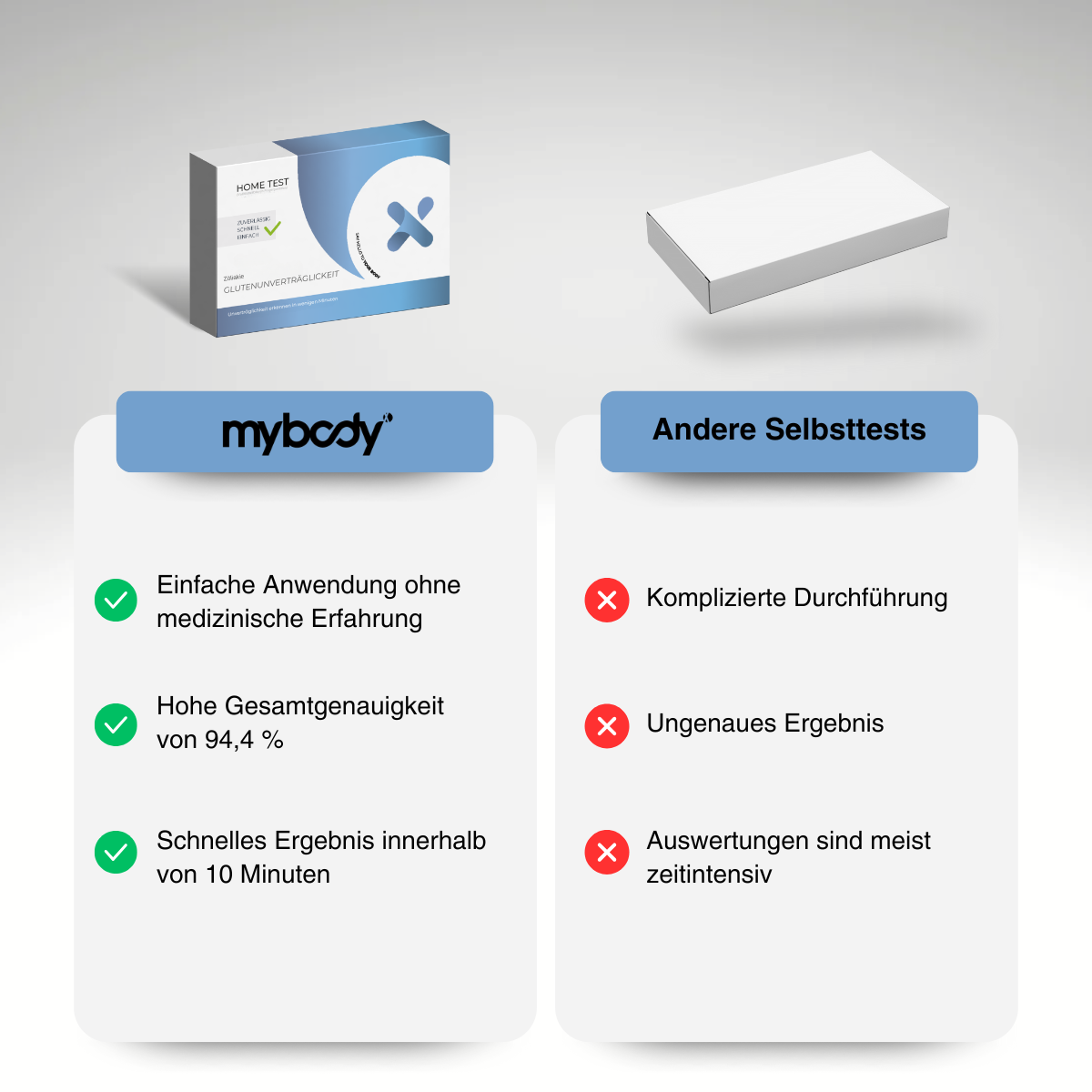
After performing the test, it takes approximately 5–10 minutes for the result to be available.
What consequences can untreated celiac disease have?
Untreated celiac disease can have the following consequences:
- Intestinal damage: Chronic inflammation can lead to permanent damage to the lining of the small intestine.
- Nutrient deficiencies: Impaired nutrient absorption can lead to deficiencies such as iron-deficiency anemia, vitamin D deficiency, or osteoporosis.
- Weight loss: Persistent weight loss and malnutrition can occur.
- Increased risk of other diseases: There is an increased risk of autoimmune diseases, such as type 1 diabetes or thyroid disorders.
What symptoms may indicate celiac disease?
Celiac disease can manifest in various ways, and the symptoms are often diverse. Common complaints include:
- chronic diarrhea
- abdominal pain
- bloating
- weight loss
- anemia
- osteoporosis
- extreme fatigue
- growth delays in affected children
What should I do if the self-test is positive?
If the result is positive, this means that anti-tTG IgA antibodies were detected in the blood. In this case, you should see a doctor and discuss the test results. The doctor will decide whether further tests are necessary, which may include a gut test to confirm the diagnosis and determine the severity of celiac disease.
Tip: The gut test can already be carried out directly through us beforehand to make the next step easier for you.
What is the best way to test for gluten intolerance?
You can test for gluten intolerance in several ways. The traditional method is a blood test that detects specific antibodies elevated in celiac disease. An intestinal biopsy can provide additional clarity. For an initial assessment, however, a gluten intolerance self-test is suitable and can be conveniently performed at home.
Can gluten intolerance also be tested at home?
Yes – a gluten self-test can provide initial indications of a possible intolerance. With this gluten intolerance self-test, you collect a small blood or stool sample, which is analyzed in a laboratory. You receive the results online or by mail. This allows you to easily check whether you have gluten intolerance or even celiac disease.
Testing for gluten intolerance – what options are available?
If you want to test for gluten intolerance, you have several options. Visiting a doctor usually involves blood tests and possibly a colonoscopy. For everyday use, however, more and more people are opting for an online gluten intolerance test. These tests are scientifically sound, easy to use, and provide fast results. They check whether your body produces antibodies against gluten, which may indicate celiac disease or non-celiac gluten intolerance. Typical symptoms such as abdominal pain, bloating, diarrhea, or skin problems are a clear indication that testing may be worthwhile. Particularly convenient: Many tests can be performed as a self-test at home. This allows you to quickly and discreetly gain clarity about the possible causes of your symptoms.
Gluten Intolerance Self-Test
Quick help for home use. A gluten intolerance self-test is a simple way to get some initial answers. Especially if you regularly suffer from symptoms such as abdominal pain, bloating, or persistent fatigue, a gluten self-test may be useful. You collect a small blood sample or a drop of capillary blood, which is analyzed in a laboratory. Within a few days, you receive a result showing whether your body reacts to gluten. Although a self-test does not replace a medical diagnosis, it is an important first step in narrowing down the possible causes of your symptoms. On mybody®, you can find a gluten self-test for home use that provides quick clarity and supports you on your path to a healthier diet.
How to test for gluten intolerance?
Many people affected ask themselves: How to test for gluten intolerance without having to undergo an extensive examination by a doctor right away? Modern providers allow you to order a gluten intolerance test online discreetly and carry it out at home. With clear instructions, collecting the sample is easy, and the laboratory analysis provides reliable results. This helps you determine whether an intolerance is present and adjust your diet accordingly. It is particularly valuable that the test can also indicate whether your symptoms may be caused by celiac disease. Typical symptoms include not only digestive problems, but also skin irritation, headaches, or chronic fatigue. An online test gives you clarity—conveniently, quickly, and professionally.
Why a celiac disease gluten intolerance self-test can give you clarity
Celiac disease test – Keep an eye on your health. Do you often feel tired, have abdominal pain, or suffer from unexplained weight loss? A celiac disease test can give you clarity. Our at-home celiac antibody self-test allows you to quickly and reliably check whether you have gluten intolerance. Early detection helps treat symptoms effectively and protect your health.
Celiac disease test – peace of mind for your well-being. Digestive problems, fatigue, or skin rashes can be signs of gluten intolerance. With our at-home celiac disease test, you can quickly and easily check whether your body reacts to gluten. A fast test gives you clarity—and the opportunity to take an active role in managing your health.
Celiac Disease Self-Test – Monitoring Made Easy. Celiac disease often remains undetected for a long time, even though it can cause many symptoms. With the Celiac Disease Self-Test, you can quickly and easily check whether your body reacts sensitively to gluten. The test is simple to perform at home, allowing you to take action early if anything unusual is detected. Your health is in your hands.
Detect celiac disease early – conveniently from home. Do you suffer from recurring abdominal pain, bloating, or diarrhea and wonder whether gluten could be the cause? With the at-home celiac disease self-test, you can quickly and reliably find out. The test measures specific antibodies in the blood that may indicate gluten intolerance. This allows you to take action early and significantly improve your everyday life with the right diet—without any waiting time at the doctor’s office.
Test for gluten intolerance yourself – quickly & easily. Suspect gluten is causing your symptoms? Then the celiac disease test is exactly right for you. You collect a small blood sample yourself and send it to our laboratory. You receive the result digitally – explained clearly and easy to act on. This allows you to find out specifically whether you have celiac disease or gluten intolerance and adjust your diet to suit your needs.
Peace of mind when celiac disease is suspected—with one test. Do you feel that bread, pasta, or baked goods don’t agree with you? Gluten intolerance can manifest in many ways—from skin problems to constant fatigue. Our at-home celiac disease test helps you better understand your symptoms and take action. Without a doctor’s visit, but with medical precision—for greater reassurance and peace of mind.