

Benefits of blood analyses for your health
More and more people from Central Switzerland are opting for precise blood analyses to improve their health individually. Up to 50 percent of all nutrient deficiencies go undetected during routine examinations and noticeably affect nutrition and energy levels. Anyone who truly wants to understand their body can gain comprehensive insights into metabolism, immune function, and risk factors through modern blood analysis. This gives you control over your well-being and enables you to work specifically toward vitality, weight management, and prevention.
Table of contents
- What blood tests measure and enable
- Different blood tests and their applications
- Process and evaluation of modern blood analysis
- Individual benefits for prevention and vitality
- Costs, risks, and data protection related to blood tests
Key insights
| Point | Details |
|---|---|
| Blood analyses are preventive | They enable the early identification of health risks and the optimization of well-being. |
| Different blood tests have specific applications | Tests such as complete blood counts and glucose tests provide important information about your health. |
| Regular blood analysis is recommended | A comprehensive analysis should be performed at least once a year to monitor changes in your health. |
| Data protection and security are ensured | Blood tests are subject to strict legal regulations to protect health data. |
What blood tests measure and enable
A blood analysis is like a detailed health compass, providing you with deep insights into your physical condition. Blood analyses capture various health parameters that help you proactively understand and optimize your health.
The examination includes a wide range of important health indicators, including:
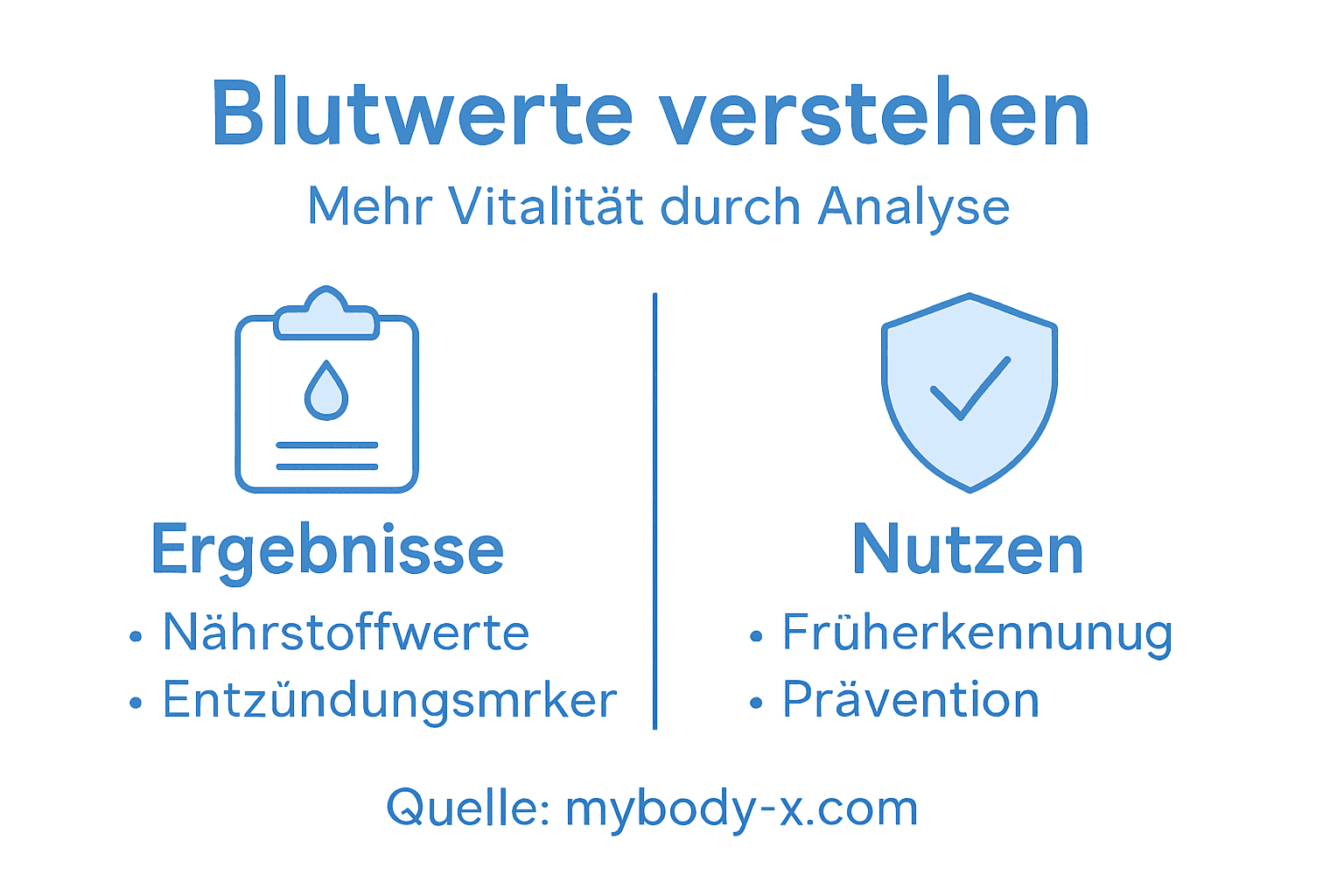
- Vitamin status: Detection of deficiencies
- Inflammation markers: Indications of potential health risks
- Blood lipid levels: Evaluation of cardiovascular risk
- Hormonal balance: Assessment of metabolic activity
- Immune function: Assessment of the body's defenses
Blood analyses go far beyond traditional medical examinations. They enable preventive health optimization by identifying risk factors at an early stage. Systematic tracking of biomarkers can detect potential health problems long before they manifest.
Modern blood analyses focus on preventive optimization and aim to specifically improve your performance, concentration, and immune function. They are not just a snapshot, but a dynamic tool for long-term health planning.
Pro tip: Have your blood analysis performed at least once a year to continuously monitor your health and take early corrective action.
Different blood tests and their applications
Blood tests are precise diagnostic tools that provide comprehensive insights into your health. Blood tests can provide various types of medical information, from general blood values to specific disease markers.
The most important types of blood tests include:
- Complete blood count: Examination of blood cells and immune function
- Liver function tests: Assessment of liver health
- Blood lipid levels: Analysis of cardiovascular risk
- Glucose tests: Diagnosis and monitoring of diabetes
- Kidney function tests: Assessment of kidney function
Blood tests provide detailed medical insights that shed light on different aspects of health depending on the type of examination. A complete blood count, for example, checks cells such as erythrocytes, leukocytes, and thrombocytes, while a blood chemistry panel analyzes electrolytes, enzymes, and metabolic products.
Each blood test has specific applications: Hormone tests can detect thyroid dysfunction, lipid panels provide information about cholesterol and triglyceride levels, and blood glucose tests help diagnose and monitor diabetes.
Below you will find a comparison of common blood tests and their diagnostic significance:
| Test type | What is being examined? | Typical applications |
|---|---|---|
| Complete blood count | Blood cells and cell types | Anemia, infections |
| Liver function test | Enzymes and proteins | Liver damage, metabolism |
| Kidney function test | Creatinine, urea | Kidney disease, diabetes |
| Glucose test | Blood sugar | Diabetes, metabolic disorder |
| Lipid panel | Cholesterol, triglycerides | Cardiovascular risk |
Pro tip: Always discuss the results of your blood tests with a doctor to ensure correct medical interpretation.
Process and evaluation of modern blood analysis
Blood analyses are highly precise medical procedures that provide detailed insights into your health. Blood is drawn professionally by qualified medical staff, typically from a vein in the arm, to obtain meaningful samples.
The laboratory process involves several precise steps:
- Sample collection: Blood collection by trained staff
- Sample preparation: Sorting and labeling blood samples
-
Laboratory analysis: Examination using specialized equipment
- Hematological procedures
- Biochemical examination methods
- Interpretation of results: Medical evaluation of the findings
Various analytical methods are used in the specialized laboratory to obtain comprehensive information. A distinction is made between the complete blood count for basic cell counts and the differential blood count for detailed information about white blood cells.

The results are carefully documented and sent to the doctor, who interprets them in the context of your individual medical history. Important aspects such as reference values, individual deviations, and potential health risks are taken into account.
Pro tip: Fast for 12 hours before having your blood drawn to obtain more accurate test results.
Individual benefits for prevention and vitality
Blood tests are far more than just routine medical examinations—they are your personal key to preventive health optimization. Dark-field microscopy enables qualitative blood analysis, offering deeper insights into your health than conventional laboratory tests.
The individual benefits of blood analyses include:
- Early detection of health risks
- Detection of nutrient deficiencies
- Monitoring of detoxification processes
- Measurement of inflammation markers
- Personalized therapy planning
Through detailed analysis of your blood values, you can specifically improve your vitality. The examination provides insights into your individual metabolic activity, hormone balance, and immune function. It enables a tailored strategy for improving your health that goes far beyond standardized recommendations.
Modern blood analyses are a preventive tool that helps you actively shape your health. They provide more than just snapshots, enabling long-term monitoring and optimization of your physical performance.
Pro tip: Have your blood values comprehensively analyzed at least once a year to proactively monitor your health progress.
Costs, risks, and data protection related to blood tests
Blood tests are an important investment in your health, involving minimal risks and high safety standards. Blood tests in Germany are performed with the utmost care, with patient safety and data protection given top priority.
The key aspects at a glance:
Costs:
- Covered by health insurance when medically necessary
- Private additional tests usually have to be paid for out of pocket
- Prices vary depending on the scope of the examination
Risks:
- Minimal and temporary
- Possible minor soreness at the puncture site
- Occasional minor bruising
Data protection:
- Strict legal regulations
- Confidential handling of health data
- Pseudonymization of laboratory samples
Health insurance providers cover the costs only when a medical indication has been demonstrated, meaning that preventive or routine examinations often have to be paid for privately. Costs can vary considerably depending on the scope and level of detail of the analysis.
Modern blood tests offer a balance between scientific precision, personalized preventive healthcare, and strict data protection. They enable you to proactively manage your health without compromising confidentiality and security.
The following overview summarizes important aspects of costs, risks, and data protection related to blood tests:
| Topic | Important details | Special considerations in Germany |
|---|---|---|
| Costs | Covered by health insurance when medically necessary | Private tests usually require payment |
| Risks | Low, usually limited to local reactions | Generally harmless routine procedure |
| Data protection | Strict legal requirements | Pseudonymized laboratory analysis |
Pro tip: Check with your health insurance provider in advance about possible reimbursements and keep all documents carefully.
Discover the benefits of modern blood analysis for your health
Blood values provide valuable insights into nutrient deficiencies, inflammation markers, and your metabolism. If you want to actively improve your health, an individual analysis can target precisely these areas to boost your vitality and prevent health risks. A preventive approach with comprehensive evaluation and personalized advice is important.
With mybody®'s DNA Metabolism Tests for Your Optimal Nutrition – mybody®x and Allergy & Intolerance Tests | At-Home Blood Tests – mybody®x, you can conveniently obtain scientifically sound analyses from home. The results help you specifically optimize your hormone balance, nutrient supply, and metabolism. Rely on ISO-certified laboratories, the highest data protection standards, and personalized health strategies.
Take this opportunity now to make lasting improvements to your health. Learn more at mybody-x.com and start today with a personalized analysis for more energy and well-being.
Frequently Asked Questions
What are the health benefits of blood analyses?
Blood analyses enable the early detection of health risks, allow nutrient deficiencies to be monitored, and support personalized treatment planning for improved vitality.
How often should I have a blood analysis?
It is recommended to have a comprehensive blood analysis at least once a year to continuously monitor changes in your health.
Which health parameters are checked through blood analyses?
Blood analyses test various parameters, such as vitamin status, inflammation markers, blood lipid levels, hormone balance, and immune function.
How does the blood analysis process work?
The process includes sample collection by medical professionals, laboratory analysis using specialized equipment, and subsequent interpretation of the results by a doctor.
Recommendation
- Complete Blood Count: Which Diseases Can Really Be Detected? – mybody®x
- Guide: Capillary Blood Test – Measure Blood Values at Home – mybody®x
- What Is Tested in a Complete Blood Count? Everything at a Glance – mybody®x
- DNA Analysis for Weight Loss: Find Your Path to Your Feel-Good Weight – mybody®x
- What Does Alcohol Do to Your Body? Short-Term and Long-Term Effects



Share now:
Perform a blood test at home: Your path to precise results
Is a microbiome analysis beneficial for your health?