

Metabolism Analysis for Weight Loss: Your Path to Your Desired Weight
A metabolism analysis for weight loss is your personal compass for supporting your body in a targeted way instead of imposing a one-size-fits-all plan on it. It deciphers how your metabolism works and provides you with a tailored strategy based on your unique biochemistry. This way, you can finally work with your body—and not against it.
Why Most Diets Fail
Does this sound familiar? Have you tried countless diets, meticulously counted calories, and given up everything you enjoy eating—yet the results never lasted? You’re not alone. The reason rigid diet plans are doomed to fail for most people is actually quite simple: they ignore your individual biology.
Imagine your metabolism has its own language. Conventional diets give everyone the same rigid plan—they essentially speak a dialect that your body may not understand at all. The result is usually frustration, cravings, and the dreaded yo-yo effect, where you may ultimately weigh even more than before.
The Individual Metabolism Puzzle
Your metabolism is the sum of all the biochemical processes that take place in your cells. It determines how efficiently you obtain, store, or burn energy from food. This process is as unique as your fingerprint and is influenced by a whole range of factors:
- Your genes: Your DNA determines how well you can process fats, carbohydrates, or proteins. It’s essentially your factory setting.
- Your hormonal balance: Hormones such as thyroid hormones and the stress hormone cortisol are the directors of your metabolism. They can significantly accelerate it or bring it to a complete standstill.
- Your nutrient supply: Vitamins and minerals are the spark plugs for your metabolic engine. Without them, the engine runs only fitfully—or not at all.
- Your lifestyle and stress: Chronic stress or lack of sleep can significantly disrupt your metabolism and promote fat storage, even when you’re doing “everything right.”
Standard diets ignore all these personal factors. They are based on broad assumptions intended to apply to the masses, but they rarely truly suit you.
A diet based solely on willpower and deprivation fights against your body instead of working with it. True, sustainable success begins with understanding your body and giving it exactly what it needs.
The key lies in understanding, not deprivation
So instead of blindly reducing calories and forcing your body into a state of deficiency, the goal is to uncover the true causes of your weight problems. A metabolic analysis for weight loss is your personal translator here. It takes a close look at what is really going on in your body.
With targeted blood tests, such as those offered by mybody-x, you receive a scientifically grounded blueprint of your body. You discover whether a nutrient deficiency is blocking your fat burning, whether your blood sugar levels are fluctuating wildly, or whether a hormonal imbalance is slowing your metabolism.
This data forms the basis for a plan that truly suits you. This allows you to specifically stimulate your metabolism instead of slowing it down further through constant restriction and forcing it into survival mode. It is the shift from pure guesswork to a data-driven strategy for your long-term success.
What a metabolic analysis really measures
A metabolic analysis is not magic but science. It provides precise, measurable data directly from your body and shows why your weight-loss journey may have been so difficult so far. Instead of stumbling around in the dark, you get a clear map to guide you.
Of course, there are various methods for examining your metabolism. Some analyze your breath gases to determine your basal metabolic rate, while others take a look at your DNA. However, one of the most informative and practical methods is blood analysis, because it measures what is happening in your body right now.
Your blood reveals the truth
Your blood is your body's transport system. It supplies every single cell with oxygen and nutrients while also transporting waste products away. A mybody-x blood test is like a snapshot of your internal state. It measures key biomarkers that are directly related to your metabolism and weight.
These include, for example:
- Metabolic markers: Values such as blood lipids (triglycerides, cholesterol) and long-term blood sugar (HbA1c) show how your body processes fats and carbohydrates. If these values are out of balance, they can promote fat storage and block every attempt to lose weight.
- Vitamins and minerals: Imagine vitamins such as B12 and D and minerals such as iron and magnesium as the spark plugs of your metabolic engine. If these micronutrients are missing, the engine runs on low power—you feel tired and lethargic, and fat burning stagnates.
- Hormonal regulators: Hormones are the conductors of your metabolism. A blood test can reveal whether your thyroid hormones (TSH, fT3, fT4) are in tune or whether the stress hormone cortisol is keeping your body in a constant state of alarm, promoting the storage of belly fat.
A blood-test-based metabolic analysis is like looking under the hood of your body. It reveals not only the symptoms (such as overweight) but also identifies the underlying causes that are sabotaging your weight-loss success.
More than just numbers on paper
What makes such an analysis special is how the individual puzzle pieces come together to form a complete picture. An isolated value often says little. Only the combination of the various markers reveals the true connections and makes it possible to take targeted and effective measures.
The following graphic illustrates why a personalized approach based on your individual metabolic state makes all the difference compared with generic diets.
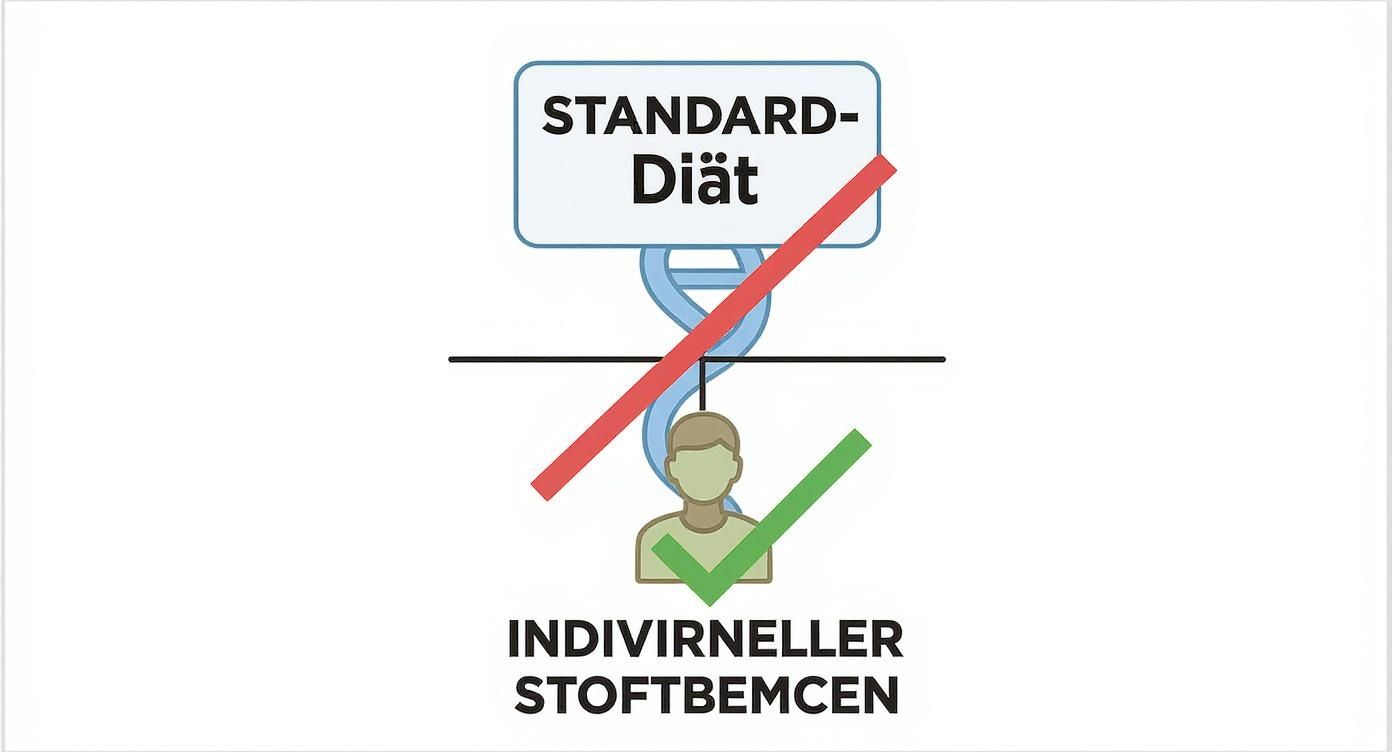
This illustration makes it clear: While a “one-size-fits-all” approach is doomed to fail, understanding your personal metabolism is the path to success.
Why this topic affects us all
The need for such individualized approaches becomes increasingly clear when you look at the current figures. In Germany, overweight is becoming more prevalent. According to the Federal Statistical Office, the obesity rate among adults rose from 14.7% in 2009 to 16.8% in 2021. This development underscores that blanket recommendations are not enough and that demand for well-founded, personalized analyses is growing.
By accurately measuring your blood values, you can find out which specific nutrients you are lacking, how your hormonal system is functioning, and how your body responds to certain macronutrients. This knowledge is the foundation for sustainable weight loss. You can learn how to nourish your body optimally instead of simply taking something away from it. If you’d like to explore the subject in more depth, you can read more in our article about the function of metabolic tests for your health.
Your at-home blood test explained
You’re probably wondering how such a detailed metabolic analysis actually works in practice. Do you have to make a special trip to the doctor and wait weeks for an appointment? The clear answer is: No. With mybody-x self-tests, the entire process is designed so that you can take care of it easily, safely, and conveniently from home.

The journey to your personal metabolic data starts simply. You order your mybody-x test kit online, and it arrives directly in your mailbox. This kit contains everything you need to collect the sample—including, of course, easy-to-follow instructions.
Your path to collecting a sample in simple steps
The central idea behind at-home tests is to give you maximum control and convenience. No waiting in an overcrowded waiting room, no turning your daily routine upside down. The entire process is divided into a few simple steps:
- Activation: First, activate your test kit online using your personal test ID. This is a crucial step so that your sample can later be anonymized while still being correctly assigned to your account.
- Sample collection: Then it’s time to collect the sample itself. All you need is a tiny blood sample from your fingertip. Thanks to the modern lancets in the kit, the small prick is virtually painless and completed in seconds. Just a few drops of blood are enough for a comprehensive analysis.
- Shipping: You securely pack the collected sample in the return envelope provided and send it free of charge to our partner laboratory.
If you are unsure about how to carry out the test, you will find more tips and a detailed description of each step in our detailed at-home blood test instructions.
Why safety and precision come first
As soon as your sample arrives at the laboratory, the actual scientific work begins. And this is precisely where the wheat is separated from the chaff, because the quality of the analysis ultimately determines the value of your results.
Your sample is analyzed exclusively in an ISO-certified specialist laboratory in Germany by qualified personnel. This certification is not an empty promise—it guarantees the highest standards of precision, reliability, and reproducibility. This is the only way we can ensure that you receive data on which you can make truly informed decisions about your health.
Protecting your personal data is our absolute priority. The entire process, from anonymized sample assignment to the transmission of your results, is subject to the strict requirements of the General Data Protection Regulation (GDPR).
Your results – presented clearly and securely
Once the analysis is complete, which usually takes just a few business days, your results will be prepared digitally for you. You will receive a notification and can then conveniently view your evaluation in your secure online account.
As you can see, the path to gaining deep insights into your metabolism is straightforward and completely safe. It begins conveniently in the comfort of your own home and provides the scientific foundation you need for a successful and sustainable metabolic analysis for weight loss.
How to interpret your results correctly
You are holding your results in your hands—and now what? Don't worry, we won't leave you on your own at this crucial point. A results report is more than just a collection of numbers and technical terms. It is your metabolism's personal map, and we help you read and understand it.

Your mybody-x results report has been deliberately designed so that you can grasp the most important information at a glance. We translate complex laboratory values into clear, easy-to-understand language. This allows you to see immediately which areas of your metabolism are functioning optimally and where action may be needed.
Your most important values at a glance
In your personal dashboard, you will find a detailed breakdown of your biomarkers. We focus on the values that are particularly relevant to a successful metabolic analysis for weight loss. These include:
- Your blood lipid levels (lipid profile): Values such as total cholesterol, HDL (“good” cholesterol), LDL (“bad” cholesterol), and triglycerides provide insight into how efficiently your body processes fats. An imbalance may indicate that your fat metabolism is not functioning optimally.
- Your long-term blood sugar (HbA1c): This value is like a blood sugar diary covering the past three months. It shows how well your body is able to manage carbohydrates and is a crucial indicator of your insulin sensitivity—a key factor in losing weight.
- Important vitamins and minerals: Here, we check your supply of essential micronutrients such as vitamin D, vitamin B12, iron, and magnesium. These “spark plugs” are indispensable for hundreds of metabolic processes.
Learn to understand the connections
The true potential of your analysis lies in recognizing the connections between the individual values. A single value that is perfectly within the green range is good. But the overall picture determines your success.
Imagine that your vitamin D level is too low. At first, that may sound rather insignificant. Yet vitamin D plays an important role in hormone regulation and insulin sensitivity. A deficiency can therefore cause your body to store fat more easily and unknowingly hinder your weight-loss plans.
Your results report is not a verdict, but a tool. It gives you the power to make informed decisions and finally adjust the right levers for your success.
Another example is the ratio of omega-6 to omega-3 fatty acids. An imbalance in favor of omega-6 fatty acids, as is often seen in the modern diet, can promote low-grade inflammation in the body. This, in turn, can slow down metabolism and make losing weight noticeably more difficult.
Science continues to underscore the importance of such detailed analyses. A molecular epidemiological study by German research institutes has shown how closely changes in weight are linked to fat and amino acid metabolism as well as insulin sensitivity. These findings help us make our analyses increasingly precise and tailor individual recommendations even more effectively. You can find more about the study results on human metabolism here.
From analysis to action
However, the most valuable part of your report is the specific, personalized recommendations for action. We do not just tell you what your results mean, but above all, what you can do now.
Based on your individual metabolic profile, you will receive clear, actionable tips for your diet and lifestyle. These recommendations are not generic advice, but are derived directly from your personal data.
For example, you will learn:
- Dietary adjustments: Which foods should you eat more of to compensate for a specific nutrient deficiency? How could you optimize the distribution of protein, fat, and carbohydrates to keep your blood sugar levels stable and avoid cravings?
- Targeted supplementation: Is there a deficiency that is difficult to correct through diet alone? We provide recommendations on which supplements might be beneficial for you.
- Lifestyle adjustments: Could more targeted strength training or better stress management positively influence your hormone balance and thereby support your metabolism?
With this knowledge, you can turn your analysis results into a concrete roadmap. You no longer have to guess; you know exactly which steps will effectively bring you closer to your goal.
How your gut and hormones influence your weight
Your metabolism is not a lone fighter. It is part of a complex network in which two players have a decisive role in your weight-loss success: your gut and your hormones. If you ignore these two areas, even the best diet can fail. Let’s take a deeper look at these fascinating connections.

Your gut is far more than just a digestive organ. It is home to trillions of microorganisms—your so-called gut microbiome. These tiny helpers influence not only how well you absorb nutrients, but also regulate your appetite, mood, and even how your body stores calories.
An imbalanced microbiome can lead to low-grade inflammation that slows your metabolism and promotes fat storage. Certain gut bacteria can even cause you to extract more calories from the same meal than someone with a healthy gut flora. If you would like to learn more about how crucial a healthy gut is, read our comprehensive article on the topic: Microbiome Test.
When foods cause unnoticed problems
Another important aspect is food intolerances. Sometimes your body reacts to certain foods without you immediately noticing through classic symptoms such as stomach pain. These hidden reactions can keep your immune system permanently on alert and place strain on your gut.
The result is often a state of chronic stress in the body that makes losing weight extremely difficult. A mybody-x intolerance test can help you identify precisely those foods that are quietly sabotaging your metabolism. This allows you to specifically help your gut return to a state of calm.
Your hormones as metabolic conductors
Besides your gut, your hormones are the most powerful regulators of your metabolism. They set the pace and determine whether your body is in fat-burning or fat-storage mode. Even the slightest imbalances can have a huge impact on your weight.
Hormones are your body’s chemical messengers. When their signals become disrupted, your metabolism can no longer function properly—no matter how disciplined your diet is or how much exercise you do.
Natural hormonal shifts occur particularly during certain stages of life, such as menopause. For example, declining estrogen levels can lead to changes in fat distribution (hello, belly fat!) and increased appetite. At the same time, elevated levels of the stress hormone cortisol can effectively block fat burning.
Key hormones that control your weight
Three groups of hormones are particularly important for a successful metabolic analysis for weight loss:
- Thyroid hormones (TSH, fT3, fT4): They are the accelerator pedal of your metabolism. An underactive thyroid, even a mild one, can lower your basal metabolic rate and lead to unexplained weight gain, fatigue, and lack of energy.
- Stress hormones (cortisol): Chronic stress leads to persistently elevated cortisol levels. This hormone promotes cravings for sugary and fatty foods and encourages the storage of visceral belly fat, which is considered particularly harmful to health.
- Sex hormones (estrogen, testosterone): As already mentioned, an imbalance in these hormones can have a major impact on appetite, fat distribution, and muscle development.
A mybody-x hormone test can precisely show you whether there is an imbalance in this area. This information is crucial because it enables you to address not only the symptoms but the actual root of your weight problem. Taking a holistic look at your metabolism, gut, and hormones is the key to truly understanding your body and achieving lasting results.
Real-life examples that show the difference
Theory is all well and good, but at the end of the day, it’s the real results that count, right? So let’s take a look at a few anonymized examples. They vividly show how a data-based metabolic analysis for weight loss can make all the difference. These are real-life stories that prove that stubborn weight problems often have hidden causes that can be uncovered.
Imagine a woman—let’s call her Anna. In her early forties, she generally eats mindfully and exercises regularly. Even so, the number on the scale hadn’t budged for months. Worse still, she often felt tired and lacked energy. Quite frustrated, she decided to take a mybody-x nutrient test.
The Case of the Blocked Energy
The result was a real eye-opener. Anna’s levels showed a clear iron deficiency. Iron, however, is the central building block for transporting oxygen in the blood and therefore absolutely essential for the entire energy metabolism. You could say her engine had been running on low power the whole time.
With this knowledge, she was able to adjust her diet specifically, incorporate more iron-rich foods, and temporarily supplement with a preparation. The result was astonishing: Her energy returned, the constant fatigue disappeared, and suddenly the pounds began to melt away again. Without the analysis, she probably would have continued counting calories obsessively and ultimately failed.
When blood sugar goes on a roller coaster ride
Another typical example is Mark. His biggest enemy? Afternoon cravings that repeatedly derailed his weight-loss plans. His metabolic analysis revealed the cause: His long-term blood sugar level (HbA1c) was close to the upper limit of the normal range. This was a clear indication that his blood sugar levels were making extreme swings throughout the day.
These stories are not isolated cases. They show how individual the reasons behind weight problems can be and why a one-size-fits-all approach so often misses the mark. Only when you know the real causes can you take targeted and successful action.
Based on this insight, he changed his diet. Instead of fast-acting carbohydrates, he opted for a smart combination of high-quality proteins, healthy fats, and plenty of fiber. His blood sugar levels stabilized, the cravings disappeared, and losing weight suddenly became something he could plan and control.
These real-life examples make it clear that lasting success does not have to be a guessing game. Science also supports the effectiveness of such personalized approaches. An independent study published in the “Journal of Nutrition and Metabolism” found that 62.5% of participants in an individually tailored metabolic program were able to maintain at least 5% of their initial weight over the long term. If you are interested in learning more, discover more findings from the study on metabolic programs.
Still have questions? Here are the answers.
You have read this far, but still have a few question marks floating around in your head? That is completely normal—and even a good sign: it shows that you are taking your health seriously. Let’s clear up the most common questions so you can make an informed decision.
Who can benefit from a test like this?
Quite simply: A metabolic analysis for weight loss is intended for anyone who is tired of one-size-fits-all diets that simply do not work. It is the right step if you finally want to understand what your own body really needs instead of continuing to feel your way in the dark.
A mybody-x test is especially valuable for you if you recognize yourself here:
- You eat healthily and exercise, but the number on the scales simply won’t budge.
- Constant fatigue, cravings, or lack of motivation are your daily companions.
- You have a quiet feeling that you’re lacking important nutrients but don’t know which ones.
- You suspect that hormonal changes (hello, menopause!) are slowing down your metabolism.
- You simply want to stop guessing and finally have a strategy based on hard facts about your body.
What’s the difference compared with regular nutritional counseling?
Traditional nutritional counseling is great—but it is usually based on general guidelines and what you tell the counselor about your eating habits. It’s an important step, but it often lacks the crucial piece of the puzzle: objective data directly from your body.
A metabolic analysis, such as the one mybody-x offers through a blood test, provides exactly these hard facts. It doesn’t replace good counseling; it makes it truly effective. Instead of working with assumptions, you know your exact levels—how well supplied you are with nutrients and what your blood sugar and hormone levels look like.
Think of it this way: Nutritional counseling gives you a good map. The metabolic analysis is the GPS that shows you your exact position on that map and calculates the fastest, traffic-free route to your destination.
How often should I have a metabolic analysis?
The first comprehensive analysis is your starting point. It’s like an honest assessment of your body—where are you really starting from? With these results, you lay the foundation and take the first, most important steps.
After following the recommendations for around three to six months, a follow-up test is worth its weight in gold. It shows you in black and white what your changes have achieved and how your levels have improved. This way, you measure your success not only on the scales but also see objectively what is happening in your body. That gives you the perfect foundation for refining your plan and reaching your goals even faster.
Are you ready to stop guessing and build your journey toward your desired weight on a solid, scientific foundation? At mybody-x, you’ll find the right nutrient, hormone, or intolerance test to finally understand your body’s signals. Discover the possibilities now and start your journey toward feeling better in your body at https://mybody-x.com.



Share now:
Lose Weight Around Your Stomach, Legs, and Buttocks—Your Path to Visible Results
At-home genetic testing: Personalized health made easy to understand