
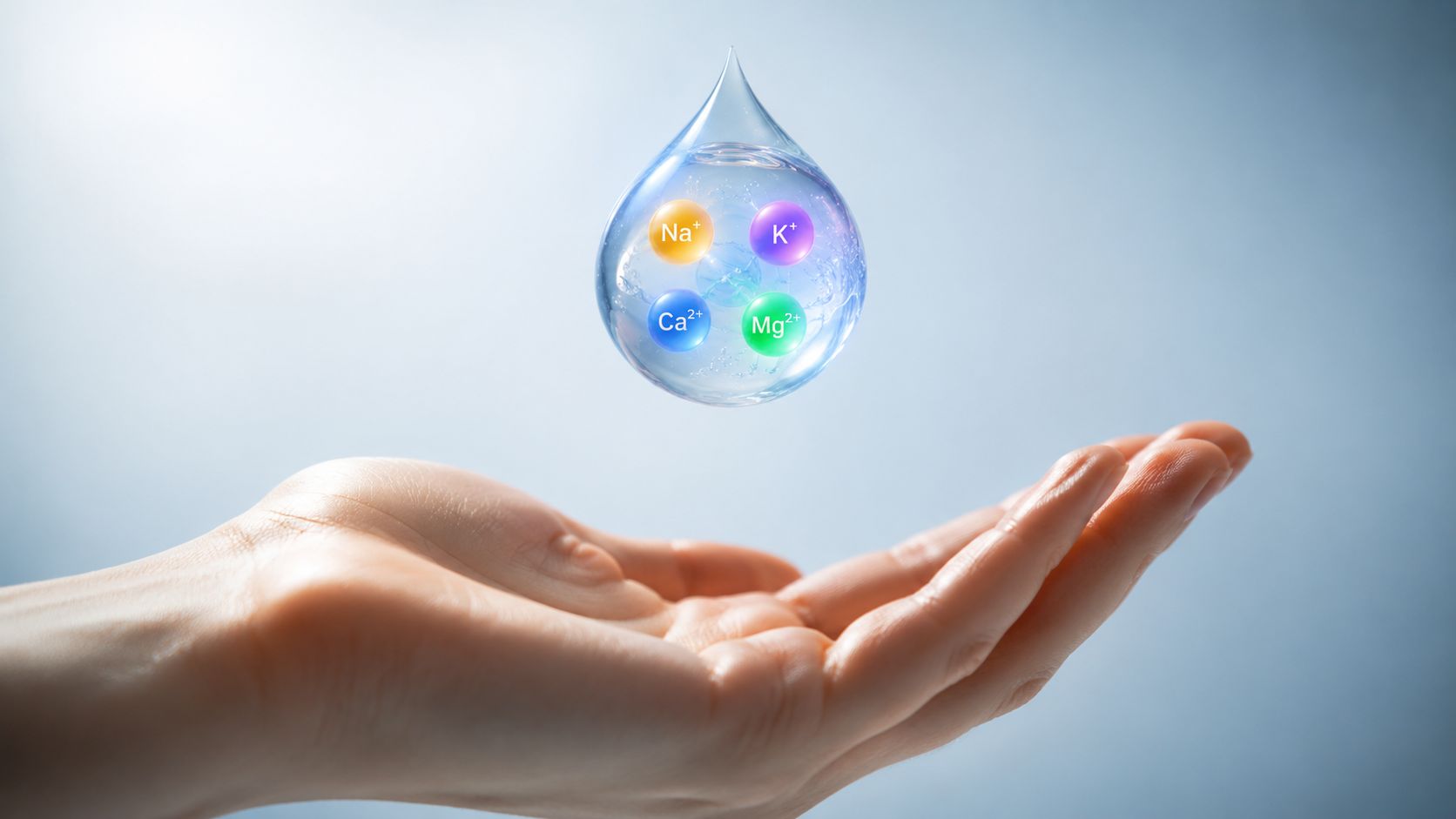
What are electrolytes, and why are they so important?
You may be sitting at your desk right now, feeling sluggish, when your leg suddenly twitches, or perhaps you had a calf cramp during yesterday’s workout. Many people put this down to stress, too little sleep, or “just a bad day.” Sometimes that is true. But sometimes something much more fundamental is behind it.
If you are wondering, What are electrolytes?, it is not about a fitness trend or just colorful sports drinks. It is about substances your body needs every day so that your nerves, muscles, fluid balance, and heart rhythm can work together properly. Electrolytes work behind the scenes. That is precisely why they are often overlooked.
The key point for everyday life is simple: You do not have to guess. If symptoms such as fatigue, cramps, or heart palpitations recur, it makes sense to understand your own status better instead of taking something at random.
Do you often feel tired or have cramps
A typical day is enough for your body to send you small warning signs. You work with focus, perhaps drink too little along the way, sweat in the heat on your way home, or exercise in the evening. Later, your calf starts to bother you. Or you feel surprisingly drained despite getting enough sleep.

These signals are nonspecific. That is exactly what makes them so deceptive. Many people notice that “something isn’t quite right” but cannot put their finger on it. People often suspect magnesium deficiency first. That may play a role. You can find out more in the article about magnesium deficiency symptoms.
The quiet helpers working behind the scenes
Electrolytes are dissolved minerals that carry an electrical charge. That sounds technical, but it has very practical implications in the body. These charged particles help cells communicate with one another and keep fluids where they are needed.
Without this system, many everyday bodily functions would not work reliably:
- Muscles contract and then relax again.
- Nerves transmit signals so you can feel, think, and react.
- Your heart beats rhythmically instead of getting out of sync.
- Fluids are distributed appropriately inside and outside your cells.
When fatigue, muscle twitching, or cramps do not occur randomly, it is worth considering your electrolyte balance.
Why confusion is so common
Electrolyte imbalances rarely feel clear-cut. Fatigue can mean many things. So can cramps. Even concentration problems or the feeling of “not quite being in your body” can fit the picture. That is precisely why many people reach for powders, tablets, or more water without knowing what they are actually lacking.
The problem is not only that you may be working against your actual needs. You may also be overlooking the real question: Are you genuinely lacking something, or is your body simply trying to show you that something is out of balance?
The key players on your electrolyte team
Electrolytes are not a single substance but a group of minerals with specific functions. According to AOK, electrolytes are essential mineral salts dissolved in water, more precisely positively or negatively charged particles (ions) found in all bodily fluids, such as blood, urine, and sweat. The most important electrolytes include sodium, potassium, chloride, magnesium, calcium, phosphate, and bicarbonate. AOK explains this in detail in its article on electrolytes and their function in the body.

Four names you should remember
You encounter many terms in everyday life. They become truly helpful when you understand the roles behind them.
| Electrolyte | Main function in the body | Typical everyday significance |
|---|---|---|
| Sodium | Regulates fluid balance and nerve signals | important when sweating heavily |
| Potassium | Supports heart and muscle function | relevant for cramps and muscle function |
| Calcium | Important for bones, muscles, and blood clotting | more than just a bone mineral |
| Magnesium | Supports muscle and nerve function as well as energy processes | often associated with tension and fatigue |
You can picture the roles like this
Sodium is something like the water manager. It helps your body distribute fluids and also ensures that nerve signals get through. When you sweat heavily, you lose not only water but also sodium.
Potassium works more closely within cells. It is particularly important for muscles and the heart. When this system gets out of balance, it can manifest as weakness, cramps, or unusual sensations in the heart.
Many people know calcium only for its role in bones and teeth. However, it is also involved in muscle contraction and blood clotting. This makes it a quiet but central player.
Magnesium is the all-rounder. In clinical diagnostics, it is described as a multifunctional catalyst involved in more than 300 enzymatic reactions. It contributes to the normal functioning of the nervous system, mental health, and electrolyte balance, as praktischarzt.de explains blood electrolyte levels.
Key point: Sodium regulates a lot of water, potassium works mainly inside the cell, calcium builds and activates, and magnesium stabilizes and relaxes.
The team members that are often forgotten
In addition to the four familiar names, chloride, phosphate, and bicarbonate are also included. Among other things, they help regulate acid-base balance and fluid distribution. You do not need to memorize every detail. It is enough to understand that electrolytes never work alone. They function as a team.
In everyday life, this also means that individual symptoms cannot always be clearly attributed to a single mineral. That is why it makes sense to consider the connections. You can also find a good overview of these basics in the article on minerals and trace elements.
If a deficiency has been confirmed in your blood test and calcium utilization is an issue, Vitamin D3 K2 Complex | Shield may be relevant. The product combines high-dose D3 with K2 for optimal calcium utilization, bone health, and immune system support.
When the balance shifts: symptoms and causes
A healthy electrolyte balance is not a nice extra. It is essential for your body to function properly. This is particularly clear in the case of sodium. According to SOS, a rigid physiological balance is essential. A sodium level below 135 mmol/l or above 145 mmol/l can lead to serious complications. This is clearly described in the overview of electrolytes, osmosis, and critical sodium levels.

How to recognize an imbalance
Not every imbalance feels dramatic. It often begins subtly and gradually in everyday life:
- Fatigue can occur when your body can no longer properly regulate nerve and muscle function.
- Muscle cramps are among the symptoms many people notice first.
- Awareness of heart rhythm irregularities, such as palpitations, often makes people particularly anxious.
- Confusion or concentration problems can occur with more severe imbalances.
Common triggers in everyday life
The classic causes are usually simpler than you might think:
- Heavy sweating during exercise or in hot weather
- Vomiting or diarrhea
- Insufficient fluid intake
- Certain medications, especially those with a diuretic effect
- Unbalanced diet over an extended period
A coaching example makes this tangible: An endurance athlete regularly complained of calf cramps after long runs. The evaluation showed low magnesium and low sodium after heavy sweating. With targeted electrolyte intake during training, the symptoms disappeared.
Pure water does not always help. If you sweat a lot, you lose not only fluid but also dissolved minerals.
What often stands out together in evaluations
In mybody®x evaluations, low magnesium and potassium particularly often occur together. Typical associated symptoms include muscle cramps, fatigue, or a perception of irregular heartbeats. This is a good indication of why blanket self-diagnoses often fall short. Anyone who thinks only of magnesium may overlook the second part of the problem.
For people who want to manage their nutrition and training more individually, a genetic perspective may also be interesting. The DNA Metabolism Analysis from mybody®x reveals genetically determined metabolic types, fat and carbohydrate utilization, and individual weight-related risks. It does not replace electrolyte testing, but it can broaden the framework for a personalized nutrition and training plan.
Creating clarity: this is how your electrolyte levels are measured
If you judge symptoms based only on how you feel, you quickly end up guessing. Drink more. Drink less coffee. Take magnesium. Eat salt. These measures may be appropriate, but they may not be. Clarity comes only when values are measured.
In clinical diagnostics, electrolyte levels are routinely determined using blood or urine tests. This makes sense because you are not merely interpreting symptoms—you have actual measurements in front of you.

These four values are particularly relevant
The pharmaceutical reference source identifies four key electrolytes in blood serum with clear reference ranges. They are listed as follows in the overview Ions in Fine Balance:
| Value | Reference range |
|---|---|
| Sodium | 135–145 mmol/l |
| Potassium | 3.5–5.0 mmol/l |
| Magnesium | 0.7–1.0 mmol/l |
| Calcium | 2.2–2.6 mmol/l |
These exact four values—sodium, potassium, magnesium, and calcium—are individually marked as above or below the normal range in mybody®x’s results report.
Why a blood test is better than guessing
A cramp on its own does not tell you whether sodium, potassium, or magnesium is affected. Fatigue tells you even less. And “but I do eat healthily” is not a measurement method.
That is why a blood test is so helpful:
- It separates feelings from findings. You can see what is genuinely unusual.
- It reveals combinations. This is particularly valuable when several mild complaints occur together.
- It makes decisions more precise. Diet, recovery, or supplements can be adjusted more specifically.
Practical rule: If symptoms recur or you train a lot, measuring is more useful than blindly taking more supplements.
If you want to explore the topic further, you’ll find additional guidance in the article about mineral tests and identifying deficiencies.
One possible approach is the mybody x blood test. It enables key blood values to be determined at home and explains any deviations clearly in the report.
Replenish strategically instead of supplementing blindly
Many people now treat electrolytes like a general wellness shortcut. A powder in the morning, a tablet after training, a drink in between. It seems sensible, but it’s often not targeted.
Apotheken Umschau points out that taking electrolytes without a clinical deficiency, such as vomiting or diarrhea, offers no health benefit because healthy kidneys regulate excess minerals. At the same time, more than 60% of electrolyte products in Germany are bought by people who are not involved in sports, as described in the article about the appropriate use of electrolytes.
What usually helps first in everyday life
For many people, the first thing to adjust isn’t the supplement but the basics:
- Drink regularly instead of consuming large amounts at once.
- Eat a balanced diet so that you get electrolytes every day.
- Consciously replenish after heavy sweating instead of simply drinking more water.
- Observe your symptoms, especially if they repeatedly occur in similar situations.
The DGE standard recommendation mentioned in the AOK article calls for at least five servings of fruit and vegetables daily and two liters of water per person. That’s a solid foundation for everyday life before you consider specialized products.
When electrolyte drinks can really be useful
In coaching, there’s a simple practical tip: For training sessions lasting more than 60 minutes, an isotonic drink containing sodium and magnesium can be useful during and immediately after exercise. Plain water is often not enough when you sweat heavily and may even worsen the imbalance.
That doesn’t mean you need a sports drink on every walk. But during long, strenuous sessions, your needs are different from those of everyday office life.
Not every symptom needs a powder right away. Often, what you need first is a good question: What am I actually losing right now?
Anyone who wants to personalize their diet even further can also consider their genetic foundations. The NutriCare | INFINITY DNA test from mybody®x analyzes genetic nutrient utilization, food intolerances, micronutrient requirements, and metabolic type. It does not replace a blood value for the specific question of electrolytes, but it can make your diet more individualized in the long term.
If you are unsure whether you are supplementing sensibly at all, it may also help to read the article about the supplement test.
Your path to balanced electrolyte levels
Electrolytes are small, but their impact is significant. They help your body regulate water, support nerve function, enable muscles to work, and keep your heart rhythm stable. When this balance is disrupted, you may not notice it clearly right away, but you can still feel the effects.
The key point is that you do not have to explain away your symptoms. Recurring fatigue, cramps, or unusual heart sensations are signals that deserve to be taken seriously. In clinical diagnostics, electrolyte levels are routinely determined using blood or urine tests. Data of this kind enables precise, personalized recommendations for nutrition and recovery, as praktischarzt.de summarizes in its overview of electrolyte diagnostics.
Three sensible next steps
- Observe patterns. Do symptoms occur after exercise, in hot weather, or on stressful days?
- Optimize the basics. A balanced diet and sufficient fluids remain essential.
- Test instead of guessing. A blood value often provides more clarity than a third scoop of electrolyte powder.
Personalization makes the difference
Some people want to understand not only their current values but also their health more individually in the long term. In that case, an additional genetic perspective may be interesting. The Longevity | ALL IN ONE DNA test from mybody®x analyzes genetic risk factors for aging, inflammation, nutrient utilization, and metabolism.
For the specific question of electrolytes, however, the simplest approach is often the best: measure first, then act. This turns uncertainty into a clear next step.
If you recognize yourself in symptoms such as fatigue, muscle cramps, or recurring exhaustion, a mybody x blood test can help you check your electrolyte status and other relevant values from home. This allows you to make data-based decisions instead of relying on guesswork.



Share now:
What types of metabolism are there? Your guide for 2026
Heal your skin from within for a clear complexion in 2026