
Find a metabolic analysis near you: Your 2026 guide
You are looking for a metabolic analysis near you because you finally want clear answers. Perhaps you already eat more mindfully than before, exercise regularly, and yet still feel that your body reacts differently than you expect. Or you find it difficult to lose weight, get tired quickly, or feel that general nutrition advice simply does not work for you.
This is exactly where a closer look is worthwhile. “Metabolism” is not a buzzword, but describes how your body obtains energy, processes nutrients, and responds to exertion, food, and everyday life. Those who understand this better often make far more sensible decisions—not based on feelings, but on a reliable foundation.
Why you should understand your metabolism
Many people start a diet and realize after a few weeks that the numbers do not add up. Calories are reduced, snacks eliminated, and the exercise plan is in place. Yet their weight stagnates or their energy drops. This is often not due to a lack of discipline, but because standard plans work only with averages.
However, your metabolism determines very individually how your body handles carbohydrates, fats, and protein. It influences your resting energy expenditure, how well you cope with exertion, and whether you feel stable or sluggish after eating. Once you understand these differences, nutrition suddenly becomes more practical and far less frustrating.
Those who want to better understand the basics will find a good introduction in the article Metabolism explained simply.
When general advice is no longer enough
A metabolic analysis is not a miracle cure. Nor does it replace your daily routine, sleep habits, or physical activity. But it can show you where your body currently stands or which predispositions may play a role for you.
This is especially helpful if you recognize yourself in one of these points:
- Weight management remains difficult: You try many things, but the results seem random.
- Energy fluctuates greatly: Focused in the morning, exhausted after eating.
- Nutrition confuses you: First it is low carb, then more fat, and then more protein after all.
- You want to act preventively: Do not wait until symptoms appear to take action.
A good analysis does not just answer the question “What should I eat?” but above all “Why does my body react this way?”
What you specifically gain from it
With the right analysis, you gain clarity—either through a snapshot of your current metabolic state or a look at your genetic predisposition. Both can be useful. What matters is choosing the method that matches your goal.
For some people, a current measurement of their calorie expenditure at rest is enough. Others want to understand more deeply why certain nutritional strategies suit them better or worse in the long term. This distinction is particularly important when you are searching locally and weighing up practice-based services, breath gas testing, blood analysis, and at-home tests.
How to find local providers
If you want to have a metabolic analysis done locally, do not go with the first result you find. The quality of providers varies considerably. A good search saves you time and prevents you from ending up with results of little practical value despite a nicely worded website.

Start with the right search terms
Google Maps and physician directories provide better results when you search more specifically. These search terms often work best in practice:
-
Metabolic analysis + city name
Good for an initial overview of practices, centers, and studios in your area. -
Breath gas analysis + city name
Helpful if you are specifically looking for indirect calorimetry. -
Nutrition Medicine Metabolic Analysis
More likely to filter for medically oriented services rather than purely fitness-based tests. -
Endocrinologist Metabolic Diagnostics
Useful if you want to consider hormonal or medical questions as well. -
Diabetologist Nutrition Medicine Breath Gas Analysis
Particularly interesting for blood sugar concerns or overweight.
If you also want to know how local testing services differ from an at-home test, where to get a DNA test provides a helpful overview.
Providers that are often worth considering
Not every metabolic analysis is offered in a traditional medical practice. You will often find these services at:
| Type of provider | Typical strength | What you should look out for |
|---|---|---|
| Nutritional medicine practice | Medical context, consultation | How thoroughly the findings are explained |
| Endocrinology or diabetology | Useful for complex complaints | Whether metabolic tests are offered at all |
| Functional medicine or preventive care center | Often a broader perspective on nutrition and lifestyle | Transparency regarding methods and evaluation |
| Fitness or performance studio | Quick access, often practical | Qualifications of the person providing care |
Briefly check the website
A good provider page quickly answers three questions: What is measured? How does the test work? What do you receive afterward? If this information is missing, be skeptical.
Pay particular attention to these points:
- Method clearly identified: Does it state breath gas analysis, blood analysis, or DNA test?
- Results report described: Do you receive just one value, or also specific recommendations?
- Consultation included: Is there a discussion to help interpret the results?
- Preparation explained: Reputable providers give guidance on rest, eating, or exercise before the appointment.
- Scope of application stated realistically: Be cautious of grand promises without a clear method.
If a confirmed deficiency is identified after an analysis, a product such as Vitamin D3 K2 Complex | Shield may be appropriate. The Vitamin D3 K2 Complex Shield from mybody®x combines high-dose D3 with K2 for optimal calcium utilization, bone health & immune system support. Ideal after a DNA or blood test confirms a deficiency, precisely dosed, with maximum bioavailability.
Don’t choose the provider with the loudest marketing. Choose the one that clearly explains what is measured—and what is not.
Choosing the right on-site analysis
Many local providers use “metabolic analysis” to mean very different things. Sometimes it is breath gas measurement, sometimes a blood test, and sometimes a combination of a questionnaire and body data. If you want genuinely useful results, you need to distinguish between the methods.

What breath gas analysis actually measures
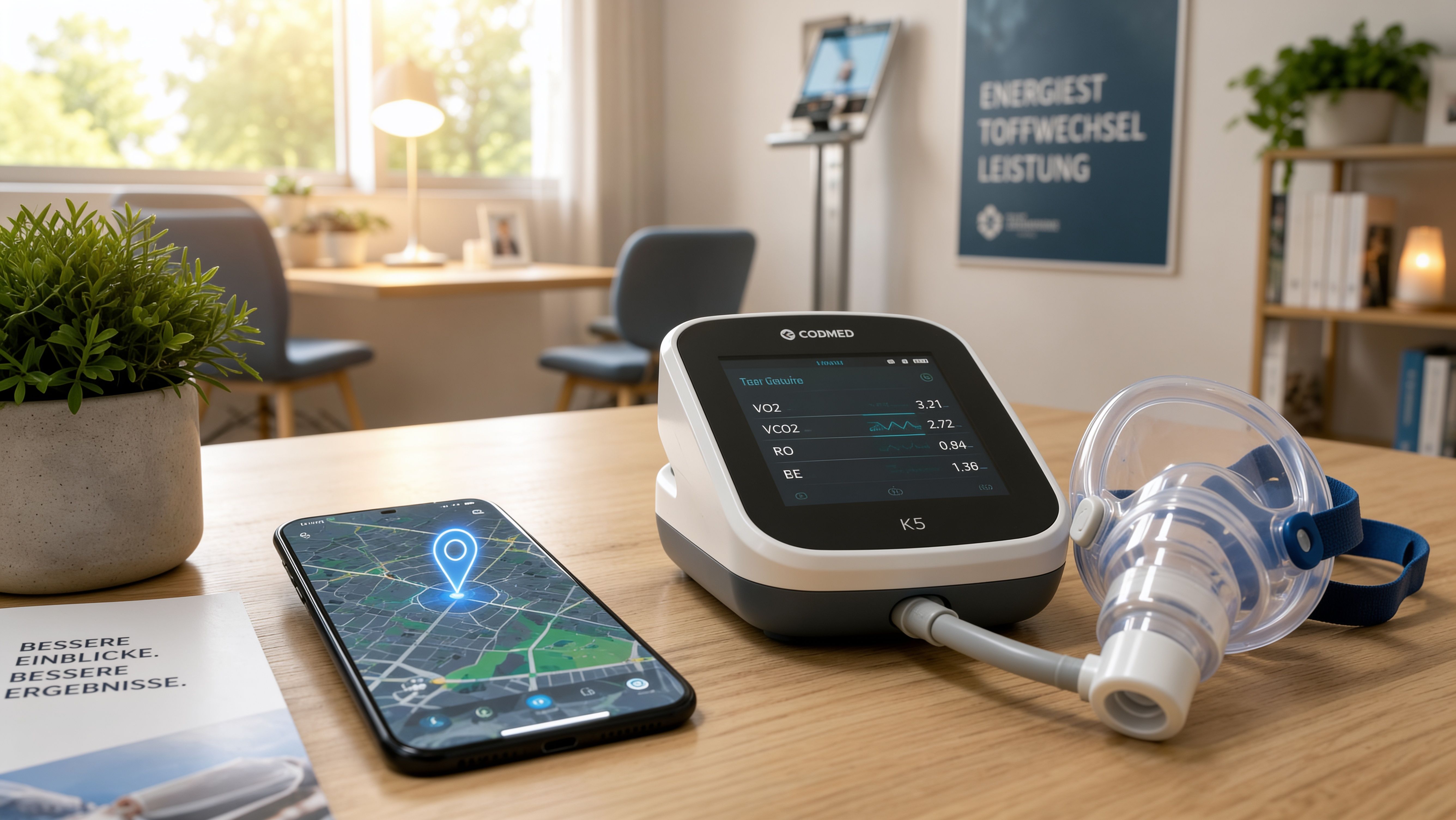
Breath gas analysis, also known as indirect calorimetry, is an established method. It provides accurate basal metabolic rate measurements in 3 to 5 minutes and measures the proportion of nutrients being burned. In Germany, more than 1,000 locations use this method, as described by Stadtwaldpraxis Köln's information on breath gas analysis.
The method measures the ratio of inhaled oxygen to exhaled carbon dioxide. This can be used to determine how your body provides energy at rest. In practical terms: You get indications of whether your body is currently relying more heavily on fat or carbohydrates as fuel.
What it cannot do
A breath gas analysis is useful when you want to understand your current state. However, it does not show genetic predispositions. Nor does it automatically explain why you tend toward certain patterns in the long term or how your body responds to different dietary strategies over months and years.
A blood analysis, on the other hand, can answer different questions. According to Alta Klinik's information on at-home metabolic testing, a comprehensive at-home metabolic analysis can examine markers of energy, fat, and glucose metabolism, such as the acylcarnitine profile, carnitine status, HDL, LDL, triglycerides, and HbA1c. This offers a different perspective from breath measurement alone.
How to recognize a good provider
If you book locally, ask specific questions in advance. Good providers answer concrete questions calmly and clearly.
-
Who performs the analysis?
Ask what qualifications the person supervising the process has. -
Which values will I receive exactly?
A reputable provider will tell you your basal metabolic rate, fuel distribution, and the scope of the analysis. -
What does the report look like?
A single printout with raw values is of little help to most people. -
What happens after the test?
What matters is translating the results into nutrition, everyday life, and realistic next steps. -
How do I prepare?
If hardly any information is provided, that does not indicate a precise procedure.
You can get a better overview of the differences between the methods in the guide to types of metabolic analyses.
Practical takeaway: The best local analysis is not the one with the most technical terms, but the one whose results you can actually put into practice afterward.
Quick decision guide
| Question | On-site indirect calorimetry | Other methods |
|---|---|---|
| You want to know your current resting energy expenditure | Highly suitable | Not always the most direct route |
| You want to speak to someone right away | Advantage of an on-site test | Depends on the provider |
| You are looking for genetic indicators | Not suitable | More likely DNA-based |
| You want to take a deeper look at laboratory values | Only to a limited extent | Blood-based tests are more suitable |
Preparation process and typical costs
With an on-site metabolic analysis, preparation often determines whether the result is useful or not. This is especially true for indirect calorimetry, which requires a stable resting state. Anything that raises your circulation or energy expenditure shortly beforehand can shift the result.
How to prepare properly
A common mistake is to drink coffee shortly before the appointment, arrive hurriedly by bike, or go straight from a stressful daily routine into the measurement. According to drreiche.de on uVida metabolic analysis, failing to observe the rest period can distort the measured values by up to 15%.
That is why this order makes sense:
-
Stay calm before the appointment
Allow enough time for the journey. Hurrying immediately before the test can distort resting values. -
Be mindful of food and drinks
Follow the provider’s instructions carefully. In particular, stimulating drinks or meals shortly before the measurement are unfavorable. -
Avoid exercise
Exercising beforehand changes energy expenditure and therefore affects the reliability of the measurement.
What an appointment usually looks like
The process is generally straightforward. After a brief consultation, you sit or lie down in a relaxed position, depending on the provider. During indirect calorimetry, you breathe through a mask. The measurement itself takes only a few minutes and is painless.
Then comes the more important part. The figures need to be interpreted. Good practices explain what your result means for your calorie needs, meal structure, or training management. Poor providers simply hand you a printout.
What you should know about the costs
For genetic metabolic analyses in Germany, costs range from 275.38 euros to 329 euros, depending on the provider. These costs are generally not covered by statutory health insurance, as explained by Dr. Kurscheid on genetic metabolic analysis.
For a general overview of price differences, the article how much a metabolic analysis costs is also helpful.
Before booking, clarify not only the price but also whether consultation, the report, and a follow-up discussion are included. Only then does a test become a useful decision-making aid.
The alternative: metabolic analysis at home
When looking for a metabolic analysis nearby, people often think of a practice first. That is understandable. But there is another option that may better suit the actual goal for many people: not a snapshot of the present moment, but a deeper understanding of their own predisposition.

The key difference
A local breath gas analysis shows what your body is doing right now. A DNA-based analysis asks something different: What are you generally predisposed to? This is especially relevant if you want to work on your diet, weight, training, or prevention over the long term.
The DNA-based metabolic analysis examines specific gene variants such as FTO, APOA5 and ADRB3. For example, the FTO gene may have a mutation that makes people more susceptible to obesity and a high-fat diet, as described in Cerascreen's article on metabolic analysis.
How the home test works
The process is simple and practical for everyday life:
-
Order the test
You start online and receive the kit at home. -
Collect the sample
This is usually done using a saliva sample or cotton swab, depending on the test. -
Send it in
The sample is sent to the laboratory by post. You are not tied to a particular place of residence or local drop-off point. -
Receive your results report online
Afterward, you receive a personalized report that explains your genetic markers in an understandable way.
That is precisely the practical advantage of a home test. You do not have to coordinate an appointment, find a practice in your city, or choose a local provider simply because nothing else is available.
Who this approach is particularly suitable for
A DNA test is most valuable when you want to know more than just how many calories you currently burn at rest. It is useful when you want to understand why certain dietary approaches may be more suitable for you in the long term than others.
One possible option is the NutriCare | INFINITY DNA Test. The NutriCare INFINITY DNA Test from mybody®x analyzes genetic nutrient utilization, food intolerances, micronutrient requirements & metabolic type. The most comprehensive nutrition DNA package for a permanently personalized nutrition plan—precise, science-based, and convenient from home.
What you should assess objectively
A DNA test will not tell you how to automatically lose weight tomorrow. Genes are not a ready-made solution. They are more like a map that shows where your body may respond more sensitively, efficiently, or challengingly.
That is precisely why an at-home test is the more modern choice for many people. You get more than a purely short-term snapshot—you get a basis for decisions that extend beyond individual weeks.
Conclusion: Which test is right for you?
The best metabolism analysis near you is not automatically the best metabolism analysis for you. It depends on your goal.
If you mainly want to know how much energy your body currently burns at rest, a local respiratory gas analysis is a sensible option. It is direct, quick, and practical if you want an immediate assessment of your current status. If, on the other hand, you want to understand which genetic patterns may influence your diet, weight, and long-term strategy, an at-home DNA test is often the more suitable option.
The right expectations are important here. Genes explain a lot, but not everything. According to Ernährungsradar on the Food4Me study and DNA metabolism tests, personalized dietary recommendations lead to better weight-loss results, even though genetics alone is not the only decisive factor. Lifestyle and diet remain central.
That is the real good news. You are not at the mercy of your genes. But with the right data, you can make much smarter decisions. And that is precisely why it is worth making an informed choice between local measurement and an at-home test.
If you want to measure your metabolism not just at a specific moment but understand it better over the long term, MYBODY Lab GmbH offers at-home DNA, nutrient, and health analyses. The focus is on practical reports that help you tailor your diet and lifestyle more precisely to your body.



Share now:
What is oxidative stress analysis? Your health check
The 5 Best DNA Metabolism Tests Compared in 2026