
What is oxidative stress analysis? Your health check
Oxidative stress analysis is a diagnostic procedure that determines the redox balance in the body and thereby assesses the state of cellular stress and antioxidant defense mechanisms. The term “oxidative stress” does not describe a feeling, but a biochemical state: free radicals exceed the capacity of the body's antioxidants. This analysis provides a snapshot of this balance and is increasingly used in preventive medicine and longevity programs. Anyone who wants to take an active role in shaping their health will find here a tool that goes far beyond conventional blood tests.
What is oxidative stress analysis and how is it used?
Oxidative stress analysis measures the redox balance in the body using indirect biomarkers such as the d-ROMs test and the PAT test. The technical term is redox analysis or biochemical oxidation diagnostics. These methods quantify the extent to which your cells are burdened by reactive oxygen species (ROS) and how well your body can buffer this burden.
The analysis typically takes place in three contexts: as part of a longevity program, as a supplement to nutrient analyses, or as an independent health check for chronic fatigue. Epigenetics expert Kathleen Thiel describes oxidative stress as a hidden accelerant that promotes premature cellular aging and chronic inflammation without those affected noticing the condition at an early stage. This makes the analysis particularly valuable for people without obvious symptoms.

The importance of stress analysis therefore lies not only in diagnosis, but also in prevention. You can detect oxidative stress before it manifests as a disease.
How does oxidative stress analysis work? Methods and measurement procedures
Free radicals cannot be measured directly. Instead, modern diagnostics detect their traces in lipids, DNA, and proteins, as well as the body's antioxidant capacity. This may sound technical, but it is easy to implement in everyday practice.
The two central testing methods
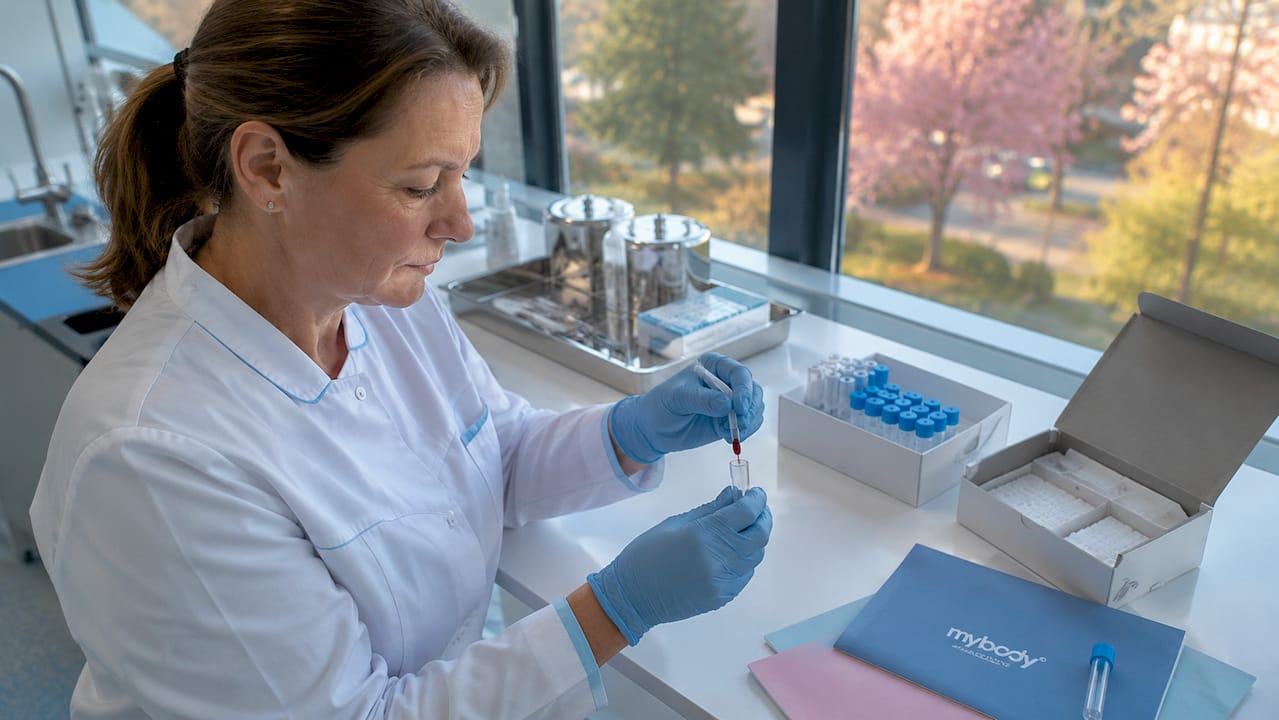
The most important methods of stress analysis are the d-ROMs test and the PAT test. Both are measured by the FRAS 5 system, which determines free radicals and antioxidant capacity from capillary blood within a few minutes. Capillary blood means a small finger prick—no venous catheter and no long waiting time.
- d-ROMs test (Reactive Oxygen Metabolites): This test measures the concentration of reactive oxygen metabolites in the blood. A high value indicates that your body is currently under significant oxidative stress.
- PAT test (Plasma Antioxidant Test): This test measures the antioxidant protective capacity of your blood plasma. A low value means that your defenses against free radicals are weakened.
- 8-OHdG as a DNA marker: The biomarker 8-hydroxy-2-deoxyguanosine (8-OHdG) is considered an important marker of DNA oxidative damage. Reference values are approximately 17 ng/mL for a healthy state; values above 20 ng/mL are considered critical.
- Additional markers: Malondialdehyde (MDA) indicates damage to cell membranes, while oxidized LDL cholesterol signals vascular stress.
How an oxidative stress test works
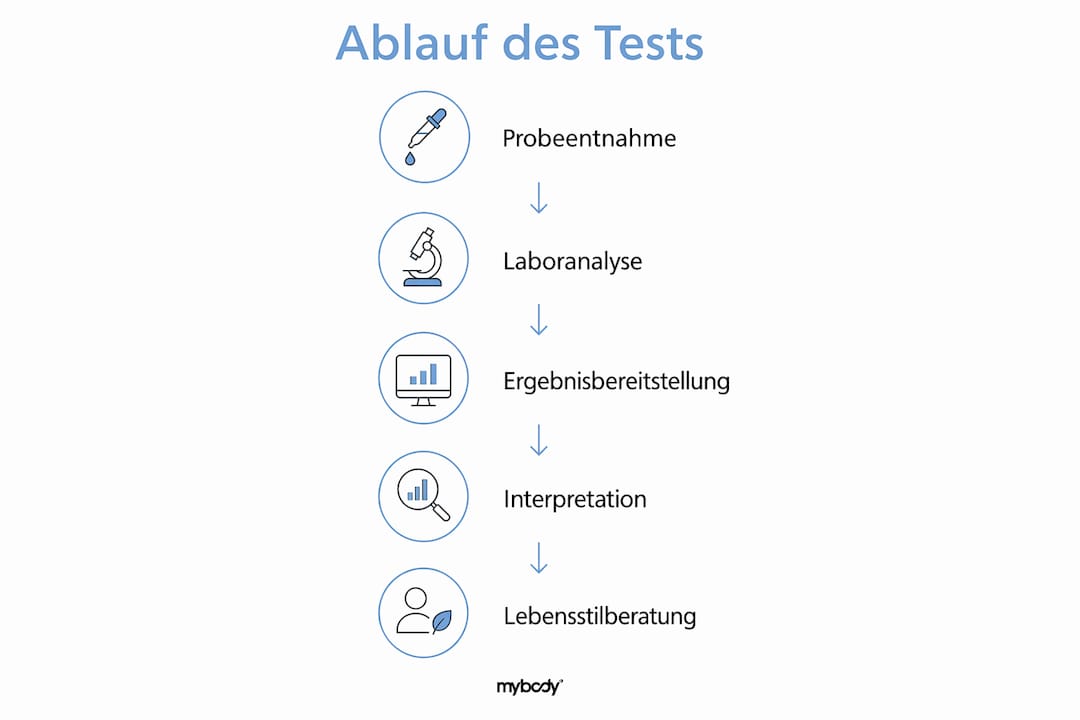
The test takes a few minutes and is usually performed using capillary blood. The results are available promptly and serve as the basis for individualized lifestyle counseling. Many longevity practices and health centers integrate redox analysis into their standard diagnostics.
Pro tip: Do not take the test immediately after intense exercise or an illness. Both factors temporarily increase free-radical stress and distort the results. Choose a calm day for testing.
What do the results show? Understanding values correctly
The results of a redox analysis are not a diagnosis. They are a snapshot based on indirect markers that must always be interpreted in the context of lifestyle, nutrition, and clinical data. This distinction is crucial.
Reference values and their significance
The following reference values can help with interpreting the results:
- d-ROMs value below 300 CARR U: Normal oxidative status; no urgent action required.
- d-ROMs value 300–320 CARR U: Borderline range; review lifestyle factors.
- d-ROMs value above 320 CARR U: Increased oxidative stress; targeted measures recommended.
- PAT value above 2,200 µmol/L: Good antioxidant protective capacity.
- PAT value below 1,800 µmol/L: Weakened defenses; review nutrition and supplementation.
- 8-OHdG under 17 ng/mL: Healthy DNA status.
- 8-OHdG over 20 ng/mL: Increased risk of cellular damage; a fourfold higher risk of oxidative DNA damage has been demonstrated.
What the values do not indicate
An elevated 8-OHdG value signals DNA damage caused by oxidative stress, but it is nonspecific and should only be considered in the overall context. This means that a single value does not justify panic or self-diagnosis. Temporary factors such as lack of sleep, a cold, or intense exercise can shift values in the short term.
| Marker | Healthy range | Critical range | What it measures |
|---|---|---|---|
| d-ROMs | under 300 CARR U | over 320 CARR U | Oxidative stress in the blood |
| PAT | over 2,200 µmol/L | under 1,800 µmol/L | Antioxidant protection capacity |
| 8-OHdG | under 17 ng/mL | over 20 ng/mL | DNA damage caused by oxidation |
Lifestyle-related variability in the values is considerable. People who regularly consume antioxidant-rich foods generally show better PAT values than those with a highly processed diet.
Is oxidative stress always harmful?
Oxidative stress is no longer generally classified as harmful; instead, it is understood as a disruption of redox balance involving beneficial signaling mechanisms. This reassessment is one of the most important insights of modern cell biology.
Reactive oxygen species (ROS) are cellular signaling molecules. They activate repair processes, strengthen the immune system, and promote adaptation to physical stress. Anyone who exercises temporarily produces more free radicals. This is not damage but a training stimulus.
“Oxidative stress is not an enemy that must be eliminated. It is a regulator that should be kept in balance.” This perspective changes how we think about prevention.
Oxidative stress only becomes problematic when the body's repair capacity is exceeded over an extended period. Chronic stressors such as smoking, environmental toxins, lack of sleep, physical inactivity, or a highly processed diet upset the balance. This leads to damage to cell membranes, DNA, and proteins, which can ultimately cause chronic inflammation and accelerated cellular aging.
The connection between stress and health is particularly clear here at the biochemical level. Chronic psychological stress raises cortisol levels, which in turn weakens antioxidant defenses and accelerates ROS production. Physical and psychological stress therefore act synergistically on redox balance.
Pro tip: Anyone who takes antioxidants as dietary supplements should not do so without guidance. Excessive doses of vitamin E or beta-carotene can suppress the natural training stimulus provided by ROS and thereby reduce the adaptive effects of exercise. More is not better here.
For deeper insight into the antioxidant effects on cells and skin, it is worth exploring the connections between nutrition and cellular protection.
How do you use the analysis to shape your lifestyle?
Personalized lifestyle interventions are increasingly based on objective biochemical measurements such as redox analysis. This means the analysis is not an end in itself, but a starting point for making concrete changes.
Practical measures after the analysis
- Adjust your diet: Elevated d-ROMs values indicate a diet rich in polyphenols, vitamin C, vitamin E, and secondary plant compounds. Berries, nuts, green leafy vegetables, and olive oil are well-established sources.
- Adjust exercise intensity: Moderate endurance exercise reduces chronic oxidative stress. Intensive training without sufficient recovery increases it. The analysis helps you find your individual tolerance threshold.
- Prioritize sleep: Poor sleep has been shown to increase ROS production. Anyone who wants to improve their PAT value should start by getting seven to eight hours of sleep per night.
- Integrate stress management: Chronic psychological stress and biochemical oxidative stress reinforce each other. Breathing exercises, meditation, or yoga lower cortisol and thereby also relieve the redox system.
- Use supplementation strategically: Only after the analysis will you know whether antioxidants are appropriate and which ones to use. Without testing, supplementation is guesswork.
Distinguishing it from HRV stress analysis
Oxidative stress analysis and HRV analysis (heart rate variability) measure different physiological systems: biochemical cellular stress versus autonomic nervous system regulation. Both analyses are useful, but they answer different questions. HRV shows how well your autonomic nervous system responds to stress. Redox analysis shows how heavily your cells are biochemically burdened. Combining both significantly improves prevention strategies because it provides a more complete picture.
Biochemical stress analysis complements psychological stress diagnostics. Together, they enable a holistic picture of health that can be achieved neither through blood tests alone nor through questionnaires.
Anyone who wants to understand how biological analyses generally contribute to health will find a related approach with similar logic in the metabolic analysis.
Key insights
Oxidative stress analysis provides a measurable basis for targeted prevention and informed lifestyle decisions through biomarkers such as d-ROMs, PAT, and 8-OHdG.
| Point | Details |
|---|---|
| Measurement method | d-ROMs and PAT from capillary blood measure stress and protective capacity within minutes. |
| Significance of 8-OHdG | Levels above 20 ng/mL indicate increased DNA damage and require targeted measures. |
| Not a diagnosis, but a snapshot | Always interpret results in the context of lifestyle and clinical data. |
| Oxidative stress is not always harmful | ROS are cellular signals; only a persistent imbalance causes cell damage. |
| Combining it with HRV is useful | Biochemical and autonomic stress analyses together provide the most complete picture of health. |
My assessment of oxidative stress analysis
Oxidative stress analysis is one of the most underestimated tools in modern preventive medicine. At mybody x, we see every day that people define their health by symptoms. If nothing hurts, everything is fine. That is a misconception.
What convinces me about redox analysis is its honesty. It shows a biochemical state, not a feeling. And it shows it before symptoms appear. That is the essence of prevention.
At the same time, I often see values being misinterpreted. An elevated d-ROMs level after a stressful month is no reason to panic. It is a signal asking for context. Ignoring that context and immediately counteracting with high-dose antioxidants can disrupt the body’s natural regulatory mechanisms.
My recommendation: Use the analysis as a starting point, not an endpoint. Combine it with a nutrient analysis, a look at your diet, and an honest conversation about your lifestyle. That’s when it delivers its full value. Individual numbers without context are noise. Numbers with context provide guidance.
— mybody x
Measure your health with mybody x

mybody x offers scientifically validated health analyses that begin where conventional blood tests end. With ISO-certified laboratory analyses of blood, saliva, and stool, you receive personalized reports on metabolism, nutrient status, hormones, and cellular health. The tests can be conveniently performed at home, and the results are presented in a clear, easy-to-understand format. More than 11,300 satisfied customers with an average rating of 4.77 stars speak for themselves. If you want to understand the state of your redox balance and cellular health, mybody x is the right place to start. Visit mybody-x.com now and gain clarity for your health decisions.
FAQ
What exactly does an oxidative stress analysis measure?
An oxidative stress analysis measures indirect biomarkers such as d-ROMs (oxidative burden) and PAT (antioxidant protection capacity) from capillary blood, as well as DNA damage markers such as 8-OHdG. Free radicals themselves cannot be measured directly, but their effects on lipids, DNA, and proteins can.
How can I recognize oxidative stress without a test?
Symptoms of oxidative stress are nonspecific and include chronic fatigue, frequent infections, poor wound healing, and accelerated skin aging. Since these symptoms can have many causes, a biochemical test is the only reliable method of confirmation.
How long does an oxidative stress test take?
The test takes just a few minutes and is performed using capillary blood from the fingertip. Results are available promptly and form the basis for personalized lifestyle recommendations.
Is oxidative stress the same as psychological stress?
No. Oxidative stress describes a biochemical imbalance between free radicals and antioxidants at the cellular level. Psychological stress is a neurological and hormonal response. The two influence each other, but measure different physiological systems.
When should I repeat a redox analysis?
Repeating the test after three to six months is advisable to measure the effects of lifestyle changes. Avoid testing immediately after intense exercise, illness, or acute stress, as these factors can temporarily distort the results.


Share now:
Examples of genetic health factors: Keeping an eye on your body
Find a metabolic analysis near you: Your 2026 guide