
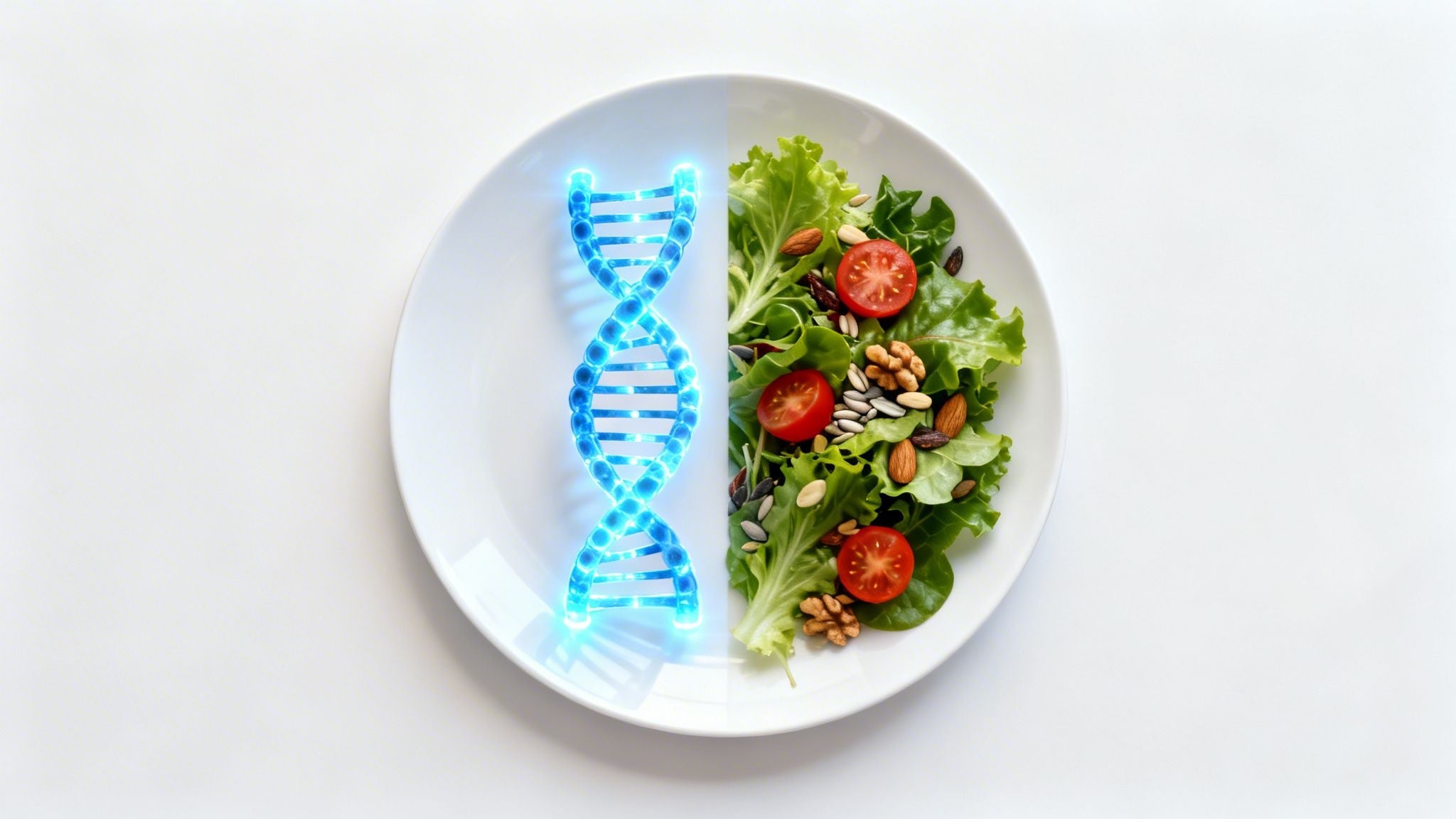
What a genetic test for nutrition really reveals about you
You’ve been through countless diets, but the hoped-for success never materializes? Or worse, does the yo-yo effect strike back mercilessly every time? The good news is that this is most likely not due to a lack of discipline. Rather, most standard diets ignore the most important factor in your success—your unique genetic blueprint.
Why standard diets are often doomed to fail
Have you ever wondered why your friend loses weight effortlessly with a low-carb diet, while hardly anything changes on the scale for you despite strict rules? The answer is hidden in your DNA. Every person has an individual genetic code that functions like a personal operating system for the body. This code determines exactly how your metabolism responds to different nutrients.
Think of it this way: You’re trying to install software for a Mac on a Windows PC. It simply won’t work, no matter how often you try. Universal nutrition plans work much the same way. What is perfect for one person may be completely unsuitable for another.

Your genetic fingerprint makes the difference
Your genes have a direct influence on how efficiently your body processes fats, carbohydrates, and proteins. Some people are natural “carbohydrate burners,” while others can use fat much more effectively as an energy source. A genetic test for nutrition deciphers precisely these individual predispositions.
It gives you crucial insight into your metabolism:
- Your metabolic type: Are you primarily a protein, carbohydrate, or mixed type?
- Your response to fats: Are you genetically predisposed to store fat more quickly?
- Your feeling of satiety: How quickly does your body signal that it has had enough?
This information is the key to finally breaking the vicious cycle of diet frustration and the yo-yo effect. Instead of blindly following a trend, you can precisely adapt your diet to your body’s needs.
To make the differences more tangible, let’s take a direct comparison.
General diet vs. personalized nutrition through genetic testing
The following table provides an at-a-glance overview of where the decisive advantages of genetically based nutrition lie.
| Aspect | Conventional diet | Personalized nutrition (based on genetic testing) |
|---|---|---|
| Basis | General recommendations, trends | Individual genetic predisposition |
| Success rate | Often low; the yo-yo effect is common | Higher likelihood of lasting success |
| Nutrient distribution | Standardized (e.g., low-carb, low-fat) | Tailored to your own metabolic type |
| Motivation | Drops quickly when results fail to appear | Increases through understanding and visible results |
| Implementation | Guessing and trial and error | Clear, scientifically grounded instructions |
The table makes it clear: Instead of feeling your way in the dark, a genetic test gives you a clear roadmap to follow.
A one-size-fits-all diet is like navigating with someone else’s map. A genetic test for nutrition gives you your own personal map, guiding you directly to your destination.
When you adapt your diet to your genetic predisposition, you work with your body, not against it. This is where personalized nutrition comes in—an approach that puts your unique biology at the center. Learn in our related article how personalized nutrition can change your life.
A genetic test lays the foundation for a health strategy that truly suits you and delivers lasting results.
How a Genetic Test Deciphers Your Metabolism
Imagine having a kind of user manual for your body. A handbook that finally tells you why you react to certain foods, how to manage your weight most effectively, and where your true energy reserves lie dormant. That is exactly what a genetic test for nutrition provides. But how exactly does it work—and how do you go from a simple sample to a complete nutrition plan?
The entire process is remarkably straightforward and starts right at home. You need neither a doctor’s appointment nor have to worry about needles. All that is required is a simple, painless saliva sample. Using a cotton swab, like the one included in the mybody® test kit, you briefly swab the inside of your cheek. That’s it.
From Sample to Laboratory Analysis
As soon as your sample arrives at the lab, the real detective work begins. Experts use state-of-the-art methods to extract your DNA from the cells in the saliva sample. They then take a close look at specific areas of your genetic makeup: the so-called genetic markers.
These markers are like small switches in your genetic blueprint that control crucial metabolic processes. The important thing is that this is not about diagnosing diseases. It is about understanding your individual predispositions.
A genetic test for nutrition does not read your future. Instead, it gives you the user manual for your body, so you can work optimally with your genetic strengths rather than against them.
By analyzing these specific markers, it is possible to determine quite precisely how your body responds to certain nutrients.
Which genes reveal information about your diet?
A genetic test does not examine random genes, but only those whose influence on metabolism is well established scientifically. Some of the most important examples are:
- FTO gene: This gene is often called the “weight-gain gene.” Certain variants can affect how quickly you feel full and whether you have a tendency toward obesity.
- APOA5 gene: It plays a key role in fat metabolism. It regulates how your body takes up and processes fats (triglycerides) from the blood. An unfavorable variant can slow fat loss.
- ADRB2 gene: This gene is involved in regulating energy expenditure and fat burning. It can indicate how effectively your body responds to exercise with fat loss.
These and several other genes come together to provide a clear picture. They show whether you are more of a protein, carbohydrate, or mixed type, how efficiently you burn fat, and which nutrients you need to stay truly energized throughout the day.
The following graphic clearly shows why this individualized approach is so much more sustainable than blanket diets.

You can see it immediately: While a one-size-fits-all diet often ends in frustration and a dead end, the genetic test shows you a clear, personal route to your goal.
The mybody® analysis turns this complex scientific data into a report that everyone can understand and put into practice immediately. So you don’t get cryptic lab values, but clear recommendations tailored to you. If you want to delve even deeper into the topic, you’ll find more fascinating details in our article about the mybody® Metabolism Test. With this, you finally have the right tool to optimize your diet on a solid foundation and truly achieve your goals.
The science behind personalized nutrition
The term “gene diet” may sound like science fiction, but it is based on solid science. To understand how a genetic test for nutrition really works, we need to examine the foundation on which everything is built: nutrigenetics.

This fascinating field of research explores a central question: How do our genes and our diet work together? It examines how individual nutrients—such as vitamins, fats, or proteins—interact directly with our DNA and thereby regulate our bodily functions.
Imagine your genes are the instruments in an orchestra and nutrients are the notes being played. When everything is in harmony, the melody sounds perfect. But if you play the wrong notes, the entire system falls out of rhythm. That is exactly where personalized nutrition comes in.
What nutrigenetics means for you
Nutrigenetics proves that there is no single, universally “healthy” diet for everyone. Countless studies show that tiny variations in our genes—known as polymorphisms—determine how our bodies respond to certain foods. A good example is the response to saturated fatty acids.
Some people can process these fats quite well without their blood lipid levels skyrocketing. Others, however, are genetically predisposed to gain weight more quickly or develop elevated cholesterol levels when eating a high-fat diet. In a sense, your body has its own built-in instruction manual.
A genetic test is not about finding a magic formula. It is about precisely adapting your diet to your unique biological predisposition—for results you can truly feel and maintain over the long term.
The growing importance of this approach is also reflected in current developments in Germany. While the number of adults with obesity is increasing, meat consumption is declining at the same time, as shown by the 2023 Nutrition Report. DNA tests such as those from mybody® address precisely this point: They analyze which genes are important for fat breakdown or individual vitamin requirements, providing valuable answers at a time of changing dietary habits. You can read the complete study on current nutrition trends here.
Scientifically grounded instead of based on blanket recommendations
A reputable genetic test, such as mybody®’s, has nothing to do with blanket diet promises. The analysis is based on scientifically validated genetic markers whose influence on metabolism is well established in research. Your results are therefore not simply interpreted, but derived clearly and transparently.
Science provides the crucial pieces of the puzzle:
- Genetic variations have been shown to influence how efficiently your body uses carbohydrates to produce energy.
- Your individual protein requirement may also be genetically determined—which explains why a high-protein diet does not work equally well for everyone.
- Your susceptibility to oxidative stress or an increased need for certain vitamins (such as B vitamins) can also be identified from your DNA.
A mybody® genetic test translates these complex scientific facts into a report that you can understand and put into practice immediately. You learn not only what is good for you, but also why. This knowledge is the key to taking control of your health and finally making decisions based on data rather than mere guesswork.
If you want to delve even deeper into the interplay between genes and nutrition, read our blog post about what nutrigenetics is and how it shapes our lives. Ultimately, the science behind the genetic test gives you a powerful tool: your personal compass on the path to greater well-being.
Your mybody® report as a practical guide
A genetic test for nutrition provides you with a wealth of valuable data about your body. But data alone does not change anything. It only becomes your personal key to greater well-being when it is translated into a clear, actionable plan for your everyday life.
That is exactly what your mybody® report provides: It is not a complicated laboratory document, but your very own personal guide. Let’s work through a specific example to see how abstract genetic results become a tailored nutrition and lifestyle plan that really works.
From Gene Analysis to Meal Plan
Picture Anna: 35 years old, employed, and a mother of two. She often feels tired and lacks energy, and for years she has struggled to lose the last pounds gained during pregnancy. Countless diets brought only short-term success and, above all, frustration in the end. Anna decides to take a mybody® genetic test to finally understand what her body really needs.
Her report reveals two key predispositions:
- Slower fat metabolism: Her genes, including a specific variant of the APOA5 gene, cause her body to burn dietary fats less efficiently and instead store them more easily in fat deposits.
- An increased need for B vitamins: Due to her genetic predisposition, she needs more B vitamins (such as B6, B12, and folic acid) to keep her energy metabolism functioning optimally. In her case, a deficiency becomes noticeable more quickly through fatigue and exhaustion.
These two insights are a turning point for Anna. Instead of continuing to rely blindly on low-carb or other generalized diet trends, she now has concrete, scientifically grounded guidance at her disposal.
The mybody® report is like a translator that turns the language of your genes into simple, everyday habits. You get not only the “what,” but above all the “why” behind each recommendation.
Anna’s personalized nutrition plan
Based on her genetic analysis, an entirely new approach is being developed for Anna. Her nutrition plan no longer relies on radical prohibitions, but on intelligently adjusting her macro- and micronutrients.
1. Adjusted fat intake: Instead of avoiding fats across the board, Anna learns to consciously choose the right fats. Her plan recommends a moderate intake of high-quality unsaturated fatty acids, which are essential for hormone production and cell health.
- Beneficial foods: Avocados, nuts, seeds, olive oil, and fatty fish such as salmon now appear on the menu more often.
- Foods to reduce: Hidden saturated fats in processed products, processed meats, and full-fat cheese are deliberately reduced.
2. Optimized carbohydrate and protein sources: Since her body metabolizes carbohydrates relatively well, she does not need to avoid them strictly. Instead, the focus is on complex carbohydrates that keep blood sugar levels stable and keep her full for a long time.
- Recommendation: Whole-grain products, oatmeal, quinoa, and legumes form the basis of her meals.
- Protein: Lean meat, fish, and plant-based proteins help maintain muscle and promote a feeling of fullness.
3. Targeted intake of B vitamins: To noticeably increase her energy levels, Anna specifically incorporates foods rich in B vitamins.
- Food boost: Green leafy vegetables such as spinach and kale, lentils, eggs, and whole-grain products become regular parts of her diet.
In addition to nutrition, Anna also receives recommendations for her lifestyle. Since her body responds particularly well to fat burning during endurance exercise, she now incorporates a 30-minute brisk walking or cycling session three times a week—a form of exercise she enjoys and that fits perfectly into her daily routine.
If you too would finally like to know what your personal nutrition plan could look like, the mybody® DNA Test for Nutrition is the first step. Anna’s example impressively shows that it’s not about deprivation, but about making the right decisions for your unique body.
Who can really benefit from a genetic test for nutrition?
A genetic test for nutrition is a powerful tool, no question. But is it also right for you? The answer depends entirely on your personal goals. Ultimately, such a test is worth considering for anyone who wants to put their health on a scientific foundation and finally make informed decisions instead of continuing to grope in the dark.
However, there are certain groups that benefit particularly from the deep insights into their genetic predisposition. Do you recognize yourself in any of the following situations? Then a DNA test could be exactly the decisive next step for you.
If you want to lose weight sustainably
Do you also feel trapped in the endless cycle of diets and the dreaded yo-yo effect? Do you feel like you’ve already tried everything, but nothing seems to work in the long run? A genetic test can be the decisive turning point. It shows you why certain diets were bound to fail for you by decoding how your body actually metabolizes fats, carbohydrates, and proteins.
With this knowledge, you stop working against your body. Instead, you develop a strategy that is perfectly suited to your unique metabolism.
A genetic test is not a miracle cure that makes the pounds melt away overnight. Think of it instead as your personal, data-driven guide. It shows you how to adjust your diet so that you not only reach your goals but can also maintain them in the long term.
Especially today, as awareness of healthy nutrition continues to grow, this is extremely relevant. The market for consciously selected foods is booming, but most people lack the link to their individual needs. A DNA test closes precisely this gap. If you would like to learn more about the costs and developments in the field of genetic engineering, you will see why personalized approaches are becoming increasingly important.
If you want to maximize your athletic performance
Do you love fitness and want to get the absolute maximum from your training? Your genes can tell you how to optimally tailor your nutrition to your athletic goals. A test can provide insight into your body's condition:
- Your individual protein needs: How much protein do you really need to optimally support muscle growth and recovery?
- Your response to endurance vs. strength training: Is your body more inclined to burn fat during long cardio sessions or strength training?
- Your need for specific micronutrients: Are there genetic predispositions indicating an increased need for certain vitamins or minerals that are essential for your energy production?
With this specific information, you can finally fine-tune your nutrition plan—for greater performance, faster recovery, and targeted improvements to your body composition.
If you want to invest in your health preventively
For health-conscious people who would rather take action today than react tomorrow, a genetic test is an incredibly valuable tool. It is not about predicting diseases. It is about identifying potential weaknesses in your metabolism at an early stage and taking proactive countermeasures.
Your analysis may reveal a predisposition to slower fat metabolism or less efficient processing of certain vitamins. With this knowledge, you can tailor your diet and lifestyle to support your body as effectively as possible and safeguard your long-term well-being.
A genetic test is therefore a key component of a holistic, forward-looking health strategy that intelligently combines exercise, lifestyle, and personal preferences.
Your easy start to personalized nutrition
Are you curious and wondering: How should I get started? Don’t worry—the path to your personalized nutrition strategy is easier than you think. With a genetic nutrition test from mybody®, you lay the foundation for finally working toward your health goals in a targeted and scientifically sound way. We’ve designed the entire process to be simple and completely safe for you.
It all starts conveniently at home. Simply order your test kit online, and we’ll send it to you promptly and free of charge. Forget complicated blood draws—a simple saliva sample, collected painlessly with the included cotton swab, is all you need. Then simply place the sample in the prepaid return envelope and send it to our certified laboratory.
Your trust is our most valuable asset
We understand completely: genetic data is extremely personal and sensitive. That’s precisely why protecting your privacy is our top priority. We focus on maximum transparency and uncompromising security standards because we want to earn your trust, not simply expect it.
- Pseudonymization: As soon as your sample arrives at the laboratory, it is pseudonymized. This means it is assigned a random code and analyzed completely separately from your personal data, such as your name or address. No one in the laboratory knows who the sample belongs to.
- GDPR compliance: We strictly adhere to the stringent European General Data Protection Regulation. Your data will never be sold to third parties or misused for other purposes under any circumstances.
- Secure destruction: Once the analysis is complete, your biological sample is professionally and completely destroyed. Nothing remains.
These strict measures guarantee that your sensitive information is in the best hands with us.
More than just a test—a partner by your side
Are you ready to stop guessing and take control of your health? With mybody®, you’re not just choosing a test, but a reliable partner for your journey. The satisfaction of more than 11,300 customers and our excellent reviews show that our approach works and is appreciated.
This is the moment to stop guessing and start knowing. Make decisions based on facts about your body—not general trends or assumptions.
With mybody®, you get a scientifically sound roadmap. It’s time to listen to the signals of your unique body. Start your journey toward a healthier life today—perfectly tailored to you and your genetic profile.
Still have questions about the nutrition genetic test? Here are the answers.
Are you considering taking a genetic test for your nutrition but still have a few questions on your mind? That’s completely normal. We’ve collected the most important questions and answer them here—briefly, clearly, and without technical jargon, so you know exactly what to expect.
How safe is my genetic data with mybody®?
Your data and privacy are in the best hands with us. As soon as your sample arrives at the laboratory, it is pseudonymized. This means that your name is replaced with a unique code. No one in the laboratory knows who the sample belongs to.
After analysis, your biological sample is professionally and completely destroyed. All your data is handled in accordance with strict European data protection regulations (GDPR) and never shared with third parties. You can rely on that.
Can the genetic test predict diseases?
A clear no. The mybody® genetic test is not a medical diagnostic procedure and does not look for disease risks. Instead, we examine how your metabolism works and how your body naturally processes nutrients.
The results are your personal guide to a healthier lifestyle. It’s about well-being and prevention, not diagnosing diseases.
So, your report does not provide diagnoses; instead, it shows you how to optimally support your body based on your genetic predisposition.
And what do I do once I have my results?
We won’t leave you on your own here. Your results report is specifically designed so that you can get started right away. You receive not just knowledge, but concrete, actionable recommendations for everyday life. These also include detailed nutrition plans and practical food lists tailored precisely to you.
If you ever have a question, our mybody® customer service team will be happy to help. That way, you have everything you need to sustainably improve your nutrition and achieve your goals at last.
Now you have a good overview of how a nutrition genetic test can change the rules for your well-being. Instead of continuing to guess, you make decisions based on your own DNA. Trust the expertise of mybody® and start your journey toward nutrition that truly suits you. Discover the possibilities now at https://mybody-x.com.



Share now:
Genetic testing: How you can live healthier with knowledge of your genes
Genetic Test: The User Manual for Your Body