

Constantly tired? Which vitamins are you really lacking and how can you find out?
Do you often feel tired even though you've had enough sleep? Then the answer might lie deeper than just your mattress or pillow. Very often, a deficiency in important vitamins or nutrients is the culprit. The most common suspects when your energy just won't return are vitamin D, vitamin B12, and iron . They all play a key role in your energy metabolism.
Why you're constantly tired despite getting enough sleep
Do you wake up in the morning feeling like you've been up all night? A surprisingly large number of people are familiar with this feeling. But the cause is rarely just a restless night.
Imagine your body as a finely tuned orchestra. For the music – your energy – to sound powerful and clear, all the musicians must play together perfectly. Vitamins and minerals are the crucial instrumentalists. If even one is missing, the whole melody falters and sounds off-key. The result? You feel sluggish and lethargic.
The problem is that blindly popping supplements is like groping in the dark. It's crucial to know exactly which "musician" is missing from your nutrient intake so you can take targeted action. The following graphic provides an initial indication of how widespread certain vitamin deficiencies actually are in the population.
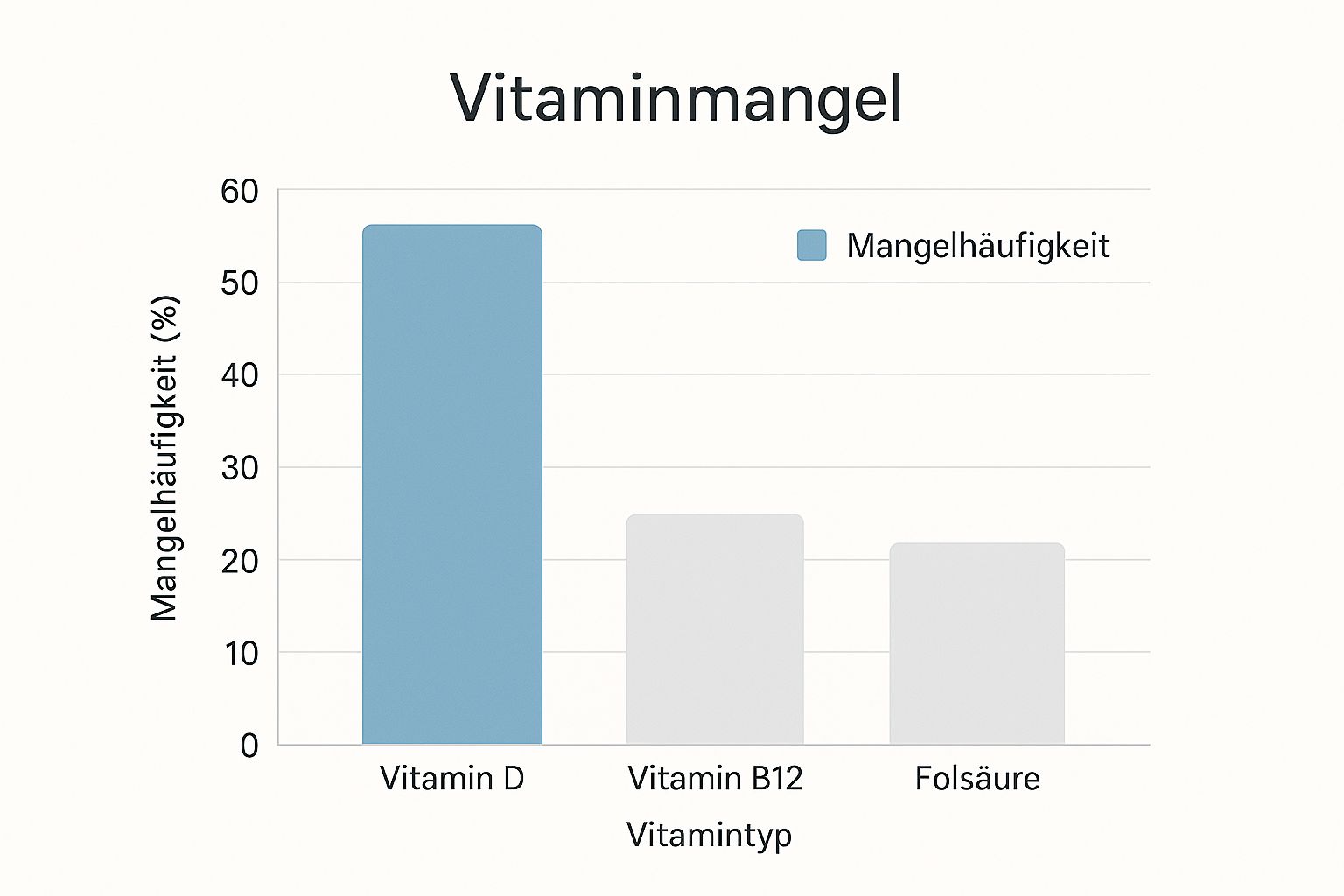
The data clearly shows that a vitamin D deficiency is particularly widespread and could be a major reason for your constant fatigue.
A nutrient deficiency often creeps up on you quietly and unnoticed. Symptoms like constant fatigue are usually the first loud warning signals from your body that it lacks important building blocks for energy production.
This article will help you better understand the connections and uncover the true causes of fatigue . We'll show you how a targeted blood test from mybody-x can reveal what your body is really lacking and how you can specifically regain your energy.
The main suspects: Vitamin B12 and Vitamin D
When it comes to this nagging, deep-seated exhaustion, two nutrients quickly come into focus. Let's take a closer look at vitamin B12 and vitamin D, because their role in your energy levels is absolutely crucial.

Vitamin B12: The invisible engine
Think of vitamin B12 as the silent engine of your body. It works in the background and is essential for healthy nerves and the formation of red blood cells – the tiny transporters that deliver oxygen and energy to where they are needed.
A deficiency often creeps in unnoticed over years. It's as if your body is slowly running out of fuel. Suddenly, you find it difficult to concentrate in meetings, or you can no longer remember small things. These can be the first subtle signs.
Vegans, vegetarians, and older people are particularly at risk. In fact, a shockingly high number of people in Germany suffer from fatigue directly related to this deficiency. Estimates suggest that up to 15% of the older population is affected. You can learn more about the background in our detailed article on vitamin B12 deficiency .
Vitamin D: The sunshine vitamin for your energy
And then there's vitamin D, the famous "sunshine vitamin." In our latitudes, a deficiency, especially during the dark months from October to March , is almost the rule, not the exception.
Vitamin D is so much more than just a mood booster. It's fundamental for your muscle strength, a functioning immune system, and the overall regulation of your energy levels.
A deficiency in this vitamin often leaves the body feeling heavy and sluggish. A lack of motivation on the weekend, despite having plans, or unexplained muscle weakness can be clear warning signs. Your immune system becomes more vulnerable, and you simply don't feel as resilient.
So if you notice that your batteries just aren't recharging anymore, these two vitamins could be the answer to the question: "Which vitamins are missing when you're constantly tired?" A simple nutrient test will give you certainty.
How iron deficiency sappes your energy
Do you get out of breath climbing stairs, often feel pale, and constantly have cold hands? These could be more than just bad days – they are often clear signs of an iron deficiency. Although iron isn't technically a vitamin, it plays a crucial role in your energy levels.
Imagine your blood vessels as a vast, busy highway. The red blood cells are the countless delivery vans on this road. Iron is the material these "transporters" are built from. Their precious cargo? Vital oxygen, which must be delivered to every single cell in your body.
Why your body gives out without iron
If your body lacks iron, it simply can't produce enough "delivery vehicles" (iron molecules). The result is a massive oxygen bottleneck in your system: your muscles, organs, and especially your brain are no longer optimally supplied. No wonder you constantly feel tired, unfocused, and lacking in energy.
Iron deficiency is indeed one of the most common causes of fatigue in Germany, and it affects far more than just a few people. Women and adolescents are particularly often affected. It is estimated that around 20–30% of young women of childbearing age suffer from hidden iron deficiency anemia, which manifests itself primarily through this nagging, persistent fatigue.
Some groups are naturally at higher risk of falling into a shortage:
- Women of childbearing age: Monthly menstruation leads to regular blood loss and therefore iron loss.
- Endurance athletes: They not only have an increased need for iron, but also lose iron through sweat.
- For people following a plant-based diet: Unfortunately, iron from plants is absorbed by the body much less efficiently than iron from animal sources.
Pay attention to your body's subtle signals. Typical symptoms like brittle nails, hair loss, cracked corners of the mouth, or noticeably pale skin should be taken seriously. These are often not harmless cosmetic flaws, but genuine cries for help.
So, if you suspect that an iron deficiency might be behind your persistent fatigue, it's important to get to the bottom of it. Symptoms alone can be misleading. Only a blood test from mybody-x can reliably show you whether your iron stores are truly depleted and how best to replenish them. In our guide, you'll learn what a good diet strategy is to replenish your iron stores when you have an iron deficiency .
Other hidden energy drains in the body
Sure, almost everyone knows the usual suspects like iron, vitamin D, and B12. But there are other silent energy drainers that slow you down in everyday life without you even realizing it. Often, it's precisely these lesser-known nutrients where a deficiency makes all the difference.

This is where magnesium and the large family of B vitamins come into play. Their role is often underestimated, yet they are absolutely essential for your energy production. So, if you're wondering, "Which vitamins am I missing when I'm constantly tired?", the crucial answers might lie here.
Magnesium: The anti-stress mineral
Think of magnesium as your personal "anti-stress mineral." It's not only key to relaxing your muscles and calming your nervous system, but it's also involved in over 300 enzymatic reactions in the body. Many of these are directly responsible for your energy metabolism.
A magnesium deficiency often manifests as distressing inner restlessness, bothersome muscle twitching, or nighttime leg cramps. The result? Poor, unrefreshing sleep. And those who don't regenerate properly at night drag themselves through the day feeling weak and listless.
Magnesium helps your body switch from "fight-or-flight" mode to "rest and digestion mode." Without it, you're subconsciously constantly on edge – and that severely depletes your energy reserves.
A magnesium deficiency is therefore often a vicious cycle: stress depletes magnesium, and the deficiency in turn makes you more susceptible to stress.
B vitamins: The teamwork wonder
The B vitamins are your body's ultimate power team. They work hand in hand like a well-coordinated team in a power plant to release the energy from your food and make it available to your cells.
What happens when a key player on this team suddenly drops out? Exactly, the entire production process grinds to a halt. It's no different when there's a shortage.
- Folic acid (vitamin B9): Essential for cell division and the formation of new red blood cells. A deficiency, similar to iron deficiency, can lead to a form of anemia – and thus to extreme fatigue.
- Vitamin B6: A key player in amino acid metabolism. It helps in the production of happiness hormones like serotonin and dopamine, which regulate your mood and motivation.
- Vitamin B1 (thiamine): Plays a key role in the conversion of carbohydrates into energy. A deficiency often manifests as fatigue and difficulty concentrating.
A deficiency in just one of these vitamins can disrupt the entire energy chain. Because they work so closely together, it's all the more important to monitor the status of the entire vitamin B family – which is easily done with a targeted test.
No more guesswork – a home nutrient test provides clarity
Guesses and random trial and error won't get you anywhere when you're constantly tired. If you really want to know what your body is lacking, you need facts, not vague assumptions. That's exactly where a nutrient test from mybody-x comes in, giving you back control over your health.

Instead of blindly swallowing expensive supplements that might not even solve the real problem, a test provides you with a precise snapshot. You'll find out exactly where a deficiency lies – be it in iron , vitamin B12 , vitamin D , or other important building blocks for your energy.
Your path to more energy is incredibly simple.
We deliberately designed the mybody-x nutrient tests so that you can conveniently and safely perform them from home. You don't need to be an expert to finally get clarity.
- Step 1: Sample collection: A small, almost painless prick in the fingertip is all it takes. It's quick and really straightforward.
- Step 2: Secure shipping: Simply send your sample in the enclosed return envelope to our certified specialist laboratory in Germany.
- Step 3: Detailed analysis: In the laboratory, experts examine your blood closely and analyze all relevant nutrient values.
- Step 4: Your personal results report: You will receive an easy-to-understand report that not only shows you your values but also explains what they mean for you and your energy.
A blood test is the crucial step from an uncertain suspicion to a sound basis. It is the foundation on which you can build targeted and truly effective measures for your health.
With this knowledge in hand, you can finally take targeted action. If you'd like to delve deeper into the subject, you'll find everything you need to know about the nutrient deficiency test and how it helps you identify your personal energy drainers in our comprehensive article. This way, you can make data-driven decisions – not mere guesswork.
From result to concrete action
You're holding your mybody-x results report in your hands – a pivotal moment! But what do all these numbers and values mean for your everyday life? That's precisely where we come in: This section is your personal roadmap, transforming lab results into concrete, actionable steps.
Your report is presented in such a way that you don't need a medical degree to understand it. Instead of medical jargon, you get clear explanations of what each value means for your energy level. This way, knowledge finally translates into a noticeable improvement.
- Iron deficiency? The vitamin C trick: Always combine iron-rich foods like lentils or oatmeal with a source of vitamin C. A glass of orange juice with your muesli or a few strips of bell pepper in your lentil salad – this will multiply your body's iron absorption.
- Not getting enough vitamin D? Add more to your diet: consciously include more fatty fish like salmon or mackerel in your meals. But be careful: especially during the darker months, diet alone is often not enough to meet your needs.
- Vitamin B12 deficiency? Whether from animal sources or targeted supplements: The most reliable sources are usually animal products. If you follow a plant-based diet, fortified foods or targeted supplements are the right approach.
Vitamin D, the "sunshine vitamin," is a topic in itself. Did you know that around 60% of the German population isn't getting enough? This often leads to muscle weakness and that debilitating, chronic fatigue. Learn more about the typical symptoms of a vitamin deficiency and what you can do about it.
Don't see your results report as a judgment, but as your personal compass. It shows you the most direct path to more energy and helps you to sustainably replenish your depleted reserves.
With these tailored tips, you can specifically adjust your diet and lifestyle. This way, you not only combat the symptoms, but finally tackle the root cause of your fatigue.
Your questions, our answers: Fatigue & nutrient deficiency
You probably still have some questions about fatigue and vitamin deficiencies. We've compiled the most frequently asked questions here and provide clear, easy-to-understand answers so you know exactly where you stand.
How quickly will I notice that it's getting better?
That's a question we hear often – and the answer is: It depends. Every body is different, and every nutrient has its own pace.
For example, many people with an iron deficiency notice a return of energy and a reduction in fatigue after just a few weeks. Vitamin B12 usually requires a bit more patience, as the body replenishes its stores slowly. The most important thing is to persevere and consistently follow the recommendations.
Wouldn't a simple multivitamin supplement be enough?
Imagine a single flower in your garden is thirsty, but you water the entire flowerbed. Multivitamin supplements are similar. They are often nonspecific and may contain nutrients your body doesn't need, while the actual deficiency remains undetected.
A targeted test from mybody-x shows you in black and white exactly where you're lacking. This allows you to replenish precisely and according to your needs – it's not only more effective and safer, but also saves you money in the long run.
And what about the tiredness right after eating?
We're all familiar with the famous "food coma." It's usually quite normal and simply related to digestion or minor fluctuations in blood sugar. It's a temporary dip in energy that quickly disappears.
If, however, you experience fatigue throughout the day and occur completely independently of meals, then there's probably more to it. That's the moment when it's worth taking a closer look and getting to the bottom of the true cause with a test.
Are you ready to stop guessing and finally find out what's causing your fatigue? At mybody-x, you'll find the perfect at-home nutrient test to precisely analyze your levels and regain your energy. Discover your path to greater well-being now at mybody-x.com .



Share:
Recognizing and sustainably correcting vitamin B12 deficiency
Magnesium deficiency symptoms: When your body sends you signals