

What affects metabolism? A comprehensive understanding
Metabolism ensures that every individual body cell is supplied with energy and that waste products are disposed of. Sounds ordinary, right? Yet what surprises many people is that every cell in our body is involved in these processes thousands of times a day. This means that even tiny changes in diet, exercise, or the environment can have huge effects on our health.
Table of contents
- What is metabolism, and what functions does it have?
- Why is understanding metabolism important for health?
- How do genetic factors influence metabolism?
- The role of nutrition and lifestyle in metabolism
- Environmental factors and their effects on metabolism
Quick summary
| Takeaway | Explanation |
|---|---|
| Metabolism has two processes | Metabolism consists of anabolism and catabolism, which produce energy and build up or break down body tissue. |
| A healthy metabolism is essential | A balanced metabolism can help prevent obesity, diabetes, and other diseases and improve performance. |
| Nutrition affects metabolism | The quality of our food intake determines how efficiently the body uses energy and converts nutrients. |
| Genetics shapes metabolic efficiency | Genetic factors and epigenetic influences determine how effectively our body processes nutrients and regulates metabolic processes. |
| Environmental factors disrupt metabolism | Chemical substances and climatic conditions can negatively affect our metabolic functions and endanger our health. |
What is metabolism, and what functions does it have?
Metabolism is a complex biological process that is fundamental to the survival and functioning of every living organism. It encompasses all the chemical reactions that take place in our body’s cells and is essential for converting food into energy, as well as building up and breaking down bodily substances.
For a clearer overview, this table compares the two main processes of metabolism: anabolism and catabolism.
| Process | Description | Main function | Everyday examples |
|---|---|---|---|
| Anabolism | Anabolic metabolism – Molecules are synthesized and body structures are renewed | Formation of tissue and reserves | Muscle growth after training |
| Catabolism | Catabolic metabolism – Complex molecules are broken down and energy is released | Energy production, breakdown | Fat burning during exercise |
The basics of metabolism
At its core, metabolism involves two essential processes: anabolism and catabolism. Anabolism deals with the synthesis of molecules and the formation of body tissue, while catabolism breaks molecules down into smaller units and releases energy.
According to the Robert Koch Institute, metabolism is responsible for:
- The energy supply for all body cells
- The formation and renewal of cell structures
- The disposal of metabolic waste products
Core functions of metabolism
Metabolism controls numerous vital processes. It regulates how quickly nutrients are converted and processed, influences our body temperature, and controls growth and regeneration processes. Read more about natural ways to support your metabolism.
The complexity of metabolism is evident in the fact that it not only produces energy but also regulates hormones, controls immune functions, and coordinates detoxification processes.
Every cell in our body participates in these continuous conversion processes, underscoring the importance of a balanced and efficient metabolism.
Why is understanding metabolism important for health?
Understanding metabolism is crucial for comprehensive preventive healthcare and personal performance. A functioning metabolism affects not only our physical condition but also has a major impact on mental health and well-being.
Health effects of metabolism
A balanced metabolism is fundamental to preventing numerous diseases. Metabolic disorders can lead to health challenges such as obesity, diabetes, cardiovascular disease, and hormonal fluctuations. Regulating metabolism helps minimize these risks.
Regular physical activity can prevent many diseases while also boosting performance. Science shows that people with an efficient metabolism:
- Have better energy distribution throughout the body
- Process nutrients faster
- Have a more stable immune system
- Have lower levels of inflammation
Individual metabolic optimization
Every person has an individual metabolism influenced by various factors such as genetics, diet, exercise, and stress levels.
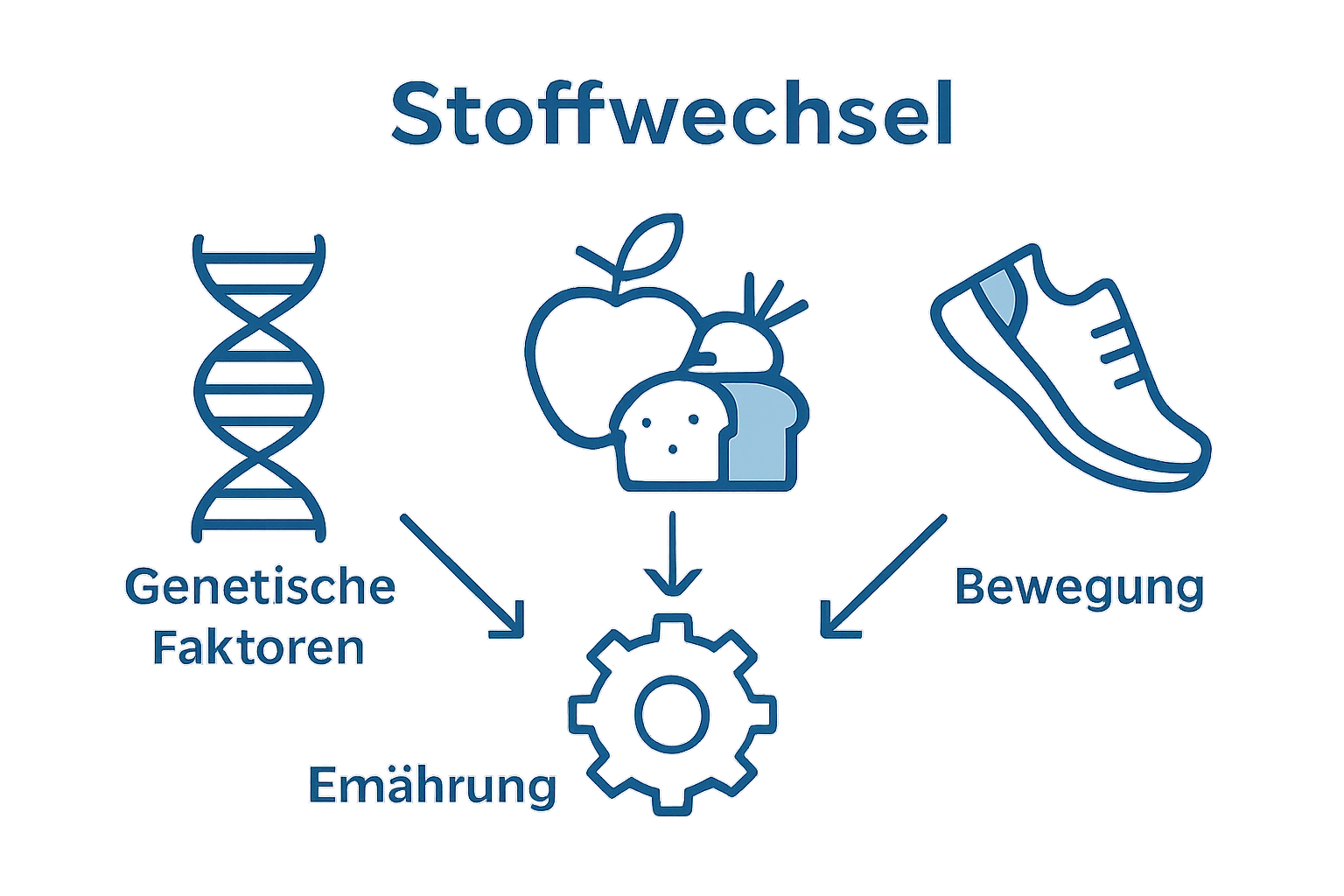 Understanding your own metabolic processes enables targeted interventions to improve health.
This table summarizes key factors that influence human metabolism and their respective effects on the body.
| Factor | Impact on metabolism | Potential effects on health |
|---|---|---|
| Genetics | Determines enzyme composition, basal metabolic rate, efficiency of nutrient utilization | Individual metabolic rate, risk factors |
| Nutrition | The quality and quantity of nutrients regulate energy production and metabolism | Blood sugar fluctuations, fat storage |
| Exercise | Increases energy expenditure and improves insulin sensitivity | Lower risk of being overweight, more energy |
| Environmental factors | Chemicals and climate factors can disrupt metabolic processes | Hormonal disorders, detoxification problems |
| Stress & sleep | Hormonal balance and regeneration are key influencing factors | Slower metabolism, increased body fat |
Understanding how your body metabolizes nutrients helps develop personalized nutrition and fitness plans. A balanced diet and regular exercise are key elements of a functioning metabolism and make a significant contribution to quality of life and longevity.
How do genetic factors influence metabolism?
Genetic factors play a crucial role in regulating and determining how our metabolism functions. They not only determine our basic metabolic predisposition but also influence how efficiently our body processes nutrients, converts energy, and regulates metabolic processes.
Genetic variations and metabolic efficiency
Our genes are responsible for producing enzymes, hormones, and proteins that directly influence metabolism. Genetic polymorphisms can significantly alter the activity of these key metabolic components. Our DNA-based metabolic test can reveal these individual differences.
According to scientific studies, genetic variants such as FTO and MC4R directly influence:
- Individual metabolic rate
- The risk of being overweight
- Insulin sensitivity
- Fat burning and energy storage
Epigenetics and metabolic modulation
In addition to direct genetic influences, epigenetics plays a crucial role. It describes how environmental factors and lifestyle influence gene expression without altering the underlying DNA sequence. Nutrition, exercise, stress, and environmental influences can activate or deactivate genetic metabolic mechanisms.
This means that although our genes provide a foundation, our lifestyle has a significant influence on how these genes actually function. Personalized nutrition and targeted exercise can optimize genetic metabolic potential.
The role of nutrition and lifestyle in metabolism
Nutrition and lifestyle are fundamental factors that directly and profoundly shape our metabolism. They determine not only our energy intake and utilization but also have far-reaching effects on our overall metabolic health.
Nutrition as the key to metabolism
Nutrients are the building blocks of metabolic processes. The quality and composition of our diet influence how efficiently our body produces energy, burns fat, and builds muscle mass. Discover tips for optimal metabolism.
According to nutrition experts, different foods have different effects on metabolism:
- Protein-rich foods increase thermogenesis
- Complex carbohydrates stabilize blood sugar levels
- Healthy fats support hormone production
- Fiber-rich foods support digestion
Lifestyle and metabolic balance
Physical activity, sleep, and stress management are just as crucial for a functioning metabolism as nutrition. Regular physical activity increases the metabolic rate and improves insulin sensitivity. Sufficient sleep and stress reduction help stabilize hormonal balance.
N 0e4hrient requirements vary depending on individual factors such as age, sex, and activity level. A personalized approach that takes these aspects into account can significantly optimize metabolic efficiency.

Environmental factors and their effects on metabolism
Environmental influences play an underestimated but crucial role in regulating our metabolism. Chemicals, radiation, air pollution, and other environmental stimuli can influence metabolic processes directly and indirectly.
Chemical exposure and metabolic disorders
Chemicals in our environment can fundamentally alter metabolism. Microplastics, pesticides, and industrial pollutants can disrupt hormone levels, block enzyme systems, and impair energy production. Our health experts explain the connections.
Environmental factors that influence metabolism include:
- Heavy metals in food
- Microplastic particles in bodies of water
- Industrial chemicals in packaging
- Air pollution and particulate matter
Climatic influences on metabolic processes
Temperature, humidity, and seasonal changes have direct effects on our metabolism. According to scientific studies, nanoplastic particles can negatively affect metabolic processes.
Extreme environmental conditions force our bodies to adapt their metabolic strategies. Heat accelerates metabolism, while cold slows it down. These adaptation mechanisms protect our bodily functions and maintain energy balance.
Discover Your Metabolism – and Unlock Your Full Potential
Many people wonder: Why does my metabolism work differently from other people's? The causes often lie deeper than they initially seem. Genetics, diet, or hormonal influences can determine an individual's metabolic rate. In everyday life, you may be uncertain when choosing suitable foods, or you may feel that despite your efforts, you are experiencing little energy or progress. Our article shows you how varied the influences on your metabolism are and how important personalized solutions are. Find out with a DNA metabolism test what really influences your metabolism and how you can take targeted action.
Test at home now and receive scientifically backed recommendations tailored perfectly to your personal needs. Take the opportunity to enhance your well-being and discover how you can sustainably optimize your metabolism with mybody®x. If hormonal fluctuations are relevant to you, also learn more about our at-home hormone tests. Choose your next step now and shape your health journey in a personalized and informed way.
Frequently Asked Questions
What are the main factors that influence metabolism?
Metabolism is influenced by various factors, including genetic components, diet, physical activity, stress, and environmental factors.
How does diet affect metabolism?
Diet plays a crucial role in metabolism, as the type and quality of nutrients determine how efficiently the body produces energy, burns fat, and builds muscle mass.
What role do genetic factors play in metabolism?
Genetic factors determine how efficiently the body processes nutrients and regulates metabolic processes. Genetic variations can influence metabolic rate, insulin sensitivity, and fat burning.
How can I naturally boost my metabolism?
A balanced diet, regular physical activity, sufficient sleep, and stress management help optimize metabolism and improve overall metabolic health.



Share now:
Sport & Gene – Why Your Training Plan Isn’t Working and How DNA Reveals Your Potential
Epigenetics Definition: How You Control Your Genes Yourself