
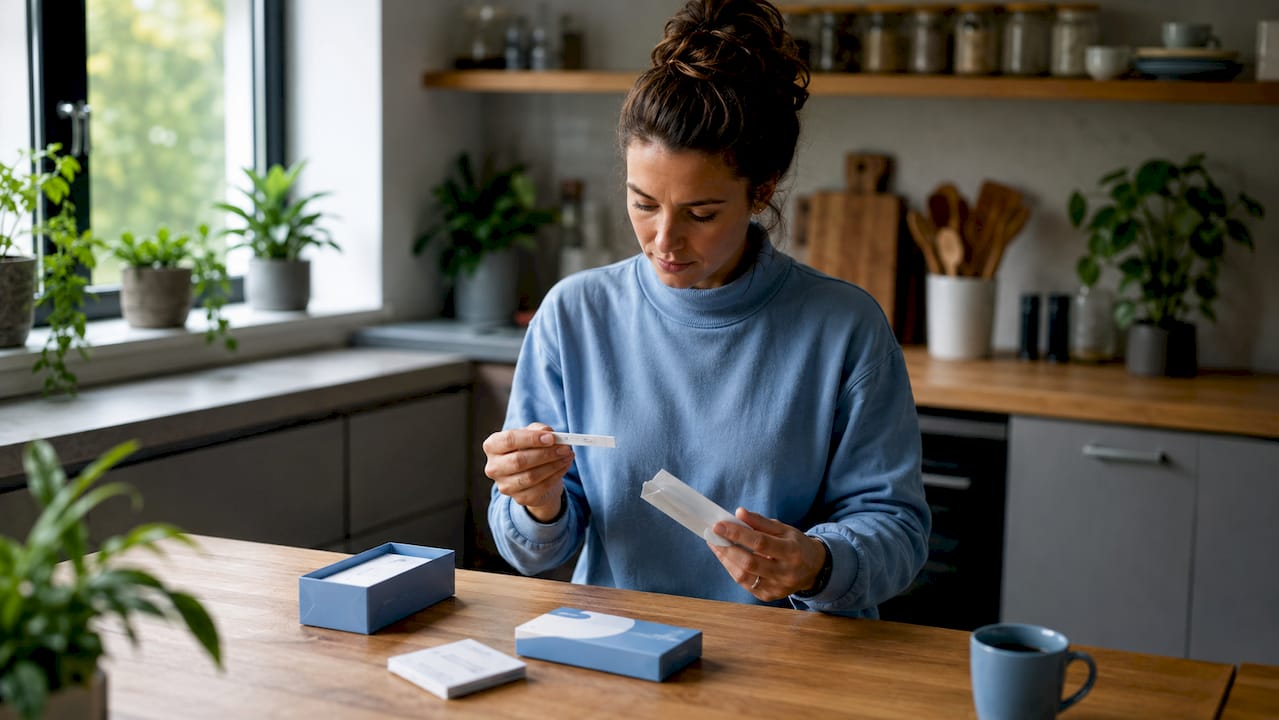
The purpose of self-diagnosis: Understanding your health proactively
Self-diagnosis is the independent collection and assessment of your own health status using home tests, online self-tests, and digital applications. The term covers everything from simple rapid tests for blood and urine to complex biomarker analyses that you can carry out conveniently at home. The purpose of self-diagnosis is not to replace a visit to the doctor, but to give you an initial, structured overview of your body. Tools such as microbiome analyses, hormone tests, and mental health questionnaires make this possible. The final diagnosis and every treatment decision always remain the responsibility of a medical professional.
How does self-diagnosis work technically and methodologically?
Self-diagnostic methods can be divided into two main categories: rapid tests that you evaluate immediately at home, and laboratory tests in which you send in a sample for analysis by a certified laboratory. Both approaches have their strengths, but they differ significantly in accuracy and reliability.
Rapid tests work using test strips or cassettes that make biochemical reactions visible. A blood glucose rapid test, for example, measures glucose in capillary blood within seconds. Laboratory tests by sample submission, on the other hand, analyze saliva, blood, or stool under controlled conditions. Self-tests are designed as screening tools and, when evaluated by a professional laboratory, often achieve accuracy comparable to clinical tests. This means the method is reliable when you use it correctly.
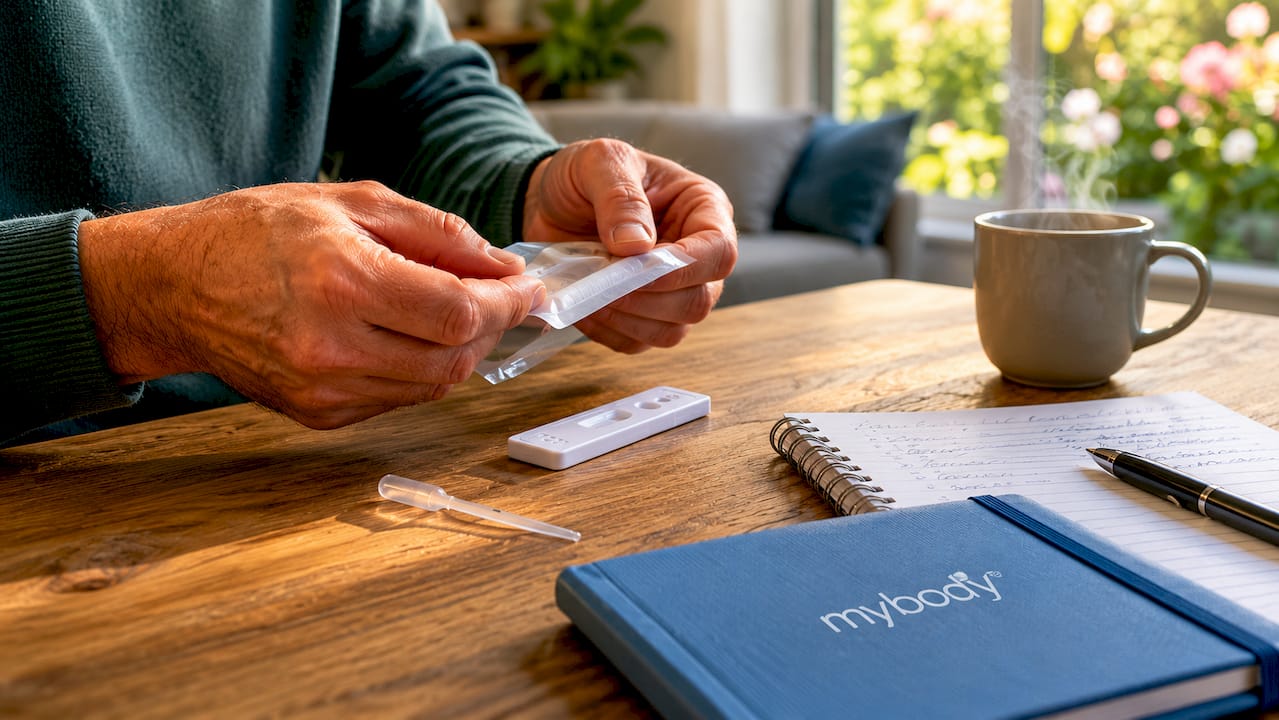
A crucial quality feature is the CE-IVD marking (in vitro diagnostic medical device). It indicates that a test meets European safety and performance standards. If you expect reliable results, only buy tests with this marking.
The most common sources of error in home tests are:
- Sample quality: Incorrect sample collection significantly reduces the reliability of the results. A poorly performed finger prick yields too little blood or blood that is contaminated.
- Timing of sample collection: Short-term influences such as stress or a high-fat meal can significantly alter biomarker levels.
- Operating errors: Misinterpreted instructions lead to incorrect results, even with high-quality tests.
- Contextual conditions: Lack of sleep, medications, and physical activity affect many measurements.
Digital tools noticeably reduce these sources of error. App-based instructions and automated analyses improve result quality by guiding you through the process step by step and automatically reading test strips from photos. Wearables such as smartwatches complement this picture through continuous measurement of heart rate, oxygen saturation, and sleep quality.
Pro tip: Before each home test, note how much you slept the previous night, when you last ate, and your current stress level. This contextual information makes your results significantly more meaningful and helps your doctor interpret them.
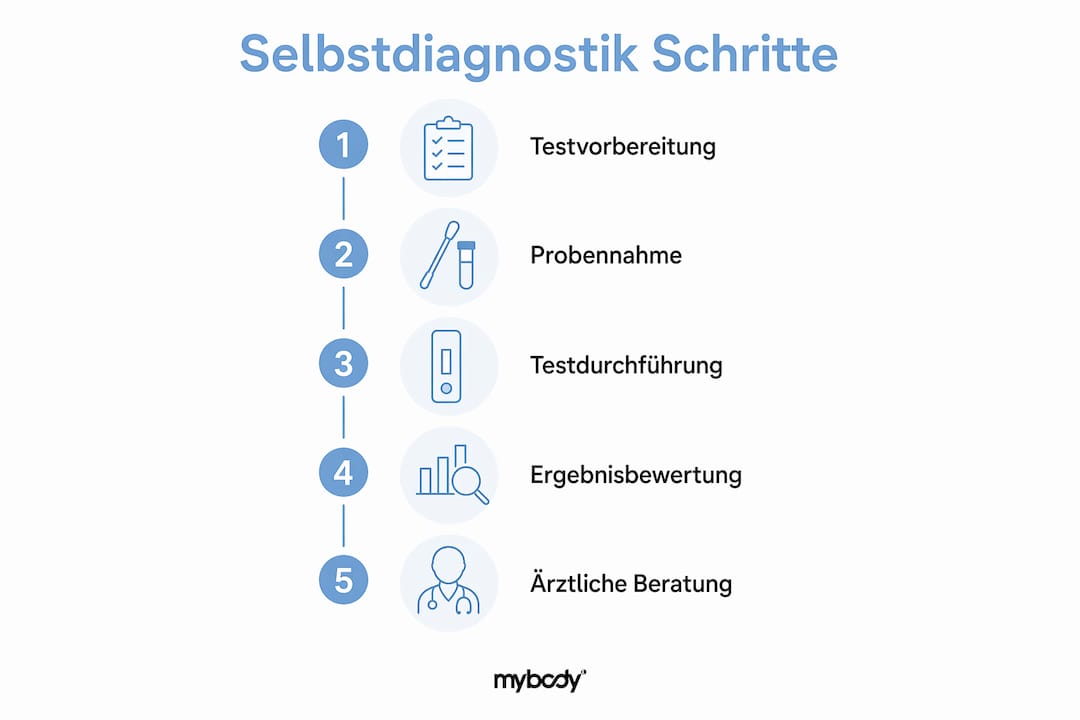
What role does self-diagnosis play in prevention?
Proactive health monitoring is the primary purpose of self-diagnosis. Anyone who regularly tracks vital parameters such as heart rate, blood pressure, or blood sugar can detect changes earlier than someone who only measures them at the doctor’s office. Proactive self-diagnosis includes features such as continuous vital parameter monitoring, biomarker tracking, and structured symptom recording. This is not a luxury but a concrete strategy for early detection.
Typical areas of application show how broad the benefits are:
- At-home allergy tests: Specific IgE antibodies in the blood can indicate food intolerances or pollen allergies before symptoms become chronic.
- Microbiome analyses: A stool sample reveals the composition of your gut flora and highlights imbalances that may explain digestive problems or immune reactions.
- Mental health screenings: Standardized questionnaires such as the PHQ-9 (Patient Health Questionnaire) systematically assess depressive symptoms and help you prepare specifically for a conversation with your doctor.
- Nutrient and mineral checks: Vitamin D deficiency or iron deficiency can be detected early through a blood test, long before fatigue or concentration problems occur.
Important: Online self-tests enable anonymous, accessible screening and help identify warning signs early. They provide a basis for discussion with healthcare professionals, but are not a substitute for a clinical examination. If you have acute symptoms, severe pain, or sudden changes, see a doctor immediately.
Documenting symptom patterns over several weeks is an underestimated advantage. If you can show your doctor that your blood pressure is elevated every Monday morning, this provides valuable diagnostic clues that a single measurement in the practice could never capture.
What are the limitations and risks of self-diagnosis?
Self-diagnosis has clear limitations that you need to understand. The most important statistical relationship is that the prevalence of a disease significantly affects a test's positive predictive value. For rare diseases, the rate of false-positive results rises sharply. This means that a positive test result for a rare disease is highly likely to be wrong, even if the test is technically sound.
The key risks at a glance:
- False reassurance: A negative result does not rule out an illness. Anyone who trusts a negative test despite having symptoms and does not see a doctor risks delayed treatment.
- False concerns: A false-positive result causes unnecessary anxiety and can lead to needless follow-up examinations.
- Cyberchondria: Excessive symptom-searching on Google can fuel cyberchondria, a form of obsessive health anxiety in which those affected suspect increasingly serious diagnoses.
- Confirmation bias: Users tend to seek out information that confirms their suspicions while ignoring alternative explanations.
- Identity formation through self-diagnosis: Self-diagnosis via social media can help shape identity, but it can also lead to overdiagnosis. This effect is particularly well documented among young people on platforms like TikTok.
Another rarely discussed problem is self-treatment based on home test results. Anyone who takes high doses of dietary supplements or stops taking medication without consulting a doctor can cause serious harm. Self-diagnosis is an information tool, not a treatment plan.
Pro tip: If a test result worries you, wait 24 hours before searching online for explanations. Instead, write down your questions and discuss them directly with a doctor. This protects you from confirmation bias.
How does self-diagnosis improve doctor-patient communication?
The deliberate use of self-diagnosis strengthens health literacy because patients become more actively involved in their own health. Anyone who comes to the doctor’s office with structured data asks more targeted questions and receives more precise answers. This is not a theoretical advantage, but a measurable difference in the course of the conversation.
The following table shows how self-diagnosis specifically improves the quality of doctor-patient consultations:
| Situation without self-diagnosis | Situation with self-diagnosis |
|---|---|
| “I’ve been feeling tired for weeks.” | “My ferritin level was 12 ng/ml in the home test, I sleep 7 hours, but I feel exhausted.” |
| Doctor has to reconstruct symptoms from memory | Doctor receives progress data over several weeks |
| Untargeted basic diagnostics are necessary | Targeted follow-up examinations are possible |
| Patient feels passive and uninformed | Patient is an active conversation partner |
| Diagnosis takes longer | Diagnosis can be narrowed down more quickly |
Digital patient portals and health apps such as Apple Health or Samsung Health make it possible to export measurements automatically and provide them to the doctor in a structured format. This saves time and reduces misunderstandings. A blood test at home with documented results is more valuable than a verbal account without supporting data.
Strengthening personal responsibility is another benefit. Anyone who regularly monitors their body develops a more refined sense of changes. In the long term, this learning process is at least as valuable as the individual test result. Self-diagnosis trains awareness and makes you a more informed patient.
Key insights
Self-diagnosis works best when you use it as a structured information tool that prepares for and supplements a doctor's visit but never replaces it.
| Point | Details |
|---|---|
| Sample quality is decisive | Incorrect sample collection makes even good tests unreliable; document the context. |
| Check for the CE-IVD marking | Only certified tests meet European safety standards for reliable results. |
| Prevalence affects the reliability of results | For rare diseases, false-positive results are common; medical evaluation remains essential. |
| Bring structured data to your doctor | Progress data and measurements improve the quality of consultations and speed up diagnosis. |
| Actively avoid cyberchondria | Reduce confirmation bias by asking targeted questions instead of searching the internet indiscriminately. |
mybody x: My assessment after years of using self-tests
Over the past few years, I have spoken with hundreds of customers who have used self-tests. The most common misunderstanding is that people either expect too much or too little. Some believe that a home test completely replaces a blood test at their family doctor. Others consider every self-test a gimmick with no real value.
Both attitudes are wrong. The truth is more precise: A properly conducted laboratory test using a mailed-in sample and analyzed by an ISO-certified laboratory provides clinically relevant data. What is missing is medical interpretation in the context of your complete medical history. That is the crucial difference, and you should never forget it.
What really surprised me was that customers who regularly perform self-tests come to medical consultations better prepared. They ask more precise questions. They do not blindly accept diagnoses but question them constructively. This is not a threat to doctors—it is an improvement for the entire system.
My honest advice: Use medical home tests as a tool for monitoring yourself, not as a judgment of your health. Document the context, repeat measurements when values are abnormal, and take your data to your doctor. Used this way, self-diagnosis can provide real value.
— mybody x
Your health in your own hands: mybody x makes getting started easy
You now know how self-diagnosis works and where its limits lie. The next step is choosing the right test for your question.
mybody x offers certified analyses of blood, saliva, and stool that you can conveniently perform at home and send to an ISO-certified laboratory. Whether it’s a microbiome analysis, DNA metabolism test, or nutrient check, each test provides a personalized report with specific recommendations. More than 11,300 customers trust mybody x, with an average rating of 4.77 stars. Get started now at mybody-x.com and gain a well-founded overview of your body.
FAQ
What Is the Purpose of Self-Diagnosis?
The purpose of self-diagnosis is to independently assess and monitor your own health. It serves as a guide and preparation for discussions with a doctor, but does not replace a clinical diagnosis.
How Accurate Are Home Tests Compared with Laboratory Tests?
Home tests with CE-IVD labeling and professional laboratory analysis often achieve accuracy comparable to clinical tests. Sample quality and correct execution are the decisive factors.
What Is Cyberchondria, and How Can I Avoid It?
Cyberchondria refers to compulsive health anxiety caused by excessive symptom-searching on Google. You can avoid it by discussing concerning test results directly with a doctor instead of searching the internet uncontrollably for explanations.
When Should I See a Doctor Despite a Negative Self-Test?
A negative test result does not rule out an illness. If you have persistent or severe symptoms, see a doctor regardless of the test result.
Which Self-Diagnosis Tools Are Suitable for Home Use?
Suitable tools include CE-IVD-certified rapid tests, laboratory tests conducted by sending in samples, standardized mental health questionnaires, and wearables for continuous monitoring of vital parameters. mybody x offers a selection of personalized analyses for various areas of health.



Share now:
How much meat per person: Your portion guide
Why Diets Fail Without Testing: The Real Reasons