
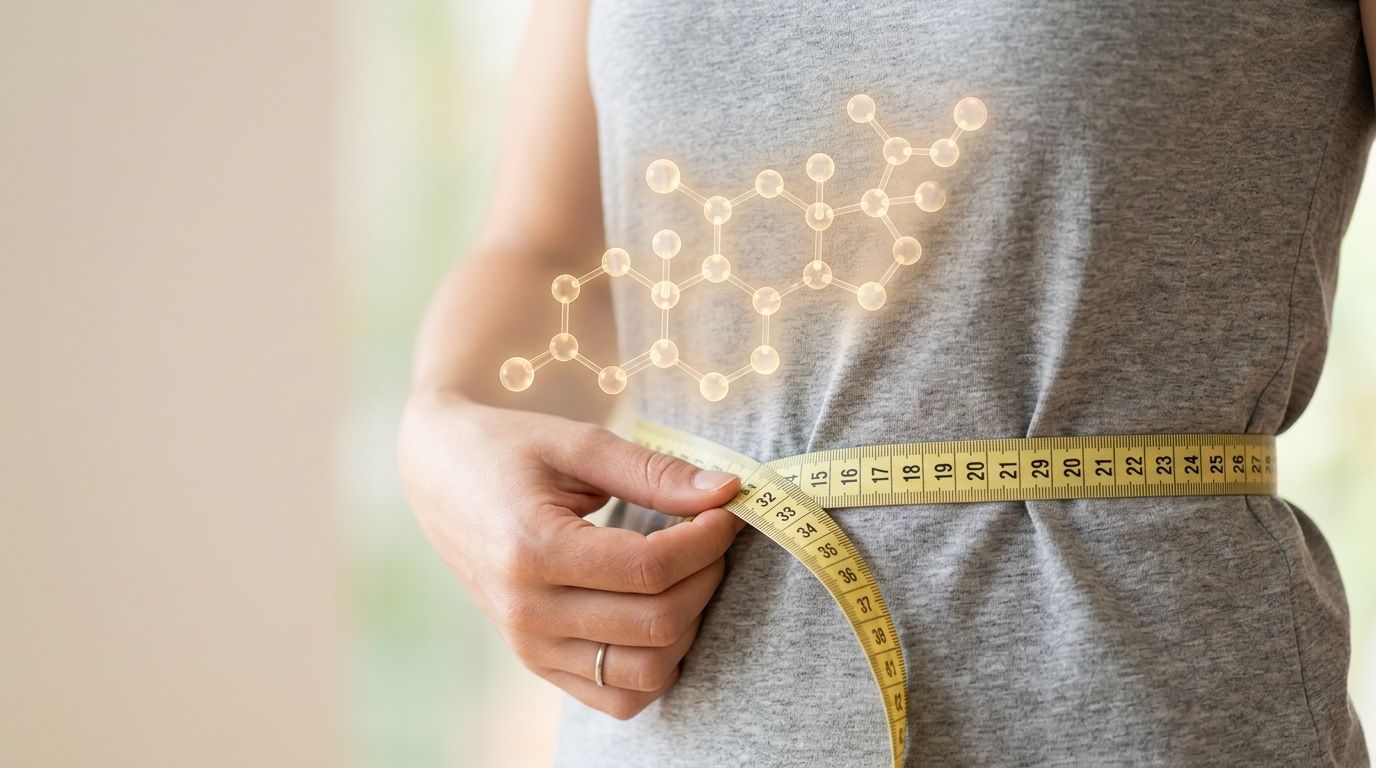
Stress-Related Weight Loss: Is Cortisol the Cause?
You are making an effort. You may be watching your calorie intake, exercising regularly, and yet the scale still shows something that does not match your efforts. Perhaps you are gaining weight around your stomach even though you are eating less. Or you lose weight during an intense period of stress, but feel empty, restless, and not truly healthier physically.
That is exactly what makes stress-related weight loss so confusing. Stress can work in both directions. It can drive weight up or push it down. Both have often less to do with willpower than many people think, and more to do with your hormonal balance.
If you have so far adjusted only your diet and exercise, you may be looking at the wrong level. Under prolonged strain, the body does not make neutral decisions. It prioritizes survival, not fat loss. If you want to understand why your body is reacting this way right now, it helps to look behind the scenes, for example at Why Am I Not Losing Weight Despite a Calorie Deficit?.
The Mystery on the Scale When Stress Takes Control
Many people expect a simple logic: eat less, burn more, and your weight goes down. In practice, this often does not work. Under stress, not only does your behavior change, but so does the way your body distributes, stores, and releases energy.
This explains why two people can react completely differently to stress. One person has hardly any appetite, is constantly tense, and loses weight. The other experiences intense cravings, sleeps poorly, and gains weight around the stomach. Both reactions can be stress-related.
Why the Scale Alone Does Not Tell You Enough
The number on the scale shows you only a result. It does not tell you what you have lost or gained. Fat, water, muscle mass, and digestive contents all look the same on the scale. But they make a major difference to your health.
Important thought: Not every instance of weight loss is progress. Not every instance of weight gain is simply the result of eating too much.
The crucial question, therefore, is: Which hormones are currently controlling your metabolism? The body reacts differently to acute stress than to chronic stress. This is where true understanding begins.
The Invisible Directors Behind the Scenes
When you are under pressure, certain hormones work in the background like a control panel. They influence appetite, blood sugar, fat burning, sleep, mood, and even where fat is preferentially stored. That is why stress often feels so physical, even though the strain originally began as mental or emotional.
Once you recognize this, you usually stop blaming yourself. You are not automatically undisciplined when your body reacts differently under stress than planned. Often, it is sending a biologically understandable signal.
Adrenaline vs. cortisol: the two faces of your stress hormones
Stress is not always the same. Your body knows a brief alarm response and a prolonged crisis response. These two states feel similar, but they have different effects on your weight.

Adrenaline is the fire alarm
Adrenaline is designed for the acute moment. You are startled, have to react quickly, and become instantly alert. The body switches into performance mode. Heart rate and attention increase, digestion is more strongly inhibited, and appetite recedes into the background.
That makes sense. In a real danger, you are not supposed to digest comfortably but to act. That is why some people report having less hunger or forgetting meals during short, hectic periods.
Cortisol is the smoldering fire
Cortisol works differently. It does not activate for just a few minutes; it accompanies prolonged strain. When work pressure, lack of sleep, worries, or ongoing emotional tension do not let up, this system keeps running. Your body then no longer thinks in terms of rapid reactions, but of protection and security.
The result can be a metabolism geared toward storage. The University of Ulm describes how chronic stress, through the increased release of the hormone cortisol, significantly shifts metabolism toward storage, blocking fat breakdown and promoting fat storage, especially around the abdomen and waist. This is explained in the University of Ulm article on stress hormones and metabolism.
Anyone who wants to understand more precisely what this hormone does in everyday life can find a suitable in-depth explanation at Cortisol in the Body During Stress.
A simple comparison
| Hormone | Typical situation | Short-term effect | Possible effect on weight |
|---|---|---|---|
| Adrenaline | acute pressure, sudden tension | Energy is mobilized quickly, and appetite may decrease | more likely temporary weight loss or a lack of hunger |
| Cortisol | persistent stress, lack of sleep, ongoing strain | Energy is conserved, and blood sugar tends to remain elevated | Fat loss becomes more difficult, and fat storage may increase |
Why modern stress is so insidious
Your body does not perfectly distinguish between a real emergency and an endless stream of deadlines, conflicts, sensory overload, and poor sleep. Biologically, it often activates the same program. The difference is that today it ends much less often after a short time.
When stress becomes chronic, your body is not trying to make you slimmer. It is trying to keep you functioning.
That’s exactly why your metabolism can feel like it’s working against you. You’re in a calorie deficit, but your body behaves as if it needs to protect its reserves. This isn’t a character flaw but an ancient protective program in a modern environment.
The cortisol effect: why your belly fat grows despite dieting
If your belly is what frustrates you most, you’re not alone. Especially with chronic stress, the strain often doesn’t show evenly across the body but tends to accumulate around the midsection.

Why the belly reacts in particular
An important factor is the hormonal sensitivity of the abdominal region. According to the article about the so-called cortisol belly, a chronically elevated cortisol level specifically leads to the accumulation of visceral fat in the abdominal area, even when a calorie deficit exists, because cortisol makes the fat cells in the abdominal region particularly sensitive to hormones and reserves stored energy for hard times. You can find the explanation at DoktorSchelle’s article on the connection between cortisol and abdominal fat.
For many people, this is an aha moment. It explains why your waist size doesn’t automatically reflect your calorie discipline. Under stress, the body sets different priorities.
Cravings, blood sugar, and the sabotaged diet plan
Cortisol rarely acts in isolation. Many people sleep worse under stress, reach for quick snacks more often, or eat on the go. On top of that, high pressure often increases the desire for sugar and fat. This creates a cycle: You’re tense, need energy, eat more impulsively, don’t really feel full afterward, and end up back in the same pattern.
For pet owners, this principle is easier to understand when you see that hormonal shifts can also have significant physical effects in animals. A good example is Help for dogs with Cushing’s syndrome at MyPet.ch, which explains how hormonal processes visibly alter metabolism.
Measure instead of guessing
If you’re not making further progress, especially around your belly, despite being in a calorie deficit, it’s worth taking an objective look at your biomarkers. In practice, cortisol, DHEA, and the cortisol-to-DHEA ratio play an important role. This ratio helps assess how strongly your body is caught in a stress-dominated metabolic state.
A hormone test doesn’t replace lifestyle changes. But it can show you whether you’re currently treating symptoms while the actual hormonal cause continues in the background. That is often the difference between blindly pushing through and taking targeted action.
Practical rule: If your belly stops shrinking despite your discipline, don’t just check your calories and training. Also check whether your stress system is permanently on high alert.
It may also be useful to personalize your nutritional approach. The NutriCare | INFINITY DNA test from mybody®x analyzes genetic nutrient metabolism, food intolerances, micronutrient requirements, and metabolic type. This can be helpful if, in addition to stress, you want to understand how your body responds to food individually. The article about losing belly fat is also a suitable starting point.
Muscle loss instead of fat loss when stress makes you lose weight
Not every instance of stress-related weight loss is a good sign. Many people are initially pleased when the number on the scale goes down. But under prolonged strain, the body often does not lose what you actually want to get rid of.
When the body breaks down its substance
Under severe stress, some people eat irregularly, have less appetite, or are so tense that hardly any recovery takes place. In this situation, the body may break down muscle mass because it provides readily available energy. The problem is that muscles help stabilize your metabolism. When they are lost, you often feel weaker and less resilient, and in the long term may even become more susceptible to regaining weight.
The weight loss may look positive on paper, but biologically it is more of a warning sign. You become lighter, but not necessarily healthier.
Women are particularly often affected
Chronic stress does not affect everyone equally. German prevalence research shows that women, at 13.9%, experience chronic stress significantly more often than men, at 8.2%, as described in the Loges article on stress and body weight.
This matters because it often indicates an underlying pattern: high mental strain, too little recovery, irregular eating, and insufficient protein intake. So if you lose weight during a stressful period, it is worth looking beyond the scale and paying attention to your strength, energy, and satiety.
How to recognize unhealthy weight loss
- Strength declines: Stairs, workouts, or everyday movements suddenly feel more difficult.
- Food becomes secondary: Meals are skipped—not intentionally, but because you feel overwhelmed.
- Your physical well-being changes: You may be lighter, but feel more distracted, tired, or unstable.
- Muscle mass fades from view: During periods of stress, your body especially needs a reliable supply of protein. The overview of protein requirements for building muscle is a useful resource.
Less weight does not automatically mean better health. What matters is whether you are losing fat or bodily substance.
Specific strategies for combating stress-related weight gain and increasing energy
When stress influences your metabolism, you do not need a perfect diet. You need adjustments that calm your nervous system and give your body a sense of security again.

Prioritise sleep, not just weight loss
Many people underestimate sleep because it does not feel active. But for hormonal balance, it is often the biggest lever. German studies show that extending sleep by 30–60 minutes per night measurably improves the hormonal baseline, as described in the Health Lexicon article on stress, cortisol and sleep quality.
This does not mean you have to change everything immediately. A more consistent sleep-wake rhythm, less screen time in the evening and a clearer evening routine can already help reduce the state of constant alarm.
Eat in a way that helps your body relax
Stress eating is not just a matter of discipline. Often, you eat too quickly, too late or while distracted. This further worsens your sense of fullness. According to Oviva, consciously eating slowly and without distractions, engaging in physical activity, and using specific abdominal or diaphragmatic breathing at 6–10 breaths per minute have been shown to normalise cortisol levels and directly counteract fat-cell-altering effects. More information is available from Oviva on losing weight despite stress.
These points are particularly helpful in everyday life:
- Put your phone away while eating: Without distractions, you notice when you are full sooner.
- Regular meals: A consistent routine can help curb cravings.
- Simple, complete meals: Protein, fibre and sufficient energy give the body more stability than constant snacking.
Micronutrients as support
When stress persists for a long time, it is also worth looking at your nutrient intake. B vitamins in particular play a role in the nervous system and energy metabolism. The Vitamin B Complex | Energize from mybody®x provides all 7 B vitamins in an optimal dosage for energy, the nervous system & metabolism. Particularly recommended for a confirmed B deficiency in a blood or DNA test, and ideal for vegans, athletes & people with chronic fatigue.
This is not a substitute for sleep or stress management. However, it can be a useful addition when a deficiency is known or your lifestyle suggests a higher level of strain.
Exercise without additional pressure
Many people respond to stress-related weight gain with even more intense training. That can work, but it does not have to. During an already stressful phase, excessive training can increase the pressure even further. Forms of exercise that build energy rather than simply demand it are often better.
A few good examples:
- Walks after meals: They calm you, structure your day, and help you break out of rumination.
- Moderate strength training: It protects muscle mass without unnecessarily overstimulating your system.
- Breathing exercises: Diaphragmatic breathing at a calm pace can even be done between meetings.
Small, repeatable steps almost always beat the perfect but unrealistic solution during stressful periods.
A simple daily routine
| Time | Mini-step | Why it helps |
|---|---|---|
| in the morning | get up at the same time | stabilizes your rhythm |
| at lunchtime | eat mindfully and without a screen | improves satiety and eating control |
| in the afternoon | take a short walk or do a breathing exercise | reduces inner tension |
| in the evening | reduce light and stimulation | supports recovery and sleep |
Your path to balance: when a hormone test is the right step
You are making an effort. You are eating more mindfully, planning your daily routine better, and trying to pull yourself together. Yet the scales are moving in the wrong direction. Or they are going down, but you feel weaker rather than healthier. This is exactly when it is worth changing your perspective: moving away from sheer willpower and toward measurable causes.

When measuring makes more sense than more guesswork
Stress-related weight changes often seem contradictory. One person gains weight around the abdomen despite watching their calorie intake. Another loses weight, but also muscle strength, sleep quality, and resilience. From the outside, the two cases look different. Inside the body, the same regulator may be involved: a stress system that has been stuck on high alert for too long.
A hormone test becomes worth considering when your experience and your efforts do not match. If you are doing many things right but your body is not responding, you often do not need another diet plan, but a clearer picture of your biological situation.
This step is especially helpful because vague symptoms suddenly become tangible. Cortisol shows how strongly your body reacts to stress. DHEA provides clues about how well your system can still counteract that stress and regenerate. Together, these markers reveal something that often feels diffuse in everyday life: Is your body stuck in chronic stress, exhaustion, or a phase in which regeneration can barely keep up?
A brief self-assessment
Looking at your biomarkers often makes sense when several of these points apply to you:
- You mainly gain weight around your stomach: even though you eat consciously or are already in a calorie deficit.
- You are exhausted and tense at the same time: mentally tired, but not truly calm.
- Your appetite fluctuates significantly: from little hunger to sudden snack attacks.
- Your weight changes illogically: up or down, without your behavior providing a clear explanation.
- You sleep poorly and are only just managing to function: with coffee, pushing through, and little genuine recovery.
What a hormone test can clarify
Cortisol and DHEA function somewhat like the accelerator and the balancing force in the system. Cortisol helps you respond to demands. DHEA is more associated with buffering, adaptation, and recovery. When this balance gets out of sync, it may explain why your body distributes fat differently, has more difficulty maintaining muscle, or why hunger and energy signals become chaotic.
A test is therefore not a label, but a tool for orientation. It can help answer questions more concretely: Is your cortisol pattern over the course of the day unusual? Is your system lacking a balancing counterforce? Does your pattern of symptoms point more to persistent activation or to a state in which you have already been overexerting yourself for some time?
This is exactly where a data-driven approach adds value. You no longer treat only symptoms such as belly fat, fatigue, or intense cravings. You examine what biological dynamics might be behind them and which levers should truly be addressed first.
When you know how your stress system is currently functioning, decisions about sleep, training, nutrition, and recovery become much more precise.
If–then for your next step
| If you experience this | Then the next sensible step may be |
|---|---|
| belly fat persists despite your efforts | check cortisol and DHEA to assess the biological impact of stress |
| your weight is dropping, but so are your strength and energy | take a targeted look at recovery, protein intake, and possible stress markers |
| sleep problems, inner restlessness, and intense cravings occur together | stabilize your daily rhythm and check whether your stress system is permanently overactive |
| you no longer want to just keep trying things | work with measurements and align your actions accordingly |
If you want to better understand the cause behind your stress-related weight gain, looking at your biomarkers can be a sensible next step. MYBODY Lab GmbH offers at-home health analyses, including hormone and metabolic tests, that can help you assess cortisol, DHEA, and other connections in a more structured way. This turns a vague feeling into a concrete basis for your next decisions.

Share now:
Vitamin D and magnesium: They only work together
Your Omega-3 Athlete Guide: Performance & Recovery