
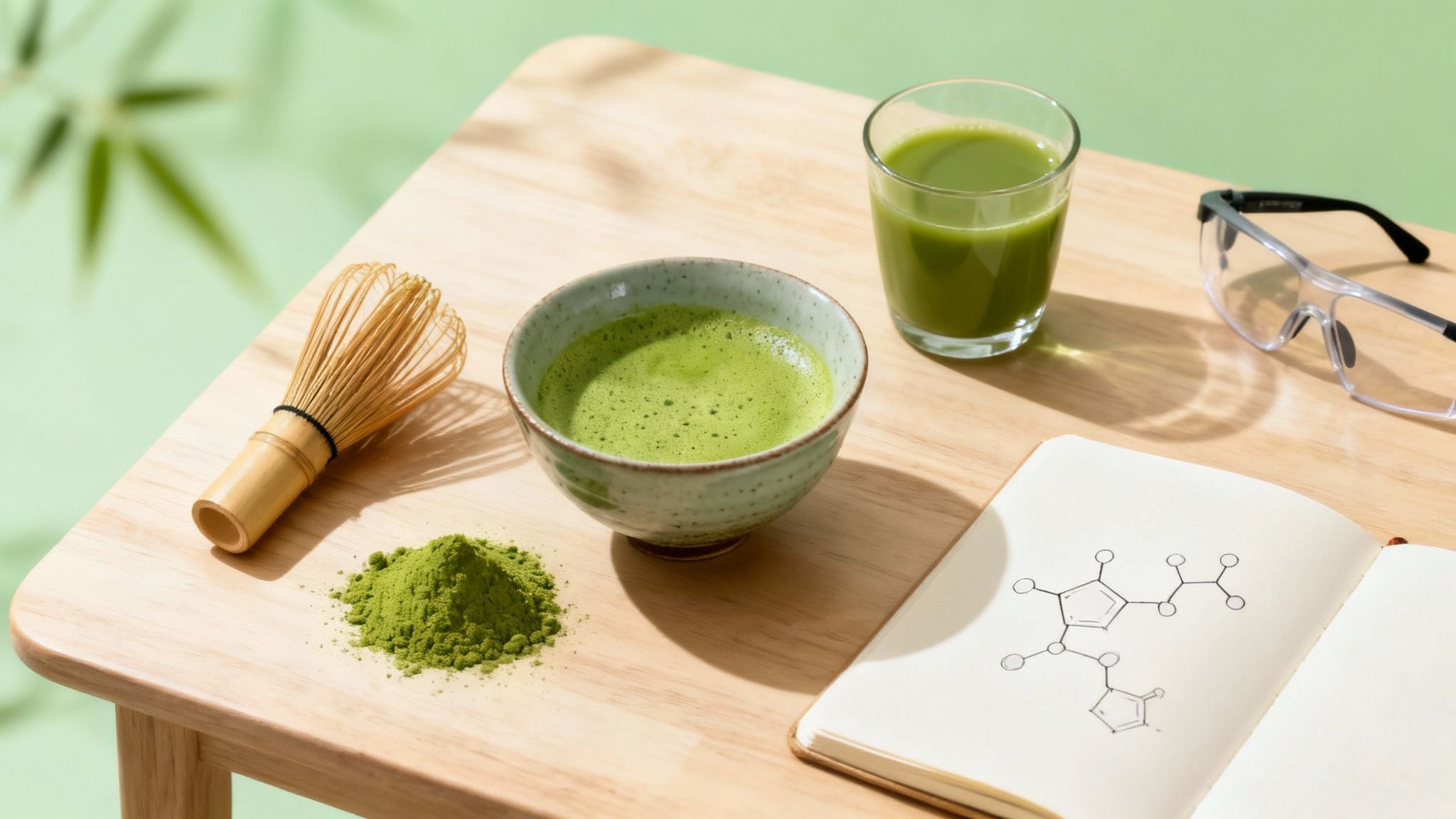
Matcha Tea: How Healthy Is the Green Powder Really?
Yes, matcha really is the little green powerhouse many people believe it to be. The decisive reason is very simple: You drink the entire powdered tea leaf—not just a watery infusion like with ordinary green tea. This means you take in a much higher concentration of valuable compounds that your body can use for its well-being.
Is Matcha Tea Really as Healthy as Its Reputation Suggests?
You’ve probably already heard of the bright green powder and wondered whether the hype is really justified. The short answer is: Yes. And the secret lies in its unique production process, which is designed to get the best out of the tea leaf. Unlike other types of tea, the tea plants grown for matcha are deliberately shaded during the final weeks before harvest.
This deliberate deprivation of light is a clever trick used by tea growers. It strongly stimulates the production of chlorophyll and important amino acids in the plant. The result? The intense green color and the distinctive, slightly sweet flavor that connoisseurs value so highly. After harvesting, the delicate leaves are gently steamed, dried, and ground into an ultra-fine powder in traditional stone mills.
So what ends up in your cup is not just ordinary tea, but a true nutrient concentrate. While you throw away the depleted leaves after drinking a cup of regular green tea, with matcha you dissolve the powder completely. This way, you drink the concentrated power of the tea leaf with every sip.
The Full Power of the Tea Leaf
This exact difference is what makes matcha so special. The best way to imagine it is this: Regular green tea is like the water used to cook vegetables—it contains a few nutrients, but most of the good stuff remains in the vegetables themselves. Matcha, on the other hand, is like puréeing the vegetables and drinking them as a smoothie. You get everything.
As a result, you benefit from an impressive wealth of:
- Antioxidants: Especially the famous catechins such as EGCG, which protect your cells from oxidative stress.
- Amino acids: At the forefront is L-theanine, which creates this unique state of relaxed alertness.
- Vitamins and minerals: These include vitamins A and C, as well as potassium.
This powerful combination makes matcha an ideal companion for your well-being. It can support your immune system, promote concentration, and provide much gentler, longer-lasting energy than the typical coffee kick. If you are wondering how caffeine generally affects your body, by the way, we have an interesting analysis in our article about whether coffee is healthy.
Ultimately, matcha is much more than just a pick-me-up. It is a small ritual and a wonderful way to naturally provide your body with valuable substances that specifically support your health.
The superpowers in detail: EGCG, L-theanine, and more
What makes matcha so special is not only the fact that you consume the whole leaf. The true magic lies in the active compounds it contains in impressively high concentrations. You can think of them as a perfectly coordinated team in which each player takes on a specific task for your well-being.
At the forefront is epigallocatechin gallate (EGCG). Behind this complicated name lies one of the most powerful antioxidants nature has to offer. Think of antioxidants simply as bodyguards for your cells: They neutralize aggressive molecules known as free radicals. These are caused by stress, environmental toxins, or an unbalanced diet and can cause cell damage over time.
This brief infographic clearly summarizes the key aspects of matcha – from cultivation and nutrients to its benefits.
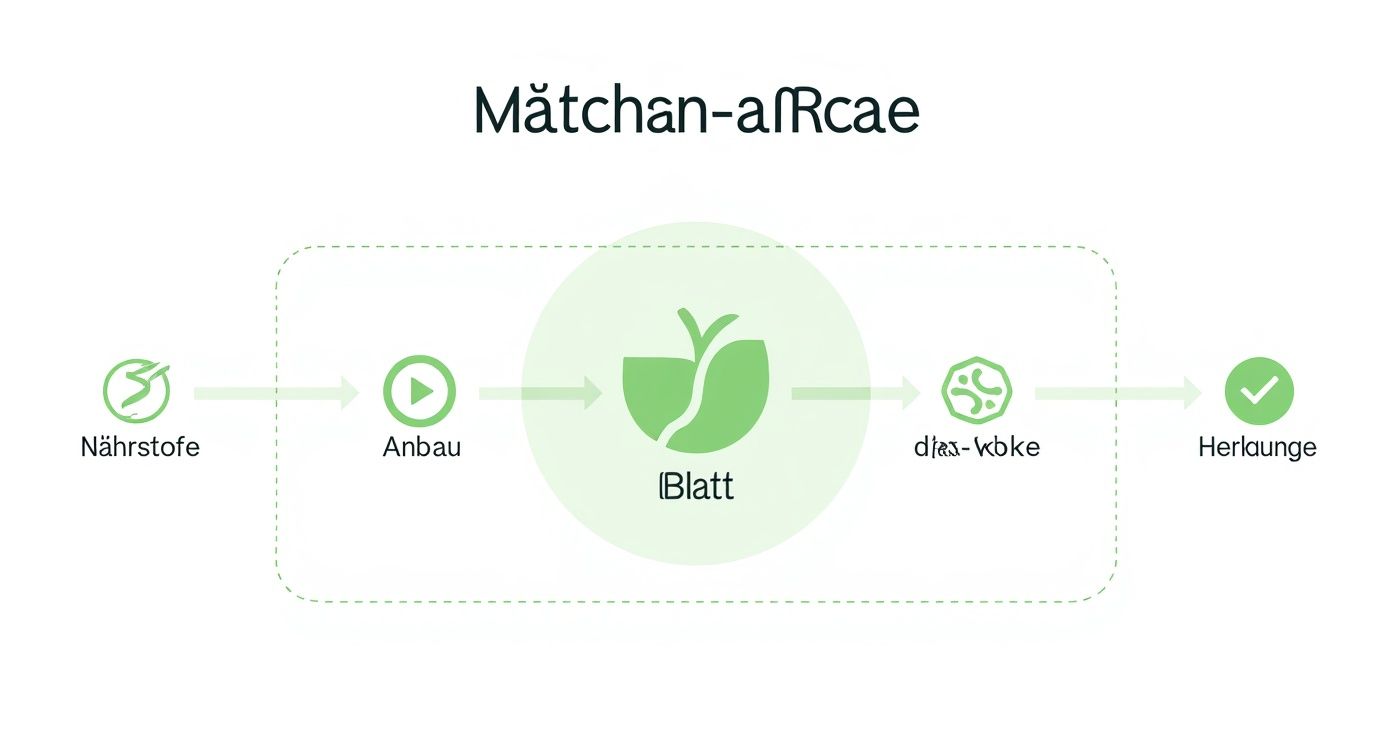
The graphic clearly shows how the special cultivation directly ensures that the valuable ingredients are concentrated at such high levels – which in turn forms the basis for the many health benefits.
The secret of calm alertness
The second hero on the matcha team is L-theanine. This exceptional amino acid has a direct connection to your brain, where it promotes alpha-wave activity. This is precisely the state you also reach during deep relaxation or meditation – a feeling of calm composure and clear focus.
This is exactly where the caffeine comes in. Unlike in coffee, it is firmly bound to the L-theanine in matcha. This has a brilliant effect: The stimulating effect of the caffeine is released into your body much more slowly and evenly.
The result is the often-described state of “calm alertness” – long-lasting, clear focus without the typical nervousness or sudden energy crash that many people experience with coffee.
This unique combination makes matcha the ideal companion for periods of focused work, creative moments, or whenever you simply want to keep a clear head.
A powerhouse for your cells
The high content of all these valuable compounds is no coincidence, but the direct result of the special production process. For example, one serving of matcha contains up to three times more catechins (especially EGCG) than a cup of conventional green tea. These compounds play a key role in fighting free radicals.
The high chlorophyll content, produced by shading the tea plants for several weeks, is also remarkable. Chlorophyll naturally supports your body’s detoxification processes by helping eliminate harmful substances.
If you would like to explore the topic of how to specifically provide your body with such cell-protecting powerhouses, you will find plenty of valuable information about antioxidant-rich foods in our guide.
What science says about the effects of matcha
When it comes to superfoods, the claims often sound too good to be true. But when it comes to whether matcha is healthy, science actually has some impressive answers. So instead of relying on myths, let’s take a look at what concrete studies have found about the green powder.
Research into its effects on our cardiovascular system and brain is particularly fascinating. For years, scientists have closely examined the consumption of green tea, which includes matcha. The results are promising and give ancient wisdom a solid scientific foundation.
These studies make it clear why matcha is more than just a trend. It can be a truly valuable part of a health-conscious diet, helping you stay fit and full of vitality in the long term.
Protection for the heart and circulatory system
One of the most important studies in this field is the Japanese Ohsaki Study. Imagine this: Over a period of 11 years, more than 40,000 people were followed to determine whether there was a connection between their green tea consumption and overall mortality.
The results were truly astonishing. Participants who drank five or more cups of green tea daily had a significantly lower risk of dying from cardiovascular disease. Among women, mortality even fell by more than 30 %, in men by more than 20 %.
This impressive long-term observation provides strong evidence that the catechins abundant in matcha—especially the renowned EGCG—may have a protective effect on our heart and blood vessels.
An ally for the brain
But the heart is not the only beneficiary. Matcha also appears to play an important role in maintaining mental fitness as we age. Researchers at the Max Delbrück Center for Molecular Medicine in Berlin have discovered that EGCG has the potential to help prevent neurodegenerative diseases such as Alzheimer’s.
Research suggests that EGCG may slow down or even partially reverse the formation of harmful protein deposits in the brain, known as plaques. These processes are closely linked to how our genes work. If you want to explore this fascinating topic in greater depth, our article explains what epigenetics is and how our lifestyle influences our genes.
These findings are a great example of how targeted nutrition can support our health down to the cellular level. If you feel like delving deeper into the research yourself, it helps to know how professionals find scientific articles. This way, you can always stay up to date.
How to make the most of matcha’s benefits
Knowledge is good, but putting it into practice in everyday life is what really counts. After examining the impressive science behind matcha, we now come to the crucial question: How can you make the most of all these benefits for yourself and your health goals?
Matcha is incredibly versatile. You can drink it as a gentle pick-me-up before an important appointment or celebrate it as a calming ritual after a demanding day. The unique combination of caffeine and L-theanine makes it the ideal companion when you need a clear head and calm focus.
But as beneficial as superfoods like matcha are, they only unleash their full power when the foundation is right. And that foundation is your own body. Only when you understand what it truly needs and how it works can a healthy diet have its full effect.
Know your body for maximum impact
Matcha can significantly enhance your well-being, but it is only one piece of the bigger picture. Have you ever wondered whether your body is even ready to absorb all those valuable ingredients optimally? That is precisely the crucial point. An unnoticed nutrient deficiency or a silent intolerance can easily undermine the positive effects of even the best foods.
This is where true personal responsibility for your health begins. Instead of groping in the dark and merely guessing, you can find out specifically what is going on with you.
- Your nutrient status: Could you be lacking important vitamins or minerals? Sometimes even the simplest basics are missing, preventing your metabolism from functioning properly.
- Your personal tolerance: Are there foods that are secretly putting a strain on your system? Silent inflammation drains your energy and can weaken your immune system without you noticing it directly.
Modern self-tests from mybody-x.com offer a simple and clear solution. They are the first step toward understanding your body better and truly taking your health into your own hands.
By knowing your individual levels, you create the ideal foundation for healthy habits—such as drinking matcha regularly—to have the best possible effect.
A nutrient test from mybody-x.com can show you exactly whether you have any deficiencies that you can address specifically. At the same time, an intolerance test helps you adjust your diet so that it perfectly supports the positive properties of matcha—instead of unknowingly undermining them. This gives you a strong foundation for your well-being.
What to look for in quality and preparation
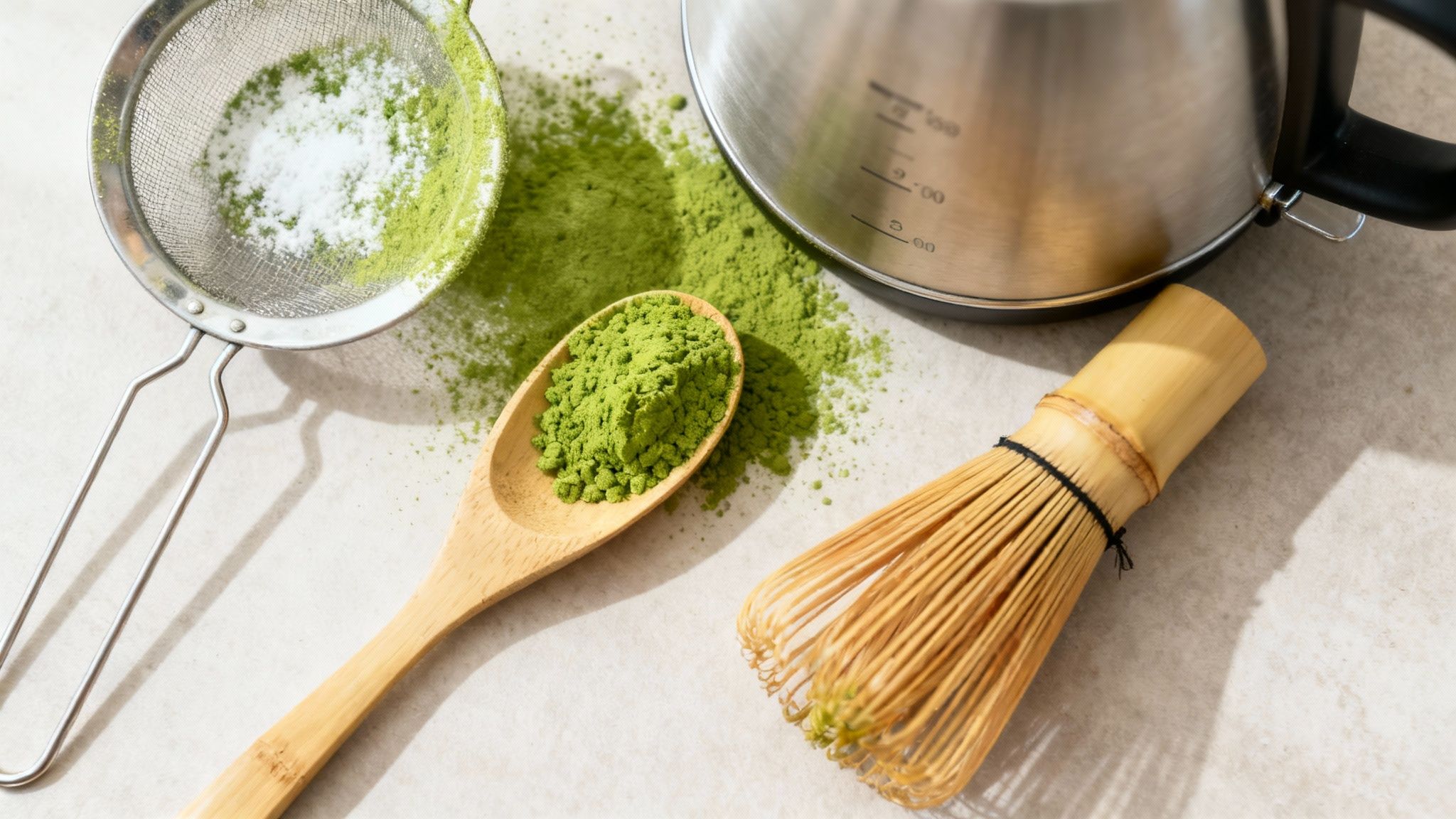
For your matcha moment to become a truly enjoyable experience and for you to benefit from its health advantages, two things matter: the quality of the powder and the right preparation. The market is full of matcha products, but the differences are enormous.
Low-quality powder not only tastes disappointing, it also provides only a fraction of the valuable nutrients. So a bad purchase is not only frustrating for your wallet, but also diminishes what makes matcha so special. Think of it as a small investment in your well-being—one that is absolutely worthwhile when you know what to look for.
How to recognize high-quality matcha
The good news is that you do not need to be an expert to distinguish good matcha from bad matcha. Your senses are the best guides. With three simple criteria, you can quickly assess whether you are holding a top-quality product.
Simply look for these characteristics:
- The color: Genuine high-quality matcha glows with an intense, almost jade-green hue. This vibrant color is a clear sign of high chlorophyll content and gentle processing. Inferior products often look pale, yellowish, or even brownish.
- The texture: The powder should feel incredibly fine and silky, almost like powdered sugar. If it feels coarse or clumps heavily, the tea leaves were probably not ground in traditional stone mills, which is a quality issue.
- The flavor: Good matcha tastes smooth and creamy, with a subtle sweetness and a pronounced “umami” note—that full-bodied, savory flavor. If your tea tastes primarily bitter or excessively grassy, that is a clear sign of poor quality.
So you can see the differences at a glance, we have created a brief overview for you.
Comparison: High-quality vs. inferior matcha
This table shows the direct differences between good- and poor-quality matcha to help you make your choice.
| Characteristic | High-quality matcha (ceremonial grade) | Inferior matcha (culinary/industrial grade) |
|---|---|---|
| Color | Bright, rich jade green | Pale, yellowish to brownish |
| Texture | Extremely fine, silky, powder-like | Coarse, often lumpy |
| Aroma | Fresh, slightly sweet, mildly vegetal | Grassy, hay-like, sometimes musty |
| Flavor | Mild, creamy, slightly sweet with an umami note | Often very bitter and astringent |
| Foam | Forms dense, fine-bubbled foam | Little to no foam, large bubbles |
| Origin | Usually from Japan (e.g., Uji, Nishio) | Often from other countries, unclear labeling |
| Price | More expensive, but goes a long way | Very inexpensive |
As you can see, the signs of good quality are quite clear. It is worth taking a closer look when buying so you can enjoy the full flavor experience and the health benefits.
The right preparation for full enjoyment
Have you found the perfect powder? Great! Now comes the second important step: preparation. With just a few simple steps, you can ensure that the delicate flavor and valuable ingredients unfold optimally.
The most common mistake is using boiling water. This not only destroys sensitive amino acids such as L-theanine, but also causes the catechins to develop a bitter taste. The ideal water temperature is approximately 80°C. A simple trick: Bring the water to a boil, then simply let it cool for a few minutes.
Then add about 1–2 grams of matcha (approximately half a teaspoon) to a bowl, pour in around 80 ml of the cooled water, and vigorously whisk the mixture with a bamboo whisk (chasen) until it is frothy and no lumps remain.
This careful preparation is more than just a ritual; it ensures that you get the full potential from your tea. If you would like to learn more about the basics, you can find a detailed explanation in our guide of what matcha tea actually is. This turns every cup into a genuine moment of health and enjoyment.
Conclusion: Is matcha the key to better health?
Let's get to the point: matcha is definitely more than just a pretty drink. This bright green powder contains an impressive concentration of valuable nutrients, making it a true powerhouse for your health.
The unique combination of powerful antioxidants such as EGCG and the calming amino acid L-Theanine provides scientifically well-documented benefits. Matcha can support your cardiovascular health, help you improve your focus, and effectively protect your body from oxidative stress.
Your path to genuine well-being
Despite these impressive properties, matcha is of course no miracle cure that solves all problems on its own. Think of it instead as a powerful and valuable component of a healthy, mindful lifestyle. The most important step always begins with listening to and understanding the signals of your own body.
The full potential of superfoods like matcha only unfolds when you truly know what your body needs. There is no one-size-fits-all solution—the key lies in your individuality.
And this is exactly where the self-tests from mybody-x.com come in. Do you sometimes wonder whether your body might be lacking important nutrients for a well-functioning metabolism? Or whether undiscovered intolerances are holding back the positive effects of your diet?
By gaining clarity about your personal starting point, you take control of your health. A nutrient test from mybody-x.com shows you exactly how well supplied you are with nutrients. In addition, an intolerance test can help you adjust your diet so that your body can optimally absorb and utilize superfoods like matcha. This gives you a sound, data-based foundation for your well-being and makes matcha a true ally on your path to greater health and vitality.
The essentials at a glance: Your questions about matcha
Do you still have a few questions before incorporating matcha into your daily routine? No problem! Here, we answer the most common questions briefly and clearly so you’re fully informed.
Can I drink matcha every day?
Absolutely! For most healthy adults, one to two cups of matcha per day are not only safe but may even do you a lot of good. The only important thing is to keep an eye on your total caffeine intake—especially if you also love coffee.
If you are pregnant, breastfeeding, or have certain pre-existing conditions, it’s best to speak briefly with your doctor before making matcha part of your daily routine. Better safe than sorry.
What is the difference between matcha and green tea?
The key difference lies in what you end up drinking. Think of it this way: With regular green tea, you pour hot water over the leaves and then drink only the infusion. You throw away the best part—the leaf itself.
With matcha, on the other hand, the entire tea leaf—which has previously been grown in the shade—is ground into a fine powder. So you drink the whole leaf and consequently consume a much higher concentration of valuable compounds such as EGCG and L-theanine.
Does matcha tea help you lose weight?
Matcha can be a great companion on your journey toward a comfortable weight. Studies suggest that the catechins it contains may stimulate the metabolism and slightly boost fat burning.
But one thing is clear: matcha is not a miracle cure, but one building block of a healthy lifestyle. You’ll get the best results when you combine it with a balanced diet and regular exercise.
Are you ready to get the most out of superfoods like matcha? Use the self-tests from mybody-x.com to find out what your body really needs. Discover your individual nutrient or hormone status now and take your health to the next level.



Share now:
Understanding the VO2max value chart and improving it effectively
VO2max Score for Women: How to Quickly Improve Your Endurance