

Strengthening the immune system is important—but what is the right way to do it?
A healthy immune system cannot simply be “boosted”—it can only be kept capable of functioning. The evidence supports the opposite direction: sleep deprivation, chronic stress, smoking, high alcohol consumption, and genuine nutrient deficiencies weaken immune defense. Eliminating these factors does more than any supplement.
This article explains what the immune system is, which levers are supported by evidence, which ten micronutrients have a recognized immune function, what is overestimated—and when susceptibility to infections should be medically evaluated.
What to expect in this article
Can the immune system really be “strengthened”?
Which levers are actually proven?
Which micronutrients have a proven immune function?
Why is vitamin D the biggest bottleneck in Germany?
What does not work or is overrated?
When does too much become dangerous?
When should you have it medically evaluated?
How mybody® gives you clarity about your nutrients
Putting it into context: What a test can—and cannot—do
Conclusion
Frequently asked questions (FAQ)
Sources
What stands out in the research is a pattern: evidence primarily shows that certain factors weaken immune defense—not that anything boosts it beyond normal levels.
| Lever | Effect | What concretely helps |
|---|---|---|
| Sleep | Sleep deprivation weakens immune defense and the response to vaccination | 7–9 hours, at consistent times |
| Exercise | Moderate levels are supportive; extreme levels are burdensome | Regularly rather than rarely and extremely |
| Nutrition & micronutrients | Deficiency weakens the body; excess provides no benefit | Eat a varied diet; supplement only in cases of deficiency |
| Stress | Chronic stress dampens immune defense through cortisol | Schedule regular periods of recovery |
| Smoking cessation | Smoke damages the respiratory tract lining | Quit—the most effective single step |
| Alcohol | Disrupts immune cells and mucous membranes | Significantly reduce consumption |
| Vaccinations | The only way to achieve specific protection | Check vaccination status and get booster shots |
| Hygiene | Reduces pathogen exposure rather than strengthening immunity | Handwashing, ventilation, keeping your distance |
Four everyday factors repeatedly appear in research:
Regeneration
During deep sleep, processes related to immune memory take place. Sleep deprivation weakens immune defense.
Circulation of immune cells
Moderate exercise gets immune cells circulating. Extreme exertion has the opposite effect.
Building blocks of immune defense
Ten micronutrients have an EFSA-recognized immune function. Adequate intake is what matters.
Chronic strain
Short-term stress is harmless. Prolonged strain dampens the immune response.
What is the immune system, anyway?
The immune system is not an organ but a network of cells, messenger substances, and tissues: bone marrow, thymus, spleen, lymph nodes, mucous membranes, and white blood cells. A network without a central regulator also has no switch that can simply be turned up.
Innate immunity: the fast, nonspecific rapid-response team
It is present from birth and responds within minutes to hours: phagocytes such as macrophages and neutrophils, natural killer cells, and the complement system. It does not recognize individual pathogens but general patterns. Fever and fatigue are therefore not signs of weakness, but of an immune response at work.
Acquired immunity: your body’s memory
The adaptive immune response needs several days, but works with great specificity: B cells produce precisely matched antibodies, while T cells destroy infected body cells. After an infection, memory cells remain that respond more quickly upon the next encounter—this is exactly the principle used by vaccinations.
Skin, mucous membranes, and the gut microbiome as the first barrier
Most pathogens fail before that: at the skin with its acidic protective film, in mucus and the cilia of the airways, and in stomach acid and tears. A large proportion of immune cells is located in the intestinal lining.
The gut microbiome contributes to this fine-tuning; its diversity is promoted above all by a high-fiber diet. By contrast, evidence that a probiotic reduces susceptibility to infections in healthy adults is weaker than advertising suggests.
Can the immune system really be “strengthened”?
The honest answer: A healthy immune system cannot be boosted beyond its normal level of performance—but it can be kept functional. It is not an engine with an accelerator pedal, but a balance: strong enough to fight pathogens, precise enough to spare the body’s own tissue.
Key message: There is no switch that “ramps up” the immune defenses. Only the opposite direction is proven—deficiencies and prolonged strain weaken the immune system. Eliminating these factors restores normal function; nothing more has been proven.
Why “immune boosting” is a marketing term
The term does not exist in technical language. It suggests a measurable quantity that does not exist: no laboratory value shows “how strong” an immune system is. In the EU, only scientifically substantiated health claims are permitted.
According to the EFSA assessment under the EU Health Claims Regulation (Regulation (EC) No. 1924/2006), nutrients may only be advertised as “contributing to the normal function of the immune system”—not as boosting it.
More is not always better: a look at autoimmune diseases
An overactive immune system is not a desirable state. In autoimmune diseases such as Hashimoto’s thyroiditis or rheumatoid arthritis, the immune defenses attack the body’s own tissue; in allergies, they target harmless substances. The goal is not the strongest possible immune system, but one that is well regulated. Anyone taking immunosuppressive medication should discuss immune-stimulating preparations with a doctor.
Which levers are actually proven?
The most effective measures are unremarkable and usually cost nothing—they eliminate known weakening factors.
Sleep: the best-studied individual factor
During deep-sleep phases, processes take place that are important for immunological memory. People who chronically sleep too little become ill more often after exposure to pathogens, and antibody production after vaccinations is weaker. For most adults, seven to nine hours at consistent times provide the foundation.
Exercise: moderate and regular rather than rare and extreme
During exertion, more immune cells are released into the bloodstream and then patrol tissues and lymphatic organs more intensively. During very intense, prolonged exertion, the effect temporarily reverses—after a marathon without recovery, respiratory infections become more common. Regular moderate exercise is more beneficial than rare extreme workouts; during a feverish infection, take a break from exercise.
Nutrition: ensure adequate intake instead of chasing superfoods
Antibodies are proteins, and immune cells divide very quickly during an infection—both require protein, energy, and several micronutrients. Malnutrition is the most common cause of weakened immune defenses worldwide; in Germany, the problem is more likely to result from an unbalanced diet. No single food “strengthens” anything—the overall pattern over several weeks matters.
Stress: unproblematic in the short term, burdensome over time
Acute stress even activates the immune system temporarily; the critical factor is sustained stress over weeks. If cortisol levels remain elevated, this also dampens desirable immune responses. Indirect effects add to this: poorer sleep, less exercise, and increased alcohol and cigarette use.
Quitting smoking and alcohol: the greatest preventable burdens
Smoking attacks the immune defenses at their most vulnerable point: Smoke paralyzes the cilia in the airways and permanently alters the local immune response. According to the World Health Organization (WHO), tobacco use is one of the most significant preventable risk factors for respiratory diseases worldwide. Alcohol also impairs phagocytes and lymphocytes.
Vaccinations and hygiene: targeted protection instead of general strengthening
Vaccinations do not make the immune defenses generally “stronger”; instead, they train them to target a specific pathogen, measurable through antibodies and memory cells. According to the World Health Organization (WHO), vaccination is one of the most effective public health measures. Hygiene works differently: handwashing, ventilation, and keeping your distance reduce the pathogen load.
Which micronutrients have a proven immune function?
In the EU, ten micronutrients may officially be advertised as contributing to the normal function of the immune system: vitamin D, vitamin C, zinc, selenium, iron, vitamin B12, folate, copper, vitamin A, and vitamin B6. This list is based on assessments by the European Food Safety Authority (EFSA).
The fine print is crucial: This statement applies to the contribution to the normal function. A deficiency impairs immune defenses—additional intake provides no benefit when levels are already adequate.
| Nutrient | Role in the immune system | Typical sources |
|---|---|---|
| Vitamin D | Helps regulate immune responses | Sunlight; very little from food (oily fish) |
| Vitamin C | Antioxidant protection of immune cells | Bell peppers, broccoli, citrus fruits |
| Zinc | Cell division, maturation of immune cells | Meat, cheese, lentils, pumpkin seeds |
| Selenium | Component of antioxidant protective enzymes | Fish, eggs, nuts |
| Iron | Cell division and oxygen transport | Meat, legumes, whole grains |
| Vitamin B12 | Cell division and blood formation | Meat, fish, eggs; vegan sources require supplementation |
| Folic acid (folate) | Rapid cell division during an immune response | Leafy greens, legumes |
| Copper | Component of enzymes in immune cells | Nuts, whole grains, cocoa |
| Vitamin A | Intact mucous membranes as the first barrier | Liver, eggs; beta-carotene in carrots |
| Vitamin B6 | Protein metabolism and antibody production | Fish, whole grains, potatoes |
Key message: Micronutrients act like building blocks, not fuel. If one building block is missing, the immune system functions less effectively. If all are present, adding more provides no further benefit.
Who is at increased risk of a true deficiency?
The risk is elevated, among other groups, in people following a purely plant-based diet (vitamin B12, and in some cases iron and zinc), those with heavy menstrual bleeding (iron), during pregnancy and breastfeeding, in older age (vitamins D and B12), with chronic inflammatory bowel disease or celiac disease, and after bariatric surgery. Long-term medications such as proton pump inhibitors can also impair the absorption of vitamin B12. If you belong to one of these groups, targeted testing makes more sense than taking a blanket combination supplement.
Why is vitamin D the biggest bottleneck in Germany?
Vitamin D is the nutrient with the largest supply gap—for geographical reasons: The body produces most of it itself in the skin, but only with sufficient UVB radiation. During the winter half of the year, the sun is too low in the sky at our latitudes, and diet can barely compensate for this: significant amounts are found almost exclusively in oily sea fish.
According to the Robert Koch Institute (RKI, 2016 fact sheet), 30.2% of adults in Germany have inadequate vitamin D levels (25(OH)D below 30 nmol/l); only 38.4% reach the level considered sufficient, at least 50 nmol/l.
These figures are annual averages; levels are significantly lower at the end of winter.
According to the German Nutrition Society (DGE), the estimated vitamin D intake when the body produces none itself is 20 micrograms per day for adolescents and adults.
To put the evidence honestly into perspective, the research on vitamin D and respiratory infections is inconsistent: supplementation apparently helps mainly in cases of pronounced deficiency—no effect is seen in those with adequate levels. Anyone who wants to know where they stand can have their 25-OH vitamin D3 level measured and adjust the dosage accordingly.
What does not work or is overrated?
A large part of the “immune products” market promises more than it can substantiate.
High-dose vitamin C for colds
Vitamin C does not prevent colds in healthy adults—that is the central finding of the best-known systematic review on the subject.
According to the Cochrane review by Hemilä and Chalker (2013), regular vitamin C intake does not reduce the frequency of colds in the general population (risk ratio 0.97 across 29 studies with 11,306 participants). The duration was shortened by an average of 8% in adults and 14% in children.
Eight percent sounds like more than it is: With a seven-day cold, that is about half a day—and only with consistent use, not by simply reaching for an effervescent tablet. One exception: Under extreme exertion—marathon runners, skiers, and soldiers in subarctic conditions were studied—the risk of catching a cold was halved in five studies involving 598 participants (risk ratio 0.48). Nothing can be inferred from this for everyday life.
“Immune booster” shots and miracle cures
Ginger shots, acerola concentrates, and combination products with twenty ingredients are not harmful, but their benefits are systematically overstated: They usually provide exactly the nutrients that are already sufficient with a normal diet. The label test helps: “contributes to the normal function of the immune system” is the authorized EFSA wording for a nutrient contained in the product—not proof that the product prevents infections. The evidence for echinacea is contradictory.
Supplements without a known deficiency
“A little extra can’t hurt” is roughly true for water-soluble vitamins—but not for fat-soluble vitamins and trace elements. High-dose zinc can impair copper absorption over time, thereby causing a second deficiency.
When does too much become dangerous?
For several nutrients relevant to immune function, EFSA has established tolerable upper intake levels—the daily amount considered safe for healthy adults to consume over the long term.
According to EFSA, the tolerable daily total intake for adults is 25 mg of zinc, 255 µg of selenium (EFSA, 2023), and 100 µg of vitamin D. These values apply to the total from food and supplements—not the supplement alone.
Zinc: more is counterproductive
Zinc is the classic example of overdosing because many cold remedies contain high amounts. In the short term, nausea, stomach pain, and a metallic taste are possible; over several weeks, copper supply suffers. There is some evidence that zinc lozenges for an acute cold slightly shorten the duration of symptoms—but zinc is not intended as a long-term solution.
Selenium: narrow range between enough and too much
Selenium has the narrowest safety margin: The daily requirement is around 60 to 70 micrograms, while the upper limit is 255. Chronic overdosing can cause hair loss, brittle nails, and garlic-like breath. Be careful with Brazil nuts: Their selenium content varies greatly.
Vitamin D: the problem with high-dose supplements
Vitamin D is fat-soluble and stored in the body. An overdose practically never results from sunlight or diet, but from taking high-dose supplements over a prolonged period. This leads to an elevated calcium level in the blood, accompanied by nausea, intense thirst, and confusion; in the long term, kidney damage may occur.
When should you have it medically evaluated?
Recurring infections are usually harmless—especially with close contact with young children. However, there are circumstances in which the cause should be investigated by a doctor.
According to IQWiG (gesundheitsinformation.de), adults catch colds an average of two to four times a year; children typically bring home six to eight colds a year from daycare or school.
When susceptibility to infections requires medical attention
- ✓ Infections that occur significantly more frequently than is usual among those around you
- ✓ Unusually severe or prolonged courses, such as repeated cases of pneumonia
- ✓ Persistent or recurring fever without an apparent cause
- ✓ Infections that do not resolve despite treatment
- ✓ Unintentional weight loss, night sweats, or severe fatigue
- ✓ Known immunosuppression—for example, during chemotherapy or with biologics
- ✓ Chronic underlying conditions such as diabetes or kidney disease
- ✓ Wounds that heal poorly or frequent fungal infections
The distinction between frequency and severity is crucial: Six mild colds for a parent of a daycare child are unremarkable, but two severe infections requiring hospitalization are not. If impaired immune function is suspected, targeted tests are available—differential blood count, immunoglobulins, and further immunological diagnostics. Seek immediate medical help if you have a high fever with a strong feeling of illness, shortness of breath, neck stiffness, or confusion.
How mybody® gives you clarity about your nutrients
If nutrient deficiencies are the only proven nutrition-related weakness, measuring them is the logical first step—not taking supplements as a precaution.
You should apply three criteria to every provider: analysis in a certified laboratory, transparent reference ranges, and GDPR-compliant handling of your health data. According to its own statements, mybody® (MYBODY Lab GmbH) meets them: an ISO-certified laboratory in Germany, SSL-encrypted transmission, and pseudonymized processing.
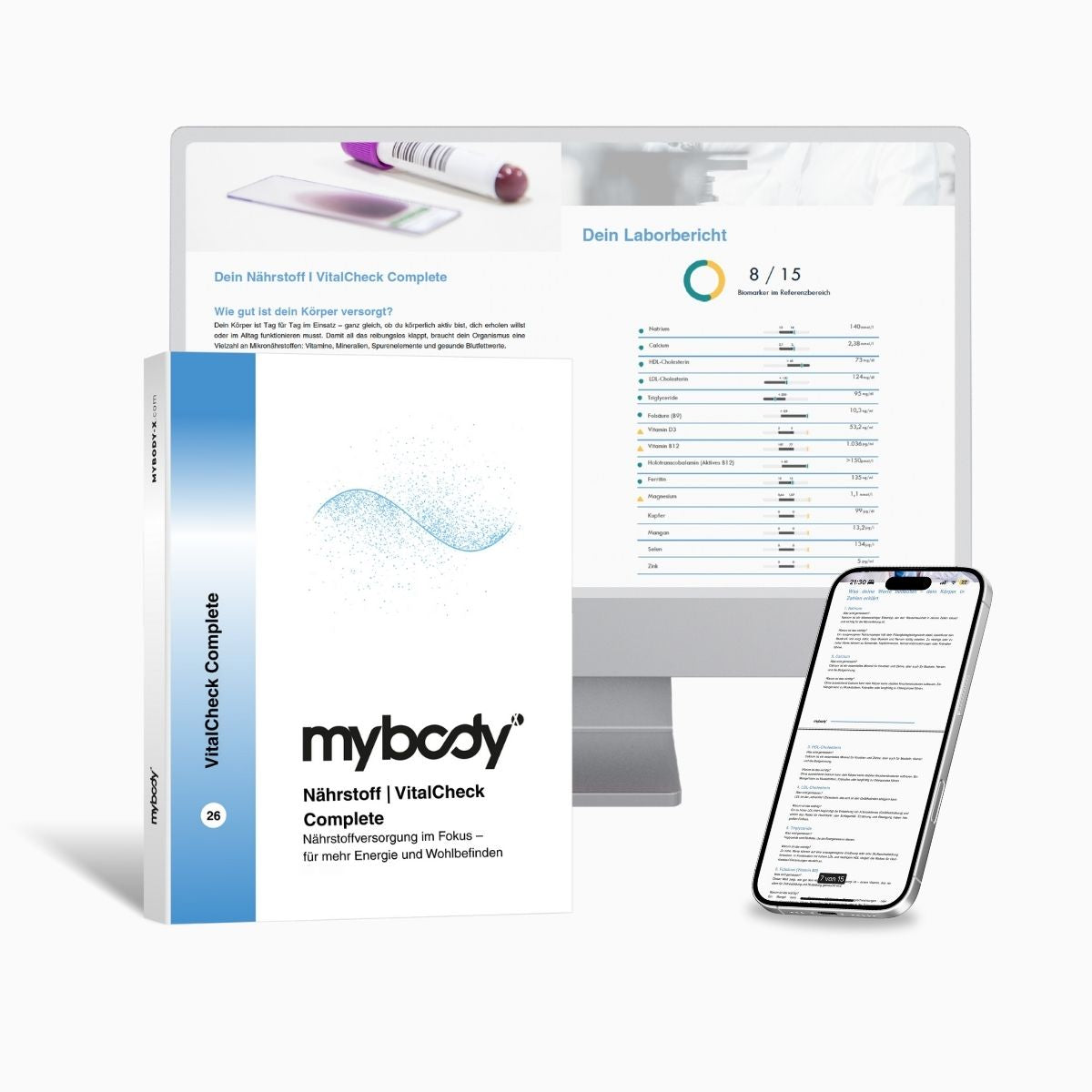
Nutrient | VitalCheck Complete
15 blood values from a capillary blood sample collected at home—including seven of the ten nutrients with recognized immune functions: 25-OH vitamin D3, zinc, selenium, copper, ferritin, vitamin B12 and folate. In addition: transcobalamin, calcium, magnesium, sodium, manganese, as well as HDL, LDL and triglycerides.
Price: €169.00 (instead of €199.00) · Sample type: Capillary blood (at home) · Processing time: approx. 10–15 working days · Laboratory: ISO-certified, GDPR-compliant
View the nutrient checkFor an honest assessment, two limitations should be mentioned. First: Vitamin C is not included in this test, nor are vitamin A or vitamin B6. This is reasonable because vitamin C deficiency is rare in Germany—but you should still be aware of it.
Secondly, and this is the more important point: The test measures your nutrient status, not your immune function. It shows whether a building block is missing—not how well your immune defenses are working. In cases of genuine susceptibility to infections, it therefore does not replace medical evaluation, but it can help prepare for it.
Information on price, sample type, processing time and markers comes from the mybody® product page (as of July 2026) and may change.
Putting it into context: What a test can—and cannot—do
A nutrient blood test gives you a snapshot of your status: It shows whether your values are within the reference range and makes changes over time visible.
What it cannot do: assess the performance of your immune system—no single value can reflect that. Nor does it identify causes: A low ferritin level does not indicate whether the underlying issue is insufficient intake, heavy menstrual bleeding or a source of bleeding. Determining this is a doctor’s job.
The greatest benefit comes from using the results as a basis for discussion—with specific figures, your medication list and your symptoms.
Conclusion
You cannot “boost” the immune system, but you can protect it. The effective measures are unspectacular: get enough sleep, exercise moderately, eat a varied diet, reduce chronic stress, do not smoke, limit alcohol, check your vaccination status and take hygiene seriously.
When it comes to micronutrients, one rule applies: A deficiency weakens you; an excess does not help. The most relevant bottleneck is vitamin D during the winter months—high-dose zinc, selenium or vitamin D supplements without a known deficiency offer no benefit, but do pose a risk.
And the most important caveat: A well-nourished immune system is not a promise of protection. Even those who do everything right will catch colds. If infections occur unusually often, are severe or prolonged, this should be medically evaluated—not addressed with a supplement.
Frequently asked questions (FAQ)
Measure first, then supplement
15 blood values from a single at-home sample—including vitamin D, zinc, selenium, copper, ferritin, vitamin B12, and folate. Analyzed in an ISO-certified laboratory in Germany.
View VitalCheck Complete All nutrient testsYou might also be interested in
→ Nutrient deficiency test: When it makes sense
Which values are meaningful and how to identify a deficiency.
→ Vitamin and mineral test: What it really shows you
How to read your test results correctly.
Sources
- European Food Safety Authority (EFSA): Health Claims – scientific assessment of health-related claims under Regulation (EC) No. 1924/2006. efsa.europa.eu
- EFSA: Dietary Reference Values and Tolerable Upper Intake Levels (including zinc 25 mg/day and vitamin D 100 µg/day); selenium upper limit of 255 µg/day according to the 2023 EFSA opinion. efsa.europa.eu · Selenium opinion
- Robert Koch Institute (RKI), Journal of Health Monitoring 2/2016: Fact Sheet “Vitamin D status in Germany” – 30.2% of adults below 30 nmol/L, 38.4% at or above 50 nmol/L. rki.de
- German Nutrition Society (DGE): Reference values for vitamin D intake – estimated value of 20 µg/day in the absence of endogenous synthesis. dge.de
- Hemilä H, Chalker E (2013): “Vitamin C for preventing and treating the common cold”, Cochrane Database of Systematic Reviews. cochranelibrary.com
- World Health Organization (WHO): Fact Sheet “Immunization coverage”. who.int
- IQWiG / gesundheitsinformation.de: “Common cold” – frequency, progression, and treatment options. gesundheitsinformation.de
Source attribution: Health Claims [1], Upper limits [2], Vitamin D status [3], Estimated intake value [4], Vitamin C [5], Vaccinations [6], Frequency of colds [7]. Product information comes from the mybody® product page; subject to change.

mybody® Editorial & Expert Team
This article was created by the mybody® editorial and expert team, which brings together expertise in laboratory diagnostics, nutritional science, and nutrigenetics. Learn more about our team on our editorial and authors page.
Published on July 27, 2026 · Last updated on July 27, 2026
Medical note: This article is intended for general information and does not replace medical advice, diagnosis, or treatment. A well-supported immune system is not protection against infections. If you experience frequent, severe, or prolonged infections, have a known immunosuppression, or are considering taking high-dose supplements, please consult a doctor.



Share now:
How do you notice an electrolyte deficiency?
Gluten—is intolerance hereditary?