

What is non-HDL cholesterol: Why this value often tells you more
You’ve probably heard of “good” HDL and “bad” LDL cholesterol. But what exactly is non-HDL cholesterol? Quite simply, it is the sum of all potentially harmful types of cholesterol in your blood. Think of it as an overall risk value for your cardiovascular health. It’s a value you should know to better understand your body and take targeted action for your health.
Your bloodstream as a highway—who causes traffic jams?
To understand the whole thing better, let’s picture it this way: Your bloodstream is a huge, busy highway. Various “vehicles” travel along it, transporting fats.
The “good” HDL cholesterol is somewhat like the garbage collection service or roadside assistance. It collects excess cholesterol from the blood vessel walls and takes it back to the liver for disposal. A very important job!
The non-HDL particles, by contrast, are like a huge fleet of trucks. They transport vital fats from the liver to the cells. The problem begins when too many of these trucks are on the road. Then traffic jams quickly develop. In the body, this means that the particles build up in the artery walls, form dangerous plaques there, and narrow the blood vessels.
What exactly is included in non-HDL cholesterol?
The major advantage of the non-HDL value is that it shows the complete picture. It combines all particles that can potentially damage the blood vessels (are atherogenic).
These include:
- LDL (Low-Density Lipoprotein): The best-known culprit, often referred to as “bad” cholesterol.
- VLDL (Very-Low-Density Lipoprotein): Primarily transports triglycerides and is converted into LDL in the blood.
- IDL (Intermediate-Density Lipoprotein): An intermediate stage on the way from VLDL to LDL.
- Chylomicron remnants: What remains from food after fat digestion.
- Lipoprotein(a) [Lp(a)]: A specific risk factor that is largely determined by genetics.
This simple graphic shows you how to calculate the value yourself from your lab report.
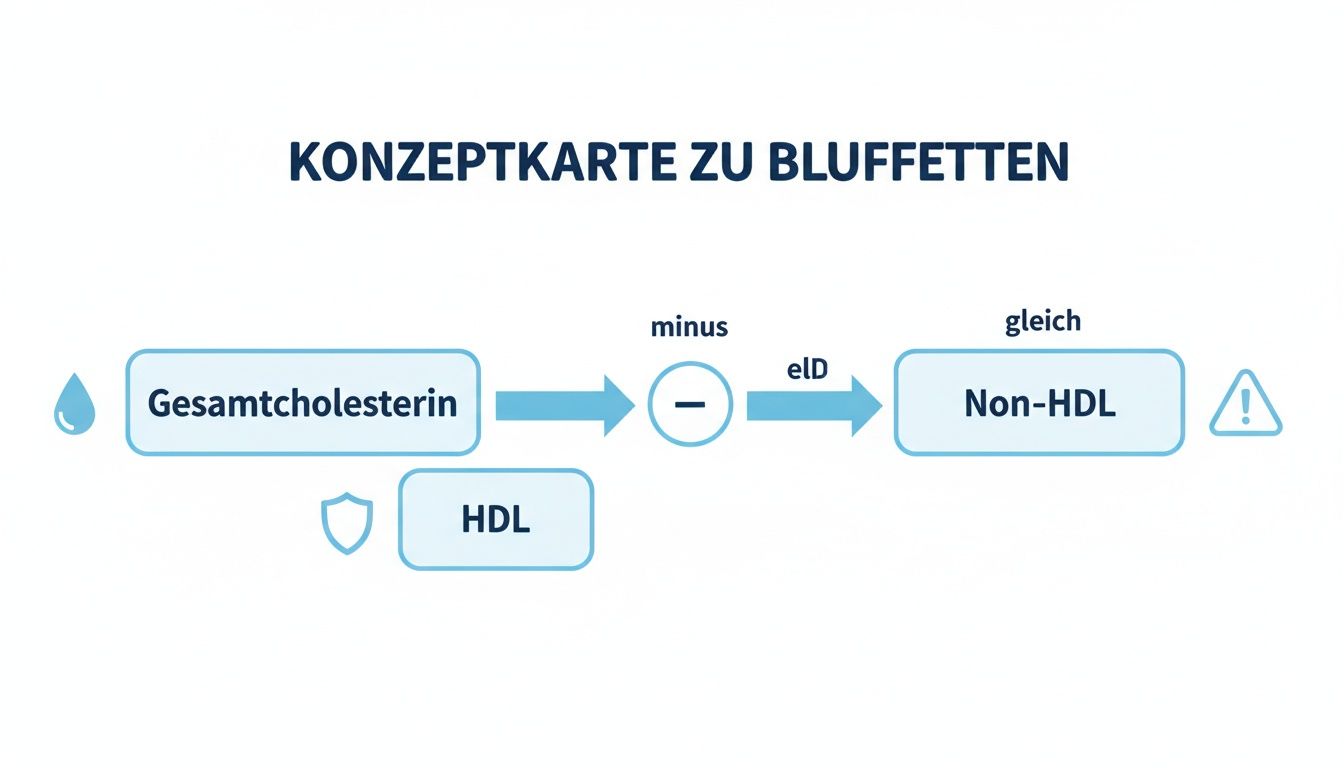
The calculation—your total cholesterol minus the protective HDL—therefore gives you the value of all potentially risky blood fats at a glance.
The simple formula for a quick overview
The best part? The calculation is incredibly easy, and you can apply it directly to your blood test results. You only need two values: your total cholesterol and your HDL cholesterol.
Non-HDL cholesterol = total cholesterol − HDL cholesterol
This value gives you a much clearer picture of your risk than the LDL level alone because it captures the entire spectrum of the “traffic-jam causers.”
The better you understand the connections within your body, the more targeted your approach to your health can be. If you would like to dive deeper into how your body processes fats, read our in-depth article about what fat metabolism actually is. This knowledge will help you interpret your values even better and take the right steps.
Why non-HDL cholesterol often tells you more than the LDL level alone
For years, one value was at the center of discussions about the risk of cardiovascular disease: LDL cholesterol. It was considered the sole “villain.” But science does not stand still, and today we know that this view simply does not go far enough.
That is why more and more doctors and current medical guidelines are focusing on non-HDL cholesterol. Why? Quite simply: The non-HDL level captures the totality of all blood-fat particles that could potentially harm our blood vessels. It therefore provides a much more comprehensive picture and is a crucial building block for understanding your health holistically.
Looking at more than just a single value
Imagine your bloodstream as a highway. The LDL level counts only one particular type of “truck” that can cause traffic jams. Non-HDL cholesterol, on the other hand, captures the entire fleet of vehicles that could bring traffic to a standstill.
In addition to the familiar LDL cholesterol, these include other important culprits:
- VLDL cholesterol (Very-Low-Density Lipoprotein): These particles are packed with triglycerides (another type of blood fat) and are later converted into LDL in the body.
- IDL cholesterol (Intermediate-Density Lipoprotein): These are essentially the direct precursors of LDL and are also harmful to the arteries.
- Lipoprotein(a) [Lp(a)]: A largely genetically determined risk factor that does not appear on a standard LDL test.
This comprehensive view is crucial. Numerous studies show that the risk of heart attack and stroke is much more closely linked to the total amount of these harmful particles than to the cholesterol contained in LDL particles alone.
By knowing your non-HDL level, you gain a more honest and complete risk profile. You see not just a small section, but the entire panorama of potential dangers to your arteries.
Especially for people with certain health challenges—such as metabolic syndrome, diabetes, or very high triglyceride levels—the LDL level alone may even appear deceptively low. Here, non-HDL cholesterol provides a much more accurate picture of the true risk.
A scientific shift that makes sense
The greater emphasis on this value is no coincidence, but the result of an important development in medicine. Although average cholesterol levels in industrialized countries such as Germany have fortunately declined since the 1980s, as studies from Central Europe show, many professional medical societies now recommend non-HDL cholesterol as the primary target value when treating lipid metabolism disorders—simply because it enables a more precise risk assessment.
The non-HDL level is therefore not a short-lived trend, but the result of a deeper understanding of what is really happening in our blood vessels. It helps you better assess your personal risk and take more targeted action for your health. If you already know that your LDL cholesterol is too high, you can find practical tips for lowering LDL cholesterol in our guide—measures that naturally also benefit your non-HDL level.
How to correctly assess your non-HDL cholesterol target levels
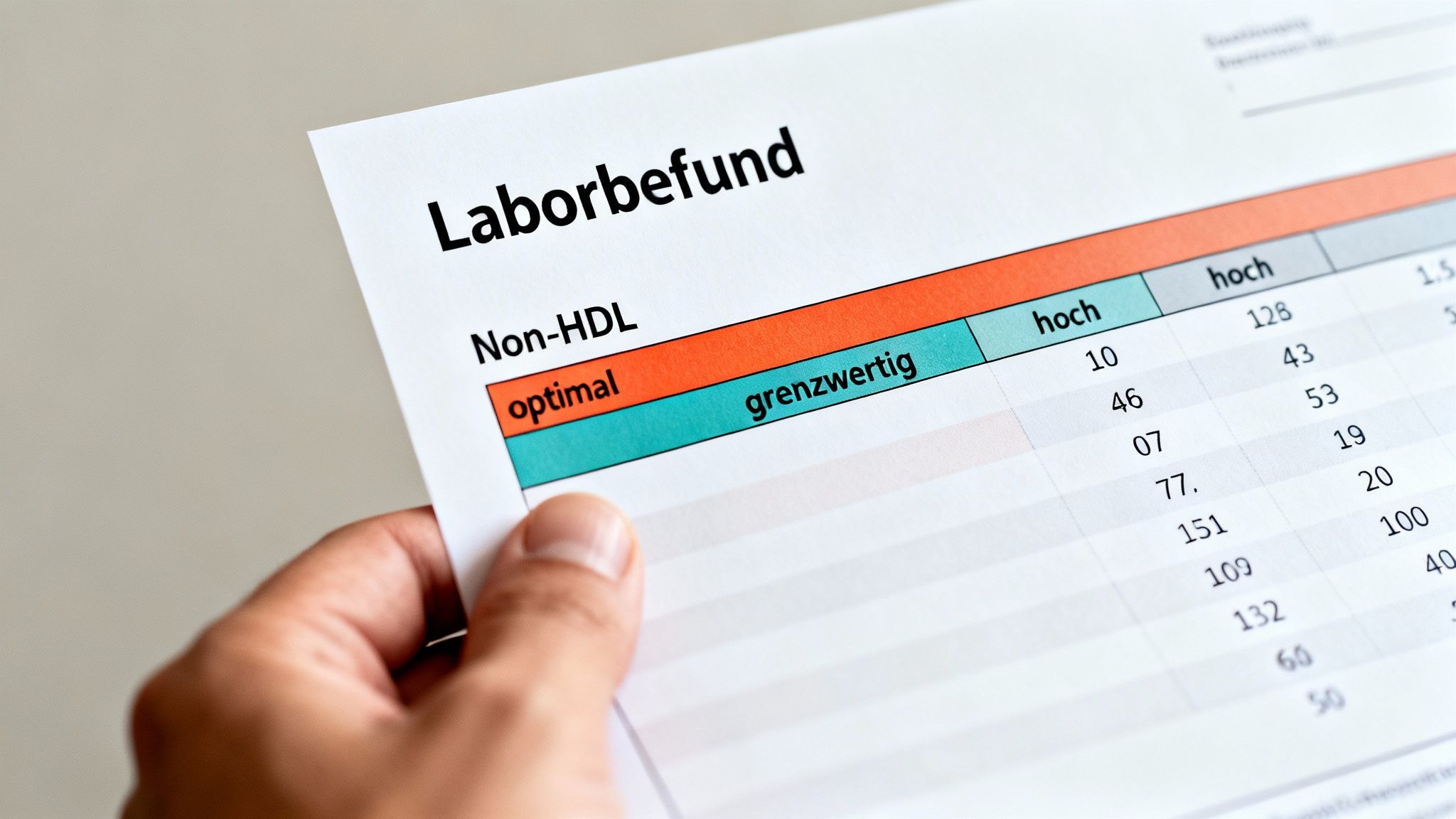
You have your lab results in front of you and are wondering: What does this number specifically mean for me now? Knowing a value is one thing. Interpreting it correctly, however, is the crucial next step.
Because the ideal non-HDL level is not a one-size-fits-all value that applies to everyone. It depends heavily on your personal risk profile. So it is not about rigidly reaching a specific number, but about understanding what this value means for your long-term heart health. Your age, blood pressure, whether you smoke, or whether you already have conditions such as diabetes—all of this plays a significant role.
Guideline values for initial orientation
To make it easier to get started, there are general guidelines. They help you roughly assess your level and recognize whether you should take action. However, keep in mind: Your personal target level may differ and should always be determined in consultation with your doctor.
An elevated non-HDL cholesterol level is not your fate. See it as an important signal from your body—as an opportunity to take proactive steps and actively reduce your risk of cardiovascular disease.
Studies repeatedly demonstrate the importance of early monitoring. A study in Germany found that even slightly elevated non-HDL levels between 143 and 185 mg/dl can dramatically increase the risk of a serious cardiovascular event by age 75. In men with additional risk factors, this risk rose to as high as 28.8%. Lowering the level below 143 mg/dl reduced this risk to 6.4%—a clear sign of how effective early action can be. You can find more details about these connections, for example, here on Gelbe Liste.
Non-HDL cholesterol target values by risk category
This table provides an overview of the recommended target values, depending on individual cardiovascular risk. This allows you to quickly assess where you stand.
| Risk category | Target value for non-HDL cholesterol (mg/dl) | Target value for non-HDL cholesterol (mmol/l) |
|---|---|---|
| Low risk (healthy individuals without risk factors) | < 145 mg/dl | < 3.8 mmol/l |
| Moderate risk (e.g., young people with diabetes) | < 130 mg/dl | < 3.4 mmol/l |
| High risk (e.g., significantly high blood pressure) | < 100 mg/dl | < 2.6 mmol/l |
| Very high risk (existing cardiovascular disease) | < 85 mg/dl | < 2.2 mmol/l |
These values are important markers that are often determined as part of a comprehensive blood analysis. If you’re wondering which other values also play a role, take a look at our article about what is tested in a complete blood count.
Correctly interpreting your non-HDL level is key to asking the right questions when speaking with your doctor and planning the next steps for your health.
The most common causes of elevated non-HDL levels
An elevated non-HDL level is a clear signal from your body that something is out of balance. There are too many of the “bad” blood lipid particles circulating. But what actually causes this? In most cases, it’s a mix of things you can control yourself and factors you have less influence over.
The good news is: You are in the driver's seat! Many of the causes are directly related to your lifestyle. Understanding which factors you can change is the first and most important step toward getting your levels back into the healthy range.
Lifestyle factors—you have the power to change these
Your daily behavior has the greatest influence on your blood lipid levels. Often, small habits add up over time and can make a huge difference.
Here are the most important levers you can pull yourself:
- Your diet: A diet high in saturated and trans fats—as often found in fast food, ready-made meals, or baked goods—significantly boosts cholesterol production in the liver. Too much sugar can also worsen blood lipid levels indirectly.
- Lack of exercise: Regular exercise is a real miracle cure. It helps increase “good” HDL cholesterol while lowering “bad” LDL cholesterol and triglycerides. Anyone who sits all day is missing out on this huge potential.
- Being overweight: Belly fat in particular is a silent troublemaker. It is directly linked to unfavorable blood lipid levels and increased production of VLDL particles.
- Smoking: Nicotine is pure poison for your blood vessels. It damages the vessel walls, making it easier for cholesterol to build up, and also lowers protective HDL cholesterol.
- Too much alcohol: One drink too many can send triglyceride levels through the roof, especially. If you want to learn more, take a look at our guide on what to do if your triglycerides are too high.
Factors you cannot directly influence
Sometimes, lifestyle isn't the only factor. There are also circumstances that affect your levels without being directly within your control.
- Genetic predisposition: Some people simply draw the short straw in the genetic lottery and naturally produce more cholesterol. Familial hypercholesterolemia is a classic example.
- Age and sex: Cholesterol levels often naturally rise with age. In women, this frequently happens after menopause.
- Existing conditions: Certain diseases, such as diabetes, an underactive thyroid, or kidney problems, can seriously disrupt fat metabolism.
This issue should not be taken lightly, because lipid metabolism disorders are widespread in Germany. A large-scale study showed that 64.5% of men and 65.7% of women are affected—often without knowing it. Learning more about the prevalence of lipid metabolism disorders in Germany makes clear how important prevention and regular checkups are.
Your roadmap: How to effectively lower your non-HDL cholesterol
An elevated non-HDL level is a warning signal from your body, but fortunately not an unavoidable fate. You have the power to bring your levels back into the healthy range. And here is the best news first: You do not have to turn your life completely upside down. Small but consistent changes have the greatest impact.
We rely on three proven pillars: diet, exercise, and your overall lifestyle. Think of this guide as your personal toolkit, helping you actively regain control over your blood lipid levels—and sustainably.
The power on your plate: Diet as the key
Your daily diet is by far the most powerful tool for specifically lowering your non-HDL cholesterol. Think of it this way: With every meal, you can clear out your body from the inside and give it exactly what it needs for healthy arteries. It is not about strict deprivation, but about finding smart and delicious alternatives.
These foods are your allies in the fight against high cholesterol:
- Soluble fiber: They are true superheroes for your heart. Foods such as oats, barley, legumes, apples, and flaxseeds bind cholesterol in the intestines and help eliminate it easily. How about a creamy porridge with fresh berries tomorrow morning?
- Good fats instead of bad fats: Replace saturated fats found in sausages, full-fat cheese, or butter with unsaturated fats. Avocados, nuts (especially walnuts), and seeds are your new best friends. A drizzle of good olive oil over your salad or a handful of almonds as a snack are simple habits with a big impact.
- Omega-3 fatty acids: Fatty fish such as salmon, mackerel, or herring is packed with these anti-inflammatory powerhouses. They have been shown to improve blood lipid levels. Try to eat fish at least twice a week.
- Plant sterols: These clever, natural substances are found in plant oils, nuts, and seeds. They can block the absorption of cholesterol in the intestines and further improve your levels. Specially fortified margarines or yogurts can be a useful addition.
Your plate is your most powerful tool. Every meal is a new opportunity to do something good for your heart and specifically reduce harmful blood lipids.
Exercise: Your personal cholesterol killer
Regular exercise acts like a reset for your metabolism. It not only helps reduce harmful non-HDL cholesterol, but also stimulates the production of protective HDL cholesterol. That’s a double win for your heart health!
Most importantly, find an activity you genuinely enjoy. That’s the only way to stick with it long term. The ideal combination consists of endurance and strength training.
Here’s how to easily incorporate exercise into your daily routine:
- Endurance training: Aim for at least 150 minutes of moderate activity per week. This could be a brisk walk, a bike ride, swimming, or an easy jog. Simply break it up—for example, into five 30-minute sessions.
- Strength training: Just two sessions per week are enough to build muscle. More muscle means a higher basal metabolic rate—so your body burns more energy even when you’re at rest.
- Every step counts: Take the stairs instead of the elevator. Walk or cycle when running small errands. Get off one stop early and walk the rest of the way. All these small bursts of activity add up to a major achievement by the end of the day.
Your lifestyle makes the difference
Alongside nutrition and exercise, there are other factors you can influence. Ongoing stress or too little sleep can seriously disrupt your hormonal balance and thus indirectly have a negative impact on your cholesterol levels.
So make a conscious effort to take time for relaxation and recovery. Whether it’s yoga, meditation, or a simple walk in nature, find out what helps you switch off. Good sleep is just as important: aim for seven to eight hours per night. When you combine these three building blocks—nutrition, exercise, and a mindful lifestyle—you create the perfect foundation for healthy blood lipid levels and a better quality of life.
Test your non-HDL level simply and reliably—here's how
Knowledge is power—especially when it comes to your health. The very first step toward getting your results under control is an accurate, reliable measurement. This is the only way to know where you really stand and whether your efforts, for example through a change in diet, are actually paying off. But how can you easily and conveniently keep track of your cholesterol levels today?
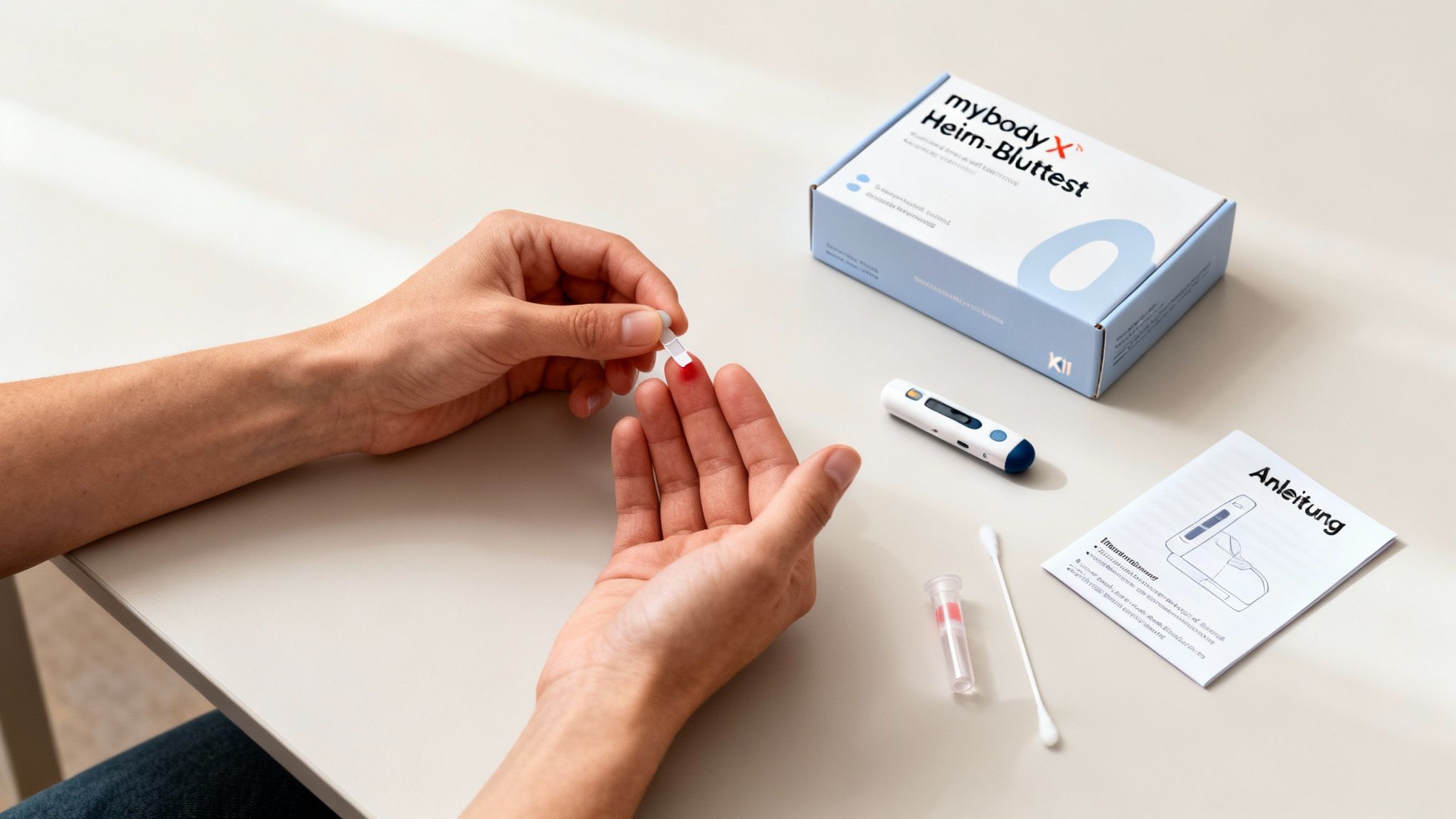
Alongside the traditional visit to a doctor's office, there are now some really good alternatives. A home blood test, such as the one offered by mybody®x, gives you the opportunity to take control yourself. With no waiting for an appointment and discreetly from the comfort of your home.
Three steps to clear results
The entire process is deliberately kept simple so that you feel confident and understand everything. You don't have to be a medical professional to actively manage your health.
- Very easy sample collection: Using the small lancet included in the test kit, you collect a few drops of blood painlessly from your fingertip at home. Every step is clearly explained, so nothing can go wrong.
- Analysis in a certified specialist laboratory: You simply send your sample free of charge to a certified German laboratory. There, experts analyze your blood lipid levels—including total cholesterol and HDL—with the highest precision.
- Easy-to-understand results report: After a short time, you receive a detailed yet easy-to-understand report. It breaks down your results, explains what non-HDL cholesterol means, and shows you where you stand compared with the optimal target values.
This approach gives you complete control. Instead of passively waiting, you become an active driver of your health. You can see in black and white whether your lifestyle changes are working and make the right decisions based on that.
With a mybody®x blood test, you get more than just dry numbers—you get the knowledge you need to put them to use and take proactive action for your health.
You asked, we answer: The most important questions about non-HDL cholesterol
Here we have compiled the answers to the questions we receive most often. This will help you clear up any remaining uncertainties and consolidate your knowledge.
Do I need to fast for the non-HDL test?
No—and that is exactly what makes this value so practical! Since non-HDL cholesterol is calculated simply from total cholesterol and HDL cholesterol, you do not have to fast before the blood draw. The two underlying values remain stable even after a meal.
This makes the measurement much more flexible and practical for everyday life than measuring LDL alone, for which doctors often recommend a fasting blood sample.
How quickly can I improve my levels through a healthier lifestyle?
You set the pace yourself—it depends greatly on your starting point and consistency. Anyone who consistently changes their diet and physical activity can often see the first results on paper within four to twelve weeks.
But much more important is to stick with it and be patient. It is not about a crash diet, but about establishing healthier long-term habits that suit you.
A healthy lifestyle is not a sprint but a marathon for your heart. Every small step you take today pays off for your long-term health and helps sustainably improve your non-HDL level.
What role does stress actually play in high cholesterol levels?
A bigger one than many people think. Persistent stress can actually drive up your cholesterol levels. Your body releases increased amounts of stress hormones such as cortisol, which disrupt your entire metabolism. In addition, during stressful periods we often resort to unhealthy coping strategies: We eat irregularly, quickly reach for fast food, skip our workout—all of this further worsens our levels.
Does an elevated level automatically mean that I have to take medication?
No, not at all. For mildly to moderately elevated levels, lifestyle changes are almost always the first and most important step, especially if there are no other major risk factors. Only if dietary changes and increased physical activity do not produce the desired results after a few months, or if there is a very high risk from the outset, will your doctor consider medications such as statins.
Do you want clarity and to take control yourself? The mybody®x blood test gives you a simple and reliable way to check your blood lipid levels directly from home. This way, you know exactly where you stand and can take targeted steps for your health.



Share now:
Silent Inflammation Test: Uncover Hidden Dangers in the Body
Which blood test results really provide insight into fatigue