
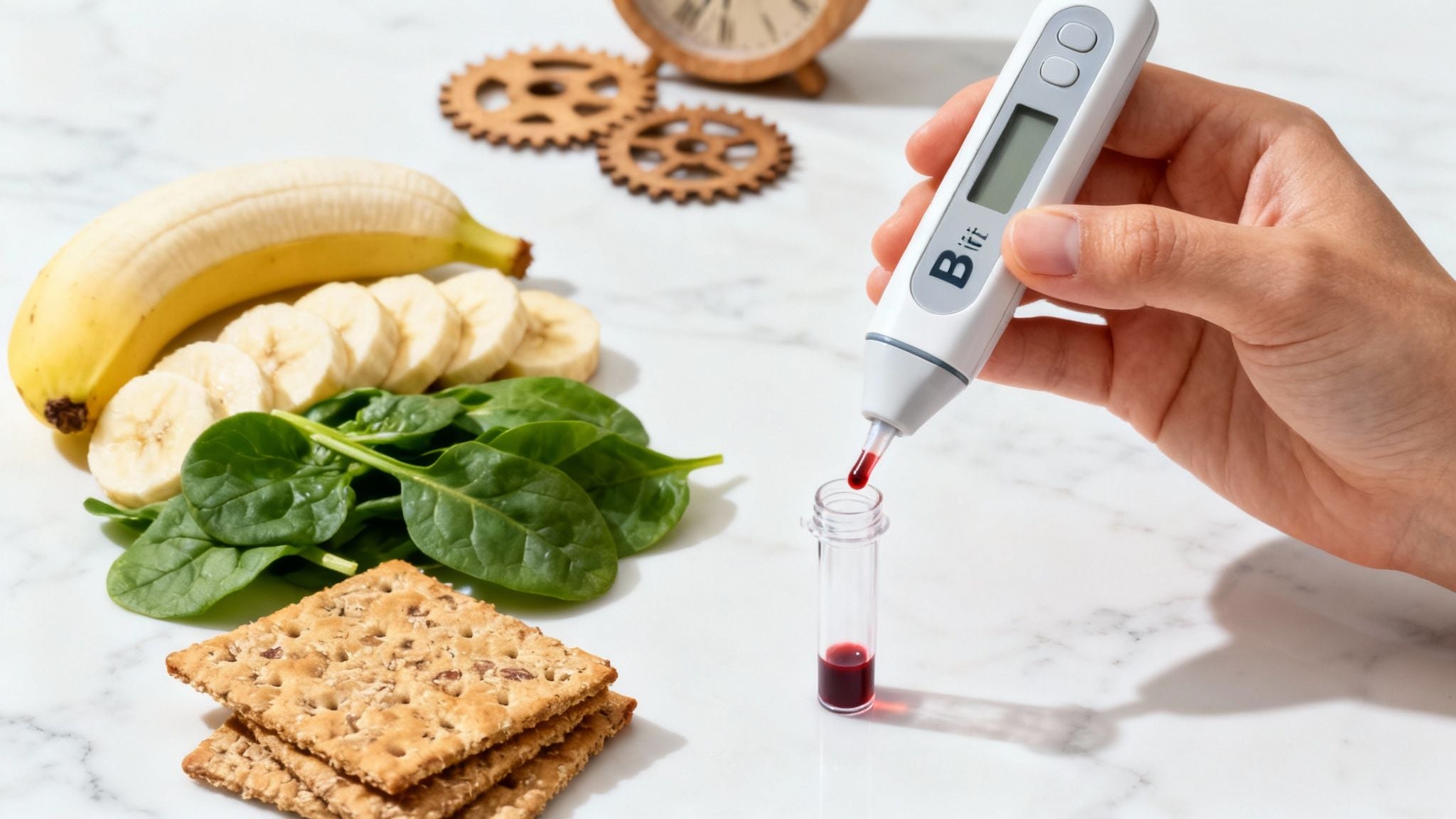
Your vitamin B test for more energy and well-being
A vitamin B test is a simple blood test that measures the concentration of the various B vitamins in your body, especially vitamin B12. This quickly reveals whether a deficiency is behind symptoms such as constant fatigue and difficulty concentrating.
Why constant fatigue can be more than just stress
Do you often feel exhausted and drained even though you have actually had enough sleep? Many people know this feeling and usually blame it on their hectic everyday lives. But what if the real cause lies much deeper? Often, it is the small, invisible helpers in your body that have gotten out of sync: the B vitamins.

A deficiency of these important nutrients, especially vitamin B12, may be the real reason for your persistent fatigue. Think of the B vitamins as the spark plugs of your metabolism—without them, your engine simply does not run smoothly.
The invisible energy providers
The vitamin B family is a group of eight different vitamins that play a key role in your health. They are involved in central processes:
- Energy production: They help your body convert the food you eat into usable energy for your cells.
- Nerve function: They are essential for a healthy nervous system and the smooth transmission of signals in the brain.
- Blood formation: Vitamin B12 and folic acid (B9) in particular are needed to produce healthy red blood cells.
A deficiency can therefore manifest itself in many different ways and noticeably restrict your quality of life. If you often feel that you are missing important vitamins when you are tired, taking a closer look at your B-vitamin status could finally bring clarity.
A widespread misconception is that only vegans or vegetarians are affected by a vitamin B12 deficiency. In fact, stress, certain medications, or age-related changes can also interfere with the absorption of these important nutrients.
A straightforward vitamin B test for home use, such as the nutrient test from mybody-x, can quickly and easily give you clarity. Instead of groping in the dark and attributing your symptoms solely to stress, you give yourself the chance to interpret your body's signals correctly. This allows you to regain control over your well-being and take targeted action to replenish your energy reserves.
How B vitamins power your body
Imagine your body as a highly complex clockwork mechanism. For it to run smoothly, even the smallest gear must mesh perfectly with the others. Those tiny but crucial gears in your metabolism are the B vitamins. They ensure that everything runs smoothly.
Every day, you eat to refuel. But at first, the energy in food is only potential energy. For it to become real fuel for your cells, the B vitamins have to step in. They are, so to speak, the spark that starts the engine and converts carbohydrates, fats, and proteins into usable energy. Without them? Everything comes to a standstill.
The key players in your energy team
There are eight B vitamins in total, and they often work as a team. If one is missing, it can seriously disrupt the work of the others. However, some of them play a particularly important role in your daily energy.
- Vitamin B1 (thiamine): Known as the “nerve vitamin.” It is essential for converting carbohydrates into energy and keeping your nervous system running.
- Vitamin B6 (pyridoxine): A true multitasker. It is involved in more than 100 metabolic reactions, including the production of neurotransmitters such as serotonin, which affects your mood. No wonder a deficiency can manifest in so many different ways, as you can read in our article about the symptoms of vitamin B6 deficiency.
- Vitamin B9 (folate): Cell division and growth can hardly function without folate. It is especially important for the formation of fresh, new blood cells.
- Vitamin B12 (cobalamin): Probably the best-known B vitamin. It is fundamental for healthy nerves, blood formation, and the production of our DNA.
You can think of it like a construction site: Vitamin B12 and folate are the diligent workers who constantly build new red blood cells (your oxygen taxis). Vitamin B6 is the foreman who coordinates communication between the nerve pathways. And vitamin B1? That’s the electrician who ensures the energy supply for the entire project is in place. If even one of them is absent, the whole construction site starts to falter.
Why you constantly need to replenish them
The catch with most B vitamins: They are water-soluble. That means your body can’t store them for long—vitamin B12 is an exception, as it is stored in the liver. Anything that isn’t needed right away is simply flushed out by your body.
That is why regular intake through your diet is so incredibly important. The good news: Data from Germany show that most people have an adequate supply of vitamin B12. Men and women aged 14 years and over consume an average of between 3.7 µg and 6.0 µg per day, putting them within the recommended range. You can find more details about this study here.
Nevertheless, your personal diet, a great deal of stress, or certain illnesses can quickly lead to deficiencies. A vitamin B test, such as the one included in our nutrient test, is the best way to check your individual status and make sure your internal clockwork is running at full power.
Interpreting the warning signs of a vitamin B deficiency
A vitamin B deficiency rarely appears overnight. Instead, it gradually creeps into your everyday life—with signs so subtle that you quickly attribute them to stress or too little sleep. But your body is sending you signals. You just need to learn how to interpret them correctly.
Perhaps you notice that your concentration is declining or that you feel irritable for no apparent reason. You may also experience physical signs such as cracked corners of the mouth, pale skin, or a strange tingling in your hands and feet. These are more than minor inconveniences; they could be your body's first warning signs that it is lacking important building blocks.
Identifying symptoms correctly
Each B vitamin has its own specific role in the body. That is why deficiency symptoms can vary greatly depending on which vitamin is lacking. A deficiency of vitamin B12, for example, often manifests through neurological symptoms, while a folate deficiency can lead to tiredness and anemia.
To better understand the connections between certain complaints and their possible causes, it helps to look at the most common symptoms.
Common symptoms and potentially affected B vitamins
This table provides an overview of typical deficiency symptoms and the B vitamins that may be associated with them.
| Symptom | B vitamin potentially involved | Main function of the vitamin |
|---|---|---|
| Tiredness & exhaustion | Vitamin B12, B6, folate (B9) | Energy production and formation of red blood cells |
| Concentration problems | Vitamin B12, B1, B6 | Support for nerve and brain function |
| Tingling or numbness | Vitamin B12 | Protection of the nerve sheaths (myelin sheaths) |
| Cracked corners of the mouth | Vitamin B2 (riboflavin), B6 | Maintaining healthy skin and mucous membranes |
| Irritability & low mood | Vitamin B6, B12, folate (B9) | Production of mood-regulating neurotransmitters |
Of course, this list is only a guide, as several factors often play a role together.
This infographic shows how closely the B vitamins are linked to your daily energy.

This clearly shows that B vitamins are the crucial link that turns the food you eat into the energy you need for everyday life.
However, it is important to remember that these symptoms are not exclusive. Many of these signs can also have entirely different causes, ranging from iron deficiency to simple lifestyle factors. That is precisely why guessing is not a good strategy.
A Vitamin B Test is the only way to replace assumptions with facts. Instead of worrying, a test like the one from mybody-x gives you clear, data-based insights into your body. It shows you in black and white whether your stores are well replenished or whether you should take targeted action to regain your full vitality.
If you would like to take a closer look at vitamin B12 in particular, you will find valuable additional information in our article about vitamin B12 deficiency. With the knowledge gained from a test, you can finally gain clarity and make the right decisions for your well-being.
Who should keep a particularly close eye on their vitamin B levels
Certain lifestyles, specific illnesses, or simply getting older can noticeably increase the risk of a vitamin B deficiency. Your body is not a machine; it is constantly changing—sometimes eating habits change, and sometimes the ability to extract nutrients from food declines.
That is why it is so important to know whether you belong to one of these groups. Often, it is not just the obvious reasons, such as diet, but also subtler biological processes that change over the years.
An overview of the risk groups
Do you recognize yourself in any of the following descriptions? Then a preventive Vitamin B Test could be particularly useful for you. This helps you keep an eye on your nutrient levels and take action early, before a true deficiency develops.
-
Vegans and vegetarians: This is probably the best-known case. Vitamin B12 is found almost exclusively in animal-based foods such as meat, fish, eggs, and milk. Anyone who avoids these foods risks developing a deficiency unless they supplement deliberately and wisely.
-
Older adults: As we age, our stomach often produces less gastric acid. Yet gastric acid is essential for releasing vitamin B12 from food so that the body can absorb it at all. This can make absorption more difficult even with a healthy diet. Find out more in our health portal under Nutrition in Older Age.
-
People with gastrointestinal disorders: When the intestine is chronically inflamed, as with Crohn’s disease or celiac disease, the intestinal lining is damaged. This disrupts the absorption of many important nutrients, including B vitamins.
-
Pregnant and breastfeeding women: During these special stages of life, the body is working at full capacity and the need for B vitamins rises rapidly. Folic acid (B9) and B12 in particular are essential for the healthy development of the child, especially the developing nervous system.
A deficiency is not uncommon and can affect people of any age. Checking your own vitamin status is not a sign of weakness, but an important step toward taking responsibility for your own health.
Data from Germany confirms that this topic is becoming increasingly important. An analysis of more than 5,000 vitamin B12 tests showed that 16,27 % of the women tested already had a deficiency or were beginning to have an inadequate supply. What's also interesting: Around 41,73 % of the participants were between 18 and 35 years old. This proves that younger, health-conscious people are also actively addressing their nutrient intake. A test simply gives you the reassurance you need.
Test your vitamin B status easily from home
In the past, checking your nutrient levels often meant making a doctor's appointment, sitting in the waiting room for ages, and then waiting several more days for the results. Thankfully, those days are over. Today, you can take your health into your own hands—conveniently and discreetly from home. A vitamin B test doesn't have to be a major undertaking.

That's exactly why we developed the mybody-x nutrient test: maximum insight with minimal effort. The entire process is designed to fit effortlessly into your everyday life.
Your path to clear results in just three steps
Don't worry—the whole process is easy and takes away any uncertainty. Just think of it as a short, straightforward guide that safely leads you to your personal vitamin B status.
-
Order your test kit and get started: It all begins with your order. Your test kit arrives directly to you in discreet packaging. Inside, you will find everything you need, including very simple step-by-step instructions.
-
Fast and painless sampling: The centerpiece of the test is a tiny blood sample. You need neither needles nor syringes. A small, barely noticeable prick in your fingertip is enough to collect a few drops of blood. The entire process takes only a few minutes and is genuinely straightforward.
-
Send in your sample and receive your results: Simply place your sample in the enclosed return envelope and send it free of charge to our certified German partner laboratory. There, experts analyze your sample using state-of-the-art methods to determine absolutely precise and reliable values.
As soon as the analysis is complete, you receive your results. No complicated “lab jargon,” but a clear, easy-to-understand report directly on your smartphone or computer. We translate the data for you so that you immediately know where you stand.
This simple process empowers you to take action yourself instead of merely reacting. You do not have to wait until initial symptoms potentially worsen. With a home test like mybody-x’s, preventive healthcare becomes a normal part of your life—modern, accessible, and perfectly tailored to you.
Understand your test results and take targeted action
The time has finally come: Your Vitamin B Test results report is in front of you. But what do you do now with all those numbers and values? Don’t worry—we won’t leave you alone with the “lab jargon.” Understanding your results is the most important step toward regaining control over your well-being.
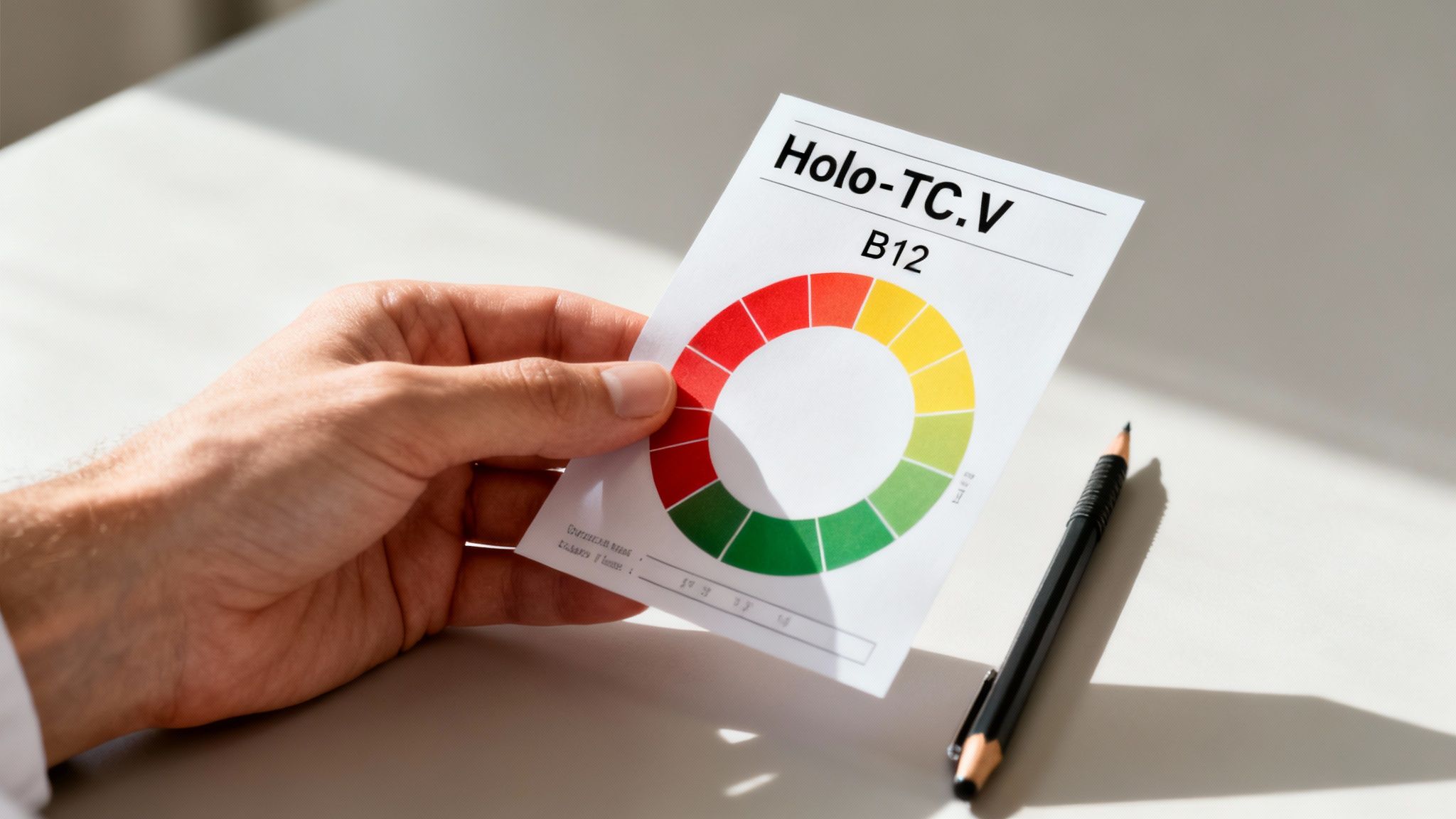
We do not want to simply provide you with data. We show you what these values specifically mean for you and your body. This allows you to finally make decisions based on facts—not mere assumptions.
What your results reveal
One value stands out particularly in your results: holotranscobalamin (holo-TC). Think of it as the “active” and immediately usable form of vitamin B12 in your blood. It is essentially the express fuel that reaches your cells directly, without detours.
That is precisely why a low holo-TC value is such a valuable early indicator. It can show that your B12 stores are gradually being depleted, often long before you notice any symptoms at all. Modern diagnostics rely on precisely these sensitive markers. A declining holo-TC level signals that reserves are running low, while elevated levels of another marker, methylmalonic acid (MMA), already indicate a functional deficiency. You can learn more about this advanced diagnostic approach and its importance for early detection here.
A low value is no reason to panic, but rather valuable information. It gives you the opportunity to take early, targeted action before a serious deficiency develops.
From insight to action
Your mybody-x results report provides you not only with the raw numbers, but also translates them directly into concrete, personalized recommendations for action. This helps bring your values back into balance.
- With optimal values: Great! Your report explains how you can easily maintain this top condition with the right diet and a suitable lifestyle.
- If your results are borderline: You will receive targeted tips to help you. These may include simple measures, such as eating more lentils if your folate levels are low, or eggs and dairy products if your B12 levels show signs of declining.
- If your results are abnormal: If a significant deficiency is found, clarity is the most important thing. We openly recommend speaking with a doctor or therapist. Together, you can determine the cause and develop the best strategy—perhaps also with targeted dietary supplements.
Your vitamin B test is therefore more than just a snapshot. It is your personal starting point for specifically improving your health. With the right facts, you can make the best decisions—for more energy, stronger nerves, and an all-around better sense of well-being.
Still have questions? Here are the answers
Do you still have a few final questions about the vitamin B test? No problem. Here we have summarized the most frequently asked questions so that you are fully informed and can get started with confidence.
How often should I have my vitamin B status checked?
It all depends on what your everyday life looks like and whether you have certain risk factors. Are you part of a risk group—for example, because you follow a vegan diet, are somewhat older, or have a gastrointestinal condition? Then an annual check can certainly be worthwhile to be on the safe side.
For everyone else, if you feel fit and maintain a balanced diet, it is generally sufficient to check your levels every two to three years. This way, you can keep track of everything and take action early if needed.
Do I need to fast for the test?
Good news: You do not need to fast for the mybody-x nutrient test, which you can conveniently take at home. You can collect the sample whenever it suits you best—without any morning stress.
The only important thing is to read the enclosed instructions carefully beforehand. This ensures that everything goes smoothly and that you get a reliable result.
Your body can barely store water-soluble B vitamins such as B6. Any excess is usually simply excreted in your urine. An overdose from food alone is therefore virtually impossible. However, you should be cautious with high-dose dietary supplements. A test helps you determine your exact needs and avoid unnecessary or excessive intake.
Are you ready to get to the bottom of your energy reserves and finally gain clarity about your vitamin B intake? The first step is easy. With the nutrient test from mybody-x, you can quickly and easily get certainty.



Share now:
Causes of vitamin B12 deficiency uncovered
Vitamin B12 foods for vegetarians: what meets their needs