

Test for nutrient deficiencies and address them effectively
Do you often feel tired, unfocused, and simply not at your best, even though you actually get enough sleep? Many people blame everyday stress. But often, something else is behind it: an undiagnosed nutrient deficiency.
Instead of continuing to guess, you can finally get clarity with a targeted blood test that you can conveniently perform at home. This will help you find out whether your body is lacking important vitamins or minerals and take targeted action. The nutrient tests from mybody-x.com are your guide to understanding your body better and taking your health into your own hands.
Why you should know your nutrient status
A balanced nutrient supply is the invisible foundation of your energy—physically and mentally. Think of it like a car engine: without the right oil and the proper fuel, it does not run smoothly, sputters, and loses power. Your body works the same way.
Even if you think you eat a healthy diet, unnoticed nutritional gaps can develop.
Subtle signals and their causes
The reasons for a deficiency are surprisingly diverse. Today, our food often contains fewer nutrients than it did in the past, for example due to depleted soil. But personal factors also play a major role:
- Special phases of life: Stress at work, pregnancy, or intense exercise—all of these can significantly increase your individual nutrient requirements.
- Specific diets: Anyone following a vegetarian or vegan diet should pay particular attention to nutrients such as vitamin B12, iron, and zinc.
- Individual absorption: Every body is different. Chronic illnesses or taking medication can make it even more difficult to absorb nutrients.
The symptoms of a deficiency often creep in slowly and are nonspecific. You may simply no longer feel as capable as you used to. If you would like to take a closer look, you can learn more here about how to recognize a nutrient deficiency when experiencing fatigue and lack of motivation.
Did you know? Nutrient deficiencies are more widespread in Germany than many people think. Studies show that almost one in three Germans has deficiencies in important vitamins and minerals.
Many people feel sluggish, especially during the darker months of the year. This is often due to a widespread deficiency, as confirmed by current statistics: An incredible 82% of men and 91% of women do not reach the recommended daily intake of vitamin D. The situation is similar for folate, with 79% of men and 86% of women falling short. This article on focus.de, for example, provides detailed insights.
A targeted nutrient test from mybody-x.com finally gives you the clarity you need to take proactive care of your health. Instead of blindly trying random dietary supplements, you can specifically fill the gaps that actually exist. This puts you back in full control of your well-being.
Learning to understand your body's warning signals
Your body is constantly communicating with you. Often, however, we simply overlook the subtle signals amid the stresses of everyday life: fatigue that just won't go away, hair that suddenly becomes thinner, or nails that keep breaking. These are not merely cosmetic flaws, but often the first, very specific cries for help from your system.
Think of it like a plant whose leaves turn yellow—it clearly shows us that it is missing something important. Your body essentially does the same thing, but its signals are somewhat more complex.
From suspicion to a clear cause
Let's consider the best-known warning signal of all: persistent exhaustion. But not all fatigue is the same. If you often feel heavy and sluggish right after waking up, this could indicate an iron deficiency. If, on the other hand, you are more nervous, can barely concentrate, and feel forgetful, a deficiency of vitamin B12 may be behind it.
Your skin and hair are also honest reflections of your nutrient status. Brittle nails and hair loss? These are classic companions of a biotin or iron deficiency. If your wounds heal slowly or you suddenly start struggling with skin blemishes, you may be lacking zinc.
Other typical signs you should take seriously:
- Frequent infections: A weakened immune system is practically crying out for more vitamin C, vitamin D, or zinc.
- Muscle cramps: Who hasn't experienced them? They are often a classic sign that your magnesium stores are depleted.
- Cracked corners of the mouth: These can indicate a deficiency in B vitamins or iron.
These symptoms are often just the tip of the iceberg. Unfortunately, malnutrition is still underestimated in Germany. According to the Federal Statistical Office, around 25% of hospital patients are malnourished or at high risk of malnutrition. If you're interested in the topic, you'll find fascinating figures and facts at Malnutrition: Statistics, Data, Facts on trinknahrung.pro.
When your body needs clarity
It's important to understand that these symptoms rarely occur on their own. They are part of a bigger picture. A nutrient deficiency never affects just one function; it often impacts the entire system.
A targeted nutrient test is the best way to move from vague suspicion to purposeful action. It translates your body's warning signs into clear data that can finally help you genuinely improve your health.
By learning to interpret these signs correctly, you take the first and most important step. You stop merely treating the symptoms and start looking for the cause. A mybody-x.com at-home blood test gives you the certainty you need and shows you in black and white which nutrients your body really needs right now.
Which nutrient test is really right for you?
Do you finally want clarity about your nutrient levels, but find yourself wondering: Which test is right for me? The choice can quickly become overwhelming. The key, however, is not to test as much as possible, but to listen closely to what your body is telling you. With the right approach, you'll find the test that can truly help you.
The at-home nutrient tests from mybody-x.com are designed precisely for this. You don't always have to go for the full program. Sometimes taking a targeted look at a single value is enough to solve a very specific problem.

Comprehensive profile or targeted individual test?
This decision depends entirely on your personal situation. Do you often feel tired, unfocused, and experience vague symptoms that you simply can't identify? Then a comprehensive nutrient test is usually the best choice. It gives you a broad overview of the most important vitamins and minerals and often reveals connections you may not have thought of.
But if you already have a very specific suspicion, a targeted individual test is the quickest and often smartest solution.
Let's take a look at a few typical real-life scenarios that can help you decide:
- The classic winter blues: Do you drag yourself through the day feeling listless and tired every year from November to March? Here, a simple vitamin D test could be just the solution. In our latitudes, deficiency is extremely common during the darker season.
- Vegan diet check: Do you follow a vegan diet and want to make sure you’re well supplied with critical nutrients? A test focusing on vitamin B12, iron, and zinc is ideal for identifying typical nutritional gaps early, before they become a problem.
- Ambitious fitness goals: You give it your all during training and want to take your recovery to the next level? Levels such as magnesium and zinc are absolutely crucial for your muscle function. A test that checks precisely these minerals can give you the decisive advantage for your performance.
A targeted test is like a flashlight in a dark room. You don’t always need to turn on the floodlight to find what you’re looking for. Sometimes it’s enough to shine the light exactly where you suspect the problem is.
Which mybody-x.com test is right for you?
To make your choice easier, we have compared our most popular tests. Find out which solution is optimal for you based on your goals and symptoms.
| Test type (e.g. Comprehensive Nutrient Test) | Who is it suitable for? | What is measured? |
|---|---|---|
| Comprehensive Nutrient Test | People with general symptoms such as fatigue or poor concentration, or for comprehensive preventive care. | A broad spectrum of vitamins (D, B12, etc.), minerals (iron, zinc, magnesium), and trace elements. |
| Vitamin D Test | Ideal for winter fatigue, mood swings, or annual monitoring during the darker months. | Focuses exclusively on the 25-OH vitamin D level. |
| Iron Deficiency Test | Especially suitable for women, vegans, and athletes who often feel sluggish and look pale. | Measures ferritin levels (iron stores) and provides insight into a possible deficiency. |
| Vegan Check | For anyone following a purely plant-based diet who wants to keep an eye on critical nutrients. | Checks typical deficiency candidates such as vitamin B12, iron, zinc, and often also iodine and selenium. |
This table is a good starting point. But always remember that your individual situation is decisive.
Your life situation is the best guide
Your current stage of life and your habits provide the best clues. Be honest with yourself: Are you constantly exposed to stress? Are you perhaps planning a pregnancy? Do you suffer from chronic complaints? All of this affects your nutrient requirements and can show you which levels you should examine more closely.
If you want to delve deeper into the topic, you’ll find more valuable information and tips on testing for nutrient deficiencies in our health portal.
Ultimately, it’s about making a smart decision. By analyzing your symptoms and lifestyle, you can find the mybody-x.com test that provides not just dry data, but genuine, actionable insights for your health. This finally takes you from merely guessing to taking targeted action.
At-home nutrient test: It’s that easy
Many people avoid going to the doctor and the associated blood draw just to check their nutrient status. The good news is that it’s much easier today. With a mybody-x.com home testing kit, you can complete this important health step comfortably in your own home.
You remain fully in control and decide when and where to collect your sample—without a crowded waiting room or rigid appointments. The entire process is designed to give you maximum clarity about your levels with minimal effort.
Clarity about your levels in just a few steps
As soon as you have your mybody-x.com test kit in your hands, you’re ready to get started. Each kit contains clear, illustrated instructions that guide you through the process step by step. So there’s no need to worry about doing anything wrong.
Essentially, all it takes is a small, quick prick in your fingertip. Using the included lancet, you collect a few drops of blood directly in the sample tube. That’s it—virtually pain-free and done in just a few minutes.
My practical tip: Warm your hands briefly under warm water before collecting the sample, or shake them vigorously. This stimulates circulation and makes it much easier to obtain the required amount of blood.
Once you have collected the sample, activate your test kit online using your personal code. This is an important step so that our partner laboratory can clearly assign your sample to you later. Then pack everything securely in the return envelope and take it to the post office. Shipping to our certified German specialist laboratory is of course free of charge for you.
This infographic gives you a good overview of how to interpret your laboratory results later and draw the right conclusions from them.
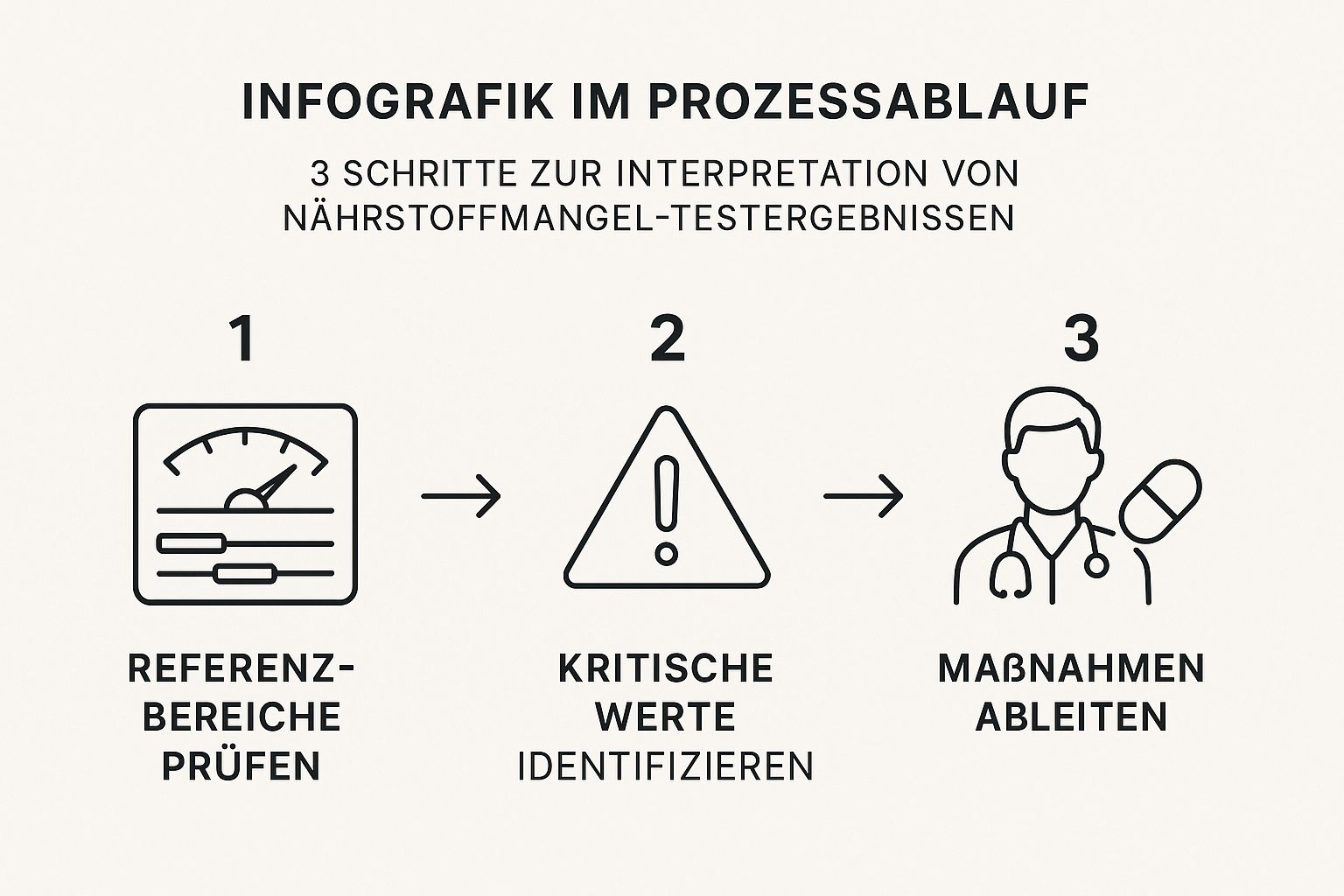
As you can see, it’s not just about the numbers themselves. It’s about using the data to derive concrete, actionable steps for your health.
What to keep in mind when collecting your sample
To make your result as accurate as possible, there are a few simple tricks. These small steps ensure that your sample reaches the laboratory in top condition.
- The perfect time: It’s best to take the test in the morning, immediately after getting up, on an empty stomach. What you eat beforehand can affect the levels of certain nutrients and distort the results.
- Hygiene is essential: Wash your hands thoroughly with soap and warm water. Disinfect the puncture site with the enclosed alcohol wipe and wait until it has dried completely.
- Don’t squeeze: Don’t press too hard on your finger to force out more blood. This could dilute the sample with tissue fluid. It works much better to gently stroke the finger from the palm toward the fingertip.
By the way: Sometimes symptoms such as constant fatigue or digestive problems are caused not only by nutrient deficiencies but also by undetected intolerances. If you suspect that certain foods are causing you problems, our guide explains how a blood test for food intolerances works and can give you additional certainty.
By following these simple tips, you can ensure that your test for nutrient deficiencies produces truly meaningful results. This gives you reliable insight into your body and enables you to make the right decisions for your well-being.
Understanding your test results and taking the right steps
You’re holding your test results in your hands—the crucial moment when vague suspicions finally become solid certainty. A lab report may seem quite complicated at first glance, but don’t worry, we won’t leave you to deal with it alone. Your mybody-x.com results report has been specifically designed so that you can quickly and easily grasp the most important information.
Each individual value is presented clearly and understandably, often supported by a simple color scale. This lets you see at a glance which values are in the green range and where you may need to take a closer look.
From numbers to concrete action
But the truly valuable part of your test is not the raw numbers. It’s the specific, actionable recommendations that result from them. Our goal is not only to provide you with data, but also to empower you to make informed decisions about your health based on your individual results.
Let’s take a look at two typical real-life scenarios:
Scenario 1: Your vitamin D level is low
Unfortunately, a vitamin D level that is too low is not uncommon in our latitudes. Scientific surveys confirm this as well. According to the 13th Nutrition Report of the German Nutrition Society (DGE), around one third of adults in Germany have an inadequate vitamin D intake. Anyone who wants to learn more about the nutritional status can read more directly on dge.de.
In this case, your results report provides you with very specific tips:
- Diet: Deliberately include vitamin D-rich foods in your meal plan. These include fatty fish such as salmon and herring, as well as egg yolks and mushrooms.
- Lifestyle: Even short walks in the midday sun can help, because your skin produces the vitamin itself when exposed to UVB rays.
- Supplementation: In the case of a significant deficiency, targeted intake of vitamin D supplements is often the most effective way to replenish your stores.
Scenario 2: Your iron level is close to the lower limit
Women, athletes, and people who follow a strictly plant-based diet are particularly familiar with this problem. An emerging iron deficiency often creeps in with persistent tiredness and paleness.
Your test result is like a personal compass. It not only shows you where you currently stand, but also points you toward ways to specifically improve your well-being—without any guesswork or trial and error.
Smart measures are needed here that go beyond simply eating iron-rich foods:
- Plant-based powerhouses: Load up on lentils, chickpeas, pumpkin seeds, and oats.
- The right combination makes all the difference: Always combine plant-based sources of iron with Vitamin C. A glass of orange juice with your cereal or peppers in your lentil salad can improve iron absorption several times over.
- Beware of “iron blockers”: Coffee, black tea, and dairy products can also block iron absorption. It’s best to leave about an hour between your iron-rich meal and your next coffee.
If you’d like to delve deeper into the topic, you’ll find valuable tips in our guide on what really helps to eat when you have an iron deficiency. See every value in your report as an opportunity to understand your body even better and support it in a targeted way.
Your questions about the nutrient test—we have the answers
You’ve already done a good job researching, but a few details are still unclear? That’s perfectly normal. Here we’ve collected the most frequently asked questions we receive time and again, so you can be well prepared and start your personal health analysis with confidence.
Are at-home blood tests really reliable?
This is one of the most important questions of all, and the answer is a clear yes. The mybody-x.com home tests are highly reliable.
Your sample is sent to exactly the same certified medical laboratories in Germany that your doctor uses. The scientifically validated analytical methods are absolutely identical. The only difference? You collect the sample conveniently at home yourself. Our detailed, illustrated instructions guide you through the process step by step, ensuring the quality of your sample. So you can rely fully on the result.
How often should I have my nutrient levels checked?
It all depends on you and your personal circumstances. There is no one-size-fits-all rule, but these guidelines based on our experience can help:
- For general prevention: If you feel fit and simply want to make sure everything is fine, a check-up every 1–2 years is more than sufficient.
- After major changes: Are you switching to a vegan diet, starting intensive training, or going through a stressful phase of life? Then testing again after around 6 months is a good idea to see how your body responds.
- To monitor a deficiency: If a deficiency is already known and you are addressing it specifically with supplements or a change in diet, you should test again after 3–6 months to check your progress.
Think of the nutrient test as a regular inspection for your body. It’s about taking proactive action and keeping your nutrient stores replenished rather than waiting until the first symptoms appear before responding.
What should I do if my test shows a severe deficiency?
First of all: don’t panic! A result showing a clear deficiency is above all an opportunity to take targeted action. Your mybody-x.com report always includes clear, practical recommendations that you can implement directly in your diet and lifestyle.
However, if the deficiency is particularly severe or you feel significantly impaired physically, we strongly recommend discussing the results with a doctor, naturopath, or therapist you trust. The mybody-x.com home test is a fantastic tool for guidance and prevention, but it does not replace medical diagnosis or treatment.
Are you ready to finally gain clarity and take control of your health? At mybody-x.com, you’ll find exactly the nutrient test that provides precise insights into your body. Take control of your well-being now. Find your personal nutrient test here



Share now:
Micronutrient analysis: What your body really needs
Food Intolerance Test: Find out what works well for you