
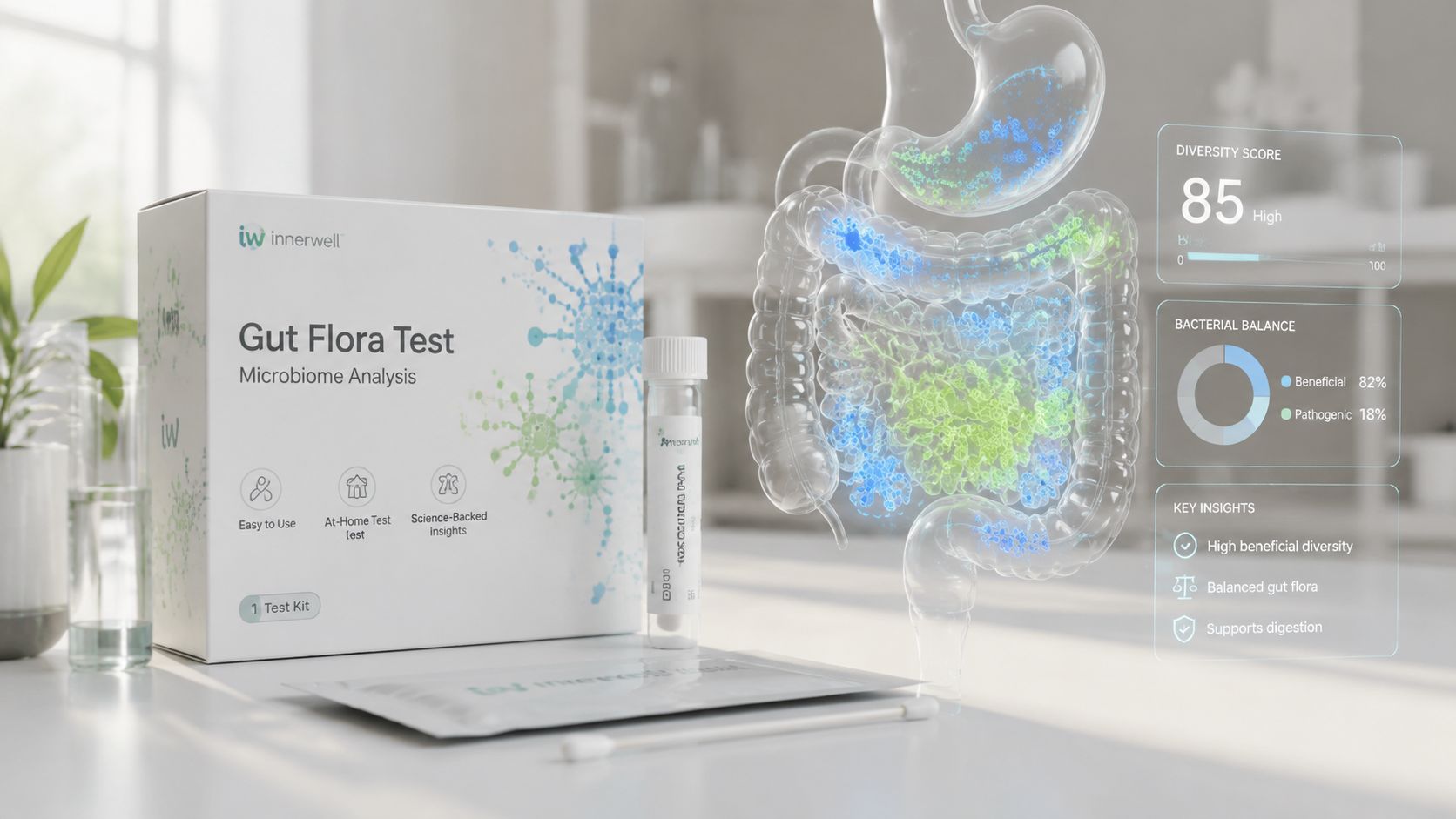
Discover the best gut microbiome tests with practical recommendations for action
You may be sitting there right now with exactly these questions: Why is my stomach so often bloated? Why does my digestion fluctuate even though I generally eat healthily? And is a gut microbiome test actually worth it, or is it just clever marketing?
This is exactly where many people find themselves. They notice that something in everyday life isn’t quite right. Sometimes it’s a sluggish stomach, sometimes tiredness after eating, sometimes the feeling that their body is suddenly reacting differently to certain foods. Then the search begins. Forums, social media, podcasts, test providers. The result is often more confusion than clarity.
If you’re currently trying to discover the best gut microbiome tests with practical recommendations for action, above all, you need a clear-eyed view of what a test can and cannot do, and how to recognize a worthwhile provider. It’s not about chasing the next hype. It’s about interpreting data in a way that produces something useful in everyday life.
Your path to greater well-being begins in the gut
Many people begin their search not out of curiosity, but out of frustration. Their stomach reacts after eating, their digestion is unpredictable, or their energy levels fall short of what should actually be possible. Then the idea of taking a direct look inside the gut seems natural.
That’s understandable. The microbiome is a complex ecosystem of microorganisms closely linked to digestion, well-being, and everyday symptoms. If you’re looking for an introduction, this article on the microbiome explained simply provides a good foundation.
Why so many people look for a test
At first glance, a gut microbiome test seems like the ideal shortcut. Send in a sample, read the report, adjust your diet, improve your symptoms. Unfortunately, it isn’t always that simple. But the basic idea makes sense if you put it into the right perspective.
Expectations are crucial. A good test can show you what your internal ecosystem looks like at the moment. It can reveal patterns and tailor general recommendations to you. But it shouldn’t pretend that every symptom can be explained solely by the composition of your bacteria.
A meaningful test is not an oracle. It is a tool for making better decisions in everyday life.
What this guide really gives you
I’m skeptical of flowery promises about gut health. What matters are sound criteria. That’s why this isn’t just about comparing offers, but about the more important question: How do you turn microbiome data into real, sensible steps?
Always ask yourself first with every test:
| Question | Why they matter |
|---|---|
| What is actually being analyzed? | Not every test goes beyond a basic overview of bacteria. |
| How easy to understand is the report? | Raw data are of little help in everyday life. |
| Are there practical recommendations? | Good reports translate results into dietary recommendations and routines. |
| What are the limitations? | A self-test does not replace medical evaluation. |
Those who understand this usually make significantly better decisions than someone who only looks at advertising claims.
What a gut flora test really reveals
A gut flora test does not provide a crystal ball for your health. It shows a snapshot of your gut microbiome. This means you receive information about which bacterial groups are present in your stool sample, how diverse the composition is, and whether a possible imbalance is visible.
This article on examining the gut flora also provides useful context.

What the test measures
Many home tests use modern laboratory methods such as 16S rRNA gene sequencing or PCR. These methods can determine the relative proportions of certain bacterial groups. In practice, this means you do not simply see “good” or “bad”; instead, you receive a profile of your bacterial distribution.
This can be useful if you want to know:
- How diverse your microbiome is
- Whether certain groups are unusually strongly or weakly represented
- Whether there are indications of dysbiosis
- Which general dietary approaches might suit your results
One example on the market is the Darmflora MIKROBIOM-Test Complete. According to the product description, it analyzes overall gut health, including bacterial diversity, leaky gut, inflammatory markers, and dysbiosis, as a basis for targeted dietary and probiotic recommendations from home.
What the test cannot do
This is where it becomes important. Scientific experts remain deliberately cautious about home tests. Stiftung Warentest points out that there is currently no standardized and validated procedure for at-home microbiome tests, nor any established definition of a “healthy” microbiome. This limits the significance of individual recommendations for action, as described in the article on at-home microbiome tests by Stiftung Warentest.
Specifically, this means:
A microbiome test does not replace medical diagnostics for irritable bowel syndrome, allergies, or other conditions.
A test can therefore provide indications, but it cannot reliably diagnose or rule out a disease. That is precisely why the quality of the provider is crucial. Reputable reports interpret results carefully. They present recommendations as guidance, not as a substitute for therapy.
How to recognize a good report
A useful report does three things at once:
- It explains your values in an understandable way.
- It does not exaggerate their significance.
- It translates data into practical next steps for everyday life.
If a provider only shows colorful graphics or acts as though your personal “perfect” microbiome can be defined precisely, you should be skeptical. Good providers work more precisely and cautiously.
The most important criteria for a good gut microbiome test
When you order a gut microbiome test, you are not just buying a kit. You are investing in data, analysis, and the question of whether anything meaningful can be derived from the result at all. That is why it is worth looking beyond design or advertising language and focusing on the substance.
For further guidance, you can also find a comparison of microbiome tests.

Analytical methods and laboratory quality
The first criterion may seem unremarkable, but it is essential. A test is only as good as the laboratory and the procedure behind it. If the analysis is not performed properly, attractive recommendations will not help either.
Check whether the provider explains transparently:
- Which method is used, such as 16S rRNA or PCR
- Where the analysis takes place
- How the sample is processed
- Whether the laboratory process is described in a comprehensible way
A provider that leaves out this part is often cutting costs in the wrong place. Especially with sensitive health topics, you should know what your report is based on.
Scientific objectivity instead of marketing
The market is full of phrases like “optimal microbiome,” “perfect balance,” or “individual therapy based on your stool sample.” This is exactly where caution is warranted. A reputable provider shows you both the possibilities and the limitations.
The cost of private gut microbiome tests in Germany currently ranges from €100 to €300. Statutory health insurance funds do not cover these costs. In addition, the DGVS described these analyses as “expensive and pointless” for the general public due to a lack of standardization, as explained in this overview of microbiome test costs and their classification.
Practical rule: The more expensive a test is, the more clearly the provider should explain what you are actually getting and where the scientific limitations lie.
Clear report with genuine everyday guidance
Many reports do not fail at the analysis stage, but at the translation stage. A good report does not merely list groups of bacteria; it also helps you interpret them. Otherwise, you are left staring at technical terms and still do not know what you should eat differently tomorrow.
Reports that offer the following are helpful:
- specific dietary guidance instead of general health platitudes
- food examples that you can actually find in the supermarket
- priorities, meaning what makes sense to do first and what can come later
- clear, understandable language that avoids technical jargon
A report is valuable when it turns information into the ability to take action.
Data protection and sensitive health data
This point is often underestimated. Your microbiome report is not a harmless lifestyle assessment, but a health document. That is why the way your data is handled should be understandable to you.
What I pay particular attention to:
| Criterion | What you should look for |
|---|---|
| Data storage | Is it explained where and how data is stored? |
| Consent | Is it clearly explained what your data is used for? |
| Deletion | Can you have your data deleted? |
| Transparency | Are there clear, understandable privacy guidelines? |
A provider that appears careless with data protection should not be your first choice for health tests.
An example of the quality of the mybody®x Darmflora MIKROBIOM Complete test
Abstract criteria are useful. A concrete example is better. If you ask what a gut flora test should look like in practice, the clearest way to demonstrate this is with a model that not only analyzes but also provides an understandable evaluation.

A helpful background article on this is what has been scientifically established about microbiome tests and when they are useful.
What is practically relevant about this example
With the mybody®x Darmflora MIKROBIOM Complete test, the focus is not solely on the list of bacteria. According to the available information, it provides specific recommendations for high-fiber foods, fermented products, and foods that should preferably be avoided. This is far more valuable in everyday life than a report that merely compiles technical terms.
In addition, the following measures are often recommended after the results:
- specific probiotic strains, tailored to the individual findings
- a high-fiber food checklist
- reducing sugar and alcohol
That may sound simple at first, but it is exactly the right approach. The best recommendation is not the most complicated one, but the one you can actually put into practice.
Why this type of report is more useful in everyday life
Many people do not fail because they lack information. They fail because information is not translated into decisions. If a test only says “eat more fiber,” that is of little help. But if the report clearly shows which food groups make sense for your profile, knowledge becomes action.
Good practical recommendations do not start with supplements, but with foods, habits, and priorities.
Another advantage of reports like these is readability. If you first have to decipher medical jargon, you are less likely to actually change anything. A clear report is not a bonus. It is part of the test’s fundamental quality.
What I would still pay attention to despite the good example
Even a well-designed test remains a self-test. That is why I would always check whether the provider is transparent about its limitations. A report is credible when it enables personalization but does not pretend that every recommendation is a medically proven individualized treatment.
Especially when it comes to gut health, that is the right attitude. Practical relevance, yes. Exaggerated health claims, no.
From test results to a healthy routine
The real problem does not begin when you buy the test, but after receiving the PDF. Many people read their results, nod in agreement, and then carry on as before. That is exactly where the benefit evaporates. Microbiome data only help if you turn them into a routine that fits your everyday life.

What you should really do with recommendations
The most important perspective comes from both practical experience and public debate: Dietary changes should not be made solely on the basis of test results, because there is no scientific consensus on an “optimal” microbiome. For healthy people, a balanced, fiber-rich diet with plenty of vegetables and whole-grain products is often sufficient. However, a test can serve as a motivator and help personalize these general recommendations, as explained by Apotheken Umschau’s article on microbiome analysis.
That is a very sensible standard. So a test is not the magic answer. But it can help you apply general rules more consistently and personally.
How to turn the report into practical everyday steps
Instead of completely changing your life overnight, work in small, clear steps. In practice, the following usually works best:
-
Start with one meal
Don’t overhaul your entire diet plan right away. Start with breakfast or lunch. A single, consistent anchor is often more effective than ten good intentions.
-
Increase fiber gradually
If your report suggests a high-fiber diet, increase it gradually. Anyone who changes too much too quickly can easily produce more bloating instead of greater well-being.
-
Test fermented foods mindfully
Small amounts are often the better starting point. Observe how your gut reacts instead of introducing several new products in parallel right away.
-
Do not cut out everything at once
Reducing sugar or cutting back on alcohol can be helpful. But if you eliminate gluten, dairy products, legumes, and fruit at the same time, you will not know in the end what actually helped.
A practical weekly routine
To keep recommendations from remaining abstract, a simple framework helps:
- work with a few repeatable meals from Monday to Friday
- try one new fiber-rich ingredient per week
- include fermented foods in small amounts if you tolerate them
- Note down your symptoms instead of relying only on how you feel
The best microbiome plan is not perfect. It is stable enough that you can stick to it even on stressful days.
When additional tests may be useful
If, despite focusing on your gut, you notice that energy, skin, concentration, or general resilience are more prominent concerns, taking a broader look at your body may be useful. In such cases, a mybody x blood test may be a complementary option for assessing nutrients, intolerances, or hormonal issues from home. This does not replace a medical diagnosis, but it can help you better understand other factors influencing your health besides gut health.
When the test is not enough and medical advice is needed
A gut flora test is a lifestyle and prevention tool. It can provide insights, reveal connections, and help structure your diet. But it is not a shortcut around medical evaluation.
This applies especially when symptoms are severe, persistent, or new. In such situations, do not try several self-tests first; instead, seek medical evaluation to determine what is behind the symptoms.
You should take these warning signs seriously
If any of the following applies to you, you should see a doctor:
- severe abdominal pain
- blood in the stool
- unintentional weight loss
- chronic diarrhea
- long-lasting constipation
- Symptoms that are clearly getting worse
This is no longer about fine-tuning your diet, but about whether a medical condition needs to be investigated. This could include, for example, chronic inflammatory bowel diseases or other medical causes.
Why this distinction matters so much
Self-tests become problematic when they create a false sense of security. An unremarkable microbiome report does not automatically mean that everything is medically fine. Conversely, an abnormal report does not mean that you have a disease.
If symptoms are affecting your everyday life or getting worse, the next step is not another report but a medical examination.
Reputable providers clearly state this limitation. That builds trust because it does not reduce your health to a marketing promise.
FAQ Frequently asked questions about gut microbiome tests
How often should I take a gut microbiome test?
A single test can be a good starting point, especially if you want to tailor your diet more specifically. A repeat test may make sense later if, after a period of consciously making changes, you want to see whether your daily routine and findings are developing in the same direction.
More important than following a fixed schedule is whether you have actually implemented anything based on the initial result. Without change, another test will usually only provide a second collection of data.
Can a gut microbiome test help me with digestive problems?
It can help you look at your situation in a more structured way. Many people feel vague and uncertain about their symptoms. A test can then provide guidance on whether the focus should be on diversity, dietary patterns, or a possible imbalance.
What it cannot do is reliably identify a medical cause. If symptoms are significant or persistent, medical evaluation is always necessary.
Do I even need the test if I eat a healthy diet?
Not necessarily. For many healthy people, a balanced, fiber-rich diet is already the most sensible foundation. The added value of a test lies more in making general recommendations more personal and creating motivation for specific habits.
If you already feel stable, a test is more of an optional analytical tool than a necessity.
Are the recommendations for action in such reports always useful?
They are useful when they remain realistic. Good recommendations are specific, practical for everyday life, and worded cautiously. It becomes problematic when a provider derives far-reaching treatment or disease claims from a single stool sample.
So pay attention to whether the report mainly gives you foods, routines, and clear priorities you can understand. This is usually more useful than an overloaded catalog of prohibitions and specialized products.
What will benefit me most after the test?
Three things:
- a clear priority, instead of changing everything at once
- a simple weekly plan that you actually stick to
- Patience, because gut routines take time
Those who keep this in mind will get significantly more out of a test than someone who simply collects numbers.
If you want to understand your health more holistically—not just through your gut—it may be worthwhile to consider suitable at-home tests for nutrients, intolerances, hormones, and home analyses. At mybody x blood test, you can find an overview of various at-home testing options.



Share now:
The 3 Best Microbiome Gut Tests Compared in 2026
The most reliable microbiome tests for your gut flora: Our top recommendations!