
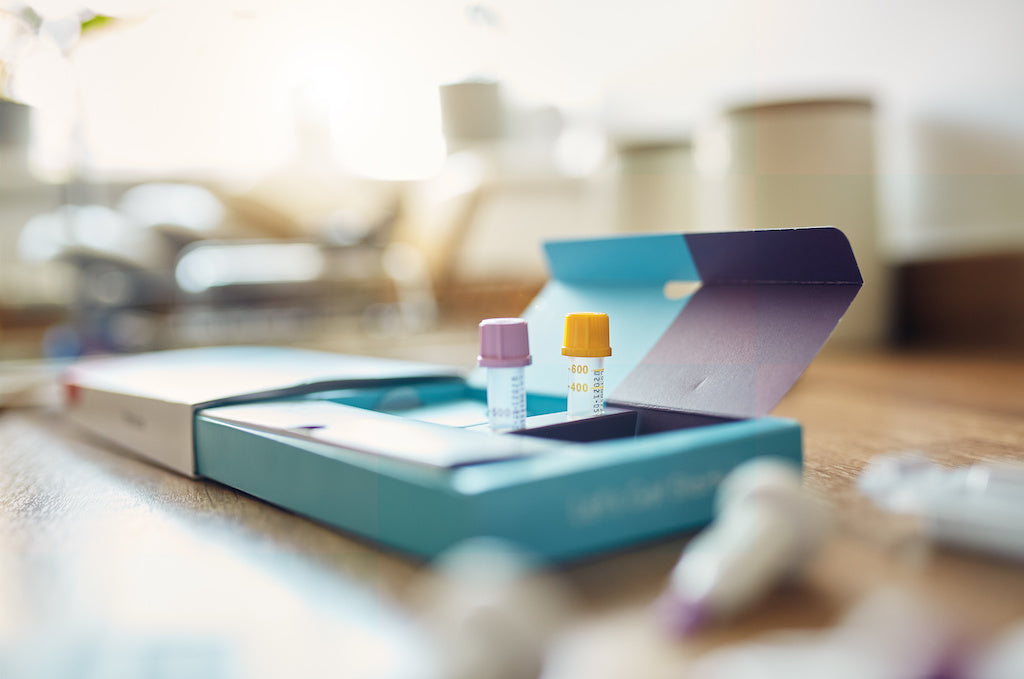
Iron Deficiency Test—How to Reliably Find Out Whether Your Iron Level Is Too Low
Iron Deficiency—the Invisible Energy Thief
Do you know the feeling of waking up tired in the morning, constantly feeling cold, or craving sweets after a meal? Many people blame this on stress, lack of sleep, or dietary lapses—but iron deficiency is often the cause. The problem is that iron deficiency develops gradually. You often notice the symptoms only when your body has already been lacking sufficient iron for quite some time.
That is exactly why an iron deficiency test is so important. It gives you clarity about whether your symptoms are actually related to low iron levels—and which measures are necessary. But what is the best way to test? With an iron deficiency test at the doctor’s office, an at-home iron self-test, or a rapid iron deficiency test? And which values are actually meaningful?
In this article, you will learn:
-
which symptoms are typical,
-
what types of tests are available,
-
how reliable at-home iron deficiency test experiences are,
-
how much the tests cost,
-
and which values are truly decisive.
In the end, you will have a clear roadmap for identifying and resolving your iron deficiency.
👉 First overview: MyBodyX Self-Tests Overview
Definition & Basics: What Does Iron Deficiency Mean?
Iron is an essential trace element needed primarily to produce hemoglobin—the red blood pigment that transports oxygen throughout your body. If your iron level is too low, this means your organs receive less oxygen.
The most important laboratory values measured by an iron deficiency test:
-
Ferritin: the storage form of iron and the most important marker of iron deficiency.
-
Hemoglobin (Hb): indicates whether your blood can transport enough oxygen.
-
Transferrin saturation: shows how well iron is bound in the blood.
-
Serum iron: fluctuates, so it is not meaningful on its own.
👉 In short: Only ferritin and hemoglobin give you real certainty.
Relevance & Benefits of an Iron Deficiency Test
A iron deficiency test offers you many benefits that go far beyond simply making a diagnosis:
-
Put symptoms into perspective: Fatigue, dizziness, headaches, or unusual cravings finally become understandable.
-
Take targeted action: Instead of taking iron supplements “just in case,” you get reliable test results.
-
Prevent consequential damage: Untreated iron deficiency leads to anemia, cardiovascular problems, and a weakened immune system.
-
Improve quality of life: With stable iron levels, you feel fitter, more focused, and more capable.
A WHO study (2021) shows that around 25% of the world’s population suffers from iron deficiency. Women of childbearing age, vegetarians, and athletes are particularly affected.
Types / categories / variants of iron deficiency tests
1. Medical tests
-
Family doctor blood test: measures ferritin, Hb, and transferrin.
-
Extended diagnostics: investigation of possible causes (e.g., gastrointestinal diseases, blood loss).
-
Cost: usually covered by health insurance.
2. Iron self-test (laboratory kits)
-
Blood collected at home with a finger prick.
-
The sample is sent to a laboratory.
-
Measures ferritin and/or Hb.
-
Results available online.
3. Rapid iron deficiency test
-
Works like a pregnancy test.
-
Result in 10–15 minutes.
-
Provides indications, but no detailed values.
4. Order online & perform the test yourself
-
Combines convenience and accuracy.
-
Especially practical for people who prefer not to go directly to the doctor.
Comparison: Iron deficiency test at the doctor’s office vs. at-home test
Here is a new, more detailed comparison:
| Aspect | Doctor / laboratory test | At-home self-test (laboratory kit) | Rapid iron deficiency test |
|---|---|---|---|
| Measurable values | Ferritin, Hb, transferrin, serum iron | usually ferritin, sometimes Hb | rough indication (positive/negative) |
| Reliability | Very high, the gold standard | High, when evaluated by a laboratory | Moderate – for initial guidance only |
| Cost | Variable, often covered by health insurance | 30–150 € | 15–40 € |
| Procedure | Blood drawn at a medical practice, laboratory analysis | Blood from a fingertip, sent to a laboratory | Blood from a fingertip, immediate result |
| Time to result | 1–3 days | 2–5 days | 10–15 minutes |
| Key features | A doctor can investigate the causes | Discreet and convenient at home | Fast, with no laboratory costs |
| Who is it suitable for? | People with severe symptoms or chronic illnesses | People who want discreet initial reassurance | Curious people or those seeking a quick check |
Practical tips & methods
If you are planning an iron deficiency test, keep the following points in mind:
-
Preparation: Avoid iron supplements before the test; otherwise, the results may be distorted.
-
Timing: Levels can fluctuate depending on the time of day – testing in the morning is best.
-
Keep an eye on ferritin: Many rapid tests only measure Hb. Ferritin, however, is crucial for reliably detecting iron deficiency.
-
Take results seriously: If your values are abnormal, you should always consult a doctor.
Use for weight loss, health, or lifestyle
An iron deficiency test is useful not only when symptoms such as fatigue or dizziness have already appeared, but also for people who want to consciously work on their health and lifestyle. Athletes in particular benefit from this, as iron is crucial for supplying oxygen to the muscles, and a deficiency can immediately become apparent through reduced performance.
Anyone who wants to lose weight should also keep an eye on their iron levels: Strict diets can easily result in iron-rich foods being neglected, causing the body to become deficient. Vegetarians and vegans in particular are at greater risk because plant-based iron is absorbed less effectively than animal-based iron.
An iron self-test or an iron deficiency rapid test can help provide clarity in good time. Anyone who checks their levels regularly can ensure that their diet and lifestyle are optimally aligned and that weight loss is not hindered by a deficiency.
Experiences & Studies
Studies:
-
University of Zurich (2019): Women with iron deficiency were twice as likely to have depressive symptoms.
-
German Nutrition Society (DGE, 2020): Vegetarians have a higher risk of iron deficiency, especially when their vitamin C intake is low.
Experiences with iron deficiency tests at home:
-
Claudia (38): “My self-test showed a ferritin level that was too low. The doctor confirmed iron deficiency. Today I take supplements regularly and finally have my energy back.”
-
Jonas (45): “I ordered a rapid test. It was positive, but inaccurate. The laboratory self-test then gave me the clarity I needed.”
Procedure / How to perform it – Checklist
-
Document symptoms (fatigue, cravings, dizziness).
-
Choose a test (rapid test, self-test, or doctor).
-
Collect the sample (finger prick or blood draw).
-
Check your results – ferritin and Hb are crucial.
-
Make a doctor’s appointment if the results are abnormal.
-
Start treatment (diet, supplements, infusions).
Health benefits / Added value
The greatest benefit of an iron deficiency test is the reassurance it provides. If your iron level is too low, you may notice it not only through fatigue but also through impaired concentration, frequent infections, and an overall reduced quality of life.
With a simple test, you can identify this condition and take countermeasures before it worsens. A stable iron balance means that your body can transport enough oxygen, your immune system is strengthened, and your energy level remains consistently high.
Many people report that after treating an iron deficiency, they not only have more strength in everyday life but also experience significantly fewer food cravings. A test is therefore more than just a diagnosis—it is a key to greater energy, performance, and well-being.
FAQ – Frequently asked questions
Which values does an iron deficiency self-test measure?
Ferritin, sometimes also Hb.
How much does an iron deficiency test cost at the doctor’s office or online?
Doctor’s office: usually covered by health insurance. Online: €15–€150.
How reliable is an iron deficiency rapid test?
Good for initial indications, but less precise than laboratory values.
Can I order an iron deficiency test online and perform it myself?
Yes, with a self-test kit that includes laboratory analysis.
When should I get tested?
If you experience fatigue, food cravings, paleness, or follow a vegan diet.
Case study / Personal experience
Sabine (29) had suffered from fatigue and difficulty concentrating for years. An iron self-test showed low ferritin levels. At the doctor’s office, a chronic source of bleeding in her stomach was found. After treatment and iron infusions, she felt like “a new person.”
Conclusion: Iron deficiency test – your first step toward more energy
An iron deficiency test is the best way to finally determine whether your symptoms are caused by low iron levels. Whether at the doctor’s office, with a self-test, or using a rapid test—the important thing is to take action. That is the only way to regain your energy, performance, and quality of life.
👉 Get started now: Discover suitable self-tests or learn more in the metabolism tests overview.



Share now:
Correct estrogen deficiency and find your balance again
Find your hormone balance for greater well-being this autumn