
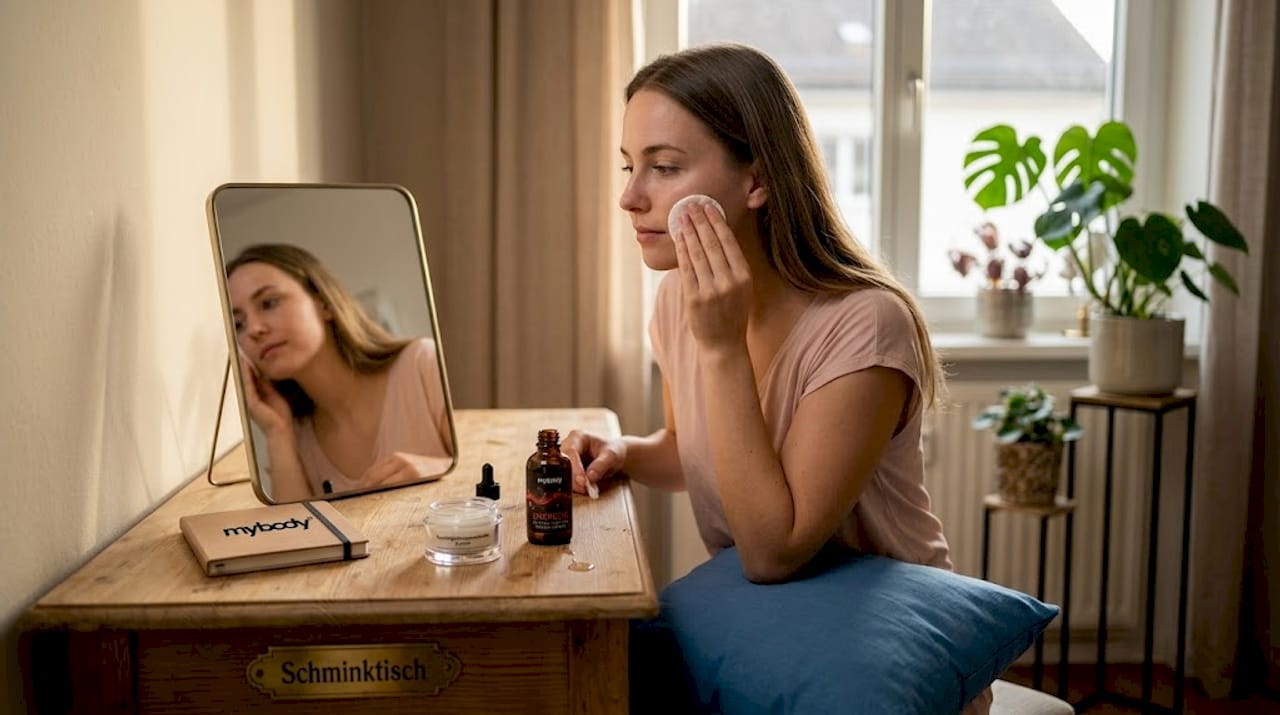
Micellar drops: effects, use, and tips
Micellar drops are among the most practical developments in modern skincare. Anyone who wants to cleanse their skin gently and thoroughly will encounter this topic sooner or later. But what is really behind them? Many people buy micellar drops without knowing exactly how they work, what matters when using them, and which mistakes are easy to avoid. This article provides an honest, practical guide: from the chemical basics and proper use to realistic expectations for the results.
Table of contents
- Key findings
- What are micellar drops and how do they work?
- Preparation: What you need for application
- Step by step: How to use Micellar Drops correctly
- Common mistakes when using Micellar Drops
- What you can achieve through regular use
- My assessment of how to use micellar drops
- Micellar Drops and More at mybody x
- FAQ
Key findings
| Point | Details |
|---|---|
| Micelles act like a magnet | Dirt and makeup are physically bound without putting strain on the skin barrier. |
| Product choice determines skin tolerance | Products with nonionic surfactants and no alcohol are particularly suitable for sensitive skin. |
| Proper application prevents irritation | Gentle patting instead of rubbing, followed by rinsing, provides lasting protection for the skin. |
| Micellar drops are not a standalone cleanser | Very oily or blemish-prone skin requires additional cleansing steps. |
| Moisturizing care afterward is advisable | After cleansing with micellar drops, light moisturizing care is recommended. |
What are micellar drops and how do they work?
Micelles are tiny, spherical structures that form in water when certain surfactants are present at a sufficient concentration. Each micelle consists of a water-friendly (hydrophilic) outer part and a water-repellent (hydrophobic) core. This core attracts and traps oil, dirt, and makeup particles, while the outer shell can be rinsed off with water.
The principle is remarkably simple: micelles bind dirt like a magnet, without requiring you to rub the skin vigorously or use harsh chemicals. That is precisely what makes them so appealing to people with sensitive skin.
Micellar drops versus micellar water: an important difference. Classic micellar water is a ready-to-use, aqueous solution that is applied directly to a cotton pad. Micellar drops, on the other hand, are more concentrated and can be diluted in water or applied directly to the skin, depending on the product. This gives you more control over the dosage.
What distinguishes Micellar Drops from conventional cleansers:
- No soap, foam, or harsh surfactant required
- Work through physical attraction, not a chemical reaction
- Nonionic surfactants are milder and more stable, especially at low concentrations
- No need for much water when cleansing
- Suitable for dry, normal, oily, and sensitive skin if the product is a good match
The chemical composition of micelles significantly affects their effectiveness and skin tolerance. Modern formulations therefore specifically use nonionic surfactants, which are less aggressive toward the skin barrier than ionic variants.
Preparation: What you need for application

Before you start using it, it is worth taking a quick look at the product selection. Not every bottle with the word “micellar” on the label is automatically gentle on the skin. Products without alcohol or perfume significantly minimize the risk of irritation, especially for sensitive skin.
Look for the following points when buying:
| Criterion | What you should look for |
|---|---|
| Surfactants | Prefer nonionic surfactants (e.g., polysorbates, decyl glucoside) |
| Additives | No alcohol, no synthetic fragrances |
| Moisturizer | Glycerin or panthenol as an ingredient is a positive feature |
| Skin type information | Product should be suited to your skin type |
| Packaging | Light-protected bottle beneficial for shelf life |
Besides the product itself, you do not need much for application: soft cotton pads without a rough surface, clean hands, and optionally a light moisturizer afterward. If you want to buy Micellar Drops, compare drugstore and pharmacy-quality products and, if unsure, choose products that have undergone dermatological testing.
Pro tip: Start by buying a smaller amount and using the product consistently for at least two weeks before switching to a large pack. Skin reactions often only appear after several applications.
Step by step: How to use Micellar Drops correctly
Using Micellar Drops sounds simple, and it is. But a few details make the difference between effective cleansing and skin irritation.
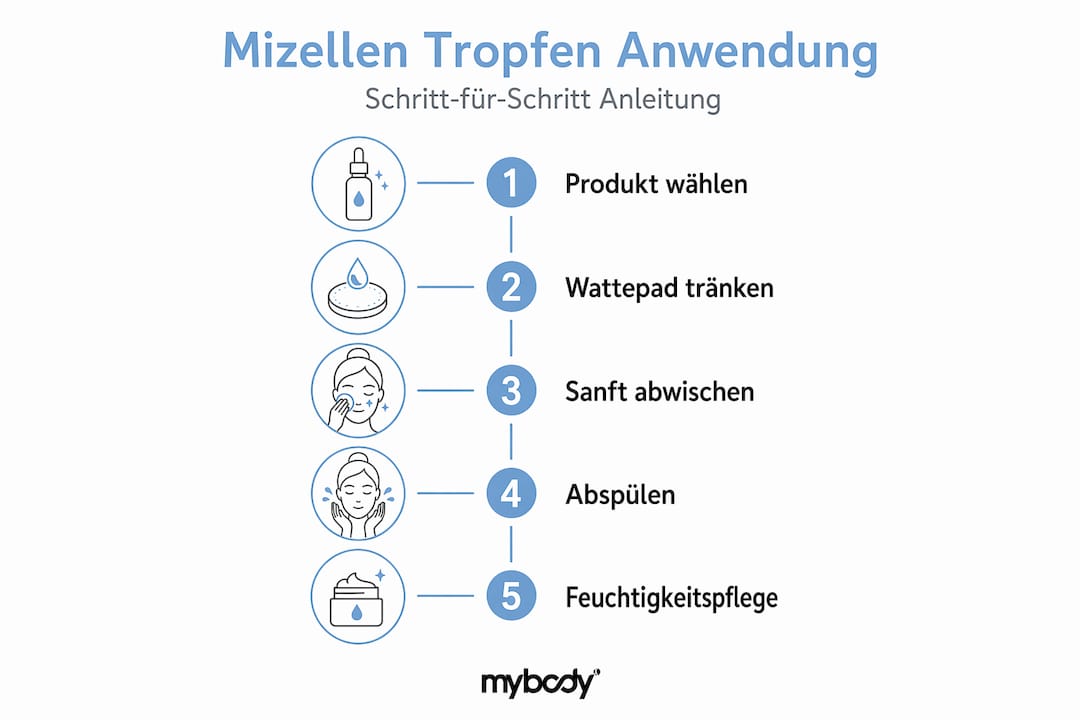
- Wash your hands. Clean hands are essential before use; otherwise, you transfer germs to the cotton pad.
- Moisten the cotton pad. Apply the Micellar Drops directly to a soft cotton pad. Four to six drops are generally enough for the face.
- Pat gently, don't rub. Place the cotton pad on your skin and press it down briefly. Then wipe in one direction using light pressure. Physical removal works best with a short contact time and gentle pressure, not rubbing.
- Start with the eyes and lips. Begin with the makeup on your eyes and lips, as these areas often require more cleansing. Use a fresh cotton pad for the rest of your face.
- Don't forget to rinse. Experts recommend rinsing after use to remove residue. A quick rinse with lukewarm water is sufficient.
- Apply moisturizer. Your skin may be slightly stripped of oil after cleansing. A lightweight moisturizer completes your skincare routine.
As for frequency: Oily skin benefits from cleansing twice a day, morning and evening. For dry or sensitive skin, using it in the evening is usually sufficient to avoid disrupting the skin's natural balance.
With waterproof makeup, you need a little more patience. Hold the soaked cotton pad over the closed eye area for about 20 seconds before gently wiping. Several passes with fresh cotton pads are better than rubbing hard once.
Pro tip: Combine Micellar Drops with a double-cleansing routine: use Micellar Drops as the first step to dissolve makeup and sunscreen, followed by a mild water-soluble cleanser for deep pore cleansing. This method originally comes from Korean skincare and has been shown to deliver more thorough results.
Common mistakes when using Micellar Drops
Even a product as simple as Micellar Drops can be used incorrectly. These are the mistakes I encounter most often.
Rubbing too hard. This is the classic mistake. Micelles dissolve dirt through attraction, not mechanical pressure. Rubbing unnecessarily irritates the skin and, over time, damages the skin barrier.
Not rinsing. Many product descriptions promise that rinsing is not necessary. However, residue from unrinsed micelles can cause irritation on sensitive skin. A quick rinse with water takes little time and protects the skin.
Other common pitfalls:
- Wrong product choice: Products containing alcohol or strong fragrances can cause dryness and redness, especially on sensitive skin
- Too much at once: More drops do not mean better cleansing performance, but often just more residue
- Micellar drops as the sole cleanser for acne-prone skin: For very oily and blemish-prone skin, cleansing with micellar water alone is often not enough. An additional mild cleanser can help here
- Product not suited to the skin type: What works well for normal skin can cause slight degreasing in very dry skin
Micellar water is often mistakenly considered a toner. However, it is a first cleansing step and should be rinsed off to prevent skin irritation. Dr. Jetske Ultee
An often-overlooked point: Micellar drops for sensitive skin should not contain synthetic preservatives such as parabens. If you want to play it safe, choose products that have undergone dermatological testing and have a short ingredient list.
What you can achieve through regular use
Those who use micellar drops consistently and correctly will notice relatively quickly what these products can do and where their limits lie.
Most importantly: Micellar water increases skin hydration immediately after use and maintains this effect for up to four hours, primarily due to moisturizing ingredients such as glycerin. This is not a marketing promise, but a measurable effect.
| Result | Realistically expected | Less to be expected |
|---|---|---|
| Gentle cleansing | Yes, when used correctly every day | No, with very heavy makeup without double cleansing |
| Improved skin hydration | Yes, due to glycerin and the absence of soap | No, not as the sole moisturizer |
| Healthy skin barrier | Yes, with regular use and without rubbing | No, if the wrong products are used |
| Removal of waterproof makeup | Limited, but possible with patience | Not completely without specialized products |
| Reduction of skin irritation | Yes, if alcohol and fragrance are avoided | No, if the wrong product is chosen |
Supporting a healthy skin barrier is an underestimated benefit. Washing your face daily with harsh cleansers damages the skin's natural protective layer. Micellar drops cleanse without attacking this barrier, which in the long term results in calmer, less reactive skin.
Micellar drops are particularly practical for travelers and everyday use: quick cleansing without water, a compact format, and no need to rinse. However, they reach their limits with waterproof makeup. In this case, you either need special products or the double-cleansing method mentioned above.
Those who want to take a holistic approach to skincare can find additional background in the article on skin aging and glycation, including how diet and lifestyle affect skin health from within.
My assessment of how to use micellar drops
I repeatedly observe that people either expect too much or too little from micellar drops. Those who buy them as a miracle product that solves every skin concern will be disappointed. Those who see them for what they are—a gentle, practical cleansing tool—will not want to be without them.
What I repeatedly see in my experience with users is that the biggest mistake is not the wrong technique, but the wrong product choice. A micellar drops test is really worthwhile before committing to a product. Many people choose the cheapest option and then wonder why their skin is dry or irritated.
My honest tip: Combine micellar drops with a lightweight moisturizer and, if needed, a second gentle cleanser. In my opinion, this combination delivers the best results for most skin types. Those who also want to understand how their body responds to nutrients and ingredients can find a useful starting point in personalized health analyses.
Micellar Drops are not a cure-all. But they are an honest, well-understood product that delivers real value when used correctly. I appreciate that.
— MYBODY X
Micellar Drops and More at mybody x
Anyone who wants to build their skincare routine on a solid foundation needs more than a good product. At mybody x, you will find not only high-quality information about Micellar Drops and micellar skincare, but also scientifically sound analyses showing what your body really needs.

From DNA metabolism tests and nutrient analyses to personalized nutrition recommendations: mybody x combines laboratory quality with real-life benefits. More than 11,300 satisfied customers with an average rating of 4.77 stars speak for themselves. Free shipping from 49 euros, personal advice, and a money-back guarantee make getting started risk-free.
View the complete range at mybody-x.com and find out which analysis best suits your health goals.
FAQ
What exactly are Micellar Drops?
Micellar Drops are concentrated cleansing products based on the technology of tiny oil-water structures. They dissolve dirt, sebum, and makeup through physical attraction without irritating the skin.
Do Micellar Drops need to be rinsed off?
Yes, experts recommend rinsing with lukewarm water after use. Residue on the skin can cause long-term irritation in sensitive skin types.
How often should Micellar Drops be used?
For oily skin, use twice daily. For dry or sensitive skin, evening use is sufficient to maintain the skin’s natural balance.
Are Micellar Drops suitable for sensitive skin?
Yes, if the product contains no fragrances or alcohol. Products with nonionic surfactants and glycerin are particularly gentle and well tolerated by the skin.
What should you do with waterproof makeup?
Hold the cotton pad soaked with Micellar Drops on the eye area for about 20 seconds before gently wiping. For complete removal, double cleansing with a special makeup remover as the second step is recommended.


Share now:
Food Intolerance Test: Find Clarity in 2026
Pantothenic acid benefits: optimize energy and metabolism